
Last Updated: | Author: Munir Ardi
Some local furniture banks and reuse organizations accept mattress donations, but there is no nationwide acceptance policy. Verified examples include Furniture Bank of Central Ohio and the Furniture Bank of Metro Atlanta, with different condition, service-area, and fee rules. Confirm the exact mattress before arranging transport.
If reuse is unavailable, consider retailer take-back, mattress recycling, or an authorized municipal or private collection. These are separate routes: a mattress collected for recycling is not necessarily a charitable gift or a bed supplied to another family.
For dressers, tables, and other items, use our parent guide to organizations that accept furniture donations. This page focuses on mattresses, box springs, and the alternatives when reuse is not possible.
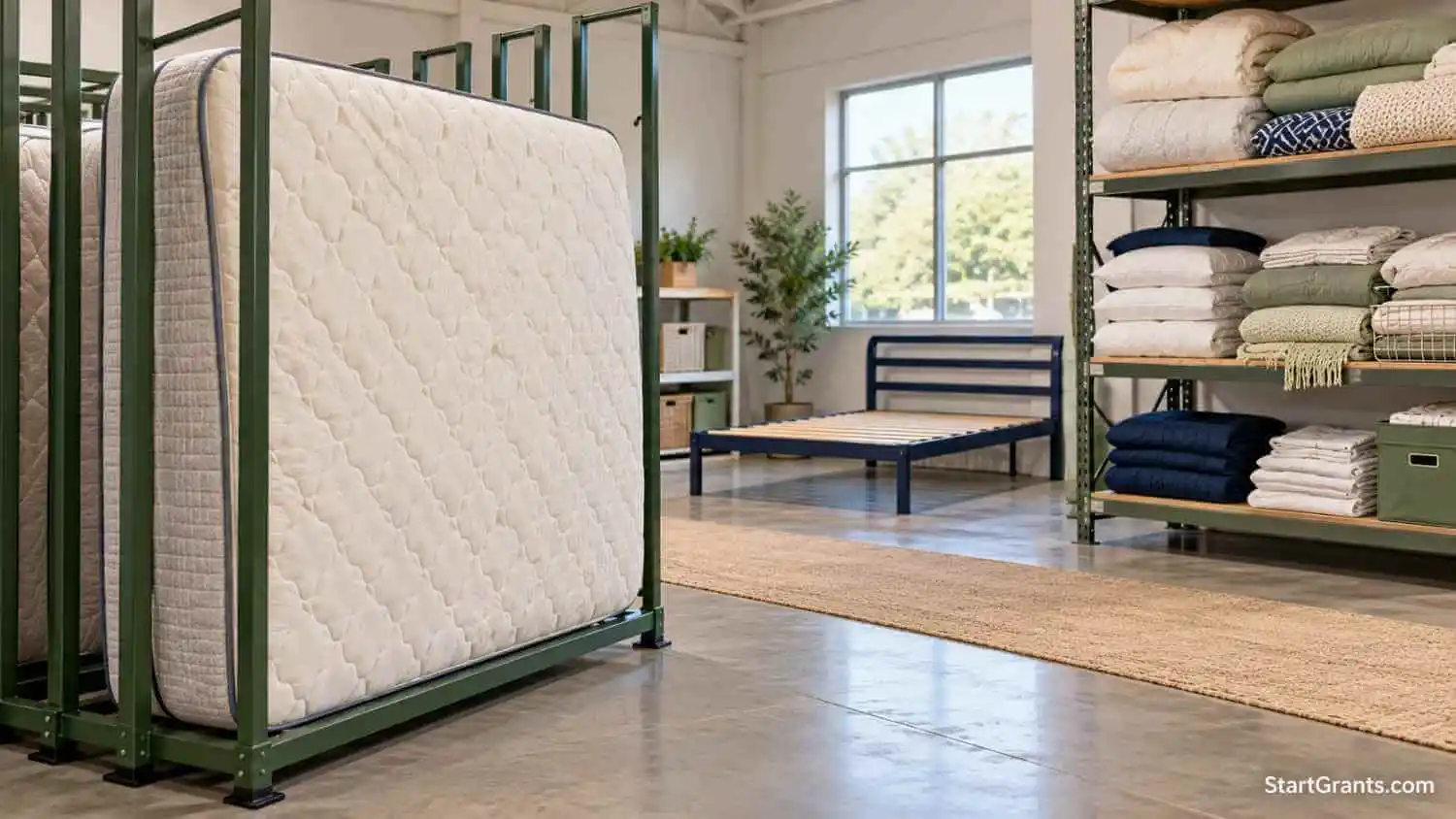
Who Accepts Mattress Donations? Start With Local Programs
Send the mattress size, type, approximate age, and clear photos of both sides, seams, labels, and any defects. Ask specifically about the mattress and box spring; approval for a bed frame does not cover either one.
Furniture Bank of Central Ohio
Furniture Bank of Central Ohio’s donation page lists mattresses and box springs as essential items. Its standards exclude rips, stains, pest evidence, and other unsuitable conditions. Service depends on the address and approved inventory. The page distinguishes free porch or garage pickups from $50 indoor pickups, and separately describes disposal services. A qualifying donation item is required for its pickup or disposal route.
Furniture Bank of Metro Atlanta
The Metro Atlanta pickup form lists $25 per mattress and $15 per box spring for cleaning or responsible recycling and excludes wet or bed-bug-infested mattresses. Its general furniture page uses broader condition wording, so confirm the applicable standard and full pickup price before paying. Ask whether your particular mattress is intended for reuse or recycling.
St. Vincent de Paul: Check the actual local operation
St. Vincent de Paul of Lane County accepts mattresses and box springs for reuse and recycling at designated Oregon and California sites. Its current page lists free drop-off for fewer than ten units and paid pickup in the Eugene–Springfield area. Those terms do not establish a national SVdP donation policy.
For contrast, the Santa Clara County SVdP merchandise page says mattresses are not accepted at its referenced donation locations. A shared charity name does not mean shared mattress acceptance.
Other furniture banks, shelters, and housing programs
Use the Furniture Bank Network directory to find nearby operators, then check each organization directly. Do not assume every member distributes all items without resale, accepts mattresses, or offers free collection.
For a shelter or transitional-housing program, contact the public donation office and ask about its current needs. Do not deliver unrequested goods, seek a confidential shelter address, or assume a new encasement makes a used mattress acceptable. The program may need a different size, new bedding, or no mattresses at all.
Why Acceptance Varies: Condition, Capacity, and Local Rules
A recipient may decline a mattress because of hygiene concerns, storage limits, transport costs, current stock, or state requirements. There is no verified national rejection percentage that makes “90%” or “99% of charities” a reliable rule.
Used-bedding rules are state-specific
Pennsylvania’s bedding and upholstery guidance describes registration, approved disinfection, and yellow labeling for covered secondhand dealers. That is a specific state framework, not proof that every U.S. mattress donation requires chemical treatment plus heat treatment. Do not remove or replace a law label to imply compliance.
Condition matters, but the recipient makes the decision
Disclose stains, sagging, odors, broken supports, dampness, tears, and pest history. Some reuse programs reject any stain. Another operator may accept a non-reusable unit only for recycling and charge accordingly. Do not conceal a defect or treat a recycler’s approval as approval for another person to sleep on it.
Do not assume Goodwill, Habitat ReStore, or the Salvation Army has one policy nationwide. Check the actual receiving location. General acceptance of furniture does not establish mattress acceptance.
The Salvation Army’s national donation FAQs include mattresses among possible furniture donations while explicitly noting local differences. This provides a reason to check your ZIP code, not a guarantee that the nearest location will take yours.
Donation Condition and Pickup Checklist
Before requesting a reuse pickup, inspect the surface, sides, underside, and seams. Photograph imperfections honestly. If the mattress has remained in storage, explain the storage conditions and inspect again before transport.
- Describe the item: Give size, mattress type, approximate age, and whether a box spring is included.
- Disclose condition: Mention stains, odors, moisture, tears, sagging, and known pest concerns.
- Get preliminary approval: Ask whether final inspection can still result in rejection.
- Agree on access: Confirm indoor removal, stairs, staging, attendance, and any charges.
- Protect it: Keep it dry and follow the receiver’s wrapping instructions.
- Save a backup: Know what happens if it is declined or the collection is missed.
Clean only according to the manufacturer’s instructions. Do not soak the mattress, cover stains to hide them, or assume deodorizer removes a contamination problem. Cleaning does not guarantee acceptance, and a fresh-looking surface does not establish that a pest problem is resolved.
For detailed building access and scheduling, see our furniture donation pickup planning guide. Indoor handling is a provider decision, not a universal legal prohibition. Do not move a heavy mattress down stairs alone just to qualify for a free service.
Retailer Take-Back: Arrange It Before the New Mattress Arrives
If you are replacing a mattress, ask the seller whether removal is included, optional, or legally required at your address. Confirm the number and type of old items, the collection date, preparation requirements, and any exclusions. “White glove delivery” does not automatically establish one nationwide removal policy.
In California, CalRecycle’s retailer requirements say sellers must offer used-mattress take-back at no additional charge when delivering a new mattress to a final California consumer. For common-carrier deliveries, the retailer must offer to arrange take-back within 30 days. Confirm the current conditions and preparation instructions; this is a state requirement, not a negotiating loophole.
Outside that context, request the seller’s actual removal terms. Ask whether the mattress will be recycled, reused, or disposed of and whether the service includes a box spring. Do not assume a salesperson will waive a fee or that a heavily contaminated mattress will qualify.
Returning a mattress during a sleep trial
Contact the seller before donating or discarding a trial mattress. Return authorization, pickup, fees, and acceptable proof vary. For example, Saatva’s trial and return policy describes arranged pickup and a processing fee. That differs from a blanket rule that every buyer must independently find a charity. Keep the authorization and follow the current policy to protect any refund claim.
Bye Bye Mattress Recycling: Four Active State Programs
Bye Bye Mattress is the consumer program operated by the Mattress Recycling Council. It provides state-specific recycling routes in California, Connecticut, Oregon, and Rhode Island. Recycling separates materials for further use; it does not mean your old mattress becomes a donated bed.
The program’s current FAQs explain that a fee or stewardship assessment on new mattress and box-spring sales funds the system. Residents can use their state’s program even if they never paid a fee on the old mattress. A new purchase is not a general prerequisite.
| State | Fee per new unit sold | Official information |
|---|---|---|
| California | $18.00 | California program |
| Connecticut | $19.50, effective October 1, 2026 | Connecticut program |
| Oregon | $22.50 | Oregon consumer guidance |
| Rhode Island | $20.50 | Rhode Island program |
Checked October 18, 2026. Fees can change. These point-of-sale charges are separate from any delivery, pickup, or other service charge; they are not a nationwide mattress disposal price.
Search the Bye Bye Mattress location finder for participating sites and events. Check residency, unit limits, appointments, hours, and charges before loading your vehicle. Free drop-off does not necessarily include transport from your bedroom or curbside collection.
Condition rules also differ. The program FAQs distinguish California and Oregon’s broader collection rules from Connecticut and Rhode Island, where heavily soiled, wet, moldy, badly damaged, or infested units need specific instructions and may involve fees. Even where a program accepts poor-condition units, contact the site before transporting one with pests or contamination. Special product categories such as crib mattresses, futons, and air beds require separate checks.
Municipal Collection and Paid Removal
Outside the four-state program, recycling can still be available through local government, private facilities, or retailers. Start with your city or county’s official waste website. Ask about appointments, fees, wrapping, accepted condition, and which collection day applies.
New York City: A local wrapping example
NYC sanitation guidance requires mattresses and box springs to be sealed in plastic bags and set out on the trash-only collection day, not recycling day. Check the current instructions for your address. Do not apply NYC’s rule to Chicago or every other municipality without checking their own guidance.
Massachusetts: A disposal-ban example
MassDEP’s mattress guidance explains that its mattress disposal ban took effect November 1, 2022, and directs residents to reuse, retailer, and municipal recycling routes. Contaminated mattresses require a separate assessment and handling instructions. A waste ban does not establish that all pickups are free.
Private haulers and apartment dumpsters
If you need indoor removal, obtain a quote covering stairs, elevators, mattress size, wrapping, and disposal or recycling charges. Ask where the item will go and what the operator can actually document. No fixed national $80–$150 price applies to every mattress or address.
Ask building management and the authorized waste provider before using an apartment dumpster. A bulky item can be prohibited by the property’s service agreement or local rules. Do not leave it on someone else’s property or assume an online “curb alert” authorizes sidewalk storage.
Bed Bugs, Mold, or Serious Contamination
Do not offer an infested mattress for someone else to sleep on, leave it in a charity pile, or mix it with approved clean goods. Notify the collector or facility about the issue before moving it and request its containment and disposal instructions.
The EPA’s bed bug guidance discusses avoiding spread, responsible disposal, and clearly identifying discarded infested furniture. It also notes that discarding furniture is not always necessary when safe treatment is possible. Consult an appropriate pest professional and local collector rather than improvising treatment or transport.
Follow the local wrapping and labeling requirements. Do not assume a “BED BUGS” label alone makes an item collectible, that every recycler accepts it, or that an encasement restores donation eligibility. Keep it separate from clean donations and avoid moving it through shared spaces without an agreed plan.
Before Trying DIY Mattress Deconstruction
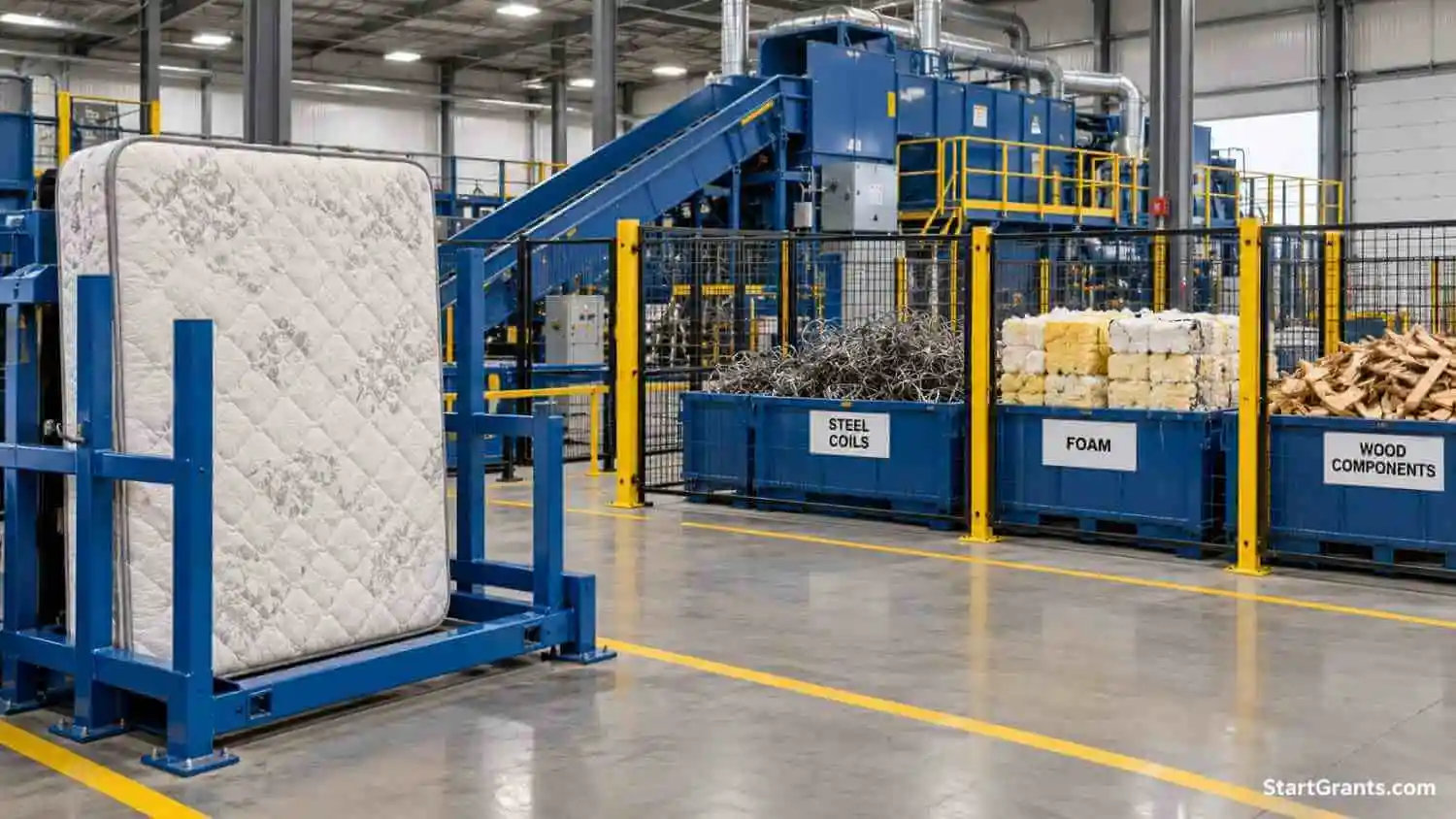
Keep the mattress intact unless the receiving recycler specifically instructs otherwise. Cutting it apart can create sharp-metal hazards, scatter filling material, and leave components that your local facility will not accept. There is no dependable one-hour process or guaranteed scrap payment for every mattress.
The California Department of Public Health’s mattress fiberglass factsheet warns that some mattresses can release fiberglass when their cover is removed or damaged. Do not unzip a cover merely because a zipper is present. Follow manufacturer instructions and arrange appropriate handling if fibers are suspected.
Do not assume old foam is suitable for a pet bed or soundproofing, or that box-spring wood can be burned or composted. Materials, treatments, contamination, fire rules, and the receiving facility’s specifications matter. Ask an approved recycler about preparation rather than generating loose waste first.
Separate the Mattress From the Rest of the Bedroom
A mattress rejection does not determine whether a dresser, lamp, or bed frame can be donated. Submit each category separately and identify which pieces the recipient has approved.
Check local Goodwill donation pickup options for other accepted goods, or Habitat ReStore donation requirements for suitable furniture and household materials. Neither network’s name guarantees acceptance of a bed frame, fixture, or mattress.
If local law and the chosen gifting platform permit a private mattress transfer, describe condition accurately and arrange an agreed handover. Never use that route to pass along pests, mold, or an unsafe item. A gift to an individual is different from a charitable donation.
If you need a bed rather than have one to give, use our bed assistance guide for low-income families. Recipient applications and referrals are separate from donor collection arrangements.
A recycling or removal payment is not automatically a charitable donation. If a qualified charity accepts a reusable mattress and you plan to claim a deduction, retain accurate records and follow IRS charitable contribution requirements. A receipt does not by itself establish deductibility.
A Muslim Perspective
Providing a clean, usable bed can be a form of sadaqah when the recipient wants and can safely use it. Honest disclosure is part of responsible giving: do not hide stains, pests, or damage, or shift an unwanted disposal cost to a charity.
Ask a qualified scholar before treating the gift as zakat; hardship or housing status does not automatically establish eligibility. Respect the recipient’s privacy, and do not make photographs or a personal story a condition of receiving the bed. Recycling and charitable giving serve different purposes and should be described accurately.
Frequently Asked Questions
Will Goodwill, Habitat ReStore, or the Salvation Army accept my mattress?
Check the exact receiving location. There is no single national mattress acceptance policy across those networks. Approval for furniture or a bed frame does not establish acceptance of a mattress or box spring.
Can I donate a mattress with a small stain?
Disclose the stain and ask the recipient. Some reuse programs reject any staining, while another operator may accept the unit only for cleaning or recycling. Do not hide the mark or assume all programs follow one legal rule.
Can I recycle a mattress without buying a new one?
Yes. Bye Bye Mattress says residents can use the program in their participating state even if they did not pay a fee on the old mattress. Check the site’s residency, product, condition, and quantity requirements.
Is retailer mattress removal always free?
No nationwide rule makes every retailer service free. California has a specific take-back requirement tied to delivery of a new mattress. Elsewhere, check the seller’s current policy and any removal charges before purchasing.
Can I put a mattress in an apartment dumpster?
Ask management and the authorized waste provider first. Local rules and the property’s service agreement determine whether that route is allowed. Do not assume an ordinary dumpster accepts mattresses.
What should I do with a bed-bug-infested mattress?
Do not donate it for reuse. Contact your local collector or receiving facility before transport and follow its containment, labeling, and disposal instructions. Keep it separate from clean donations.
Must I find a charity to receive my mattress trial return?
Follow your seller’s written return process. Some sellers arrange collection; others may request approved documentation. Obtain authorization before donating or disposing of the mattress so you do not undermine a refund claim.
Should I cut up a mattress to recycle it?
Ask the recycler and manufacturer first. Opening a mattress can release fibers and expose sharp metal, and loose components may not qualify for collection. Keeping it intact is usually the better starting point.