
Last Updated: June 2026 | Author: Robert
For a child, play is the primary vehicle for understanding the world. However, if your child lacks fine motor skills, has sensory processing issues, or relies on a wheelchair, standard off-the-shelf toys are often inaccessible. To solve this, manufacturers create “adaptive toys” featuring large push-button switches, specialized sensory feedback, or complex postural supports. The problem? The moment a toy is labeled “adaptive” or “therapeutic,” the price skyrockets.
Before searching for toy-specific funds, you must ensure your family’s broader financial safety net is secure by visiting our master directory for disability and mental health grants. Because many therapeutic toys are integrated into physical or occupational therapy, parents must also cross-reference our core guide on how to get government grants for disabled children to maximize state Medicaid waivers.
Health insurance companies frequently deny claims for adaptive play equipment, dismissing them as “recreational” rather than “medically necessary.” To bypass these denials, parents must utilize specialized funding networks. Here is your 2026 directory to finding toys for children with disabilities and grants sources.
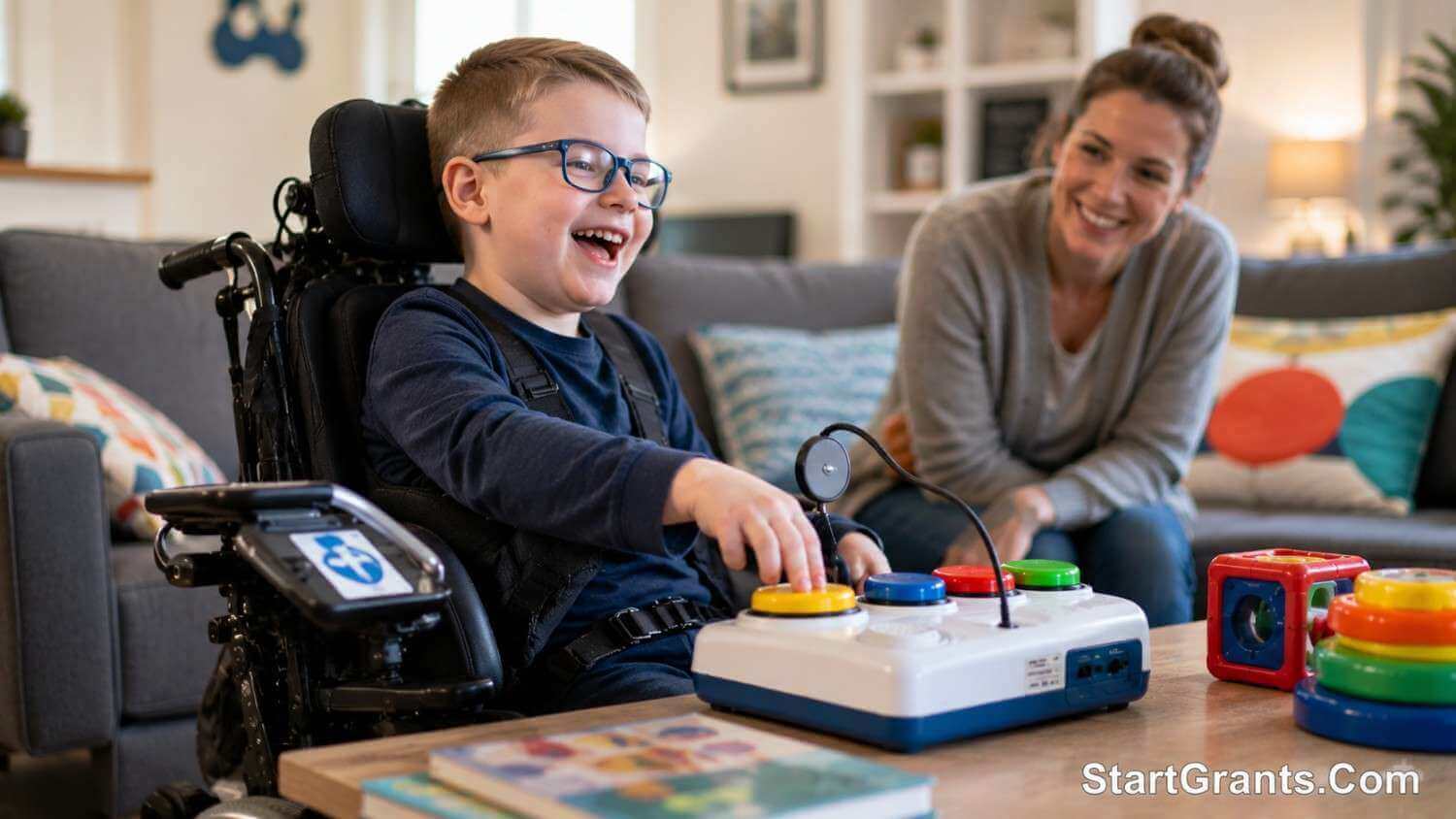
For children with disabilities, adaptive toys are not just for fun; they are essential tools for physical and cognitive therapy. Unfortunately, these customized devices often come with astronomical price tags.
Phase 1: The “Medical Necessity” Insurance Trap
If your child’s occupational therapist recommends a specialized sensory swing or a customized adaptive tricycle to build core strength, do not immediately submit the bill to Medicaid or commercial insurance as a “toy.” They will deny it 100% of the time.
To get medical insurance to pay, your pediatrician and therapist must write a Letter of Medical Necessity (LMN). In this letter, the word “toy” or “play” should be avoided entirely. Instead, the item must be framed as “Durable Medical Equipment (DME)” required to achieve a specific clinical goal—such as “improving vestibular orientation,” “preventing muscle atrophy,” or “facilitating augmentative communication.” If insurance still denies the claim, you must turn to the alternative sources below.
Phase 2: The Toy Lending Libraries (Try Before You Buy)
Children outgrow toys quickly, both physically and developmentally. Spending $150 on a switch-adapted learning toy that your child might only use for two months is financially unsustainable. The government’s solution to this is the Assistive Technology (AT) Lending Library.
Under the federal Assistive Technology Act, every U.S. state operates an AT program. These programs feature massive inventory closets filled with thousands of adaptive toys, switches, and communication devices. Just like checking out a book from a public library, parents can borrow these highly expensive toys absolutely free for several weeks to see if their child actually benefits from them before seeking funding to purchase one permanently.
Pro-Tip: Accessing Free Adaptive Toys
Watch this practical overview of an Adapted Toy Library to understand exactly how these resources operate, allowing you to borrow specialized toys and equipment for your child at zero cost:
Phase 3: Philanthropic Grants for Adaptive Equipment
When you need to permanently own expensive play equipment—such as a $3,000 adaptive bicycle or a heavy-duty sensory room setup—philanthropic foundations are your primary grant source.
- Variety – the Children’s Charity: This is one of the most powerful organizations for disabled children. Their Care Program provides direct grants for critical items insurance won’t cover, including customized adaptive bikes, therapeutic strollers, and communication devices.
- The UnitedHealthcare Children’s Foundation (UHCCF): Even if you do not have UnitedHealthcare insurance, the UHCCF provides medical grants of up to $5,000 to families who have commercial health insurance but are facing high out-of-pocket costs for therapies and adaptive medical equipment that aid in a child’s development.
- National Lekotek Center: Lekotek is a non-profit network dedicated to making play accessible. They offer interactive play sessions with specialized therapists and provide access to heavily discounted or loaned inclusive toys.
Phase 4: The Muslim Perspective (Play as Tarbiya & Zakat)
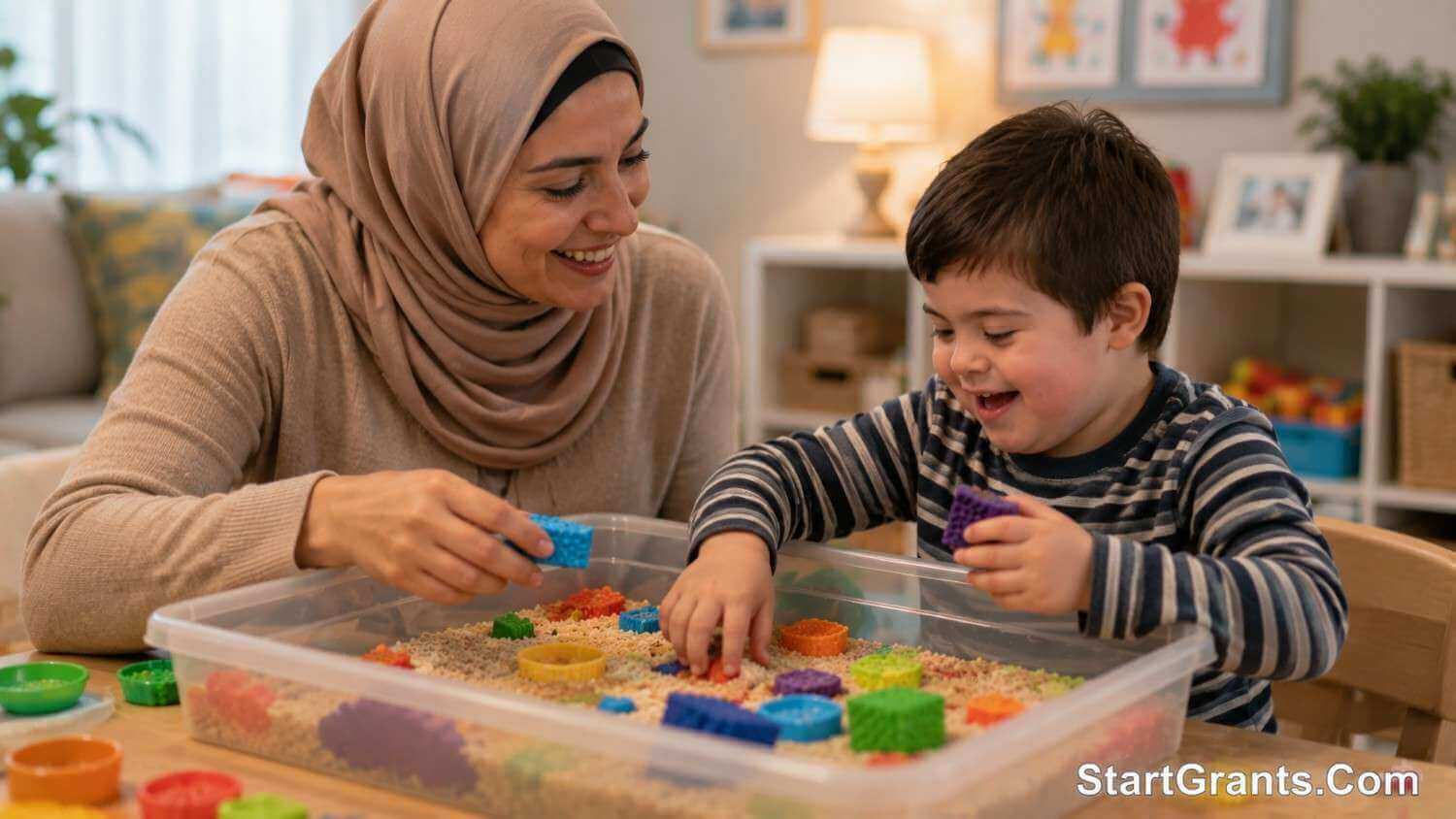
In Islam, childhood play is a vital component of Tarbiya (nurturing). Funding adaptive toys through community Zakat ensures that children with disabilities are not deprived of their right to learn, play, and thrive.
For Muslim parents navigating the world of pediatric disabilities, reframing the concept of “play” through an Islamic lens is crucial for combating burnout and seeking community support.
1. Play is Tarbiya (Nurturing)
In Islamic tradition, engaging with children through play is a highly encouraged Sunnah of the Prophet Muhammad (PBUH). For a child with neurodivergence or physical limitations, an adaptive toy is not an indulgence; it is a critical tool for Tarbiya (holistic development and education). Ensuring your child has the tools to interact with their environment is a fulfillment of the Amanah (trust) Allah has given you.
2. Funding Tarbiya through Zakat
There is a misconception that Zakat can only be used for food, shelter, or life-or-death surgeries. However, if a family is financially strained and cannot afford the specialized sensory equipment or adaptive communication switches necessary for their disabled child’s cognitive survival, they rightfully fall under the Zakat category of Fuqara (those in need).
Islamic charities and local Masjids have a duty to allocate Zakat funds to purchase these developmental tools. Buying an adaptive tricycle for a child with Cerebral Palsy so they can strengthen their muscles is a profoundly ethical, Halal use of community funds.
Conclusion: Equipping Your Child for Success
Do not let the exorbitant markup on “medical” toys prevent your child from experiencing the developmental power of play. Your strategy must bypass the retail market entirely.
First, protect your budget by utilizing your state’s Assistive Technology Lending Library to test toys for free. If you find a device that significantly improves your child’s quality of life, aggressively pursue philanthropic grants through organizations like Variety or UHCCF. Play is a developmental right, and the funding networks exist to ensure your child has the exact tools they need to thrive.
Frequently Asked Questions (FAQs)
Q1: What is “Toy Hacking” for disabled children?
A: Toy hacking is a growing movement where parents and engineering volunteers take standard, cheap electronic toys (like a dancing bear) and rewire them to accept a large “adaptive switch.” This allows a child with limited motor control to activate the toy without paying the massive markup charged by medical supply companies. Many universities and AT centers host free “Toy Hack-a-thons” during the holidays.
Q2: Can I use IDEA Part C funds to buy toys for my toddler?
A: Under the Individuals with Disabilities Education Act (IDEA) Part C, states provide Early Intervention services. While they rarely hand parents cash to buy toys, the state-assigned therapists will often bring specialized adaptive toys and sensory equipment to your home for your child to use during their free therapy sessions.
Q3: Are there grants specifically for Autism sensory rooms?
A: Yes. Organizations like Autism Speaks and local autism advocacy groups frequently offer small grants to help parents purchase weighted blankets, crash pads, and specialized lighting to build safe, calming sensory spaces in their homes for children on the spectrum.
Q4: How do I find my local Assistive Technology Lending Library?
A: You can find the exact contact information and inventory catalog for your state’s program by visiting the official AT3 Center website (at3center.net), which serves as the national coordination center for all state-level Assistive Technology Act programs.
Important Disclaimer: StartGrants.com is an informational directory and does not provide medical or occupational therapy advice. Always consult with your child’s pediatrician or licensed Occupational Therapist (OT) to ensure a specific adaptive toy or sensory device is safe and appropriate for your child’s developmental stage.