Last Updated: June 2026 | Author: Munir Ardi
Substance Use Disorder (SUD) is a chronic, life-threatening medical condition that ravages both the body and the bank account. The most effective treatment—medical detox followed by 30 to 90 days of inpatient residential rehabilitation—is notoriously expensive. Private rehab facilities routinely charge between $10,000 and $30,000 per month, leaving desperate families feeling as though recovery is a luxury reserved only for the wealthy.
Before executing your funding strategy for addiction treatment, you must ground your search in our primary directory for disability and mental health grants. Furthermore, it is a clinical reality that addiction rarely exists in a vacuum; it is frequently a secondary symptom of underlying psychological trauma. “Dual Diagnosis” (treating both the addiction and the psychiatric condition simultaneously) is critical for long-term sobriety. Therefore, you must also cross-reference our resources on finding financial help for people with depression to build a comprehensive recovery safety net.
You do not have to drain your retirement accounts to save a loved one’s life. Federal laws and massive block grants are specifically engineered to fund treatment for the uninsured. Here is your 2026 tactical guide on how to get grants for drug rehab.
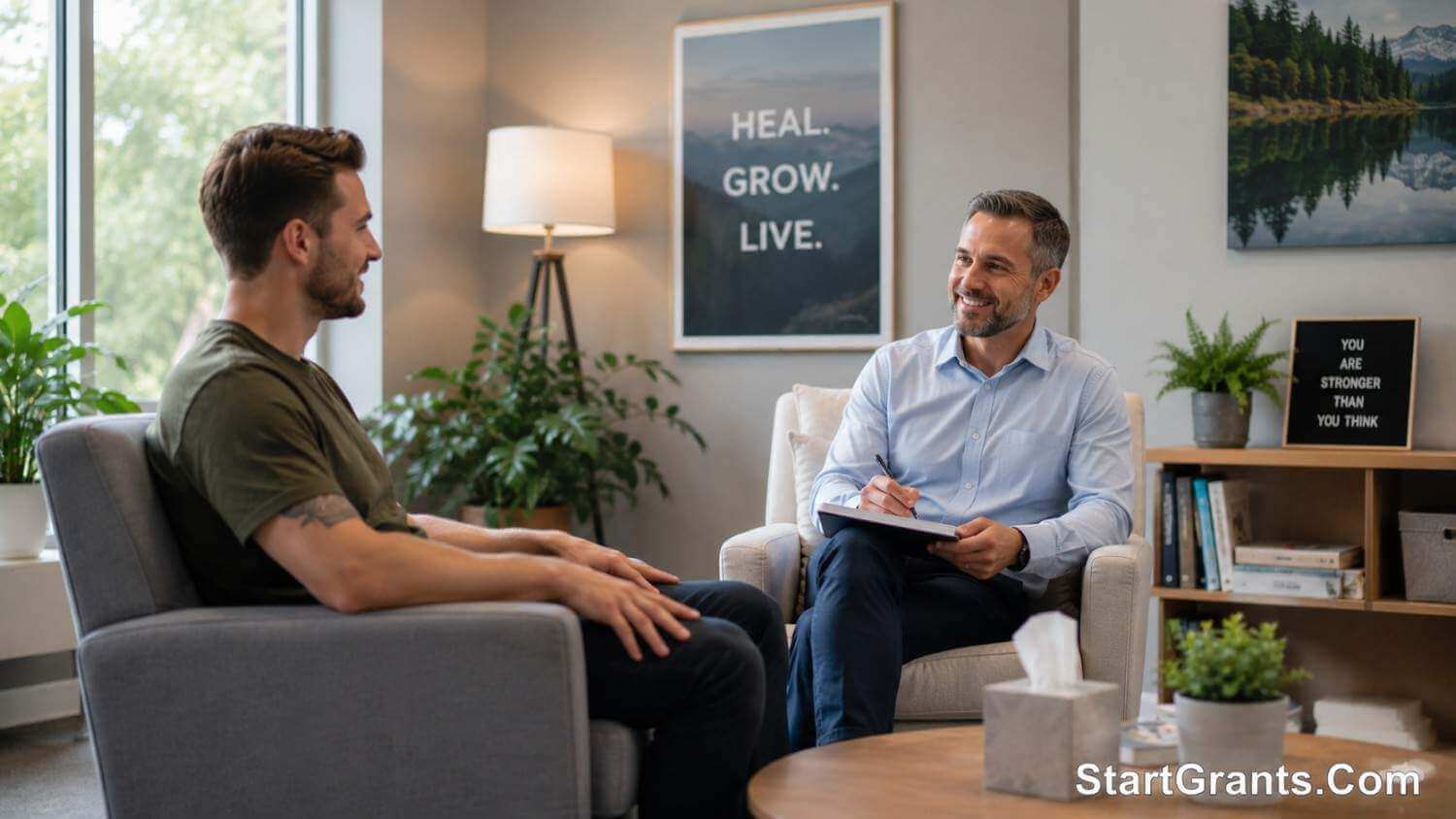
Inpatient drug rehabilitation provides life-saving medical detox and psychological counseling. While private facilities can cost upwards of $30,000 a month, state block grants and scholarships make recovery accessible to everyone.
Phase 1: The ACA and Medicaid Expansion
The single greatest shift in addiction funding occurred with the Affordable Care Act (ACA). Under the ACA, substance abuse treatment is classified as an “Essential Health Benefit.” This means that all marketplace health insurance plans, as well as Medicaid, are legally required to cover drug and alcohol rehabilitation just as they would cover a heart attack or diabetes.
If the individual struggling with addiction is unemployed or has zero income, their first step must be applying for Medicaid. In states that have adopted the Medicaid Expansion, single adults without dependents can qualify based solely on their lack of income. Once approved, Medicaid will cover outpatient therapy, medication-assisted treatment (like Suboxone or Methadone), and in many cases, short-term inpatient residential rehab.
Phase 2: SAMHSA Block Grants (State-Funded Rehab)
What happens if you live in a state that did not expand Medicaid, or you make just enough money to be disqualified from welfare, but not enough to afford a $20,000 rehab bill? This is where federal block grants intervene.
The Substance Abuse and Mental Health Services Administration (SAMHSA) provides the Substance Abuse Prevention and Treatment Block Grant (SABG). You do not apply for this grant as an individual. Instead, the federal government gives billions of dollars directly to “Single State Agencies.” These state health departments then distribute the funds to specific, state-certified rehab facilities.
To use this “grant,” you simply use the SAMHSA Treatment Locator tool, filter the search for facilities that accept “No Payment” or offer a “Sliding Fee Scale,” and the state-funded facility will use their federal block grant money to pay for your bed.
Pro-Tip: Going to Rehab Without Insurance
Watch these 3 actionable tips on how to secure drug and alcohol addiction help even if you don’t have insurance, navigating the system to find state-funded facilities and grants:
Phase 3: Philanthropic “Rehab Scholarships”
If state-funded facilities have a massive waitlist (which is common), you can target private non-profit organizations that offer direct “Rehab Scholarships.” These foundations partner with luxury or high-tier private rehab centers to secure donated beds for individuals in financial crisis.
- 10,000 Beds: The 10,000 Beds organization is a massive philanthropic network that awards scholarships for individuals without resources to enter private, high-quality addiction treatment centers across the country.
- The Salvation Army: For individuals who have hit rock bottom, the Salvation Army’s Adult Rehabilitation Centers (ARCs) provide free, comprehensive, faith-based residential rehab programs that last for six months. The program is fully funded through their thrift store donations and grants.
Phase 4: The Muslim Perspective (Disease, Stigma, & Zakat)

Addiction is a recognized medical disease, not merely a moral failing. Breaking the cultural stigma is the first step to recovery. The Muslim community must prioritize Zakat to fund life-saving rehabilitation for those trapped in substance use disorders.
The Muslim community is not immune to the opioid epidemic or the crisis of alcoholism. However, the deadly combination of deep cultural shame and theological misunderstanding often prevents Muslim families from seeking the funding and treatment they desperately need.
1. Addiction is a Disease, Not Just a “Lack of Faith”
There is a toxic stigma that equates drug addiction solely to a lack of Iman (faith) or a failure to pray. While spiritual grounding is a powerful tool in recovery, physical dependency alters the brain’s chemistry. Seeking medical detox and professional psychological therapy is an act of Tadawi (seeking medical treatment), which is heavily encouraged in Islam. Sweeping the addiction under the rug to protect the family’s “reputation” often leads to fatal overdoses.
2. Zakat for Life-Saving Rehab (Hifz al-Nafs)
One of the primary objectives of Sharia is Hifz al-Nafs (the preservation of life). If a Muslim is drowning in addiction and the family cannot afford the $15,000 required for a residential rehab facility, the individual urgently qualifies for Zakat under the categories of Fuqara (the poor) or Al-Gharimin (those overwhelmed by debt).
Masjids and Islamic charities must establish dedicated funds to sponsor rehab beds. Paying for a Muslim’s addiction treatment through Zakat is not “rewarding bad behavior”; it is a vital, Halal intervention designed to save a life, restore their dignity, and bring them back to the Ummah.
Conclusion: Bypassing the Financial Wall
Do not let a $30,000 price tag convince you that recovery is impossible. The financial wall surrounding drug rehab has “doors” built specifically for those in crisis; you just have to know which ones to open.
Your immediate action plan is to check Medicaid eligibility to trigger the ACA’s essential health benefits. Concurrently, use the SAMHSA treatment locator to find state-funded facilities operating on federal block grants. If the waitlists are too long, aggressively apply for private rehab scholarships through organizations like 10,000 Beds. Addiction is a medical emergency; deploy these resources to secure the treatment you or your loved one needs today.
Frequently Asked Questions (FAQs)
Q1: Will applying for a rehab grant affect my employment?
A: No. Your medical records, including applications for state-funded rehab or SAMHSA grants, are strictly protected under HIPAA and 42 CFR Part 2 (which specifically protects substance abuse records). Furthermore, under the Family and Medical Leave Act (FMLA), you are legally allowed to take up to 12 weeks of unpaid, job-protected leave to attend a residential rehab facility.
Q2: Are faith-based rehab centers free?
A: Many are. Organizations like the Salvation Army or Teen Challenge offer entirely free, long-term residential programs. However, it is important to note that these programs are heavily focused on work-therapy and spiritual counseling, and may not offer the acute clinical medical detox provided by hospital-based rehabs.
Q3: Does the VA pay for drug rehab for veterans?
A: Yes. The VA operates extensive Substance Use Disorder (SUD) programs. If you are an eligible veteran enrolled in the VA healthcare system, you have access to medical detox, intensive outpatient programs, and residential inpatient rehab at little to no cost.
Q4: Can I use a rehab scholarship to go to an out-of-state facility?
A: Yes, if the scholarship is from a national non-profit like 10,000 Beds, they often place you in partnered facilities across the country to remove you from your local triggering environment. However, if you are using state Medicaid or a SAMHSA state block grant, you are generally restricted to facilities within your home state.
Important Disclaimer: StartGrants.com is an informational directory, not a medical provider. Substance withdrawal, particularly from alcohol or benzodiazepines, can be medically fatal. Do not attempt to detox at home. If you or a loved one are in immediate crisis, call the SAMHSA National Helpline at 1-800-662-HELP (4357) for free, confidential, 24/7 treatment referral.