Last Updated: | Author: Munir Ardi
You may be able to get a mobility scooter at no cost through approved health coverage, a local equipment-reuse program, or charitable assistance. Approval depends on your needs and the program’s rules. Medicare alone usually leaves a patient share, and a disability diagnosis does not automatically qualify you for a free scooter.
Start with a mobility assessment, check your coverage, and contact your state’s assistive technology program about donated or loaned equipment. Confirm any charges before accepting delivery or paying a seller.
For broader funding options, see our guide to disability and mental health assistance. This page focuses on mobility scooters, safe equipment selection, and the steps needed to request funding or a donated device.
First, Check Whether a Scooter Fits Your Needs
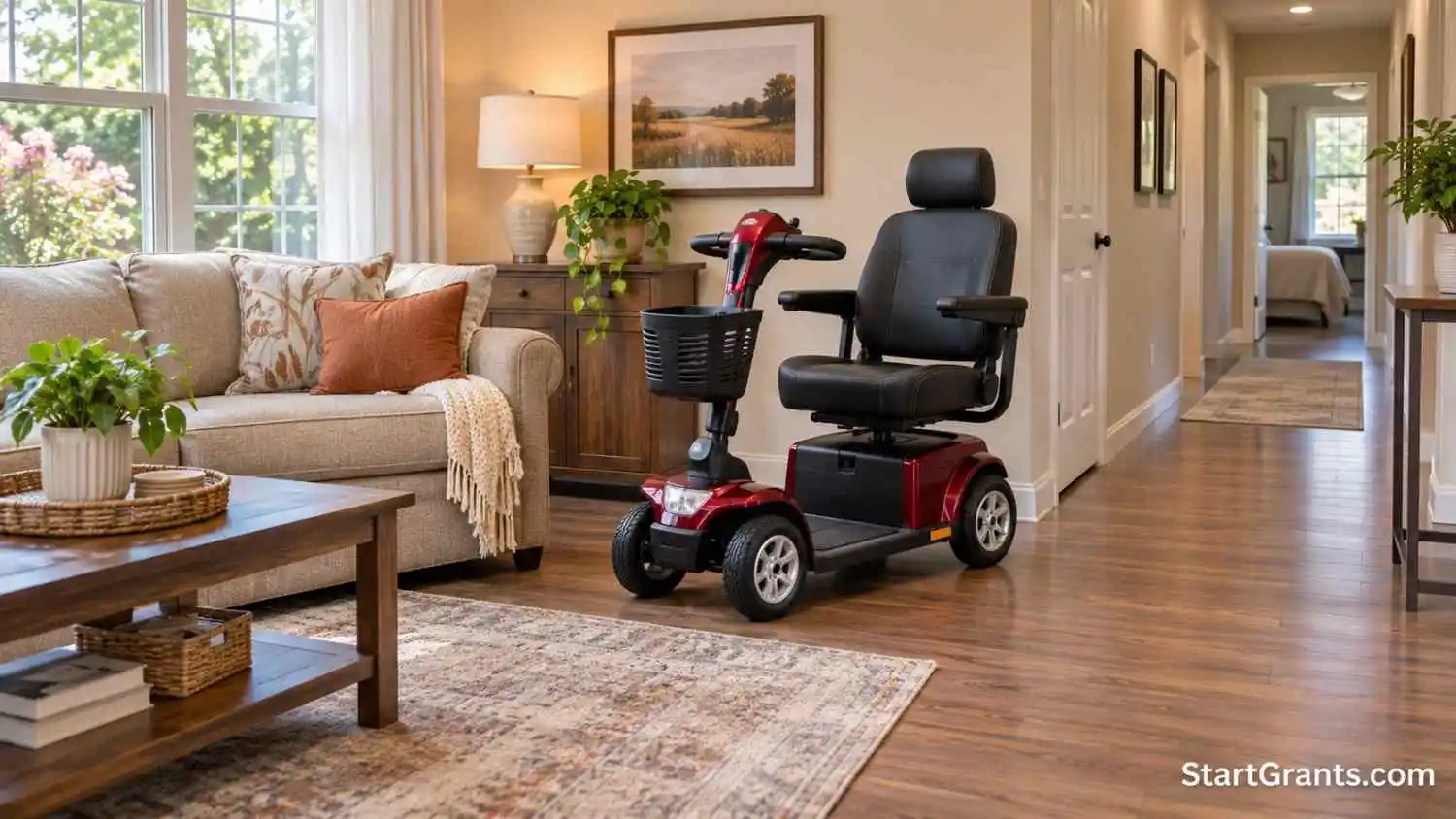
A scooter uses a steering tiller and requires a suitable combination of transfer ability, seated balance, arm function, judgment, and vision. A physical or occupational therapist can assess these abilities, your home layout, and your expected use. VA explains the differences between scooters and power wheelchairs.
A diagnosis such as stroke or spinal cord injury does not, by itself, settle which device is appropriate. Some people need specialized seating or alternative controls available on a power wheelchair. For related care and equipment resources, see financial and practical help for people with quadriplegia.
Before accepting equipment, check turning space, doorways, weight capacity, transfer height, charging access, and transportation. A free device is useful only if it can meet your needs safely.
Compare the Main Funding Routes
| Route | Type of help | What to check |
|---|---|---|
| Medicare Part B | Insurance coverage for eligible, medically necessary equipment. | Home-use criteria, enrolled supplier, authorization, and remaining costs. |
| Medicaid | State-plan equipment benefits or eligible HCBS services. | Your plan’s criteria, participating providers, and approval before purchase. |
| State AT and reuse programs | Demonstrations, loans, reused equipment, or financing assistance. | Local inventory, fees, residency rules, and whether ownership transfers. |
| VA | Clinically prescribed equipment for eligible veterans. | Enrollment, medical need, evaluation, and the authorized device. |
| Local charities and loan closets | Possible donated equipment, temporary loans, or local financial help. | Service area, application rules, availability, and repair responsibility. |
Benefits, inventory, fees, and application procedures can change. These are starting points, not guarantees of a free scooter or immediate delivery.
Medicare Part B: Coverage and Remaining Costs
Medicare covers eligible wheelchairs and scooters as durable medical equipment (DME). Under Original Medicare, after the Part B deductible, the usual patient share is 20% of the Medicare-approved amount when the supplier accepts assignment. Medigap or other coverage may help, but confirm your specific policy. Medicare Advantage members should ask their plan about suppliers, authorization, and costs.
Understand the home-use requirement
The Medicare wheelchair and scooter fact sheet explains that coverage is based on medical need for mobility within the home. Difficulty with activities such as toileting, dressing, or moving between essential rooms matters. Needing a scooter only for shopping or outings does not satisfy that requirement.
Describe your actual limitations, including both indoor and outdoor needs. There is no approved script that makes an otherwise ineligible request qualify, and mentioning outdoor activities does not automatically cause a denial. The record must accurately support covered medical need.
CMS coverage criteria also address why a cane, walker, or appropriately configured manual wheelchair is insufficient and whether a scooter can be operated safely in the home. If the scooter will not fit, ask the clinical team to assess other suitable equipment.
Arrange the evaluation and order before delivery
A face-to-face examination and written order from an eligible treating practitioner are required. CMS describes the ordering process and allows appropriate physician or nonphysician practitioners. A neurologist is not universally required; additional therapy or specialist assessment depends on the case.
The current CMS authorization list includes common scooter codes K0800–K0802. Ask the supplier to confirm the requirements for the exact model and submit the necessary records before delivery. Do not assume an order alone guarantees payment.
Use a Medicare-enrolled DME supplier and ask whether it accepts assignment. Get a written breakdown of the covered equipment, patient share, and any optional upgrades. Buying independently before the coverage process is complete can leave you responsible for the bill.
Ask about help with the patient share
The Qualified Medicare Beneficiary (QMB) program is one possible route for eligible people with limited income and resources. CMS confirms QMB billing protections: Medicare providers and suppliers cannot bill QMB participants for Medicare Part A or Part B cost sharing on covered items and services. These protections do not turn a noncovered scooter or optional upgrade into a covered benefit.
Medicaid: Ask About Equipment Benefits Before Assuming You Need a Waiver
Start with your Medicaid plan’s DME or medical-equipment benefit. CMS guidance on Medicaid equipment coverage explains that it is not restricted to the items covered as DME by Medicare. Ask for an individual coverage review and the current medical-necessity and authorization requirements.
HCBS waivers may offer additional services for eligible groups. Enrollment can depend on financial rules, a qualifying level of care, and an available slot. A waiver is not an automatic workaround for a Medicare denial or a promise to purchase a scooter for community outings.
Before purchasing, ask your plan or case manager which benefit could cover the device, what documentation is needed, and whether an approved supplier must provide it. If you have both Medicare and Medicaid, ask how the plans coordinate payment. If denied, request the written reason and follow the appeal instructions and deadline.
State Assistive Technology Programs and Reused Scooters
ACL describes state Assistive Technology (AT) programs that offer device demonstrations, short-term loans, reuse activities, and financing assistance. Use the state-program directory linked from ACL to find your local program. A federal grant to a state program does not mean every applicant receives a cash grant.
Ask specifically about mobility scooters. A program may offer a trial loan, a donated unit, reduced-cost equipment, or a financial loan that must be repaid. Inventory and fees vary. Do not assume that every reused scooter has new batteries or that it will be delivered free.
A verified local example: Maryland’s DME Re-Use Program
Maryland’s Department of Aging program provides donated equipment at no cost to Maryland residents with an illness, injury, or disability, regardless of age or insurance coverage. Power scooters are listed as complex DME. A health care professional must complete part of the complex-equipment application for safety.
The program contacts applicants about availability after processing the request. Pickup is by appointment when equipment is available; it does not deliver to the requester. This is a Maryland example, not a nationwide free-scooter entitlement.
Questions to ask before accepting a used scooter
- Has it been inspected, cleaned, and matched to my weight and mobility needs?
- Are the batteries, charger, tires, brakes, and controls in working order?
- Is there a fee, deposit, return deadline, or restriction on ownership?
- Who pays for pickup, repairs, replacement batteries, and future servicing?
- Will someone demonstrate safe transfers, steering, and charging?
VA Benefits and Local Charitable Assistance
Veterans: request a clinical mobility evaluation
VA Prosthetic and Sensory Aids Service (PSAS) describes general eligibility as VA health care enrollment plus medical need, with additional criteria for some programs. Ask your VA care team for a rehabilitation or mobility assessment. The team determines the appropriate device; veteran status or a primary-care request alone does not guarantee a scooter.
Discuss access to your home and vehicle at the same time. Our guide to home-modification assistance for disabled veterans covers related funding routes with separate eligibility rules.
Local clubs and equipment loan closets
The Lions Clubs International Foundation FAQ states that LCIF does not offer grants for individual assistance and directs personal requests to local Lions clubs. Ask whether a nearby club has an equipment project or can suggest another local resource.
A local Rotary club, disability organization, or community loan closet is another place to inquire. Confirm that it actually offers scooter assistance before sending documents. The existence of a club or charity does not establish an open equipment fund.
Repairs, Batteries, Replacement, and Home Access
Medicare’s DME booklet distinguishes owned equipment from rentals. Covered repairs or parts for owned equipment may involve cost sharing; repairs to rented equipment are the supplier’s responsibility. Ask about battery coverage, warranty, and authorization before ordering parts.
The booklet describes a reasonable useful lifetime generally of five years. That does not mean everyone receives a new scooter free every five years. Continued need, replacement rules, and payment terms still apply. Loss or irreparable damage can involve different requirements. Medicaid and charity programs have their own policies.
A scooter approval does not include every access expense. CMS excludes structural home modifications from Original Medicare coverage. Ask separately about ramps, door changes, and vehicle equipment. For transportation costs, see wheelchair-accessible van and vehicle-modification assistance.
A Muslim Perspective
For Muslim applicants, a mosque or community fund may be able to help with donated equipment, transport, or part of a verified bill. Ask whether the fund offers sadaqah assistance, an interest-free loan, or an assessment for zakat eligibility. Disability or a scooter expense alone does not establish zakat eligibility.
If financing is offered, review interest, fees, repayment obligations, and ownership terms. A donation and a loan have different responsibilities. Seek a qualified scholar’s advice about the actual agreement when religious guidance is needed, and ask the clinical team about equipment suitability.
Give the fund only the documents it needs through a verified channel. If donating equipment, confirm that it is accepted and safe to reuse; avoid promising that a particular donation guarantees a spiritual outcome.
Save This Mobility Scooter Assistance Checklist
- [ ] Get a clinical assessment of the right device and home fit.
- [ ] Confirm which insurer or assistance program should receive the request.
- [ ] Ask about the order, evaluation, authorization, and approved supplier.
- [ ] Get a written estimate of patient charges and optional upgrades.
- [ ] Check QMB or other secondary coverage if Medicare cost sharing is a barrier.
- [ ] Ask the state AT program about scooter reuse or loan availability.
- [ ] Confirm battery condition, pickup, training, and repair responsibilities.
- [ ] Keep decisions and follow any appeal deadline if coverage is denied.
Frequently Asked Questions
Does Medicare provide a free mobility scooter?
Medicare Part B may cover an eligible, medically necessary scooter. Under Original Medicare, the usual patient share is 20% of the approved amount after the Part B deductible when the supplier accepts assignment. Other coverage or QMB protections may help with that share.
Do I need a neurologist to order a scooter?
Not universally. Medicare requires an eligible treating practitioner and the necessary examination, records, and written order. Your clinical needs may require a specialist or therapy assessment.
Does Medicare give everyone a new scooter every five years?
No. Five years is generally a reasonable useful lifetime for equipment, not an automatic free-replacement schedule. Continued medical need and replacement coverage requirements still apply.
Does receiving SNAP or disability benefits qualify me automatically?
No. Those benefits alone do not establish scooter eligibility. Each insurer or assistance program has its own clinical, financial, residency, or availability requirements.
Can Medicaid cover a scooter if Medicare denies it?
Possibly. Ask your state Medicaid agency or plan to review its equipment benefit and your individual circumstances. A Medicare denial does not guarantee Medicaid approval, and an HCBS waiver is not an automatic alternative.
Should I buy the scooter first and ask Medicare to reimburse me?
Arrange the coverage process with an enrolled supplier before purchasing. Confirm assignment, required authorization, and patient charges. An independent purchase may not qualify for reimbursement.
How long does approval or a donated scooter take?
There is no universal timeline. Medical records, authorization, supplier availability, and reuse inventory affect the wait. Ask the program for its current process and whether a safe temporary device is available.
Are batteries and repairs always free?
No. Costs depend on ownership or rental status, warranty, insurance coverage, authorization, and program rules. Confirm who is responsible before approving repair work or buying a replacement battery.
Disclaimer: StartGrants.com is an independent information portal, not a government agency, insurer, medical supplier, or grant provider. This guide does not determine eligibility or replace a professional mobility assessment. Confirm coverage, approval, costs, and equipment suitability with your treating team and the relevant program. Consult a qualified religious adviser about a specific financing agreement when needed.