
Last Updated: July 2026 | Author: Munir Ardi
For an individual living with a severe physical disability, transportation is not a luxury; it is the ultimate gateway to independence, employment, and comprehensive medical care. However, the automotive industry presents a terrifying financial barrier. While a standard minivan might cost $35,000, converting that vehicle into a fully accessible mobility machine—complete with lowered floors, heavy-duty mechanical ramps, electronic tie-downs, and adaptive hand controls—can push the final price tag well over $80,000.
For individuals surviving on fixed disability incomes, taking out an $80,000 auto loan is an absolute impossibility. To prevent the disabled community from being trapped inside their homes, massive philanthropic and federal pipelines have been established. Knowing exactly how to locate and apply for grants for vans for disabled persons in wheelchairs is your key to unlocking the road.
Before dissecting the specific funding mechanisms for modified vehicles, you must understand the broader safety net supporting independent living. Anchor your overarching strategy by reviewing our Master Pillar: Disability and Mental Health Grants.
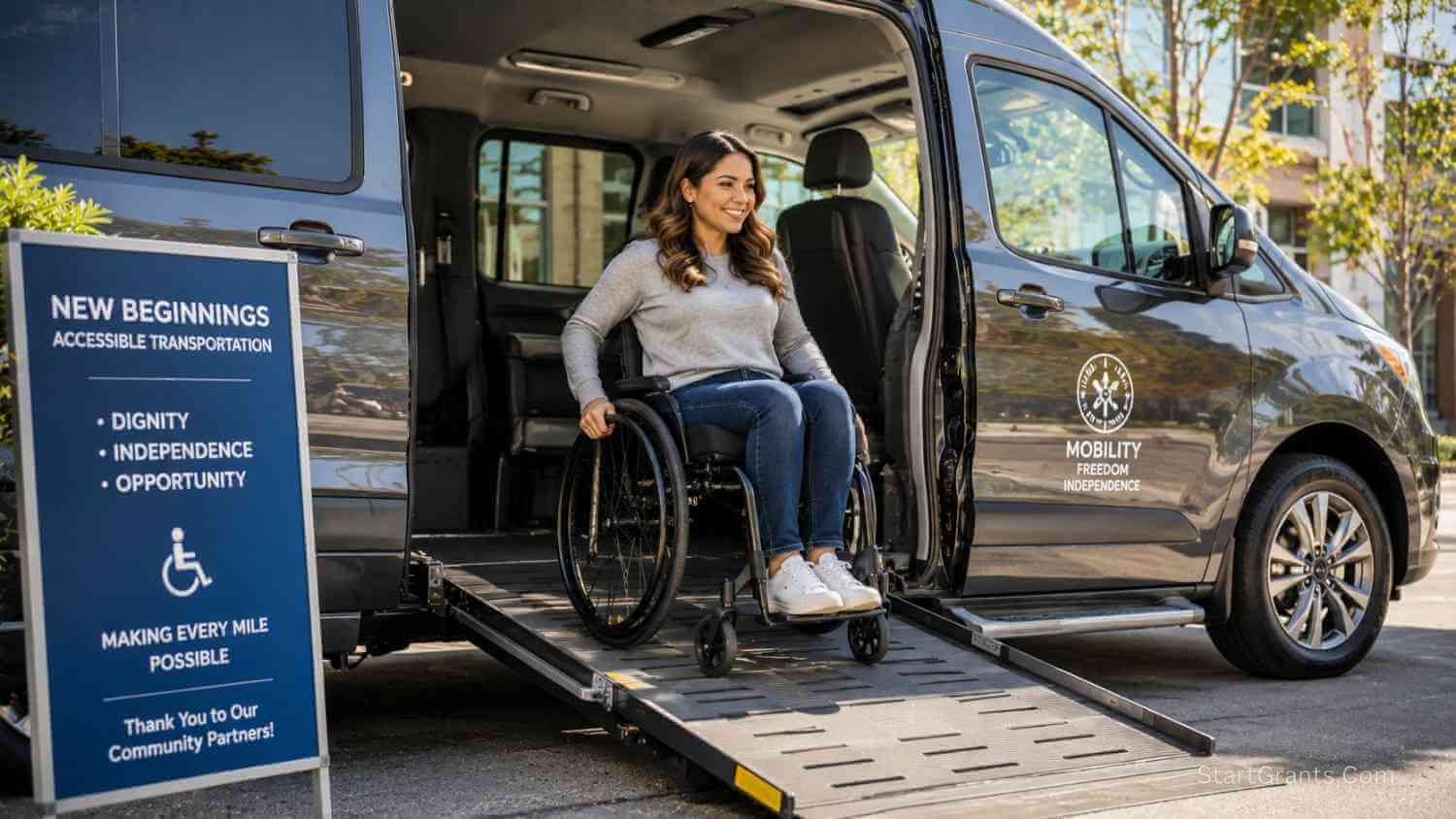
A fully modified wheelchair-accessible van can easily cost upwards of $80,000. For individuals with severe mobility impairments, securing government and non-profit grants is the only viable path to independent transportation.
Phase 1: Vocational Rehabilitation (The Employment Pipeline)
The single most powerful government entity capable of funding your mobility van is your state’s Department of Vocational Rehabilitation (VR). The federal government provides massive block grants to state VR agencies with one explicit goal: to help disabled Americans secure and maintain employment.
If you can prove that your lack of an accessible wheelchair van is the only barrier preventing you from commuting to a viable job (or traveling to the university required to get that job), the VR agency will intervene. You will work with a counselor to draft an Individualized Plan for Employment (IPE).
The Tactic: State VR agencies rarely purchase the “base vehicle” (the actual Toyota or Ford van). However, if you provide the base vehicle, the VR agency will frequently issue a massive grant to cover 100% of the cost of the structural modifications, ramps, and adaptive hand controls. If you are actively searching for funding to cover vehicle modifications for disabled drivers support and service, Vocational Rehab is your primary gateway. To understand the broader scope of adult employment resources, read: Financial Help for Disabled Adults.
Phase 2: Veterans Affairs (VA) Automobile Grants
If your disability is connected to your military service, you are entitled to the most robust and direct vehicle funding available in the United States. The Department of Veterans Affairs operates two distinct grants specifically for disabled veterans:
- The Automobile Allowance Grant: If you lost the use of one or both hands, feet, or suffer from severe visual impairment due to a service-connected injury, the VA provides a one-time grant (routinely exceeding $25,000, adjusted annually for inflation) to help you purchase a specially equipped vehicle. You apply using VA Form 21-4502.
- Adaptive Equipment Grant: The VA will also pay for the installation, repair, and replacement of adaptive equipment (like power steering modifications, lifts, and specialty seats) in your vehicle. Unlike the allowance, this grant can be used multiple times over the course of your life as equipment wears out.
For disabled veterans, modifying the vehicle is often paired with modifying the living space. Maximize your entitlements by exploring: Home Modification Grants for Disabled Veterans.
Phase 3: Medicaid Waivers & Pediatric Foundations
If you are not a veteran and do not qualify for Vocational Rehab, your next target is the healthcare system.
Medicaid HCBS Waivers
Traditional health insurance will not buy you a car. However, if you are enrolled in a Medicaid Home and Community-Based Services (HCBS) Waiver, the rules shift. These waivers are designed to keep disabled individuals integrated into the community rather than isolated in nursing homes. Many state HCBS waivers include specific funding categories for “Vehicle Modifications” to pay for wheelchair lifts, electronic tiedowns, and lowered floor conversions on a vehicle you already own.
Pediatric and Condition-Specific Grants
If the wheelchair van is required to transport a disabled child, specialized private endowments activate. Organizations like the Special Kids Fund and the Ralph Braun Foundation offer competitive national grants specifically to help families purchase wheelchair vans. For parents navigating the massive costs of pediatric disability, expand your funding strategies here: How to Get Government Grants for Disabled Children.
Furthermore, if your mobility loss is due to a specific neurological condition, organizations like the ALS Association or the National Multiple Sclerosis Society often provide emergency micro-grants for transportation. For those with severe spinal cord injuries requiring high-tech adaptive driving controls (like joystick or sip-and-puff steering), review: Help for Quadriplegics.
Pro-Tip: Securing Mobility Grants
Applying for a wheelchair van grant requires strategy and meticulous paperwork. If you want a clear roadmap on how to navigate local agencies and foundations to secure this life-changing funding without going into debt, watch this concise and practical guide: 6 Essential Steps To Securing Grants For Wheelchair Vans:
Phase 4: Manufacturer Mobility Rebates (The Hidden Discount)
Before you finalize any purchase, you must claim your manufacturer rebate. Almost every major auto manufacturer—including Ford, General Motors, Toyota, and Chrysler—operates a “Mobility Program.”
When you buy or lease an eligible new vehicle and have it customized with aftermarket adaptive mobility equipment (like a wheelchair ramp or scooter hoist), the manufacturer will issue a direct cash reimbursement, typically around $1,000 to $1,200, to offset the modification costs. You must submit your receipt from a certified mobility installer to the dealership to claim this rebate.
Synergy Note: If you are securing a van with a lift, you must also ensure your actual mobility device is covered. Learn how to get the actual chair funded in our guide: How to Get a Free Mobility Scooter for Disabled People.
Phase 5: The Muslim Perspective (Ihsan, Riba, Gharar, & Zakat Exemptions)
For a Muslim living with a disability in the United States, mobility is deeply tied to preserving human dignity (Karamah) and ensuring access to the community, employment, and the Masjid. The Islamic principle of Ihsan (excellence and compassion) mandates that society removes barriers for the disabled. However, because specialized wheelchair vans are astronomically expensive, the Western automotive industry often traps disabled individuals in predatory financial contracts that severely compromise their spiritual integrity.
The Trap of the 7-Year Auto Loan (Riba)
Because an accessible van can cost $80,000, mobility dealerships frequently push buyers into extreme 72-month or 84-month auto loans. To keep the monthly payment manageable, these loans carry massive amounts of compounding interest over their exceptionally long lifespans.
In Islamic jurisprudence, intentionally engaging in a contract that stipulates the payment of interest is explicitly Riba. Engaging in Riba is one of the most severe major sins in Islam and completely eradicates the spiritual Barakah (blessing) from the household’s wealth. A Muslim must adamantly refuse these predatory, interest-bearing auto loans.
This reality elevates the pursuit of federal and foundation Grants (Hibah) into a religious imperative. Because grants require no repayment, they are 100% Halal. If grants cover the modifications but the family still needs to purchase the base vehicle, they must seek Halal alternatives. This includes utilizing Qard Hasan (zero-interest benevolent loans) from family and the community, or seeking Islamic Murabaha (cost-plus) auto financing through specialized U.S. Islamic financial institutions. In a Murabaha contract, the financier buys the van and resells it to you at a fixed, pre-agreed markup paid in installments, avoiding the sin of compounding interest.
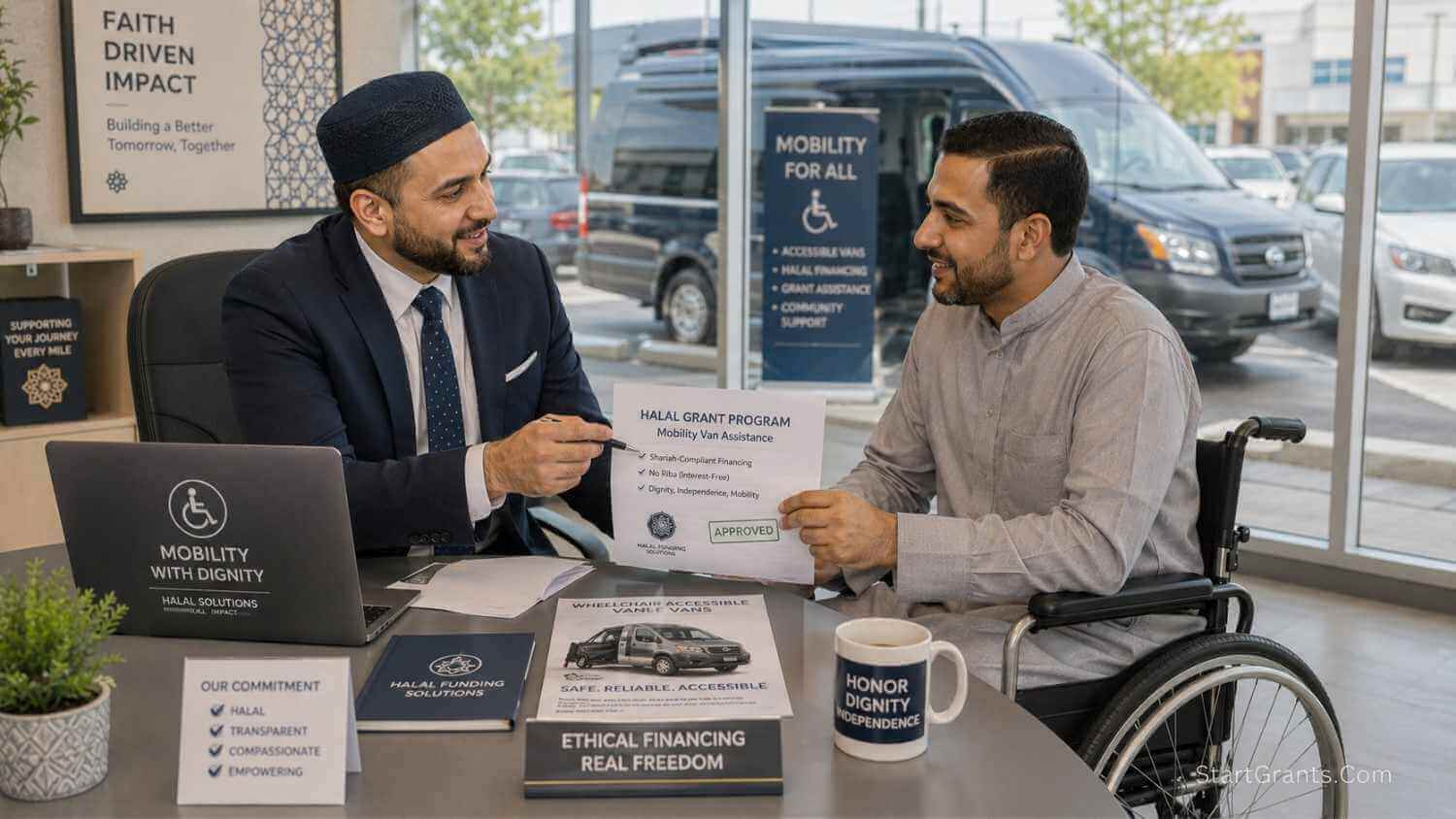
For the Muslim living with a disability, mobility is essential, but it must not come at the cost of spiritual purity. By fiercely pursuing Halal government grants (Hibah) and community Zakat, individuals can secure life-changing accessible vehicles without falling into the trap of Riba-bearing auto loans.
Gharar and Adaptive Auto Insurance
A specialized wheelchair van requires specialized auto insurance. You must insure not only the chassis of the vehicle but also the extremely expensive aftermarket ramps, lowered floors, and computerized driving controls. State laws and grant foundations mandate this comprehensive coverage. Traditional commercial auto insurance contains Gharar (excessive uncertainty) and elements of gambling.
Ideally, a Muslim should use Takaful (Islamic cooperative insurance). Because automotive Takaful is virtually non-existent in the U.S. market, contemporary Islamic scholars universally apply the principle of Dharurah (legal and operational necessity). This permits the Muslim driver to purchase the heavily mandated commercial policy to satisfy the law and protect their vital, $80,000 mobility asset from total ruin, provided the intent is survival and legal compliance, not speculative profit.
Zakat Exemptions and Eligibility (Al-Masakin)
If a Muslim successfully acquires an $80,000 wheelchair van, a massive theological fear often arises regarding wealth taxation: Do I have to pay a 2.5% wealth tax (Zakat) on this highly expensive vehicle every year?
The answer is a resounding, absolute No. In classical Islamic Fiqh, items required for basic personal use and daily necessity—including your primary residence, your clothing, your wheelchair, and your personal vehicle—are completely exempt from Zakat. The immense market value of the mobility van does not trigger a Zakat obligation because it is a tool for survival, not a hoarded asset meant to generate profit.
Furthermore, if a disabled Muslim is trapped at home and cannot afford a mobility van or the necessary modifications, they are considered financially constrained regarding their basic human needs. They fall directly into the Zakat-eligible category of Al-Masakin (the needy) or Al-Fuqara (the poor). It is entirely Halal and highly encouraged for the local Muslim community, Masjids, or Islamic relief organizations to allocate Zakat funds specifically to purchase or modify an accessible vehicle for them, restoring their independence and honoring their dignity as commanded by Islam.
Conclusion
Acquiring grants for vans for disabled persons in wheelchairs requires a highly strategic approach to bureaucracy. You must stop viewing the vehicle merely as a car, and start pitching it to the government as an employment tool (Vocational Rehab) or a medical necessity (Medicaid HCBS Waivers). By aggressively stacking VA benefits, manufacturer mobility rebates, and private foundation grants, you can successfully bridge the massive financial gap.
For the Muslim navigating a physical disability, this financial journey must be anchored in spiritual resilience. By fiercely rejecting the predatory trap of 7-year Riba-laced auto loans in favor of Halal grants (Hibah) and community Zakat, and by understanding your divine Zakat exemptions on personal mobility assets, you guarantee that your newfound independence on the road is matched by absolute spiritual purity.
Frequently Asked Questions (FAQs)
Q1: Will Medicare pay for a wheelchair-accessible van?
A: No. Traditional Medicare generally covers “Durable Medical Equipment” (DME) like wheelchairs or hospital beds used inside the home. They do not cover motor vehicles, nor do they cover the cost of modifying a vehicle with ramps or lifts. You must rely on Vocational Rehab, Medicaid waivers, or private grants.
Q2: Can I get a grant to buy a used wheelchair van?
A: Yes. Many private foundations and state Vocational Rehabilitation programs will authorize funding to modify or purchase a used wheelchair van, provided the vehicle passes a strict mechanical inspection to ensure it is structurally sound enough to safely support the expensive adaptive equipment.
Q3: What is the VA Automobile Allowance Grant?
A: It is a grant provided by the Department of Veterans Affairs to eligible disabled veterans who have lost the use of a limb or suffered severe visual impairment due to their service. The grant provides a one-time payment (adjusted annually, currently over $25,000) directly toward the purchase of a specially adapted vehicle.
Q4: Why is it Haram to use a standard 7-year auto loan to buy a mobility van?
A: Standard auto loans require the borrower to pay back the principal amount plus a percentage of compounding interest over the life of the loan. In Islamic jurisprudence, any transaction that involves the payment of interest is classified as Riba, which is strictly forbidden (Haram). Muslims must seek Halal alternatives like Hibah (grants), Qard Hasan (interest-free loans), or Islamic Murabaha auto financing.
Q5: Does a Muslim have to pay Zakat on an expensive wheelchair-accessible van?
A: No. According to Islamic law, assets that are used for personal, everyday necessity—such as your primary vehicle, home, and medical equipment—are completely exempt from Zakat, regardless of their market value. You only pay Zakat on liquid cash, gold, or business inventory once it reaches the Nisab threshold.
Disclaimer: The information provided in this article is for educational and informational purposes only. We are not a medical billing agency, a VA representative, or a religious fatwa council. Vocational Rehabilitation rules, VA grant limits, and Medicaid waiver availabilities are subject to constant legislative changes. Always consult with your state’s Department of Vocational Rehabilitation, a VA benefits counselor, and a qualified Islamic finance scholar regarding Halal auto financing, Riba avoidance, and specific Zakat exemptions.