
Last Updated: | Author: Munir Ardi
Disabled veterans may be able to get help adapting a home through several different programs, but the right option depends on the veteran’s service-connected disability, medical need, home, and the work proposed. The main VA options are the Specially Adapted Housing (SAH) grant, Special Home Adaptation (SHA) grant, Temporary Residence Adaptation (TRA) grant, and Home Improvements and Structural Alterations (HISA) benefit. For fiscal year 2026, the maximum SAH amount is $126,526 and the maximum SHA amount is $25,350. HISA has separate lifetime limits and medical requirements.
These programs are not interchangeable. SAH and SHA are housing grants for certain qualifying service-connected disabilities. TRA can help adapt a family member’s home where an eligible veteran is living temporarily. HISA is a VA health care benefit for medically necessary home improvements and structural alterations. Veterans searching for a “HISA grant application” should start with the local VA Prosthetic and Sensory Aids Service (PSAS), because HISA uses a medical prescription and a separate VA form. Selective nonprofit homebuilding programs may also help some severely injured veterans, but they are not federal grants and do not have universal eligibility.
For other disability-related assistance beyond home access, see our overview of disability and mental health grants. This article focuses on home modifications and adapted housing for veterans.
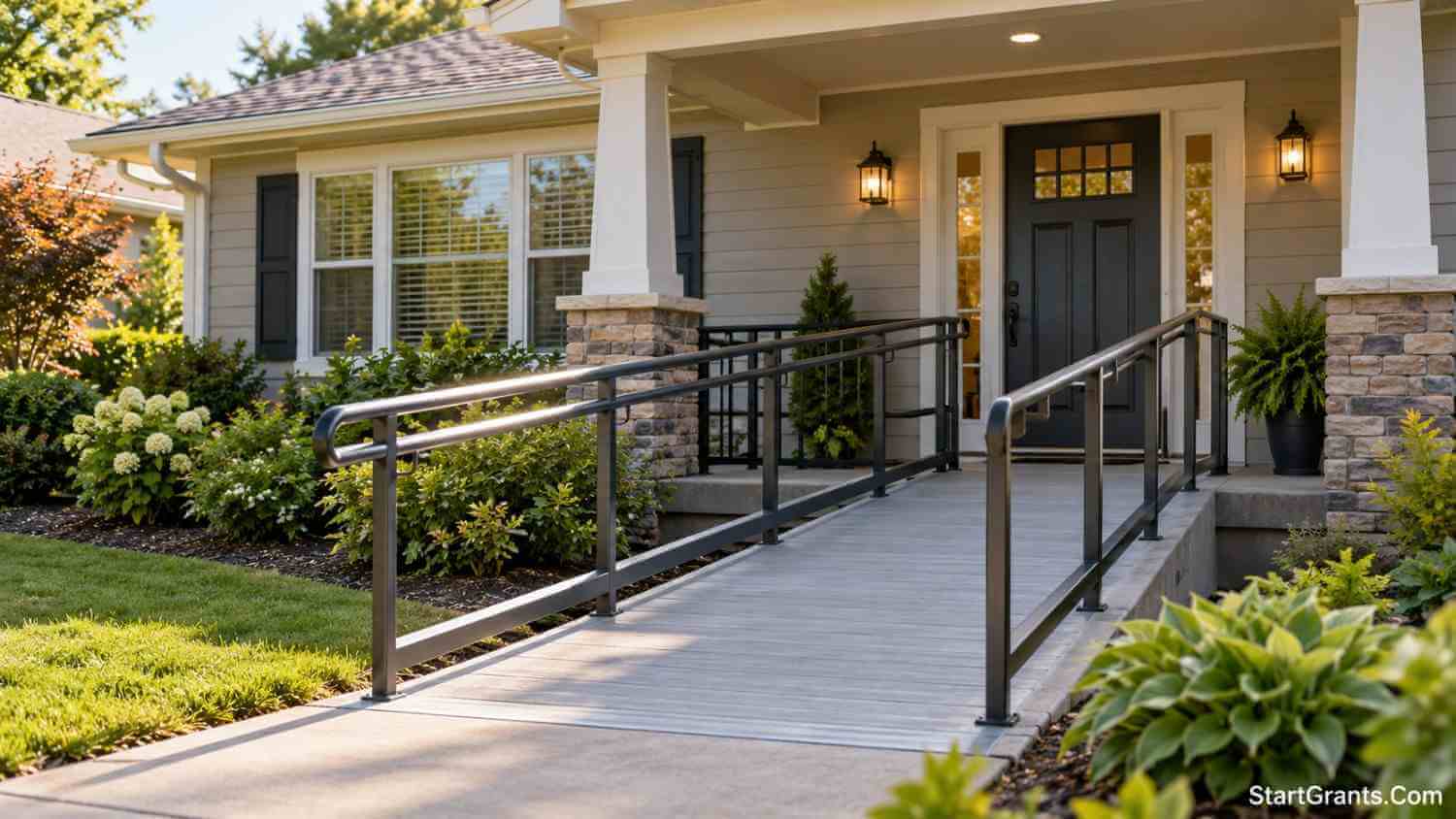
Compare VA Home Modification Programs
The amounts below are the published VA limits for fiscal year 2026, which ends September 30, 2026. SAH, SHA, and TRA maximums can be adjusted each fiscal year. Check the VA’s current page before applying, especially if you are reading this after September 30. “Up to” is a maximum, not a promise that every applicant will receive that amount.
| Program | FY 2026 maximum | Main eligibility and use |
|---|---|---|
| Specially Adapted Housing (SAH) | Up to $126,526 total | A qualifying service-connected disability and ownership of the permanent home. May help buy, build, or adapt that home. The benefit can be used up to six times over a lifetime. |
| Special Home Adaptation (SHA) | Up to $25,350 total | A qualifying service-connected disability; the veteran or a family member must own the permanent home. May help buy, build, or adapt the home. The benefit can be used up to six times over a lifetime. |
| Temporary Residence Adaptation (TRA) | Up to $50,961 for SAH-eligible veterans or $9,100 for SHA-eligible veterans | May help adapt a family member’s home where an SAH- or SHA-eligible veteran is living temporarily. The veteran does not have to own that temporary home. |
| Home Improvements and Structural Alterations (HISA) | $6,800 or $2,000 lifetime benefit | A VA health care benefit for medically necessary modifications to a primary residence. The amount depends on the disability and service-connection criteria. Renters need the owner’s written, notarized permission. |
Amounts and eligibility rules can change. The VA determines individual eligibility and the allowable amount for an approved project.
SAH Grant: Adapt or Build a Permanent Home
The SAH grant may help an eligible veteran or service member buy, build, or change a permanent home. The applicant must own or plan to own the home and have a qualifying service-connected disability. Current VA categories include loss or loss of use of more than one limb; certain lower-extremity conditions; blindness in both eyes at the specified level; certain severe burns; and loss or loss of use of one lower extremity after September 11, 2001, that affects balance or walking. Congress limits the last category to 120 grants per fiscal year.
For FY 2026, the SAH maximum is $126,526. The grant is not necessarily paid as one unrestricted lump sum. VA may approve eligible costs for an adapted home project, and the veteran can use the benefit up to six different times over a lifetime, subject to the applicable total limit. Review the current VA eligibility and funding rules for disability housing grants before committing to a purchase, builder, or construction schedule.
SHA Grant: Adapt a Home Under Different Eligibility Rules
The SHA grant is another benefit for a permanent home. The veteran or a family member must own or plan to own the home, and the veteran must meet a qualifying service-connected disability category. Current VA categories include loss or loss of use of both hands, certain severe burns, and certain respiratory or breathing injuries. The current list is different from older articles that may describe blindness as an SHA category, so use the VA’s current eligibility page.
The FY 2026 SHA maximum is $25,350. Eligible veterans may use the benefit up to six times over their lifetime, subject to the current total limit. The VA determines which improvements qualify and the amount approved for the project.
TRA Grant: Adapt a Family Member’s Temporary Home
If an eligible veteran is living temporarily in a family member’s home, the Temporary Residence Adaptation (TRA) program may help pay to adapt that home. The veteran must qualify for SAH or SHA, but does not need to own the temporary residence. For FY 2026, the VA lists maximum TRA amounts of $50,961 for a veteran eligible for SAH and $9,100 for a veteran eligible for SHA. Ask the VA housing grant team how TRA interacts with the veteran’s housing grant eligibility before starting work.
HISA Benefit: Eligibility and Application for Home Modifications
HISA is administered through the VA health care system and can cover medically necessary structural alterations to a veteran’s or service member’s primary residence. Examples include improving access to the home, making essential bathroom facilities usable, lowering kitchen or bathroom counters, installing permanent ramping near the home, or changing plumbing or electrical systems to accommodate home medical equipment.
The lifetime HISA limit is $6,800 for qualifying service-connected needs, certain conditions treated as service-connected, and certain non-service-connected needs when the veteran has a service-connected disability rated at least 50%. A $2,000 lifetime limit applies to other covered disabilities. The VA must determine medical necessity and the applicable amount. HISA does not cover every accessibility product or general renovation. The VA lists exclusions such as new construction, exterior decking, hot tubs, portable ramps, stair glides, and routine home maintenance.
HISA can apply to a rented primary residence, but the application package requires the property owner’s signed and notarized authorization. For HISA, the VA requires a prescription written or approved by a VA physician, a completed VA Form 10-0103, an itemized estimate, a color photograph of the area before work, and the landlord’s authorization when applicable. Contact the local VA Prosthetic and Sensory Aids Service (PSAS) for instructions and confirmation of available lifetime benefits. See the VA’s HISA program requirements and covered alterations.
How to Apply for VA Home Modification Assistance
- Describe the barrier and the needed work. Note which part of the home is difficult to access and what change could address it. For HISA, the proposed work must be medically justified. For SAH, SHA, or TRA, the project must fit the adapted housing benefit rules.
- Check which program fits your situation. Confirm whether the disability is service-connected, whether you own the permanent home or are staying temporarily with family, and whether the project is a structural alteration or a medical adaptation.
- Ask the right VA office before hiring a contractor. Contact the VA SAH program for SAH, SHA, or TRA questions. For HISA, contact your local PSAS. Ask what project review, estimates, inspections, and payment steps apply. Do not assume that an application automatically authorizes work or that the VA pays every contractor directly.
- Submit the correct application and supporting documents. You can apply online for a housing grant or submit VA Form 26-4555 by mail or in person for SAH or SHA. HISA uses VA Form 10-0103 and the medical prescription, estimate, photo, and owner permission described above.
- Wait for the VA’s decision and project instructions. The VA will send a decision for SAH or SHA. Confirm approval, eligible costs, and next steps with the responsible VA team before signing construction contracts or starting alterations.
The VA’s adapted housing application instructions explain online, mail, and in-person options. Keep copies of estimates, forms, prescriptions, photographs, landlord permissions, and VA decisions.
Nonprofit Home Programs for Some Severely Injured Veterans
Nonprofit programs may be an additional route for a small number of veterans, but they are selective charitable programs rather than guaranteed grants. Check current eligibility and application requirements directly with each organization.
Homes For Our Troops
Homes For Our Troops (HFOT) builds specially adapted custom homes for eligible severely injured post-9/11 veterans. Its current criteria include injury in the Iraq-Afghanistan war theater after September 11, 2001; retirement or pending retirement from service; VA SAH eligibility (with a limited SHA category); a background check; and use of the home as the veteran’s primary residence. Applicants also need to be prepared for homeowner costs such as upkeep, property taxes, insurance, and utilities. HFOT says it places a 10-year lien on the home; the veteran begins accruing equity in year six and reaches full equity after year ten. Review the organization’s current terms before applying.
Gary Sinise Foundation Custom Homebuilding
The Gary Sinise Foundation’s custom homebuilding program describes mortgage-free adapted homes with features such as smart-home technology, accessible bathrooms, and wider doorways. The foundation also has a preliminary application process and screens applicants. It is a charitable program, not a VA grant, and the foundation’s current application should be checked for eligibility and availability. See its official custom homebuilding program page.
Other Disability Assistance
If a home adaptation program does not cover another disability-related cost, our guide to financial help for disabled adults covers broader assistance categories. Those programs have different rules and generally do not replace VA approval for structural work.
A Muslim Perspective

Veterans who want to avoid interest-based borrowing may want to check nonrepayable benefits first and read the actual terms of any assistance before accepting it. VA benefits, nonprofit home awards, reimbursements, and loans are different arrangements; do not assume that every program has identical conditions or classify a specific agreement as halal or haram based on a general description.
If the terms raise a concern about riba, ownership, repayment, or a lien on the home, bring the written documents to a qualified Islamic-finance scholar. For the practical program rules, ask the VA or nonprofit administrator directly. This section is general information, not a religious ruling.
Save This Home Modification Benefits Checklist
- [ ] Write down the home access barrier and the modification you are considering.
- [ ] Confirm whether the relevant disability is service-connected and check the current SAH or SHA categories.
- [ ] Determine whether the property is your permanent home, a temporary family home, or a rental.
- [ ] Ask VA whether SAH, SHA, TRA, or HISA is the right program before hiring a contractor.
- [ ] For HISA, ask PSAS about the VA physician prescription, Form 10-0103, itemized estimate, photograph, and any owner authorization.
- [ ] Confirm the current fiscal-year maximum and your remaining lifetime benefit with VA.
- [ ] Get written approval and project instructions before beginning the work.
- [ ] Review any nonprofit eligibility requirements, homeowner costs, lien, or property conditions before applying.
Frequently Asked Questions
How much can a veteran receive from the SAH or SHA grant in 2026?
For fiscal year 2026, the VA lists a maximum of $126,526 for SAH and $25,350 for SHA. These are maximum amounts, not guaranteed awards, and VA may update the limits each fiscal year.
Can a veteran use the SAH or SHA grant more than once?
Yes. The VA says eligible veterans may use SAH or SHA funds up to six different times over a lifetime. Each use is subject to the applicable total maximum and the VA’s approval of the project.
Can a veteran qualify for HISA if the disability is not service-connected?
Possibly. The VA lists a $6,800 lifetime limit for certain qualifying conditions, including some non-service-connected needs when the veteran has a service-connected disability rated at least 50%. A $2,000 lifetime limit applies to other covered disabilities. The VA determines medical necessity and the applicable amount.
Can VA HISA pay for modifications in a rental home?
HISA may cover medically necessary alterations to a rented primary residence. The application requires the property owner’s signed and notarized permission, along with the other required VA documents. Confirm the project with the local VA Prosthetic and Sensory Aids Service before work begins.
Can a veteran use a VA housing grant in a family member’s home?
A veteran who qualifies for SAH or SHA may be eligible for a TRA grant to adapt a family member’s home where the veteran is living temporarily. The veteran does not have to own that temporary home. The VA determines eligibility and the amount available.
Will the VA pay my contractor directly?
Do not assume that the VA will pay a contractor directly. The payment and project-review process depends on the program and approved application. Ask the responsible VA office how funds are handled and what must be approved before you sign a contract or begin work.
Are VA home adaptation grants taxable?
The IRS lists grants for homes designed for wheelchair living among VA disability benefits that are excluded from gross income. For questions about a specific payment or tax return, check current IRS guidance or consult a qualified tax professional.
Important disclaimer: StartGrants.com is an independent information portal, not the Department of Veterans Affairs or a grant administrator. VA eligibility, fiscal-year maximums, approved costs, and nonprofit program requirements can change. Confirm current rules and get written project instructions from the VA or the relevant organization before beginning construction.