Last Updated: August 2026 | Author: Munir Ardi
Reaching retirement age should be a time of peace, but for millions of Americans, it brings a shocking healthcare realization: Original Medicare (Part A and Part B) does not cover routine dental care.
If you need a cavity filled, a tooth extracted, or a new set of dentures, Medicare will not pay a single cent. This coverage gap forces seniors living on fixed incomes to choose between buying groceries, paying for prescription medications, or fixing their teeth. As a result, many older adults suffer from severe oral pain, malnutrition due to the inability to chew, and dangerous infections.
However, you do not have to endure dental pain simply because you are on a fixed income. If you are searching for “dental grants for seniors on Medicare,” you have found the definitive 2026 blueprint. We will show you exactly how to bypass the Medicare dental gap using non-profit grants, state-funded programs, and alternative insurance strategies.
Before diving into specific grants for seniors, we highly recommend understanding the entire landscape of free dental care by reviewing our master guide on dental patient assistance programs.

Original Medicare does not cover routine dental care, leaving millions of seniors vulnerable. Fortunately, in 2026, specialized grants and non-profit programs exist to fill this critical healthcare gap.
Phase 1: Why Medicare Fails Your Teeth (And the Part C Loophole)
By federal law, Original Medicare only covers dental services that are deemed an absolute medical emergency linked to another life-threatening procedure. For example, if you need a tooth extracted in order to safely undergo radiation treatment for jaw cancer, Medicare Part A might cover it as an inpatient hospital expense. But for general decay, you are entirely on your own.
The Medicare Advantage (Part C) Solution
Before applying for charitable grants, your first line of defense is optimizing your Medicare coverage. During the Annual Enrollment Period, you can switch from Original Medicare to a Medicare Advantage Plan (Part C).
These are private insurance plans subsidized by the government. Unlike Original Medicare, almost all modern Medicare Advantage plans include built-in dental benefits.
- What it covers: Most Part C plans offer $1,000 to $2,500 in annual dental allowances, which can be used for cleanings, x-rays, fillings, and extractions.
- Action Step: Visit the official Medicare.gov Plan Finder to see if there is a zero-premium Medicare Advantage plan in your zip code that includes comprehensive dental coverage.
Pro-Tip: Navigating the Medicare Dental Gap
Understanding exactly what Medicare will and will not pay for is incredibly confusing. Many seniors are tricked into buying expensive supplementary insurance they do not actually need.Before you pay out of pocket, watch this crucial breakdown from the experts at Medicare School. They explain the strict 1980 federal statute that prevents Original Medicare from covering extractions, and exactly how you can use a Medicare Advantage (Part C) plan to unlock a hidden $1,000 to $2,500 annual “Dental Allowance”:
Phase 2: The Top Dental Grants & Free Programs for Seniors
If you cannot change your Medicare plan, or if your dental needs exceed your plan’s limits, you must turn to external grants and non-profit organizations dedicated to senior oral health.
1. Donated Dental Services (DDS)
Managed by the Dental Lifeline Network, the DDS program is the holy grail of dental assistance for seniors. They have a network of over 15,000 volunteer dentists and 3,000 dental labs across the United States who provide 100% free, comprehensive dental treatment to vulnerable adults.
- Eligibility: You must be over 65 years old, or permanently disabled, or medically fragile, and lack adequate income to pay for dental care.
- How to Apply: You can apply directly through the Dental Lifeline Network website. Be aware that waitlists in some states can be several months long due to high demand.
2. PACE (Programs of All-Inclusive Care for the Elderly)
PACE is a joint Medicare and Medicaid program that helps people meet their healthcare needs in the community instead of going to a nursing home.
- The Benefit: If you qualify for PACE, the program covers all Medicare- and Medicaid-covered care and services, including dentistry, at absolutely zero cost to you.
3. Federally Qualified Health Centers (FQHCs)
If you have an immediate infection or severe pain and cannot wait for a grant approval, you must locate an FQHC. These are community-based health centers funded by the federal government. They operate on a sliding fee scale based strictly on your income, meaning seniors living on social security can often receive extractions and fillings for just a few dollars.
Phase 3: Strategic Integration (Targeted Senior Needs)
Not all senior dental needs are the same. Depending on your specific situation, you must target the correct type of funding:
- Need False Teeth? Dentures are the most requested item by seniors, and they are incredibly expensive. Read our specialized guide to find specific grants for dentures.
- Are You a Veteran? If you served in the armed forces and are now a senior on Medicare, you have access to a completely different set of VA benefits. Explore our breakdown of dental grants for veterans.
- Is it a Medical Emergency? If you have an abscess or severe swelling and cannot wait for grant paperwork to process, read our tactical guide on how to fix bad teeth with no money immediately.
- Is the Procedure Just for Looks? Remember, charitable grants are for medical necessity. If you simply want whiter teeth or veneers, charities will reject you. Learn more about the difference in our article on cosmetic dentistry grants.
Phase 4: The Islamic Perspective (Medical Necessity, Insurance & Riba)
For elderly Muslims in the West, navigating healthcare financing can be spiritually stressful. When a senior urgently needs a $3,000 dental procedure and Medicare refuses to pay, dental offices will aggressively push them to sign up for medical credit cards (like CareCredit).
1. The Danger of Medical Credit Cards (Riba)
These third-party financing cards often advertise “0% interest for 12 months.” However, Islamic Jurisprudence (Fiqh) views these deferred-interest contracts as fundamentally flawed and dangerous. If you miss a single payment, retroactive compound interest (often exceeding 26%) is applied to the entire original balance. Engaging in Riba (usury) is strictly forbidden (Haram) in Islam, regardless of whether it is for medical care, unless it is a matter of absolute life or death and no other option exists.
2. The Halal Alternatives: Takaful & Zakat
Instead of risking Riba, Muslim seniors must explore permissible (Halal) avenues:
- Government Welfare (Medicare/Medicaid): Utilizing Medicare Advantage or state Medicaid programs is completely Halal. These function under the concept of social welfare and shared responsibility, heavily aligning with Islamic values of protecting the vulnerable.
- Utilizing Zakat: Dental care is not a luxury; it is a necessity for proper digestion and overall health. A senior citizen living on a fixed income who cannot afford medical care qualifies as Al-Fuqara (the poor) or Al-Masakin (the needy). It is entirely permissible, and highly encouraged, to request a grant from a local Mosque’s Zakat fund to pay for necessary extractions or dentures.
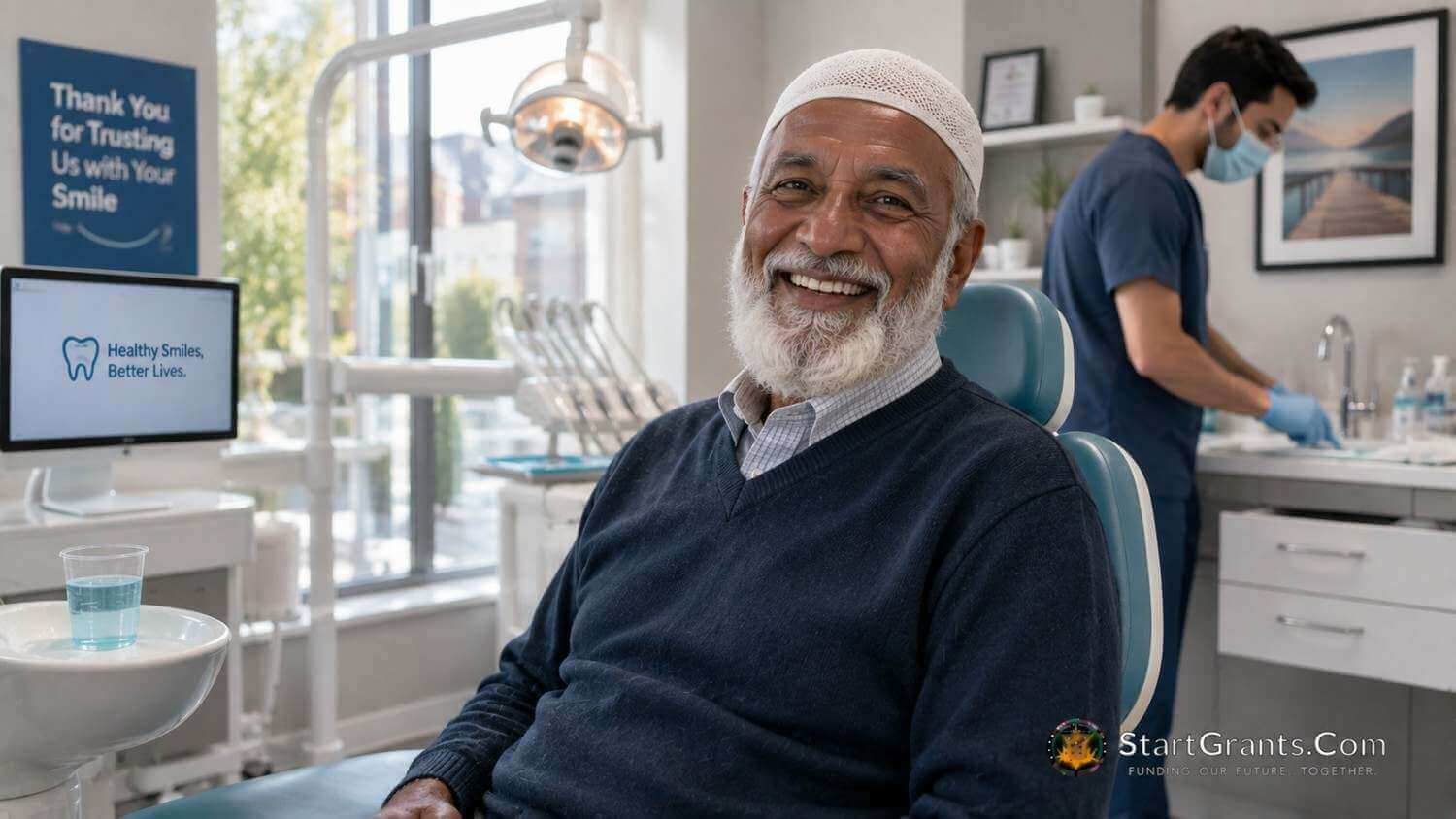
Utilizing state-funded social welfare programs like Medicare Advantage or community Zakat for medical necessities is entirely Halal, protecting Muslim seniors from falling into predatory, interest-bearing medical credit cards.
Conclusion: Your Dental Action Plan
Finding “dental grants for seniors on Medicare” requires patience, as waitlists for charitable care can be long. Do not wait until you are in unbearable pain to start the application process.
Execute these steps today:
- Check Your Plan: Verify if you have Original Medicare or a Medicare Advantage plan. If you have Advantage, call the number on the back of your card to ask about your dental allowance.
- Apply to DDS: Visit the Dental Lifeline Network website and submit an application for the Donated Dental Services program in your state.
- Locate a Clinic: Find the nearest Federally Qualified Health Center (FQHC) so you know exactly where to go if a sudden dental emergency strikes while you are waiting for grant approval.
Aging should not mean living in pain. By combining federal health centers with non-profit grants, you can secure the dental care you need to stay healthy and dignified.
Comprehensive Frequently Asked Questions (FAQs)
Q1: Why doesn’t Original Medicare cover dental care?
A: When the Medicare program was created in 1965, dental care, vision, and hearing were legally excluded from the statute, as they were not viewed as standard medical care at the time. Changing this requires an act of Congress. Currently, Original Medicare (Parts A & B) will only cover dental procedures if they are inextricably linked to a covered medical procedure (like jaw surgery).
Q2: What is the difference between Medicare and Medicaid for dental care?
A: Medicare is a federal health insurance program primarily for people over 65, regardless of income, and it excludes routine dental care. Medicaid is a joint federal and state program for low-income individuals. Unlike Medicare, most state Medicaid programs provide extensive dental coverage for adults, including extractions and dentures.
Q3: How do I apply for the Donated Dental Services (DDS) grant?
A: You must apply through the Dental Lifeline Network. Go to their website, select your state, and download the application. You must meet the criteria of being over 65, permanently disabled, or medically fragile.
Q4: Can I use a Medicare Advantage plan to get dentures?
A: Yes, many Medicare Advantage (Part C) plans offer comprehensive dental coverage that includes partial or full dentures. However, each plan has an annual maximum payout (e.g., $1,500). Since dentures can cost more than this limit, you may still have some out-of-pocket costs.
Q5: Does AARP offer dental grants for seniors?
A: AARP itself does not give away free dental grants. However, they do offer discounted dental insurance plans (managed by Delta Dental) for their members. This is an insurance policy you must pay a monthly premium for, not a free grant.
Q6: What is a Federally Qualified Health Center (FQHC)?
A: An FQHC is a community health center that receives federal funding to provide care to underserved populations. They offer dental services on a sliding fee scale. This means the amount you pay for your dental care is based strictly on your monthly income; if your income is very low, the cost is minimal.
Q7: Are there specific grants for senior veterans?
A: Yes. If you are a veteran enrolled in VA healthcare, you may qualify for full dental benefits through the Department of Veterans Affairs, depending on your disability rating. If you do not qualify for VA dental, non-profits like the “Smiles for Veterans” program offer targeted grants.
Q8: Is it permissible in Islam to accept Medicaid or Medicare benefits?
A: Yes, absolutely. Medicaid and Medicare are social welfare programs funded by tax dollars designed to protect the health of citizens. Utilizing these benefits is completely Halal and is considered a collective societal protection (similar to the concept of Takaful).
Important Disclaimer: StartGrants.com is an independent information portal. We are not a government agency and do not provide direct grants or products. Always verify the current status of programs with the providing organization.