
Last Updated: | Author: Munir Ardi
A charitable wedding can be simple: invite guests who wish to give to support a verified charity, make a modest contribution as a couple, or arrange for suitable food and flowers to be reused. None of those choices requires guests to donate, and each should fit the couple’s budget, the charity’s needs and the wedding arrangements. These eight tips explain how to make the giving clear, voluntary and practical.
This page is about charity choices within a wedding. For a broader fundraiser with a campaign goal, organizers and ongoing donor outreach, see how to get donations for a fundraiser. No U.S. wedding-cost average, food-waste total or donation conversion rate is assumed here; your own plans matter more than a headline figure.
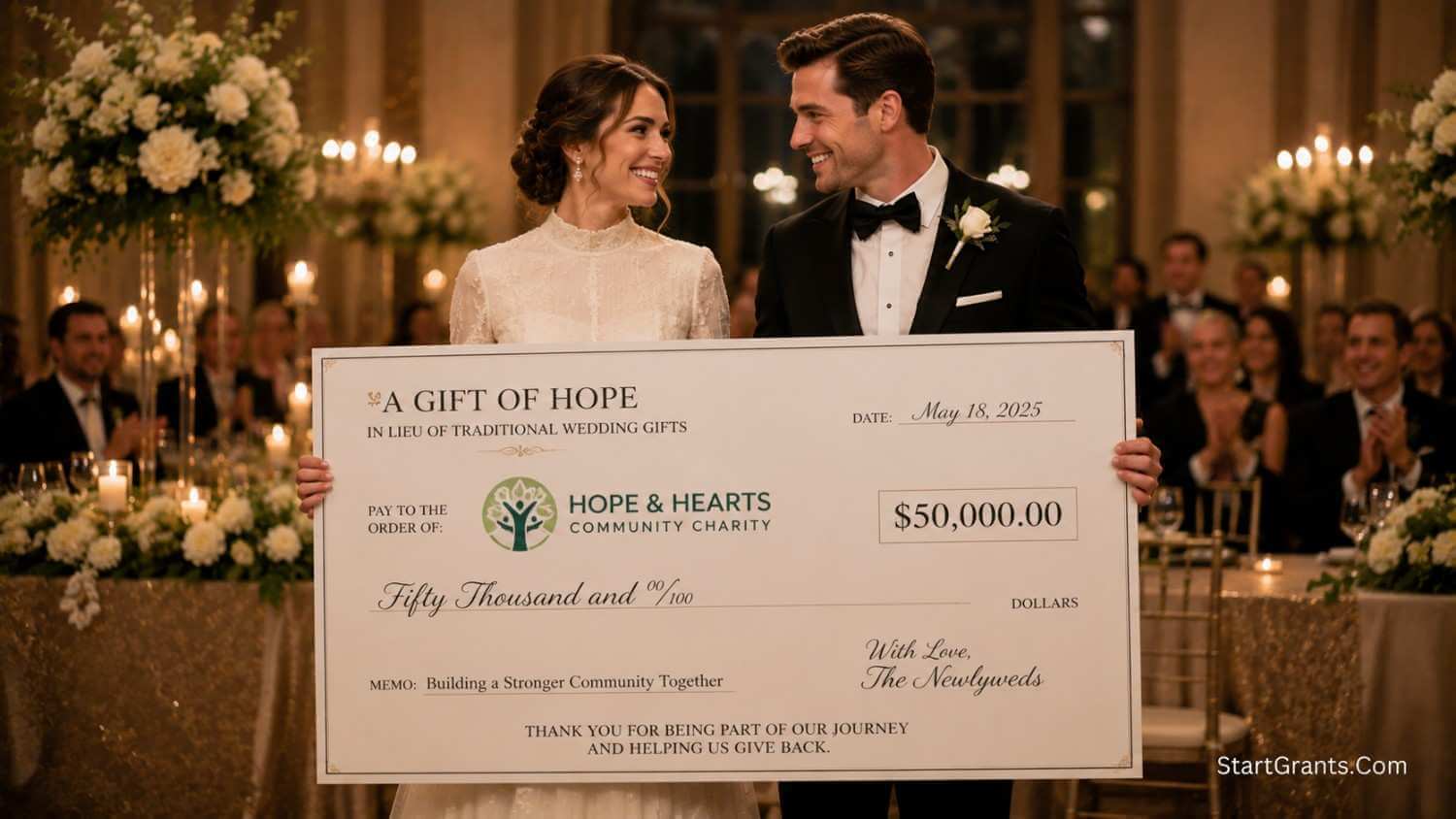
A charity registry is one option for couples who would like to invite voluntary giving.
1. Choose a cause together, then verify the recipient
Begin with a cause both partners genuinely support, such as a local food pantry, animal shelter or education program. Ask the organization whether it welcomes a wedding fundraiser, how donations will be used and whether it can create a campaign page. Review its own website and recent information. The FTC guidance on checking a charity recommends researching a charity and its payment routes before giving; for U.S. federal eligibility to receive deductible contributions, use the IRS Tax Exempt Organization Search. A charity’s mission may appeal to you even when a particular gift does not qualify for a tax deduction.
Check the details that guests will see: legal organization name, campaign purpose, donation URL, whether any platform fees apply and who issues acknowledgments. If multiple organizations are involved, specify which one actually receives each payment. Ask whether the charity has a current project your guests can choose, but do not promise restricted funding or results the organization has not approved.
2. Create a clear, optional charity registry
Instead of a household registry, or alongside one, invite guests who would like to give to use the charity’s approved donation page. When possible, link to a page controlled by the qualified organization or an authorized fundraising platform that clearly identifies the recipient. A link on your wedding website is usually enough; it need not be a one-click checkout embedded in the RSVP form.
Explain what happens after guests click: where payment goes, whether names are shared with the couple, and who answers questions about refunds. Do not assume a personal crowdfunding page becomes a tax-deductible charity registry because it mentions a nonprofit. If a separate nonprofit-led online campaign would be helpful, see how crowdfunding for nonprofits works. Check the current platform and charity terms before sharing a link.
Keep giving separate from RSVPs
An RSVP asks whether someone can attend. A gift is voluntary. Avoid making the donation amount visible to other guests, collecting payment information yourself, or requiring a contribution to confirm attendance. A simple “Donate directly to [charity]” link gives guests a clear route without disclosing their plans to the entire wedding party.
3. Make the giving link easy to use
Test the link on a phone and a desktop computer, and ask a trusted person to verify that the payment screen displays the intended recipient. Provide the charity’s name in plain text in case a guest would rather find it directly. You may add a QR code at the reception, but include a readable URL as an alternative. Retest the link close to the wedding date and avoid copying payment instructions into unprotected documents.
If you run a wedding website yourself, a button could point to the charity’s donation page. Our article on adding a PayPal donation button to a fundraising website covers that separate technical question. Do not install a payment button in your personal PayPal account while describing the resulting payments as gifts received by the charity.
4. Tell guests what you mean without pressuring them
A short note on a wedding website or invitation insert may say: “Your presence is a gift to us. If you would like to mark the occasion with another gift, we invite you to consider a donation directly to [charity name] through its website. Please give only if you wish.” Adapt this to your own voice. Some guests may still bring a traditional gift; thank them graciously.
For friends and family who prefer email, explain why you chose the cause and provide the verified link once. Do not imply that guests are obligated to fund a target or that their names and amounts will be made public. If you need help structuring a longer campaign message, see our fundraising email guide; a wedding note generally should be shorter and less urgent than a public appeal.
5. Plan safe reuse for suitable food and flowers
Ask your caterer and venue before the event whether they permit surplus food to be donated, which items might be suitable, how they will be held, and who can pick them up. Ask the receiving food program what it accepts; do not show up the next morning with food that spent the night at unsafe temperatures. Storage, packaging, transport and state or local food rules all matter. The USDA guidance on leftovers and food safety explains the importance of prompt handling of leftovers. Good-faith food donation protections do not remove the need to follow applicable food-safety standards.
Florists may be able to prepare centerpieces for a care home or community organization, but verify that the recipient welcomes flowers and that fragrance, allergies, pests and transport are addressed. Arrange an assigned volunteer or vendor to handle them; do not leave this task to exhausted guests after midnight. Our guide to useful in-kind donations explains why a recipient’s actual needs come before the presumed value of donated goods.
6. Consider a nonprofit venue for its mission
A museum, garden, cultural center or community institution may rent out space and use the revenue to support its work. Ask who owns the venue, what the rental fee covers, whether outside vendors are allowed, and which insurance and accessibility rules apply. Confirm the event fits your budget and the venue’s mission. Choosing such a venue can support its operations, but that alone does not turn your rental payment into a deductible charitable contribution.
If you pay for goods or services at a charity event, the deductible portion, if any, generally excludes the value of what you receive. IRS Publication 526 explains the distinction between a contribution and a payment for benefits. Ask the organization and your tax adviser about any separate, genuinely voluntary gift; never claim the full venue invoice as a donation merely because the venue is a nonprofit.
7. Make tax language accurate for guests
If guests donate directly to an eligible charity, the charity or authorized processor should document what it actually receives. The donor’s ability to claim a deduction depends on the recipient, the donor’s tax situation, records and any goods or services received. The IRS written acknowledgment rules describes written acknowledgments for contributions of $250 or more. Sharing a charity link is useful; it does not guarantee every guest a tax break, and gifts to a couple’s personal account are not gifts the guests made to the charity.
Acknowledge guests’ generosity without telling them what to enter on their tax returns. If a guest asks about a receipt, direct them to the recipient charity. If an invitation offers event benefits in return for a payment, ask the charity about the applicable rules before using “tax-deductible” in promotional text.
8. Make room for sadaqah in a Muslim wedding

Thoughtful hospitality and voluntary giving can be part of a modest walima.
Couples planning a nikah and walima may choose a comfortable budget and invite guests to give sadaqah to a cause they value. A local food program, reliable education project or ongoing community service can be more useful than an elaborate gesture made for publicity. Consider ways to include people who might otherwise feel excluded, while respecting the couple’s circumstances and the dignity of invited guests.
Discuss wedding expenses and any borrowing before making financial commitments. If a financing agreement raises questions about riba, read its actual terms and consult a qualified Islamic finance adviser; do not describe every wedding, loan or insurance policy with one universal religious verdict. If the charity uses the phrase sadaqah jariyah or offers an ongoing project, confirm how it maintains and reports on that project rather than promising a specific spiritual result for the couple or the donors.
Zakat has separate eligibility and fund-use considerations. A wedding registry is not automatically suitable for zakat because the chosen charity is Muslim-led. If a guest wants to give zakat, direct them to the charity’s own zakat-eligible program and advise consultation with a qualified scholar when uncertain. The couple should not receive zakat earmarked for beneficiaries into their personal account.
A Muslim Perspective
A charitable wedding is an opportunity to practice generosity and responsible stewardship without making the celebration a test of anyone else’s finances. Couples may choose sadaqah, hospitality, a restrained budget or a project that has ongoing benefit; none guarantees a particular religious outcome. Explain donor intent and payment routes clearly, honor privacy, and seek qualified religious and financial guidance when questions about zakat, riba or insurance arise.
Compare the eight ideas before you commit
| Choice | First check | Avoid assuming |
|---|---|---|
| Charity registry and link | Organization identity and payment recipient | A personal account is a charity account |
| Guest note | Voluntary wording and accessible URL | Every guest wants to give |
| Food and flowers | Recipient acceptance and safe logistics | All leftovers can be donated |
| Nonprofit venue | Rental terms and total cost | A rental fee is a tax-deductible gift |
| Faith-based giving | Charity’s actual fund and eligibility policy | Every project qualifies for zakat |
Payment methods, venue terms and food acceptance policies can change. Confirm them with the relevant organization before the event.
Let guests celebrate and choose
Pick the ideas that suit your wedding and the charity’s genuine needs. Some couples will offer one direct donation link; others will arrange a safe reuse of flowers or food. A charitable choice is most useful when the guest understands it, the recipient agrees to it and the couple can carry it out without creating debt or pressure.
Frequently Asked Questions
How do we tell guests we would prefer charity donations to gifts?
Use a brief, warm note saying that attendance is enough and any donation is optional. Name the charity and link to its verified giving page. Thank guests who choose other gifts as well.
Are wedding charity registry donations automatically tax-deductible?
No. Eligibility depends on who receives the payment, the donor’s circumstances and what the donor receives in return. Guests can check a U.S. charity’s status and ask it for an acknowledgment of contributions it actually receives.
Can we donate leftover catered food after the reception?
Sometimes, if the caterer, venue and receiving organization agree in advance and the food is handled safely under applicable rules. Do not assume food left out overnight is suitable for donation.
Does renting a nonprofit wedding venue count as a charitable contribution?
Paying for a venue generally buys the use of the space. A separate voluntary contribution may be treated differently; consult the organization and a tax adviser before claiming a deduction.
Should we ask guests to send gifts to our personal account for later donation?
For clarity, a guest who wants to support a charity should usually use the organization’s approved donation route. A payment into the couple’s account is not the same as a payment the guest made to the charity.
Must a Muslim couple borrow money to host a charitable walima?
No. Couples can choose a celebration that fits their means. If borrowing or insurance raises religious or financial questions, review the actual agreement with appropriately qualified advisers.
Can guests give zakat through a wedding registry?
Only if the chosen organization offers an appropriate zakat-eligible program and the gift meets the relevant conditions. The couple should not label an ordinary wedding fundraiser zakat eligible without checking with the charity and qualified religious advisers.