
Last Updated: | Author: Munir Ardi
Air conditioning can be a health and safety need during extreme heat, but there is no single federal program that gives every low-income household a free AC unit. Assistance depends on where you live, household income, available funding, housing status, and whether you need help with an electric bill, an emergency repair, a room air conditioner, or a whole-home upgrade.
This guide explains 33 legitimate places and strategies to check in 2026. Start with the options that match your immediate problem, and use our energy-efficiency assistance guide for homeowners if you are planning a larger home project.
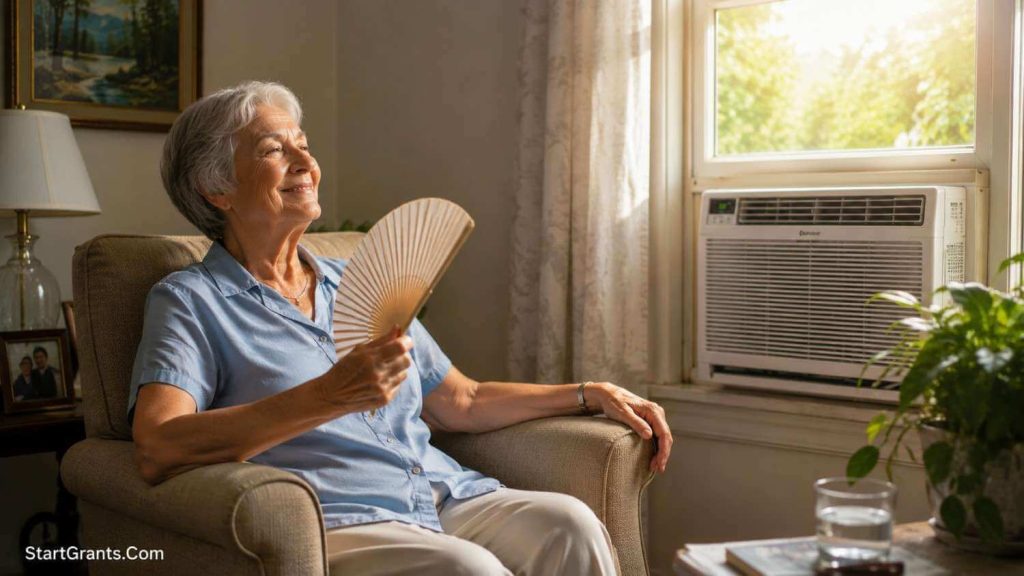
Extreme Heat Can Become a Medical Emergency
Older adults, infants and children, people with disabilities, outdoor workers, and people with certain chronic conditions can face greater heat-related risk. The Centers for Disease Control and Prevention advises people without home air conditioning to spend time in air-conditioned places and not to rely only on fans when temperatures are very high.
Heavy sweating, headache, nausea, dizziness, weakness, thirst, or muscle cramps can be signs of heat-related illness. Confusion, slurred speech, seizures, loss of consciousness, or a very high body temperature can indicate heat stroke. Call 911 immediately if heat stroke is suspected, move the person to a cooler place, and begin cooling while waiting for emergency help.
Understand What “Air Conditioning Assistance” Can Mean
One program may pay part of an electric bill, while another may provide a room unit, repair central equipment, improve insulation, or offer a rebate after preapproval. These benefits are not interchangeable. Before applying, identify which outcome you need:
- an immediate safe place to cool down;
- protection from utility disconnection;
- help with a current or overdue electric bill;
- repair of a failed air conditioner;
- a room AC, central AC, or heat-pump replacement;
- air sealing, insulation, ducts, or other work that reduces cooling costs; or
- a rebate or affordable payment option for a planned upgrade.
33 Ways to Find Financial Assistance for Air Conditioning
Emergency cooling and energy-bill help
- Apply for regular LIHEAP cooling assistance. The Low Income Home Energy Assistance Program can help with heating or cooling costs, but each state, tribe, or territory decides which benefits it offers. Use the official LIHEAP contact directory or call the Energy Assistance Hotline at 1-866-674-6327.
- Ask about LIHEAP crisis assistance. A shutoff notice, disconnected electricity, failed cooling equipment, or a heat-related medical risk may meet the local definition of an energy crisis. Deadlines, documentation, and response times vary.
- Ask whether LIHEAP covers energy-related repairs. Federal rules allow grantees to use some funds for low-cost energy-related home repairs, including work involving a broken or inefficient air conditioner. Grantees are not required to offer this benefit.
- Check for a seasonal room-AC benefit. Some state or local LIHEAP programs distribute or install window or portable air conditioners for approved households. This is not a nationwide benefit, and inventory may be limited.
- Contact the local Community Action Agency. Many Community Action Agencies administer LIHEAP, Weatherization, or flexible local crisis funds. Use the federal Community Services Block Grant page to reach the “Find Your CAA” directory.
- Request a utility payment arrangement. Ask the utility to divide overdue charges into installments. Get the amount, due dates, down payment, late fees, and what happens after a missed payment in writing.
- Ask about an arrearage-management program. Some utilities or states forgive part of an old balance as the customer makes current monthly payments. Availability and completion rules are local.
- Check the utility’s hardship or charitable fund. Utilities sometimes partner with nonprofits or accept customer donations for emergency energy assistance. These funds are separate from LIHEAP and may use different income rules.
- Consider budget or levelized billing. This does not reduce the total bill, but it can spread seasonal peaks across the year. Ask how often the utility recalculates the payment and whether a large settlement balance can become due.
- Review your state’s summer disconnection protections. Some states restrict shutoffs during extreme temperatures or specified months; others do not. Use the LIHEAP Clearinghouse state policy directory and confirm the current rule with the utility commission.
- Ask about medical-certification protection. Some jurisdictions delay disconnection when a licensed medical professional certifies a serious health risk. A medical letter does not automatically erase the balance or create a national right to free electricity.
- Use an emergency cooling center. Contact the local health department, emergency-management office, library system, or 211 for current locations and hours. Ask about transportation, accessibility, pets, medications, and overnight options before traveling.
- Call 211 for local referrals. United Way’s 211 network may identify cooling centers, utility funds, transportation, fans, shelters, or local AC programs. Listings and funding change frequently, so call the provider before visiting.
Repair, replacement, and energy-efficiency programs
- Apply for the Weatherization Assistance Program. WAP is a service program for qualifying low-income households, not a cash grant. Contact the provider listed in the DOE application directory.
- Let the WAP energy audit evaluate the cooling system. DOE lists cleaning, tuning, repairing, or replacing heating and cooling systems among possible whole-house measures. Replacement must meet the local program’s audit, cost-effectiveness, health-and-safety, and funding rules; it is not guaranteed because equipment is old. WAP may also evaluate an inefficient refrigerator when replacement would satisfy the local program’s savings rules; see our free and discounted refrigerator assistance guide for other possible routes.
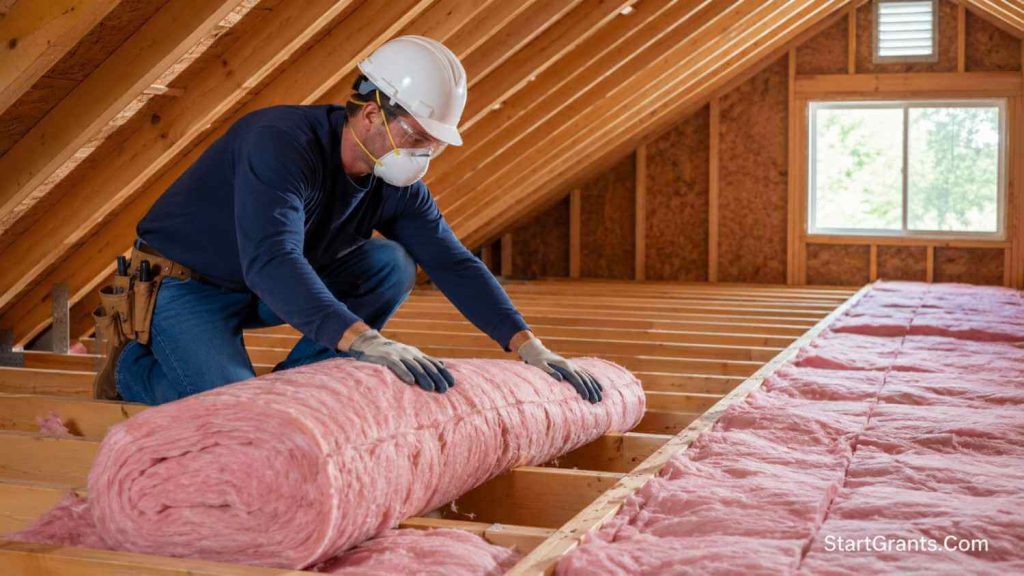
- Use WAP for insulation and air sealing. Reducing unwanted heat gain can make a smaller cooling system more effective and lower operating costs. Read our home-insulation assistance guide for related options.
- Ask WAP to evaluate ducts and controls. Depending on the audit and state plan, weatherization may address duct leakage, duct insulation, thermostats, and other measures that affect cooling performance.
- Investigate the HOMES rebate program. HOMES can include heating and cooling equipment in a whole-home project designed to achieve measurable energy savings. DOE describes rebates of up to $8,000, but the actual amount, contractor rules, and availability are determined by the administering jurisdiction.
- Check current HEEHR heat-pump rebates. The High-Efficiency Electric Home Rebate program can offer up to $8,000 toward an eligible heat pump in participating jurisdictions, subject to household income, project cost, product rules, and funding. The maximum is not automatic.
- Understand the 2026 HEEHR restriction. Under DOE guidance effective May 29, 2026, new HVAC replacement rebates generally must upgrade existing electric equipment to more efficient electric equipment. Do not assume the program will pay to replace a gas, oil, or propane system with a heat pump. Previously reserved projects may receive transitional treatment.
- Search your state energy office. States may operate rebates, grants, revolving loan funds, or income-qualified efficiency programs outside LIHEAP. Confirm current funding and whether preapproval is required before purchasing equipment.
- Search utility efficiency rebates by ZIP code. The official ENERGY STAR Rebate Finder lists offers from participating utilities and program sponsors. Verify the exact model number, installation date, contractor, and application deadline.
- Ask about an income-qualified utility HVAC program. Some utilities provide deeper rebates, no-cost tune-ups, or equipment replacement for qualifying customers. Enrollment in LIHEAP or another benefit may help establish eligibility, but rules vary.
- Check city or county housing-rehabilitation programs. Local governments may use HUD Community Development Block Grant or HOME funds for owner-occupied rehabilitation. An unsafe cooling system may be eligible under a local program, but HUD does not send a direct national AC grant to homeowners.
- Ask about USDA Section 504 in an eligible rural area. Very-low-income owner-occupants may use Section 504 loans for repairs or modernization. Grants are limited to qualifying homeowners age 62 or older and must remove health and safety hazards. The current national caps are $40,000 for a loan and $10,000 for a grant, with a higher grant cap in eligible presidentially declared disaster areas. AC work must be approved as part of an eligible project; it is not automatic.
- Improve windows or shading when the audit supports it. Window replacement is not automatically funded, but approved envelope measures can reduce solar heat gain and cooling demand. See our energy-efficient window assistance guide.
What Is the SCE Energy Savings Assistance Program?
Southern California Edison’s Energy Savings Assistance Program provides approved energy-saving improvements to qualifying customers within SCE’s service territory. Depending on the home assessment, existing equipment, income eligibility, housing status, and current program rules, available measures may include room or central air-conditioning equipment, heat pumps, evaporative coolers, or other efficiency improvements. Renters may need property-owner authorization, and some HVAC projects may involve a property-owner copayment. Verify eligibility and available measures directly on the official SCE Energy Savings Assistance page before expecting equipment replacement.
Housing, aging, disability, and community resources
- Contact the Area Agency on Aging. Older adults and caregivers can ask the local aging network about home-repair funds, cooling centers, utility assistance, transportation, or nonprofit referrals. Services and age or income rules vary by area.
- Contact a Center for Independent Living. People with disabilities can ask a local CIL about benefits counseling, advocacy, emergency resources, or home-modification referrals. CILs do not universally purchase air conditioners, but they can help identify accessible local options.
- Notify the landlord or property manager in writing. Tenants should document a failed installed cooling system and request repair. Whether a landlord must provide or repair air conditioning depends on the lease, housing program, and state or local law. Do not deduct repair costs from rent without reliable local legal guidance.
- Contact the public housing agency or subsidized-housing manager. Residents can report failed property-owned cooling equipment and request information about maintenance, emergency transfers, or disability-related accommodations. Approval depends on the property, program, and individual circumstances.
- Ask established local charities. A Salvation Army, St. Vincent de Paul, Catholic Charities, community foundation, or other nonprofit may offer utility pledges, fans, room AC units, or emergency funds. Services are local and should never be presented as guaranteed nationwide benefits.
- Ask a hospital social worker or community health worker. If a patient is medically vulnerable to heat, a care team may know local medical-needs funds, utility protections, aging services, or equipment charities. A clinician’s letter can support an application but does not guarantee priority or approval.
- Seek local faith-community or mutual-aid help. Mosques, churches, synagogues, neighborhood groups, and mutual-aid networks may help with a bill, safe temporary lodging, transportation, a room unit, or contractor referrals. Confirm whether help is a gift or creates a repayment obligation.
Which Federal Program Should You Try First?
| Your immediate need | Best first contact | What to ask |
|---|---|---|
| Dangerously hot home today | 211, health department, emergency management | Cooling-center hours, transport, accessibility, and emergency shelter |
| Shutoff notice or overdue bill | Utility and LIHEAP | Crisis benefit, payment plan, hardship fund, and shutoff protection |
| Broken room or central AC | LIHEAP, CAA, WAP, utility | Repair benefit, equipment program, audit, and contractor preapproval |
| High bills and an inefficient home | WAP or state energy office | Energy audit, insulation, air sealing, ducts, and equipment measures |
| Planned heat-pump upgrade | State HEEHR/HOMES administrator and utility | Program status, product list, income rules, preapproval, and stacking |
Important 2026 Tax-Credit Correction
Older articles may claim a federal credit of up to $600 for central air conditioning or $2,000 for a heat pump through 2032. Do not use those amounts to budget a new 2026 installation. The IRS currently states that the Energy Efficient Home Improvement Credit applies only to qualifying improvements placed in service through December 31, 2025.
Households that completed eligible work in 2025 should use the 2025 rules and tax forms or consult a qualified tax professional. State and utility incentives may still apply in 2026, but they are separate from the expired federal credit.
If your planned project is primarily rooftop solar rather than cooling equipment, use our government solar-panel assistance guide. Solar rebates, utility incentives, ownership requirements, financing terms, and tax treatment differ from HVAC assistance.
How to Apply Without Losing Time or Money
- Describe the exact problem. State whether you need bill assistance, have a shutoff notice, lack safe cooling, or need equipment repair.
- Gather only the documents requested. Common items include identification, proof of household income, utility bills, residency documents, lease or ownership records, and a shutoff notice. Do not assume every office requires Social Security cards for every person.
- Request reasonable accessibility or language help. Ask the agency about interpreters, accessible applications, home visits, or alternative document formats if needed.
- Use medical documentation accurately. Ask the program what the clinician must certify and whether it affects crisis status, shutoff protection, or equipment eligibility. A letter does not automatically move every application to the front.
- Get preapproval before work starts. Rebates and repair programs may reject costs incurred before inspection or approval.
- Verify the contractor. Check licensing, insurance, permits, the complete model numbers, warranty, scope of work, and who receives the rebate.
- Keep a complete file. Save applications, confirmation numbers, denial notices, bids, approvals, invoices, inspection records, and payment receipts.
- Ask how to appeal. If denied, request the written reason, appeal deadline, and the rule used in the decision.
A heat pump can provide both cooling and heating. Before choosing one, compare electrical capacity, ducts, climate performance, backup heat, and operating costs. Our guides to central-heating assistance and low-income furnace programs explain the heating side of that decision. For projects combining several energy measures, see government help for greener homes.
Save This Air-Conditioning Assistance Checklist
- [ ] I identified whether I need emergency cooling, bill assistance, repair, replacement, weatherization, or a planned upgrade.
- [ ] I verified that the program serves my ZIP code and is accepting applications.
- [ ] I checked household-income, age, disability, medical-need, renter, and homeownership rules that apply.
- [ ] I gathered the requested identification, income records, utility bills, shutoff notice, lease or deed, and repair estimate.
- [ ] I confirmed whether the help is a grant, direct service, rebate, bill credit, charitable gift, or repayable financing.
- [ ] I obtained written preapproval before buying equipment or authorizing work.
- [ ] I checked contractor licensing, permits, model eligibility, warranty terms, and who receives any rebate.
- [ ] I saved the application, confirmation number, decision notice, invoices, inspection records, and appeal deadline.
A Muslim Perspective: Cooling Assistance, Zakat, and Financing
Protecting household members from dangerous heat is a serious responsibility, especially when an infant, older adult, pregnant person, or medically vulnerable family member is present. Muslim households can pursue public benefits and community assistance while carefully distinguishing nonrepayable help from debt.
Verify whether the help must be repaid
LIHEAP payments, WAP services, charitable gifts, and approved rebates generally are not ordinary loans. However, applicants must provide accurate information and follow program rules; an overpayment or benefit obtained through incorrect information may be recoverable. Rather than giving a universal religious label, confirm the written terms of the specific benefit.
Review financing at the contract level
If a contractor offers monthly payments, read the annual percentage rate, interest, origination fees, deferred-interest clause, late charges, prepayment terms, lien rights, and total of payments. “No payment today” does not necessarily mean interest-free. Families concerned about riba or other contract terms can take the complete agreement to a trusted scholar or qualified Islamic-finance adviser before signing. Ask first about grants, utility hardship plans, interest-free community loans, and charitable assistance.
Ask local Muslim organizations without assuming availability
A mosque, zakat committee, Islamic charity, refugee-support organization, or local mutual-aid group may help with a utility bill, temporary cooling, transportation, or an emergency unit. Zakat policies, eligible recipients, geography, and available funds vary. Bring a shutoff notice, bill, repair diagnosis, estimate, and proof of other applications so the organization can assess the request efficiently.
Plan for privacy during inspections
Weatherization audits and HVAC repairs require workers to enter the home. Ask for identification, an appointment window, notice before entering bedrooms, shoe covers, interpretation, or—when staffing allows—an arrangement that supports the household’s privacy and comfort. Required safety inspections still need to be completed.
Frequently Asked Questions
Can I get a free air conditioner from the government?
Possibly through a state or local program, but there is no universal federal free-AC benefit. Some LIHEAP, utility, weatherization, aging, or nonprofit programs may provide or install equipment for approved households when funding and inventory are available.
Does LIHEAP help with summer electric bills?
It can. States, tribes, and territories decide whether and how to provide cooling assistance. Contact the local LIHEAP administrator to confirm application dates, income rules, covered bills, crisis definitions, and benefit limits.
What is a Summer Crisis Program?
A Summer Crisis Program is generally a seasonal energy-assistance benefit offered by certain state or local LIHEAP administrators. Depending on the location, it may help with electric bills, disconnection threats, cooling equipment, or medically vulnerable household members. It is not a single nationwide program, so applicants must verify dates, eligibility, and available benefits with their local LIHEAP office.
What is the LIHEAP income limit?
There is no single operational limit used everywhere. Federal law sets boundaries, but each grantee chooses its income standard within those rules and may recognize categorical eligibility. Use the official state or territory eligibility tool and complete a local application.
Does a doctor’s letter guarantee priority for cooling assistance?
No. Medical documentation may support crisis eligibility, utility shutoff protection, or priority under some local rules, but it does not guarantee immediate processing, equipment, or approval nationwide.
Can WAP replace a broken central air conditioner?
It can when the local audit, state plan, cost-effectiveness test, health-and-safety rules, and available funding support the measure. WAP may instead approve repair, tuning, ducts, insulation, air sealing, controls, or another measure.
Can HEEHR pay $8,000 toward a heat pump in 2026?
The statutory equipment cap can be up to $8,000, but the actual rebate depends on income, project cost, jurisdiction, product rules, and funding. Under DOE guidance effective May 29, 2026, new HVAC replacement rebates generally must upgrade existing electric equipment to more efficient electric equipment.
Is the federal AC or heat-pump tax credit available for new 2026 work?
No. The IRS says the Energy Efficient Home Improvement Credit applies to qualifying property placed in service through December 31, 2025, not equipment first placed in service in 2026.
Can renters receive air-conditioning assistance?
Renters can apply for LIHEAP and may qualify for weatherization or local assistance. Work on landlord-owned equipment normally requires owner permission and must follow the lease, program rules, and state or local law.
Is it permissible for a Muslim family to accept cooling assistance?
Public benefits and charitable assistance are not automatically the same as an interest-bearing loan. Because eligibility conditions, repayment clauses, and financing contracts differ, verify the specific terms and consult a trusted scholar or Islamic-finance adviser when religious guidance is needed.
Important disclaimer: StartGrants.com is an independent information portal. It is not a government agency, grant administrator, utility company, medical provider, tax adviser, or law firm, and it is not affiliated with or endorsed by the programs discussed above. Program availability, eligibility, benefit amounts, deadlines, and rules can change. Always verify information with the official administering agency before applying, purchasing equipment, or signing a contract. StartGrants.com cannot guarantee approval or financial assistance. Call 911 for a suspected heat-stroke emergency.