
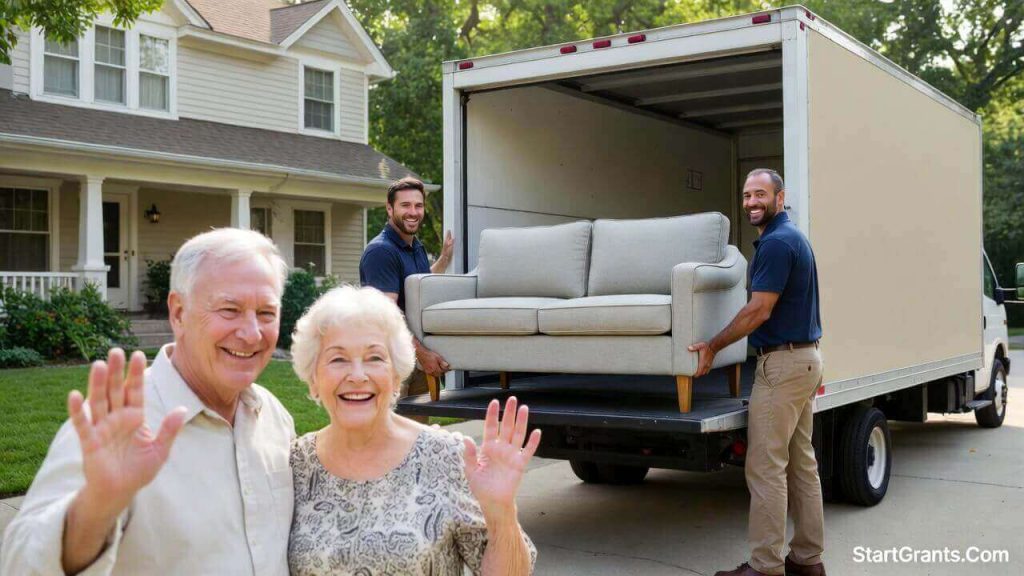
Scheduling a free charity pick-up is the ultimate logistical hack for moving bulky furniture, but you must ensure your items meet the strict condition requirements.
Last Updated: June 2026 | Author: Robert
Moving to a new house, downsizing an estate, or simply upgrading your living room setup presents a massive logistical nightmare: what do you do with the old, heavy furniture? You cannot simply leave a 300-pound sectional sofa on the curb on trash day without facing hefty municipal fines, and renting a dumpster or hiring a junk removal service can cost hundreds of dollars.
For most people, the immediate solution is to donate the bulky items to charity. It feels like a win-win scenario; you get a clean house and a tax deduction, while a family in need gets a dining table. However, the reality of furniture donation is far more complicated.
Before you start dragging your heavy oak dresser out to the driveway, you must understand exactly who accepts furniture donations, the strict condition requirements they enforce, and how to navigate the complex world of free charity pick-up schedules. (To see how donating physical assets aligns with your overall charitable tax strategy, review our comprehensive guide to donations and fundraising.)
Phase 1: The Reality of Furniture Donation (Why Charities Say No)
A common misconception is that thrift stores and charitable organizations are desperate for anything you are willing to give them. In reality, large furniture is the most frequently rejected donation category in the non-profit sector.
Why do charities turn down free furniture? It comes down to basic economics and liability:
- Storage Space: A single large sectional sofa takes up the same amount of retail floor space as four racks of clothing. Clothing sells quickly; a massive sofa might sit there for weeks, costing the charity money in overhead.
- The “Dump Fee” Crisis: If a charity accepts a broken desk or a torn armchair that nobody wants to buy, the charity itself has to pay the local landfill to throw it away. “Wish-cycling” (donating garbage in the hope it helps) drains millions of dollars from non-profit budgets every year.
- Hygiene and Bed Bugs: Due to severe state health regulations and the devastating financial cost of a bed bug infestation, virtually all charities have adopted a zero-tolerance policy for upholstered furniture that shows signs of pet hair, deep stains, tears, or mysterious odors.
The Golden Rule: If you would not feel comfortable giving the piece of furniture to a close friend or family member to put in their living room, a charity will not accept it.
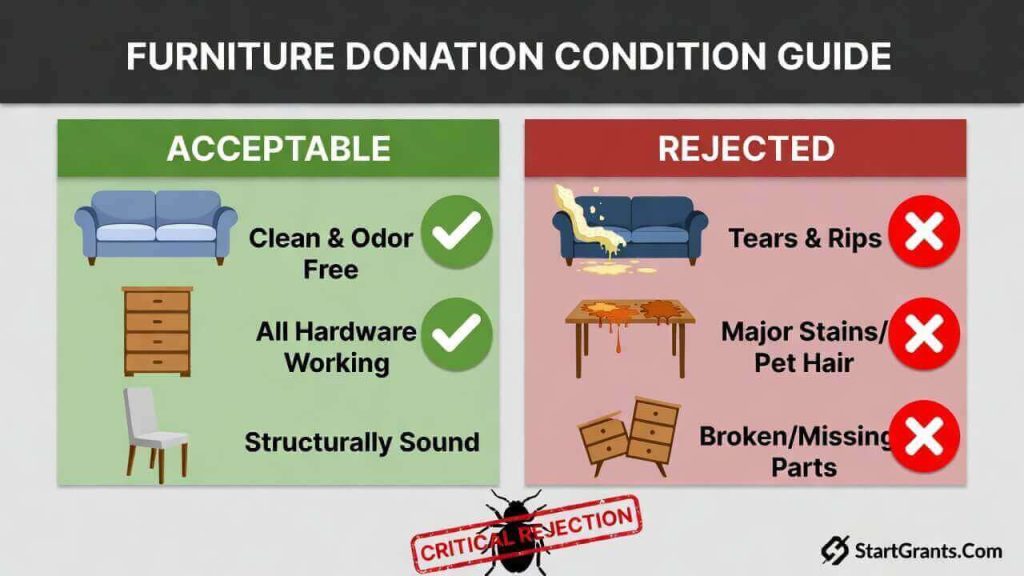
Non-profit organizations are not junk removal services. Follow this visual condition guide to ensure your bulky items are accepted by the charity truck driver.
Phase 2: The “Big 3” National Giants
If your furniture is in excellent, gently used condition, your first line of action should be contacting the largest national networks. Because they operate massive logistical fleets, they are the most likely to have the infrastructure required to handle bulky items.
1. Habitat for Humanity ReStore
When it comes to bulky household items, Habitat for Humanity is the undisputed king. Their retail outlets, known as ReStores, specialize specifically in furniture, home appliances, and surplus building materials.
- What They Accept: Dining sets, bookshelves, dressers, bed frames (without the mattress), sofas, and even intact kitchen cabinets or working refrigerators.
- The Mission: The profits generated from selling your old furniture in the ReStore go directly toward funding the construction of affordable housing for low-income families in your local community.
Watching a dining table or sofa leave your driveway is only the first step. If you want to understand exactly how the logistical process works, how to request a box truck, and what to expect on the day of your donation, watch this excellent step-by-step pickup guide directly from a regional Twin Cities Habitat for Humanity ReStore:
2. The Salvation Army
The Salvation Army operates one of the most robust fleet of donation trucks in the United States. They rely heavily on furniture sales in their Family Stores to fund their adult rehabilitation centers and homeless shelters.
- What They Accept: They generally accept a wide variety of wooden and upholstered furniture, provided it is free of structural damage, deep stains, and pet damage.
- Logistics: They are renowned for their online scheduling system, allowing you to easily book a truck to come to your neighborhood.
3. Goodwill Industries
Goodwill is the most famous thrift store chain in America, but they are incredibly decentralized. Every regional Goodwill operates as an independent territory.
- The Catch with Goodwill: While almost all Goodwill locations accept clothing and small electronics (though if you are decluttering e-waste, ensure you read our strict security guide on how to safely donate old cell phones), not all locations accept furniture. Many smaller storefronts physically do not have the loading docks or floor space for couches. You must call your local Goodwill or check their specific regional website before attempting to drop off a heavy dining table.
Phase 3: The Specialized Networks (Direct-to-Family Impact)
If you do not want your furniture to be sold in a thrift store, and instead want it placed directly into the living room of a family in crisis, you need to look beyond the “Big 3.”
The Furniture Bank Network
This is arguably the most impactful way to donate bulky items. Organizations registered with the Furniture Bank Association of North America (FBANA) operate under a completely different model. They do not sell your donations to the general public.
- The Mission: Furniture banks partner with local social workers, domestic violence shelters, and refugee resettlement agencies. When a family escapes a dangerous situation or transitions out of homelessness into an empty apartment, the Furniture Bank allows them to pick out your donated sofas, beds, and tables completely free of charge. This turns an empty house into a home. (If you are a household currently facing this exact crisis and need immediate sleeping arrangements, please refer to our dedicated guide on the best options to get free beds for low-income families.)
Veterans Organizations (VVA & AMVETS)
The Vietnam Veterans of America (VVA) and AMVETS both operate highly efficient donation pick-up services to fund programs for returning soldiers.
- Logistics: These organizations often utilize third-party logistics companies to manage their routing. They are excellent options for scheduling residential pick-ups for medium-sized furniture like end tables, nightstands, and wooden chairs, though you should always verify if their local drivers are authorized to lift incredibly heavy items like sleeper sofas.
Phase 4: The Mattress Exception (The Most Rejected Item)
When clearing out a bedroom, the bed frame, the nightstands, and the dresser are usually welcomed by charities. However, the mattress itself is the single most rejected item in the entire non-profit ecosystem.
You must never attempt to drop a used mattress off at a thrift store loading dock after hours. This is considered illegal dumping.
Why are mattresses banned?
- Sanitary Laws: Many states strictly prohibit the resale of used mattresses unless they have undergone a rigorous, legally certified sanitization process. Most local charities simply cannot afford the specialized chemical and heat-treatment equipment required by law.
- The Bed Bug Threat: A single mattress infested with bed bugs can spread to an entire charity warehouse in days, forcing the organization to destroy thousands of dollars worth of inventory and hire expensive commercial exterminators.
- Stains and Sagging: Even if a mattress is structurally sound, any bodily fluid stains, water damage, or severe sagging immediately disqualifies it.
If you are upgrading your bedroom and specifically trying to figure out who accepts mattress donations, you must read our dedicated guide. We break down the very few specialized recycling centers and shelters that still accept them, and how to navigate the strict health codes.
Phase 5: How to Schedule a Free Furniture Pick-Up
If you do not own a heavy-duty pickup truck or a trailer, transporting a three-piece sectional sofa or a solid oak dining table to a donation center is physically impossible. Fortunately, the largest national charities operate fleets of box trucks to solve this exact problem.
However, understanding the logistics of a furniture donation pick up is critical. You cannot simply call a charity, point to a heavy sleeper sofa on your second floor, and expect them to carry it down your narrow staircase.
The Liability Rule (Curbside vs. In-Home)
Charity truck drivers are usually volunteers or minimum-wage employees. The non-profit organizations that employ them carry strict liability insurance. If a driver accidentally damages your drywall while carrying a heavy dresser, or if they slip and injure their back on your stairs, the charity is legally liable.
- Because of this, almost all organizations require your bulky items to be placed outside before the truck arrives. You must move the furniture to your garage, your driveway, or your covered porch. The drivers will back the truck up, load the items, and leave a tax receipt on your door.
Navigating Specific Charities
Every organization has a different dispatch system. For example, if you are attempting to secure a Goodwill donation pickup, you must verify that your specific regional Goodwill actually operates a truck fleet, as many smaller storefronts have discontinued the service due to high fuel costs.
Conversely, if you are renovating a kitchen or clearing out massive architectural salvage, scheduling Habitat for Humanity donations through their ReStore network is often the most efficient route, as their crews are explicitly trained to handle heavy, awkward building materials and large appliances.
Phase 6: The IRS Tax Write-Off for Bulky Items
Donating a living room set that originally cost you $3,000 feels incredibly generous, and the federal government rewards that generosity through tax deductions. However, the Internal Revenue Service (IRS) has very strict rules regarding how you value used furniture.
The “Fair Market Value” Trap
You cannot deduct the original purchase price of the furniture. The IRS dictates that you can only deduct the item’s Fair Market Value (FMV) at the time of the donation.
- What does FMV mean? It is the price a willing buyer would pay a willing seller in a thrift store setting. Even if your leather sofa cost $2,000 a decade ago, its current thrift store value might only be $150. You can only claim $150 on your taxes.
The Audit Proof (Photographs)
When the charity truck driver takes your furniture, they will hand you a blank, standardized receipt. They will not write a dollar value on this receipt; it is your legal responsibility to determine the value.
- Take Photos: Before you move the furniture to the garage, take well-lit photographs of the items from multiple angles. Open the drawers to prove the dresser is functional. If the IRS ever audits your charitable deductions, these photos serve as irrefutable proof of the furniture’s “good used condition.”
- Form 8283: If you are donating an entire household of furniture and the total claimed value exceeds $500, you are legally required to file IRS Form 8283 (Noncash Charitable Contributions) with your annual tax return.
Phase 7: Plan B – The Digital Peer-to-Peer Networks
What happens if you follow all the rules, but the Salvation Army or Goodwill still rejects your furniture? Perhaps your sofa has a minor tear on the back cushion, or the charity’s local warehouse is simply at maximum capacity for the month. Do not immediately resort to renting a dumpster. If the traditional non-profit route fails, you must pivot to the digital peer-to-peer sharing economy.
There is a massive demographic of college students, single parents, and young professionals who cannot afford retail furniture and will gladly take your imperfect items for free. In fact, these exact community networks are the top quick places to discover free household items instantly for anyone trying to furnish a home on a zero-dollar budget.
If you are pivoting to a digital peer-to-peer network because a charity rejected your furniture, presentation is everything. A clean item will be claimed immediately on a local community group, while a dirty one will sit on your curb for days. Before you take photos for your online listing, watch this highly effective DIY guide on how to deep-clean and deodorize a used sofa to make it look brand new:
The Buy Nothing Project
The Buy Nothing Project is a global initiative that operates primarily through hyper-local neighborhood Facebook groups. The philosophy is simple: give where you live.
- How it Works: You post a photo of your dining table or armchair in your specific neighborhood’s group with a description of its flaws. Neighbors will comment if they are interested, and you can choose who receives the item.
- The Advantage: The recipient is entirely responsible for the logistics. They must drive to your house, load the heavy item into their own vehicle, and haul it away. It costs you zero dollars and keeps the item out of the landfill.
The Freecycle Network
Similar to Buy Nothing, Freecycle is a grassroots, non-profit movement of people who are giving (and getting) stuff for free in their own towns. It operates on its own dedicated web platform rather than relying solely on social media algorithms. It is highly moderated and heavily focused on environmental sustainability.
“Curb Alerts” on Marketplace & Craigslist
If you need a bulky item gone immediately and do not have the time to vet recipients in a community group, the “Curb Alert” is your ultimate weapon.
- Move the heavy dresser or broken sofa to the edge of your driveway or the curb.
- Take a photo and post it in the “Free Stuff” section of Craigslist or Facebook Marketplace with the exact address and the words “CURB ALERT: First come, first served. No holds.”
- The Warning: Never invite anonymous internet users into your home to carry heavy furniture downstairs. Always move the item outside first to protect your physical safety and property liability.
Phase 8: The Pre-Donation Cleaning & Prep Checklist
Even if a charity agrees to pick up your furniture over the phone, the truck driver has the ultimate authority to reject your donation at the door. Drivers are strictly instructed by their dispatchers to leave behind anything that requires repair or extensive cleaning.
To ensure your bulky items are successfully accepted and loaded onto the truck, you must execute a strict pre-donation preparation protocol.
1. The Sniff and Stain Test
Charities will not accept furniture that smells like stale cigarette smoke, mildew, or pet urine.
- Upholstery: Vacuum every crevice of your sofa or armchair. Remove the cushions and vacuum the base. If there is a lingering odor, sprinkle the entire piece heavily with baking soda, let it sit overnight, and vacuum it thoroughly the next morning.
- Wood Furniture: Wipe down coffee tables, dressers, and bookshelves with a gentle wood cleaner or a damp microfiber cloth to remove layers of dust and sticky residue.
2. The Hardware Security Protocol
If you are donating a bed frame, a dining table with removable legs, or a modular shelving unit, you must keep all the structural hardware together. A charity cannot sell a bed frame if it is missing the connecting bolts.
- The Ziploc Method: Place all screws, bolts, wooden dowels, and washers into a heavy-duty Ziploc bag.
- Tape that bag securely to the largest piece of the furniture using bright blue painter’s tape (which will not strip the wood finish like duct tape does). Write exactly what the hardware is for on the outside of the bag with a permanent marker.
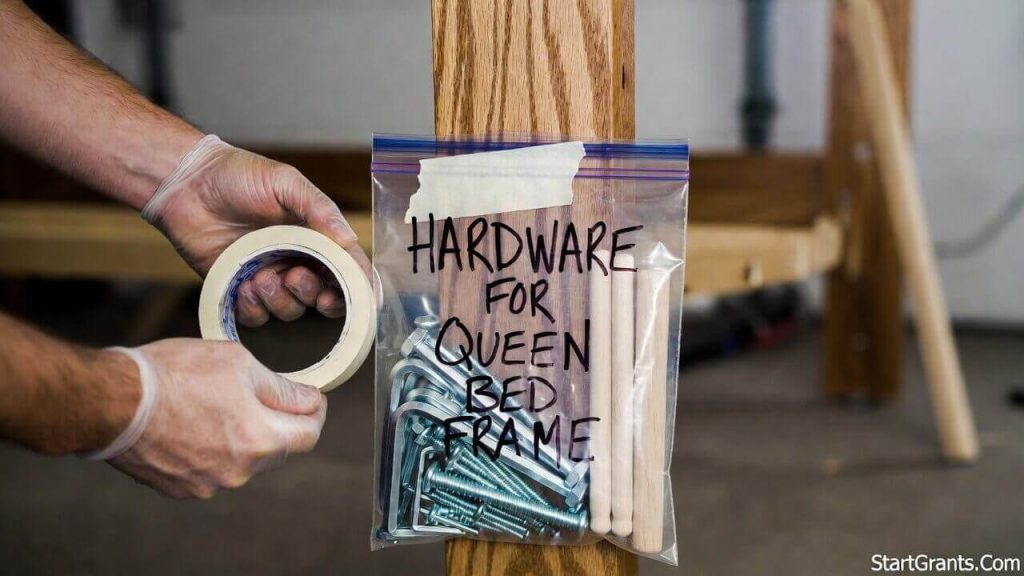
Execute the Hardware Security Protocol: a charity cannot sell a bed frame without the connecting bolts. Keep all screws together in a labeled plastic bag taped directly to the furniture.
3. The Flat-Pack Warning (IKEA Furniture)
Be incredibly careful when donating furniture made of particleboard or MDF (Medium-Density Fiberboard), such as older IKEA pieces. While popular, particleboard loses its structural integrity quickly when moved. If a bookshelf wobbles violently or the back panel is peeling off, do not donate it. Charities frequently reject assembled flat-pack furniture because it tends to shatter or break apart in the back of their moving trucks.
Phase 9: Niche & Hyper-Targeted Charities
While the “Big 3” charities are the most visible, you might want your furniture donation to support a specific cause that is close to your heart. Countless hyper-targeted non-profit organizations desperately need bulky items to fulfill their unique missions.
Domestic Violence Shelters
When individuals flee abusive domestic situations, they often leave with nothing but the clothes on their backs. Local domestic violence shelters frequently operate transitional housing programs to help survivors establish safe, independent apartments.
- The Need: They constantly require clean, high-quality beds, dressers, and dining sets to furnish these new, secure homes.
- Logistics: Because the locations of these shelters are strictly confidential to protect the residents, you cannot simply drop furniture off. You must call their administrative office to coordinate a secure pickup or utilize a designated, off-site drop-off facility.
Refugee Resettlement Agencies
The United States admits thousands of refugees annually who are escaping war, political persecution, or natural disasters. Agencies like the International Rescue Committee (IRC) or local faith-based resettlement networks are tasked with finding and furnishing apartments for these newly arrived families before they step off the plane. They rely almost entirely on community donations to provide sofas, kitchen tables, and sturdy bed frames for people starting over with nothing.
Out of the Closet
If you live in a major metropolitan area, look for an Out of the Closet thrift store. Founded by the AIDS Healthcare Foundation, this specialized charity uses the proceeds from selling your donated furniture, clothing, and books to directly fund HIV/AIDS medical care, provide free testing services, and operate specialized pharmacies for patients who cannot afford their treatments. They also offer a highly efficient, free large-item pickup service in the cities where they operate.
Conclusion (The Master Plan for Bulky Items)
Successfully navigating the world of bulky item donations requires far more than just good intentions. It demands logistical planning, an understanding of non-profit economics, and a realistic assessment of your furniture’s condition. Remember that charitable organizations are not free junk removal services; they are heavily regulated businesses that rely on selling high-quality, gently used items to fund their life-saving community programs.
Before you attempt to donate, always inspect your items rigorously for stains, structural damage, and hardware completion. Start by contacting the specialized Furniture Banks or the “Big 3” national giants (Habitat for Humanity, Salvation Army, and Goodwill) to schedule a free residential pick-up. If your items are not retail-ready, seamlessly pivot your strategy to digital peer-to-peer networks like the Buy Nothing Project or Freecycle to keep your heavy items out of the local landfill.
By preparing your items properly and knowing exactly who accepts furniture donations, you protect the charities from exorbitant disposal fees, help furnish the homes of families in crisis, and legally secure a valuable tax deduction for your generosity. Do not let good furniture rot in a landfill or clutter your garage. Schedule a pickup today, secure your tax receipt, and give your household items a second life.
Frequently Asked Questions (FAQs)
Q1: Which charities offer free furniture donation pick-up?
A: Major national organizations like the Salvation Army, Habitat for Humanity ReStore, AMVETS, and the Vietnam Veterans of America (VVA) frequently offer free home pick-up for large furniture. However, scheduling depends heavily on your local branch’s truck availability, so you must book well in advance.
Q2: Will Goodwill or the Salvation Army accept a used mattress?
A: Generally, no. Due to strict state health and sanitation laws, as well as the high risk of bed bug infestations, the vast majority of traditional charities will strictly refuse used mattresses and box springs, regardless of how clean they look. You will need to contact specialized mattress recycling centers.
Q3: Can I donate broken, stained, or torn furniture?
A: No. Charities are not junk removal services. If your couch is heavily stained, smells like pet odors, or has structural damage, charities will refuse it. By law, to claim an IRS tax deduction, the donated furniture must be in “good used condition or better.”
Q4: How do I value donated furniture for my tax deduction?
A: You cannot deduct the original purchase price. You must claim the Fair Market Value (FMV), which is what a thrift store would reasonably sell it for today. Charities like Goodwill and the Salvation Army publish online “Valuation Guides” to help you estimate these amounts for your tax records.
Q5: Do charities accept old CRT televisions or large broken appliances?
A: Most charities completely reject old, heavy CRT (tube) televisions because they contain hazardous materials and no one buys them anymore. Similarly, non-working appliances are usually rejected unless you are donating to a specific organization like Habitat for Humanity ReStore, which may sometimes accept appliances for scrap metal or repair.
Q6: Do I need a professional appraisal for donating expensive or antique furniture?
A: Yes. If you are donating a high-value piece of furniture and you plan to claim a tax deduction of $5,000 or more for that specific item, the IRS strictly requires you to obtain a qualified, independent written appraisal. For standard furniture under $500, your own itemized list and photos are sufficient.
Q7: How does donating furniture align with Islamic charity principles?
A: For Muslim donors, giving away high-quality furniture is a profound act of Sadaqah (voluntary charity). When you donate essential items to families transitioning out of homelessness or to refugees, you directly fulfill the obligation to support Al-Masakin (the needy) and Ibn Al-Sabil (the wayfarer). Durable furniture can also serve as Sadaqah Jariyah (continuous charity). Many Islamic non-profits actively seek furniture donations to furnish transitional housing. You can learn more about how donated goods support these initiatives by exploring programs like the ICNA Relief Transitional Housing.
Q8: What happens if a charity driver rejects my furniture at the door?
A: The truck drivers have the ultimate authority to accept or reject an item, regardless of what the phone dispatcher told you. If they arrive and determine the item is stained, covered in pet hair, or too heavy to safely carry out of your house, they will leave it behind. You must always have a “Plan B,” such as utilizing a local junk removal service or posting a “Curb Alert” on social media.
Important Disclaimer: StartGrants.com is an independent information portal. We are not a government agency and do not provide direct grants or products. Always verify the current status of programs with the providing organization.