Last Updated: July 2026 | Author: Munir Ardi
It is the nightmare every pet owner dreads. At 2:00 AM on a Sunday, your dog suffers a sudden gastric torsion (bloat), or your cat experiences a life-threatening urinary blockage. You rush to the nearest 24-hour veterinary emergency room, only to be handed a sterile, printed estimate for $4,000 to $6,000. The receptionist looks at you blankly and states, “We need a 50% deposit right now before the surgeon will even examine the animal.”
When you do not have that kind of liquid cash, you face the most traumatic phenomenon in the veterinary industry: “Economic Euthanasia.” This is the heartbreaking reality of having to put a beloved, treatable family pet to sleep simply because you cannot afford the upfront medical bill. However, you do not have to make that tragic choice. If you suppress your panic and act strategically, you can locate a low cost animal hospital that can save your pet’s life using a combination of subsidized care and emergency philanthropic grants.
Before navigating the highly emotional world of emergency veterinary finance, it is critical to understand the broader philanthropic ecosystem that supports animal welfare. Anchor your overarching strategy by reviewing our master pillar: Animal Rescue and Shelter Donations.
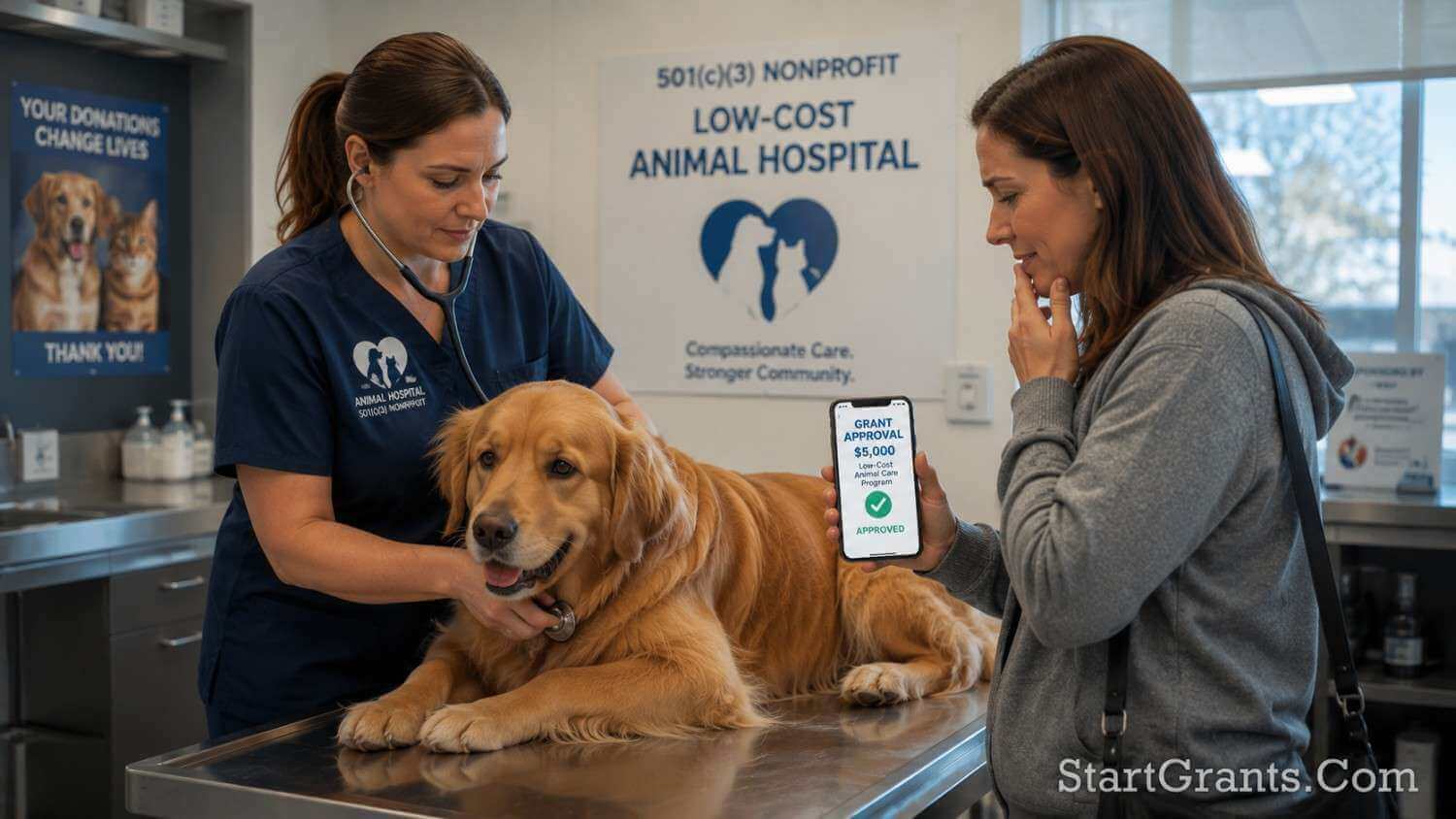
When an emergency strikes, corporate veterinary clinics can charge thousands of dollars upfront. Locating a 501(c)(3) low-cost animal hospital that accepts charitable veterinary grants is the critical first step to saving your pet from economic euthanasia.
Phase 1: The Corporate ER vs. The 501(c)(3) Shelter Clinic
To survive a veterinary financial crisis, you must understand exactly who you are doing business with. Over the last decade, massive Wall Street Private Equity firms have quietly purchased thousands of independent veterinary emergency rooms across the United States. These corporate hospitals operate on strict, uncompromising profit margins; they rarely negotiate bills and almost never offer in-house payment plans.
To cut your bill by 40% to 60%, you must actively bypass these corporate ERs and find a subsidized, non-profit facility. The most reliable option is a 501(c)(3) Shelter Clinic. Many large, municipal animal shelters and humane societies operate public-facing veterinary clinics. Because these shelters operate for public welfare rather than private profit, they offer a sliding scale based on the owner’s income, making them the ultimate low-cost animal hospital.
How are these shelter clinics able to offer surgeries for half the price? They do not magically buy cheaper medicine; their operational deficits are heavily subsidized by massive government and private foundation funding. To understand the economics behind these life-saving facilities, read our guide on how organizations secure Grants for Animal Shelters.
Phase 2: National Veterinary Emergency Grants
Even at a subsidized shelter clinic, a major surgery can still cost $1,500. If this is out of reach, you must immediately apply for emergency veterinary grants. There are national endowments specifically designed to stop economic euthanasia.
- RedRover Relief: RedRover provides rapid-response “Urgent Care Grants” (typically around $250 to $500) to bridge the gap in your deposit. They aim to respond to applications within 48 business hours.
- AVMF Veterinary Care Charitable Fund: The American Veterinary Medical Foundation operates a robust charitable fund. However, you cannot apply directly; your veterinarian must be enrolled in the program and request the funds on your behalf.
- Breed-Specific Rescues: If you own a specific breed (like a Golden Retriever or a Dachshund), there are specialized 501(c)(3) rescue organizations that will fund emergency surgeries exclusively for that breed to keep them out of the shelter system.
Pro-Tip: Funding an Unaffordable Vet Bill
The panic of an emergency room waiting area is not the time to figure out your finances. To understand the exact strategies, charitable options, and negotiation tactics you can use when handed a bill you cannot afford, watch this excellent breakdown by an industry professional: How to Pay for Expensive Veterinary BILLS:
Phase 3: The Bureaucratic Barrier of Vet Grants
When panic sets in, many pet owners misunderstand how charitable relief works. A critical rule you must accept regarding animal hospital grants: Charities will never hand you physical cash or deposit money into your personal bank account.
To prevent absolute fraud, 100% of all veterinary grants are paid directly to the attending veterinarian or animal hospital. Furthermore, charities require an official, itemized estimate from the doctor proving that the prognosis is positive. A charity will gladly grant $1,000 for a broken leg repair, but they will not fund a $5,000 surgery if the animal only has a 10% chance of surviving the night. The funding is reserved for treatable emergencies.
Phase 4: Paying It Forward (The Shelter Ecosystem)
If you successfully utilize a 501(c)(3) shelter clinic or receive an emergency grant to save your pet’s life, you become a direct beneficiary of the animal welfare ecosystem. Once the crisis has passed and your pet is safely recovering at home, it is a moral imperative to replenish the system so the next family in line can be saved.
You do not necessarily have to write a massive check. You can repay the shelter through tactical, non-cash methods, such as donating critical medical supplies, offering specialized professional skills, or organizing community drives. Discover highly effective ways to replenish the system in our guide: 6 Most Surprising Ways to Donate to an Animal Shelter.
Phase 5: The Muslim Perspective (Ihsan, CareCredit Riba, & Gharar)
For a Muslim pet owner in the United States, facing a veterinary emergency is a profound test of faith, compassion, and financial discipline. Islam places a massive emphasis on animal welfare, but the Western veterinary billing system is riddled with severe spiritual traps.
The Mandate of Ihsan (Mercy to Animals)
In Islamic theology, showing mercy (Ihsan) to animals is a pathway to paradise. The Prophet Muhammad (?) famously recounted the story of a prostitute who saw a dog panting with extreme thirst. She took off her shoe, drew water from a well, and gave it to the dog. Because of this single act of mercy to an animal, Allah forgave all her sins (Sahih al-Bukhari). Therefore, moving mountains to find a low-cost animal hospital and saving your pet’s life is a highly rewarded, righteous act in Islam.
The Trap of CareCredit (Riba)
When you tell a corporate veterinary receptionist that you cannot afford the $3,000 deposit, they will instantly slide a pamphlet across the desk for CareCredit (or a similar medical credit card). They will heavily emphasize that it is “0% interest for 6 to 12 months.”
A Muslim must recognize the deadly trap hidden in the fine print. This is known as “deferred interest.” If you miss a single payment, or if you do not pay off the entire $3,000 balance before the 6-month promotional period ends, the bank will retroactively charge you massive compounding interest (often 26% APR or higher) all the way back to the original date of surgery.
In Islamic finance, intentionally signing a contract that contains a clause to pay compounding interest—even if you “plan” to pay it off before the interest triggers—is entering a contract of Riba. This is strictly Haram (forbidden) and eradicates the Barakah (blessing) from your wealth. Muslim pet owners must adamantly refuse these predatory veterinary credit cards.
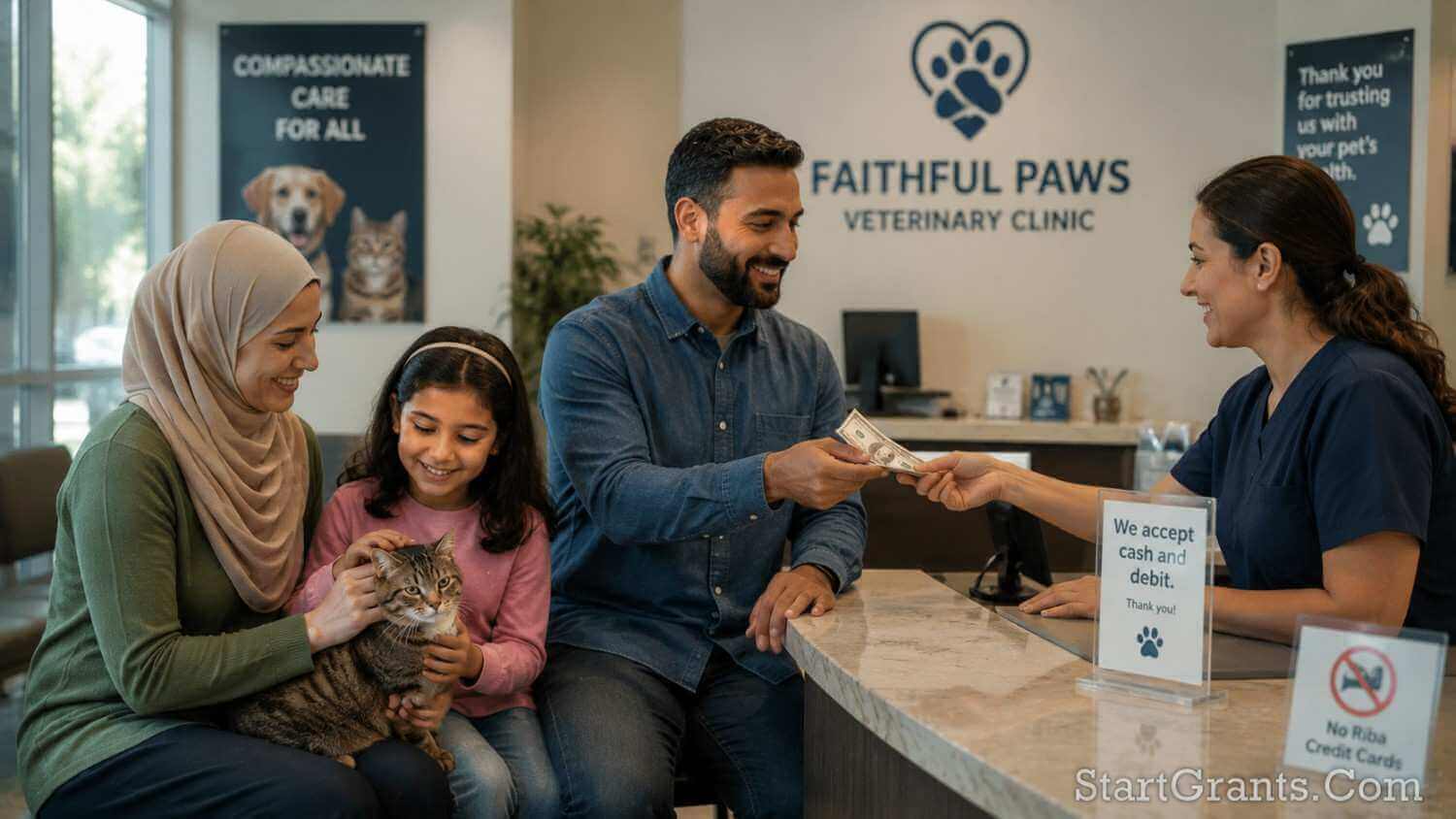
When an emergency strikes, corporate veterinary clinics can charge thousands of dollars upfront. Locating a 501(c)(3) low-cost animal hospital that accepts charitable veterinary grants is the critical first step to saving your pet from economic euthanasia.
Pet Insurance and Gharar
To avoid sudden massive bills, many Westerners purchase Pet Insurance. However, traditional commercial pet insurance contains high levels of Gharar (excessive uncertainty) and elements of gambling.
While contemporary Islamic scholars often permit human health insurance under the principle of Dharurah (absolute life-saving necessity), the threshold for pets is different. Because animals are classified as property (Mal) in Fiqh, pet insurance rarely reaches the strict theological level of absolute Dharurah. Therefore, the vast majority of scholars consider commercial pet insurance Haram.
The Halal Solution: Instead of paying a $60 monthly premium to a Haram insurance company, a Muslim pet owner should automatically transfer that $60 into a dedicated, personal “Pet Emergency Savings Account” every month. If an emergency strikes, you have Halal cash ready. If the bill exceeds your savings, you must rely on Hibah (grants from organizations like RedRover) or seek Qard Hasan (zero-interest loans) from family, keeping your mercy toward your pet spiritually pure.
Conclusion
Finding a low cost animal hospital that can save your pet’s life is a race against time and corporate margins. By bypassing expensive Private Equity-owned ERs, driving directly to a 501(c)(3) shelter clinic or university veterinary hospital, and aggressively applying for rapid-response grants from organizations like RedRover, you can secure the necessary surgery without destroying your financial future.
For the Muslim pet owner, a veterinary emergency is the ultimate intersection of compassion and financial discipline. By fulfilling the Islamic mandate of Ihsan (mercy) toward your animal, fiercely rejecting the Riba-laced trap of deferred-interest medical credit cards, and establishing a self-funded Halal emergency reserve rather than relying on Haram pet insurance, you ensure that the life you save brings uncompromising divine blessing into your home.
Frequently Asked Questions (FAQs)
Q1: What is “Economic Euthanasia”?
A: Economic euthanasia is the tragic, heartbreaking decision a pet owner is forced to make when they elect to euthanize (put down) a treatable, beloved pet simply because they cannot afford the exorbitant upfront cost of the life-saving veterinary surgery or treatment.
Q2: Do veterinary emergency rooms offer payment plans?
A: Most modern, corporate-owned veterinary emergency rooms do NOT offer in-house payment plans. They require a deposit (often 50% to 100%) upfront before rendering services. Instead of in-house plans, they will aggressively push you to apply for third-party financing, such as CareCredit or Scratchpay.
Q3: Can I get a government grant to pay my vet bill?
A: No. The federal government does not issue personal grants to pay for private veterinary bills. However, there are dozens of private 501(c)(3) nonprofit organizations (like RedRover, The Pet Fund, and breed-specific rescues) that provide emergency philanthropic grants directly to the treating hospital for pet owners in crisis.
Q4: Why is it Haram for a Muslim to use CareCredit for a vet bill?
A: CareCredit is a medical credit card. While they offer “0% interest” promotional periods, the contract stipulates that if you miss a payment or fail to pay the balance in full by the deadline, massive compounding interest is applied retroactively. In Islamic finance, intentionally signing a contract that includes a clause for interest is classified as Riba, which is strictly forbidden (Haram).
Q5: Is it Halal to buy pet insurance?
A: The majority of Islamic scholars consider commercial pet insurance to be Haram because it involves Gharar (excessive uncertainty) and Maisir (gambling). While human health insurance is sometimes permitted under Dharurah (life-saving necessity), pet insurance does not generally meet this strict theological threshold. Establishing a personal, dedicated emergency cash fund is the Halal alternative.
Disclaimer: The information provided in this article is for educational and informational purposes only. We are not a veterinary clinic, a financial advisory firm, or a religious fatwa council. Veterinary prices, grant availability, and CareCredit terms and conditions are subject to change. Always seek immediate professional medical attention for a sick animal, and consult a qualified Islamic finance scholar regarding Halal financing, Riba avoidance, and specific Gharar rulings concerning pet insurance.