Last Updated: July 2026 | Author: Munir Ardi
Over the past five years, the cost of veterinary medicine in the United States has skyrocketed. Advanced diagnostics, specialized oncology treatments, and 24-hour emergency surgical care are now widely available for pets, but they carry price tags that rival human healthcare. When a family is suddenly hit with a $5,000 estimate for a torn ACL or a cancer diagnosis, the ensuing financial panic can be absolutely devastating.
If you are staring at a medical estimate you simply cannot afford, you do not have to surrender to the tragic reality of “economic euthanasia.” There is a highly organized, multi-million-dollar philanthropic network dedicated specifically to keeping pets with their families. Navigating the bureaucratic landscape of financial assistance for veterinary care is the critical first step to saving your animal’s life without destroying your family’s financial future.
Before applying for individual medical grants, it is essential to understand the massive charitable infrastructure that funds these initiatives. Anchor your overarching strategy by reviewing our Master Pillar: Animal Rescue and Shelter Donations.
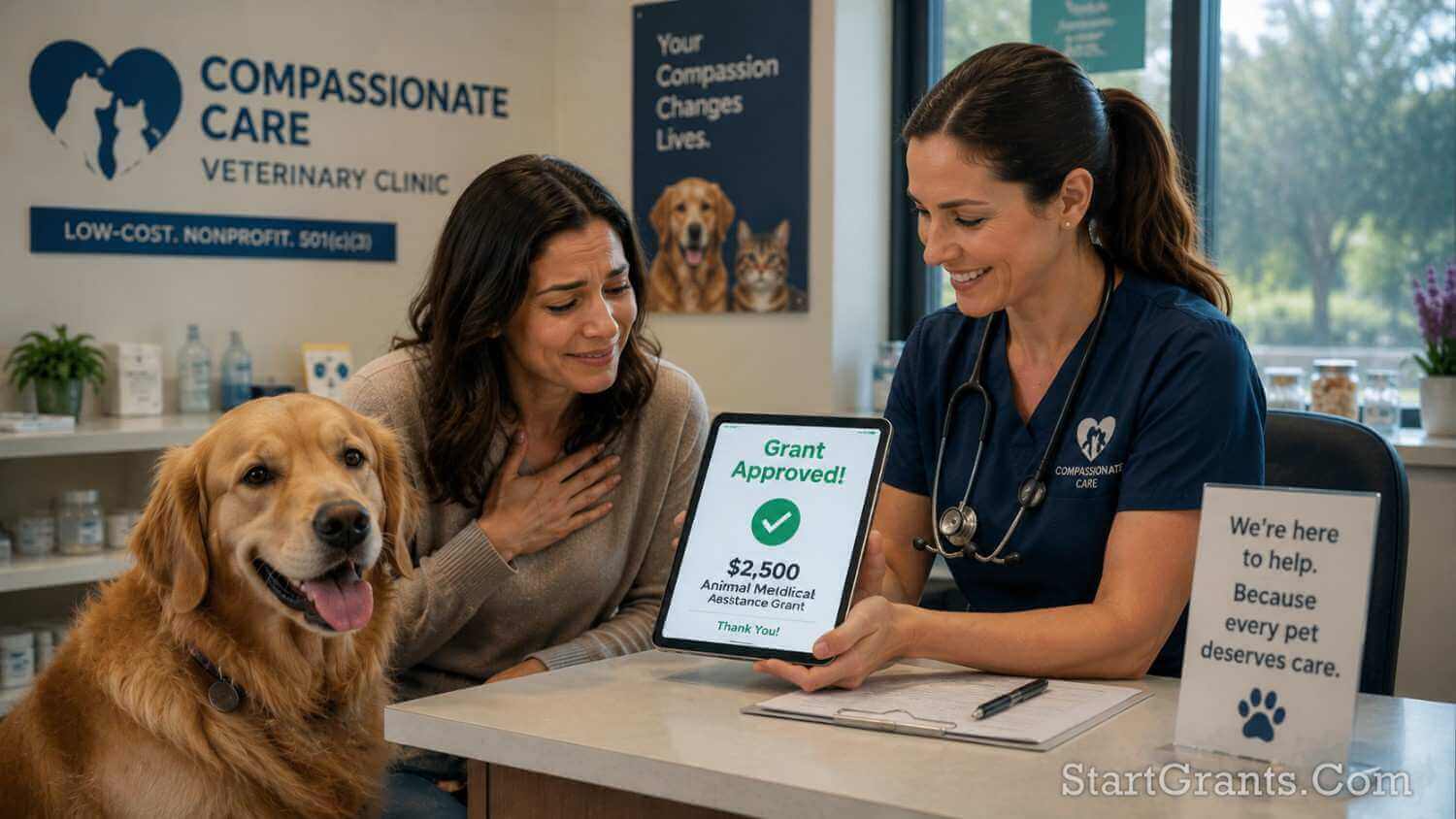
The rising cost of veterinary medicine is forcing millions of families into financial distress. Fortunately, national 501(c)(3) endowments provide financial assistance for veterinary care to help cover life-saving surgeries and chronic disease treatments.
Phase 1: The First Line of Defense (Subsidized Clinics)
Before you seek external grant money from national foundations, you must aggressively attempt to reduce the total cost of the invoice itself. Corporate-owned veterinary hospitals operate on strict profit margins. They have shareholders to answer to, which means they rarely negotiate their prices and almost never offer internal payment plans without running a hard credit check.
Your first tactical move must be transferring your pet’s care (if they are medically stable enough to be transported) to a non-profit facility. Municipal animal shelters and SPCA branches often run public-facing veterinary clinics that operate on a sliding scale based on your household income. They exist to serve the community, not to generate quarterly profits. To understand how to find and utilize these specific facilities, review our specialized guide: Find a Low Cost Animal Hospital That Can Save Your Pet’s Life.
Phase 2: Top National Grant Programs in 2026
If the reduced invoice from a subsidized shelter clinic is still beyond your means, or if your pet is too critical to be moved from the emergency room, you must immediately deploy applications to national 501(c)(3) endowments. These organizations exist strictly to provide financial assistance for veterinary care.
1. The Pet Fund (For Chronic Care and Oncology)
Many emergency grants only cover sudden trauma, such as a pet being hit by a car or swallowing a toxic substance. The Pet Fund is unique because it specifically targets non-basic, non-urgent care. If your dog requires expensive ongoing cancer treatments, heart disease medication, or endocrine therapy, this is your primary target. Note: Because of extraordinarily high demand across the country, they require you to email them before applying to ensure funds are currently available in their budget.
2. RedRover Relief (For Urgent, Life-Threatening Care)
If the situation is a life-or-death emergency that requires immediate surgical intervention within 48 hours, RedRover is the gold standard. They provide rapid-response grants (typically ranging from $250 to $500) designed specifically to bridge the gap in your veterinary deposit. This initial injection of cash is often enough to trigger the start of the surgery while you figure out the rest of the bill.
3. Waggle (Veterinary Crowdfunding)
Waggle is a specialized crowdfunding platform dedicated exclusively to veterinary bills. Unlike generic platforms like GoFundMe, where funds go directly to personal bank accounts (which breeds intense donor skepticism), Waggle pays the funds directly to your verified veterinarian. This absolute transparency dramatically increases the likelihood of strangers donating to your pet’s cause.
Pro-Tip: Negotiating with Your Vet
Applying for grants takes time, and sometimes you need the veterinary clinic to work with you immediately. Understanding how to talk to your vet about your financial limits without compromising your pet’s care is a crucial skill. Watch this excellent insider perspective from a practicing veterinarian on how to secure in-house assistance and navigate costs: Financial Assistance for Pet Owners:
Phase 3: The Shelter Ecosystem & Preventative Care
Why are local animal shelters able to offer you a $500 surgery when the corporate ER charges $2,500? Because the shelter is actively absorbing the financial loss on your behalf. They can do this because they employ professional grant writers who secure massive municipal and federal block grants to cover their operating deficits.
When you utilize a non-profit clinic, you are indirectly benefiting from government and foundation money. To understand the massive economic engines that keep these local safety nets open for pet owners, explore our breakdown on how organizations secure Grants for Animal Shelters.
Phase 4: The Bureaucratic Process of Vet Grants
When panic sets in, pet owners often make the mistake of demanding immediate cash from charities to pay their bills. You must understand and respect the strict anti-fraud bureaucracy that governs all legitimate veterinary grants:
- No Personal Cash Distribution: Legitimate charities will never deposit money into your personal bank account or write a check in your name. 100% of awarded grant funds are paid directly to the attending veterinary hospital.
- The Itemized Estimate Requirement: You cannot apply for a grant by simply stating, “My dog needs surgery.” You must upload a formal, itemized invoice directly from the veterinarian detailing the exact procedures, medications, hospitalization fees, and expected prognosis.
- The Prognosis Rule: Charities are stewards of donor funds, and their resources are finite. They will generally not approve a $3,000 grant if the veterinarian states the pet has less than a 10% chance of survival. The funds are strictly reserved for treatable conditions where the animal is expected to enjoy a good quality of life post-recovery.
Phase 5: The Muslim Perspective (Ihsan, CareCredit Riba, & Gharar)
For a Muslim family residing in the United States, a veterinary emergency is not just a test of financial endurance; it is a profound test of Islamic ethics and compassion. Islam commands absolute mercy toward all living creatures, but the Western medical billing system is laced with severe spiritual traps that can compromise a family’s faith.
The Mandate of Ihsan (Excellence in Compassion)
In Islamic theology, treating animals with mercy (Ihsan) carries immense divine reward. The Prophet Muhammad (?) taught that a prostitute was forgiven all her sins simply for drawing water from a well to save a thirsty dog. Conversely, a person can be punished in the Hereafter for neglecting an animal in their care. Therefore, exhausting every Halal avenue to secure financial assistance for veterinary care and save a beloved family pet is an act of deep spiritual merit and responsibility.
The Trap of CareCredit and Riba
When you stare at a $4,000 estimate you cannot afford, the veterinary receptionist will almost always offer you an immediate, seemingly helpful solution: CareCredit (or a similar medical credit card). They will heavily emphasize that it features “0% interest for 6 to 12 months.”
For a Muslim, this is a highly dangerous contract built on deferred interest. The fine print dictates that if you miss a single payment by one day, or fail to pay off the entire balance before the promotional period ends, the bank retroactively applies compounding interest (often exceeding 26% APR) all the way back to the original date of the surgery.
In Islam, intentionally signing a contract that contains a clause to pay compounding interest is entering into Riba. Engaging in Riba is one of the most severe major sins in the religion, and it completely strips the Barakah (blessing) from your household wealth. A Muslim pet owner must adamantly refuse these predatory veterinary credit cards, no matter how desperate the situation appears.
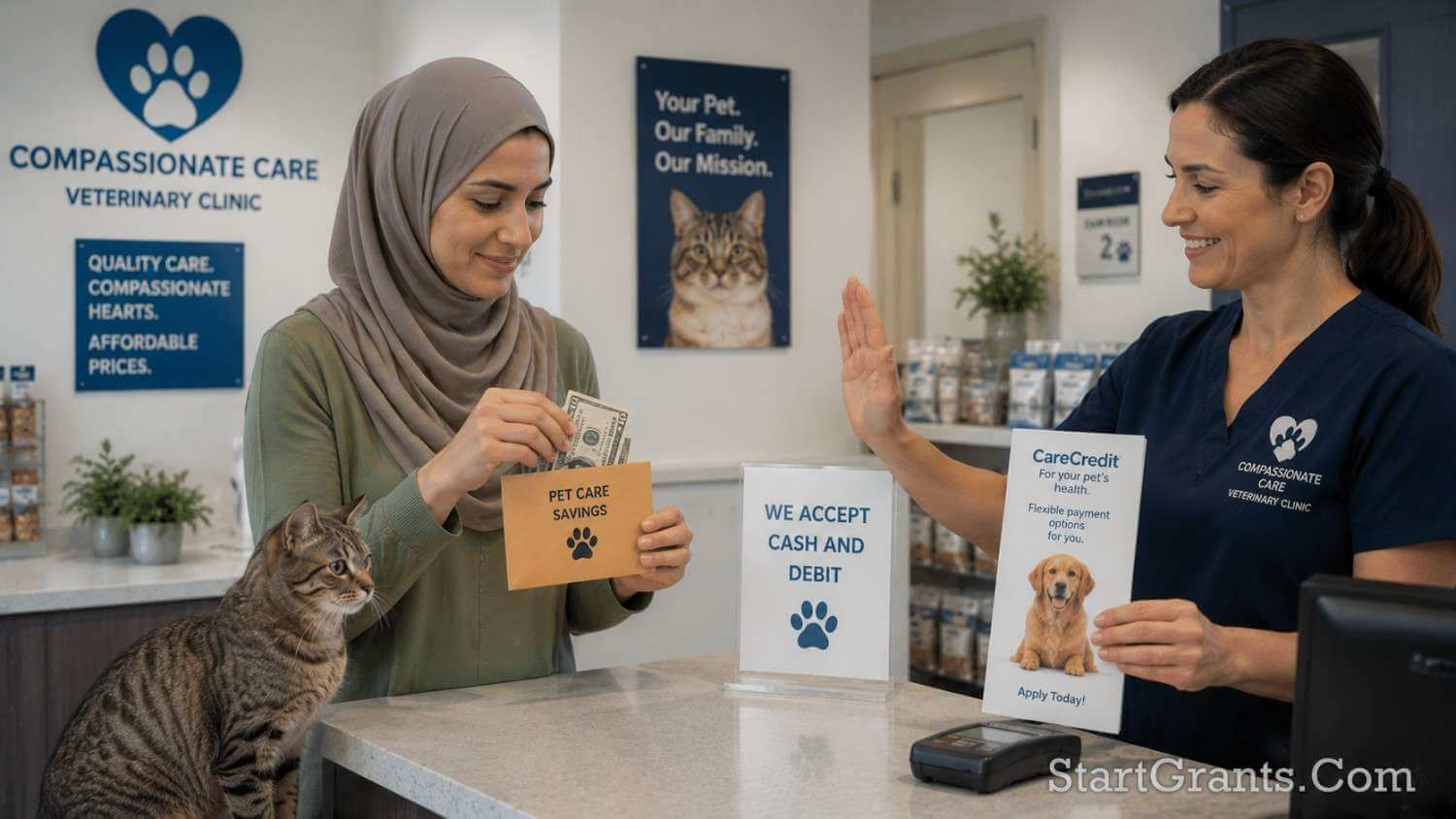
For the Muslim pet owner, fulfilling the mandate of Ihsan (mercy to animals) must be done ethically. By aggressively pursuing charitable grants and utilizing personal cash reserves, owners can bypass the destructive spiritual trap of Riba-laced veterinary credit cards.
Commercial Pet Insurance and Gharar
To avoid sudden massive bills in the future, many Western financial advisors urge pet owners to buy commercial Pet Insurance. However, traditional pet insurance contracts are structurally problematic in Islamic finance due to the presence of Gharar (excessive uncertainty) and Maisir (elements of gambling).
While contemporary Islamic scholars often permit human health insurance under the strict principle of Dharurah (absolute, life-saving necessity), the theological threshold for animals is different. Because animals are legally classified as property (Mal) in Islamic jurisprudence (Fiqh), pet insurance rarely reaches the strict level of absolute Dharurah required to override the prohibition of Gharar. Therefore, the vast majority of orthodox Islamic scholars consider commercial pet insurance to be Haram.
The Halal Financial Solution: A Muslim pet owner must engineer Halal liquidity. Instead of paying a $60 monthly premium to an insurance company that relies on Gharar, automatically transfer that $60 into a dedicated, personal “Pet Emergency Savings Account” at your bank. If an emergency strikes, you use your Halal cash. If the bill exceeds your savings, you must rely on Hibah (charitable grants like RedRover) or seek Qard Hasan (zero-interest benevolent loans) from your local Muslim community, ensuring your mercy toward your pet remains spiritually untainted.
Conclusion
Securing financial assistance for veterinary care requires suppressing your immediate panic and deploying a strategic, bureaucratic response. By bypassing corporate emergency rooms in favor of 501(c)(3) shelter clinics, negotiating effectively with your veterinarian, and rapidly applying for national endowments like The Pet Fund and RedRover, you can bridge the gap between your savings and the cost of life-saving medical care.
For the Muslim pet owner, saving your animal’s life is a profound exercise in ethical discipline. By fulfilling the Islamic mandate of Ihsan, fiercely rejecting the Riba-laced trap of deferred-interest medical credit cards, and navigating the Gharar of pet insurance by building a personal Halal emergency fund, you ensure that the compassion you show to your pet brings pure, uncompromising divine blessing into your home.
Frequently Asked Questions (FAQs)
Q1: Does the government provide financial assistance for veterinary care?
A: No. The federal and state governments do not issue direct grants to individuals to pay for personal pet medical bills. All financial assistance for individual veterinary care comes from private 501(c)(3) nonprofit organizations, philanthropic endowments, and breed-specific rescue groups.
Q2: Will a charity write me a check to pay my vet bill?
A: No. To prevent fraud, legitimate veterinary charities never disperse cash directly to pet owners. If your grant application is approved, the charitable organization will wire the funds or issue a check directly to the attending veterinary hospital to ensure the money is used exclusively for medical care.
Q3: What is the difference between The Pet Fund and RedRover Relief?
A: RedRover Relief provides rapid-response grants specifically for urgent, life-threatening emergencies that require immediate surgical intervention within a matter of days. The Pet Fund, conversely, is designed to fund non-urgent, ongoing, or chronic medical conditions, such as chemotherapy for pet cancer or long-term heart disease treatments, and often has a waitlist.
Q4: Why is it Haram for a Muslim to use CareCredit to save their pet?
A: CareCredit is a medical credit card that utilizes a system called “deferred interest.” If the balance is not paid off completely within the promotional window, the bank applies massive, retroactive compounding interest to the account. In Islamic jurisprudence, intentionally signing a contract that includes an interest (Riba) clause is strictly forbidden (Haram), regardless of the noble intention of saving an animal.
Q5: Is it Halal to purchase commercial pet insurance?
A: The majority of Islamic scholars classify commercial pet insurance as Haram because it involves Gharar (excessive uncertainty) and Maisir (gambling elements). While human health insurance is often permitted out of absolute life-saving necessity (Dharurah), pets are classified as property (Mal) in Fiqh, and therefore do not meet the strict theological threshold required to bypass the prohibition of Gharar. A personal, Halal savings fund is the required alternative.
Disclaimer: The information provided in this article is for educational and informational purposes only. We are not a veterinary clinic, a financial advisory firm, or a religious fatwa council. Veterinary grant availability, foundation budgets, and CareCredit terms and conditions are subject to constant changes. Always seek immediate professional medical attention for a sick animal, and consult a qualified Islamic finance scholar regarding Halal financing, Riba avoidance, and specific Gharar rulings concerning pet insurance.