
Last Updated: | Author: Munir Ardi
Short answer: There is no universal federal grant that an individual can claim simply because they want to attend a police academy. The most realistic ways to reduce the cost are to be hired and sponsored by a law enforcement agency, attend an eligible college or career-school program and apply for student aid, qualify for locally administered workforce funding, or use VA education benefits for a VA-approved program. Federal Department of Justice grants generally fund eligible agencies, Tribal governments, and organizations—not individual recruits.
For a broader explanation of education and workforce funding, start with our guide to grants for career training and certifications. Then use the steps below to verify whether your specific academy, employer, and funding route work together.
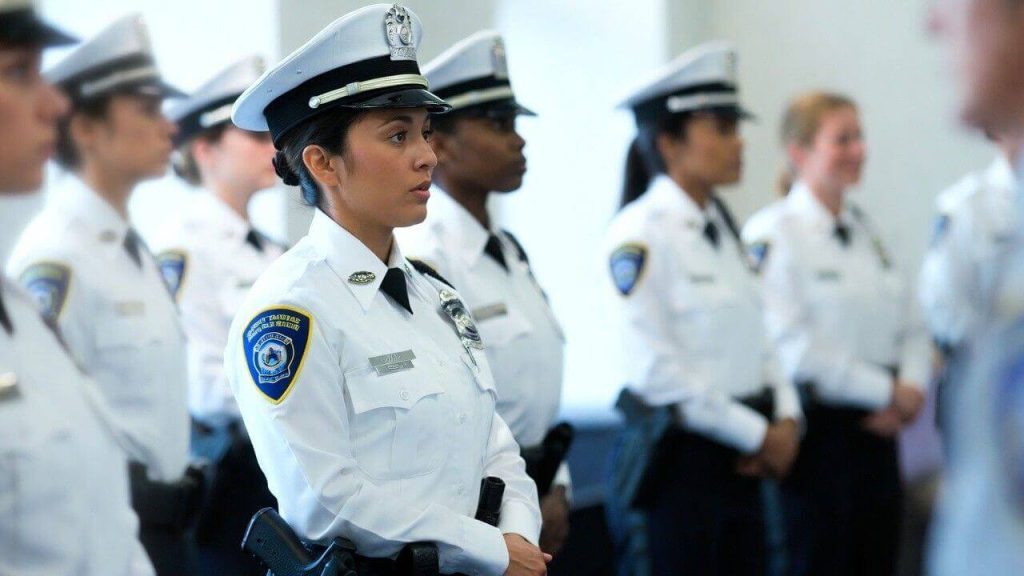
Academy requirements, costs, and sponsorship models vary by state, school, and hiring agency.
What “Grants for Law Enforcement Training” Can Mean
The phrase can describe several different forms of assistance. They are not interchangeable:
| Funding route | Who receives or controls it | What it may cover | Critical check |
|---|---|---|---|
| Agency sponsorship | The hiring agency | Academy tuition and possibly wages, uniforms, equipment, or fees | Confirm the written employment, service, and repayment terms |
| Pell Grant or other student aid | The eligible student and participating school | Eligible education costs under the school’s aid rules | The student, institution, and exact academy program must qualify |
| WIOA training assistance | A local workforce system for an eligible participant | Approved occupational training and sometimes supportive services | Local eligibility, demand, available funds, and program approval control |
| GI Bill benefits | An eligible beneficiary in a VA-approved program | Approved school training or expenses while completing approved on-the-job training | Verify the exact school or employer program in VA’s official tools |
| DOJ or COPS Office award | An eligible agency, government, Tribe, or organization | Activities allowed by the specific federal notice | This is not normally a personal police-academy grant |
| Scholarship or reimbursement | The student, employee, school, or vendor, depending on the rules | Specified tuition, fees, supplies, or employment-related costs | Check the current sponsor, deadline, payment method, and permitted uses |
1. Ask About Agency-Sponsored Academy Training First
Some departments hire candidates as recruits or trainees and pay for their academy training. Others expect applicants to graduate from an approved academy before applying. The arrangement depends on the state system, agency budget, collective-bargaining rules, and individual vacancy.
California provides a useful official example of the distinction. The California Commission on Peace Officer Standards and Training describes an affiliated student as someone hired by a department that pays for academy training; such recruits usually receive a trainee salary. A non-affiliated student pays their own way. This example should not be treated as a nationwide rule.
Questions to ask the recruiter
- Must I be hired before entering the academy?
- Who pays tuition, uniforms, equipment, medical exams, travel, and testing fees?
- Will I receive wages and benefits during training?
- Is there a minimum service commitment?
- What events trigger repayment, such as resignation, dismissal, or failure to graduate?
- Which academy and certification are accepted for this position?
Get the answer in writing before enrolling or leaving another job. “Sponsored” does not necessarily mean every expense is covered, and a service agreement can create a repayment obligation.
2. Check Federal, State, and School Student Aid
A police academy housed at a community college or another participating institution may be connected to an eligible certificate or degree program. That does not make every academy automatically eligible for federal student aid. The student, institution, and exact program must meet the applicable requirements.
- Ask the school’s financial aid office for the program’s exact name and federal school code.
- Ask whether that exact program is eligible for Title IV federal student aid—not merely whether the college participates generally.
- Submit the Free Application for Federal Student Aid and meet state and school deadlines.
- Read the school’s aid offer. It is the best source for the types and amounts of aid actually offered to you.
- Separate grants and scholarships from work-study and loans. A loan must be repaid.
Federal Student Aid explains that Pell Grants can help eligible students pay for college, career school, or trade school. Eligibility and the amount are determined through the aid process; filing the FAFSA is not a promise that the academy will be covered.
3. Ask an American Job Center About WIOA
The Workforce Innovation and Opportunity Act can support occupational training for some eligible adults, dislocated workers, and young people. Decisions are made through state and local workforce systems. An academy may need to appear on the state’s Eligible Training Provider List, and the occupation must fit local policy and labor-market priorities.
Use the CareerOneStop American Job Center finder to locate the office serving your area. Ask for an eligibility assessment before you register or pay a deposit. Local staff—not a national grant-list website—must confirm whether you qualify, whether the exact program is approved, which expenses can be paid, and whether funds remain available.
4. Veterans Should Verify GI Bill Approval
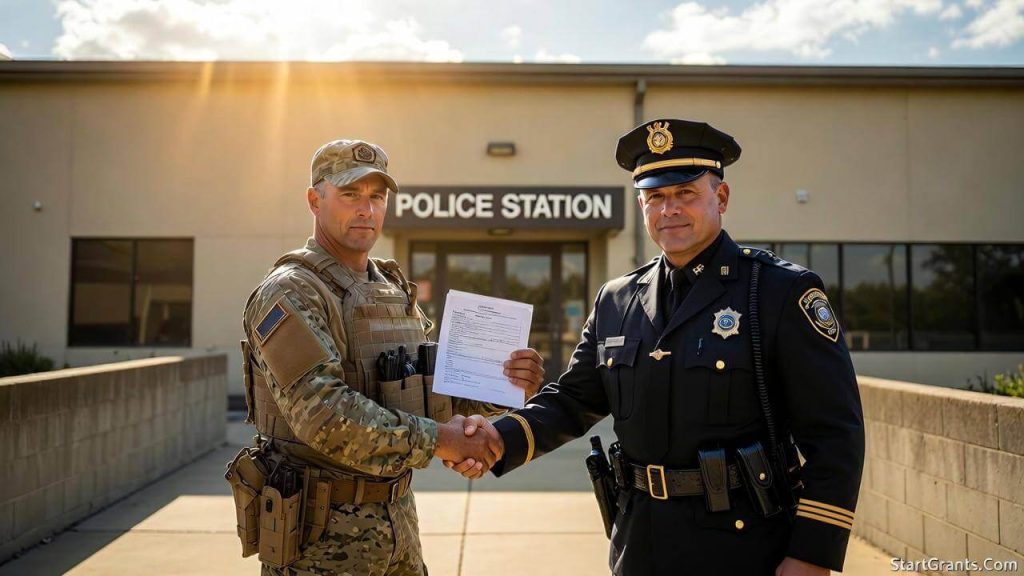
Eligible veterans may be able to use GI Bill benefits for a VA-approved school, academy, or law-enforcement on-the-job training program.
VA identifies law enforcement as a field in which approved on-the-job training and apprenticeship benefits may be available. The benefit can also be used for certain approved non-college-degree programs. Approval is specific to the school or employer program, and a recruit’s eligibility and payment rate depend on the applicable benefit.
Search the GI Bill Comparison Tool, then confirm the program with the academy or employer’s certifying official. Do not rely on a department’s statement that it is “veteran friendly” as proof of VA approval.
5. Understand What Federal Law Enforcement Grants Actually Fund
The U.S. Department of Justice’s COPS Office administers grants for eligible public-safety entities. These awards can affect hiring, training, equipment, or agency capacity, but an individual recruit generally does not submit a personal application for the money.
FY 2026 COPS Hiring Program: closed
As of September 10, 2026, the FY 2026 COPS Hiring Program was closed. Eligible applicants were established and operational local, state, territorial, and Tribal law enforcement agencies with primary law-enforcement authority. The program could support up to 75% of entry-level salary and fringe benefits for approved officer or deputy positions for three years within a five-year performance period, subject to a $125,000 maximum federal share per position and a 25% local match unless a waiver was approved.
Those facts do not mean an applicant receives $125,000, academy tuition, or a personal grant. An agency applies, manages the award, hires qualifying additional personnel, and remains responsible for award conditions.
FY 2026 CTAS: open for eligible Tribal applicants
At this review date, the FY 2026 Coordinated Tribal Assistance Solicitation was open to federally recognized Tribes and Tribal consortia. Its two published deadlines were October 15, 2026, at 11:59 p.m. ET for the Grants.gov step and October 22, 2026, at 8:59 p.m. ET for the JustGrants step. One purpose area can support Tribal law-enforcement hiring, equipment, and training. This is organizational funding, not an individual scholarship.
The COPS Office’s official funding-status page showed the other listed FY 2026 COPS opportunities as closed on September 10, 2026. Agencies should use the live page and the controlling Notice of Funding Opportunity because dates, eligibility, cost sharing, and allowable costs can change in a future cycle.
6. Calculate the Real Cost Before You Commit
There is no reliable nationwide price for a self-sponsored police academy. Ask each academy for a written cost-of-attendance or itemized estimate that includes:
- tuition and mandatory institutional fees;
- uniforms, footwear, protective equipment, and duty gear;
- books, online platforms, testing, and certification fees;
- medical, psychological, background, fingerprint, and drug-screening costs;
- transportation, lodging, meals, and lost wages;
- expenses that aid will not cover; and
- refund, withdrawal, dismissal, and repayment rules.
Do not borrow based only on an academy’s advertised tuition. Compare the total uncovered cost with likely entry-level pay, hiring timelines, licensing restrictions, and the possibility that graduation does not guarantee employment.
7. Follow This Verification Process
- Confirm the credential. Identify the state authority that sets peace-officer training and certification requirements.
- Contact target employers. Ask whether they hire and sponsor recruits or require prior academy completion.
- Verify the academy. Confirm state approval, admission standards, total costs, completion data, and the agencies that accept its training.
- Check aid before enrolling. Speak with the financial aid office, American Job Center, or VA certifying official as applicable.
- Read every agreement. Look for service commitments, reimbursement, clawback, tax, reporting, and withdrawal terms.
- Keep evidence. Save the current program page, written eligibility confirmation, award notice, receipts, and correspondence.
Save This Police Academy Funding Checklist
- [ ] I confirmed the exact academy is accepted by the state authority and my target employers.
- [ ] I asked each target agency whether it hires and sponsors recruits.
- [ ] I obtained an itemized estimate covering tuition, gear, testing, travel, and lost income.
- [ ] The school’s financial aid office confirmed whether the exact program is aid-eligible.
- [ ] I contacted my American Job Center before paying an enrollment deposit.
- [ ] If using VA benefits, I verified the exact school or employer program in VA’s official system.
- [ ] I separated grants and employer benefits from loans and other repayable funding.
- [ ] I reviewed service commitments, clawbacks, refund rules, and tax consequences.
- [ ] I saved written confirmations and current copies of all controlling terms.
A Muslim Perspective: Funding Training Without Overlooking Riba or Contract Terms
A grant, scholarship, or employer-paid academy may avoid ordinary interest-bearing debt, but the label alone is not enough to determine whether an arrangement is appropriate. Review the source of the funds, permitted use, service commitment, repayment triggers, penalties, insurance requirements, and any uncertainty in the contract.
If a funding gap remains, compare lawful savings, family assistance documented as a genuine gift, a properly documented interest-free loan, community crowdfunding, employer sponsorship, and other structures before accepting an interest-bearing loan or revolving credit. A “zero-interest” offer can still contain fees or penalties, and a service agreement can require repayment even though it is not a conventional loan.
Do not assume that mosque, sadaqah, or zakat funds may be used for police-academy costs. Eligibility depends on the fund’s stated rules and, for zakat, the recipient’s circumstances and the religious interpretation applied by the administrator or scholar. For a material decision, take the actual documents to a qualified Islamic finance scholar and, where appropriate, an attorney or tax professional. This section is educational and is not a fatwa.
Avoid Misleading Offers and Grant Scams
- Do not pay someone who promises a guaranteed government grant or guaranteed police job.
- Do not confuse an agency’s federal award with money available to every recruit.
- Verify government programs on a
.govwebsite and private scholarships on the sponsor’s own current page. - Do not send money, identity documents, or banking details in response to an unsolicited message.
- Read whether an award is paid to you, the school, or another vendor—and whether unused funds must be returned.
- Report suspected grant fraud through the relevant agency and the Federal Trade Commission’s fraud-reporting portal.
Frequently Asked Questions
Is there a federal grant I can apply for personally to attend a police academy?
There is no universal federal police-academy grant for individual applicants. Federal justice grants usually go to eligible agencies, governments, Tribes, schools, or organizations. An individual may instead qualify for agency sponsorship, student aid, WIOA assistance, a scholarship, or VA education benefits under the rules of the specific program.
Does the COPS Hiring Program pay my police academy tuition?
No. The COPS Hiring Program provides funding directly to eligible law enforcement agencies for approved officer or deputy positions. An agency may have its own recruit-training arrangement, but a job applicant does not claim a personal COPS award or the federal amount assigned to a funded position.
Can a Pell Grant pay for police academy training?
Possibly, but only when the student is eligible and the exact academy program is eligible at a participating institution. Ask the school’s financial aid office to confirm the program, complete the FAFSA, and rely on the school’s aid offer for the types and amounts of aid actually available to you.
Can WIOA pay for law enforcement training?
It may help an eligible participant when the local workforce system approves the training and the program meets applicable provider and local-demand rules. Funding and covered costs vary, so contact the American Job Center serving your area before enrolling or paying a deposit.
Can I use GI Bill benefits for police academy or on-the-job training?
Eligible beneficiaries may use GI Bill benefits for certain VA-approved school programs or approved law-enforcement on-the-job training. Verify the exact school or employer program in VA’s official tools and ask its certifying official how your specific benefit would apply.
Will a police department always pay academy tuition and a salary?
No. Some departments hire and sponsor recruits, while others require applicants to complete an approved academy at their own expense. Coverage of tuition, wages, uniforms, equipment, and fees varies by employer, so obtain the terms in writing.
How much does a self-sponsored police academy cost?
There is no dependable nationwide amount. Tuition, gear, testing, medical screening, travel, and living costs vary by academy and location. Request an itemized estimate and ask about refunds, withdrawals, dismissal, and costs that financial aid will not cover.
Do police academy grants or sponsorships ever have to be repaid?
They can. Grants may include repayment or clawback provisions when conditions are violated, and employer sponsorships may require service or repayment after early departure, dismissal, or failure to complete training. Read the controlling award and employment agreements.
Is law enforcement training funding automatically halal?
No universal religious conclusion follows from the funding label alone. Review interest, fees, permitted uses, service obligations, repayment triggers, penalties, and other contract terms. Consult a qualified Islamic finance scholar with the actual documents when religious guidance is needed.
How do I verify a police academy funding offer?
Confirm the academy with the state training or certification authority and target employers. Confirm student aid with the school’s financial aid office, WIOA with the local American Job Center, VA benefits through VA’s official tools, and federal agency grants on the responsible agency’s current website.
Bottom Line
Start with the hiring route, not a generic grant search. Ask agencies whether they sponsor recruits, verify the academy with the state authority, and then check student aid, WIOA, VA benefits, or current scholarships that fit your exact situation. Treat federal COPS and DOJ awards as agency funding unless the controlling notice explicitly says individuals are eligible.
Important disclaimer: StartGrants.com is an independent information portal. It is not a government agency, grantmaker, police academy, certification body, lender, law firm, tax adviser, or religious authority. StartGrants.com does not issue grants, loans, jobs, certifications, legal advice, tax advice, or fatwas. Program availability, deadlines, eligibility, award amounts, covered costs, fees, and contract terms can change. Verify every opportunity with the responsible agency, school, employer, or sponsor and seek qualified professional guidance for your circumstances.