Last Updated: | Author: Munir Ardi
Home improvement grants are not one nationwide program. Help may instead come through local repair grants, direct weatherization services, forgivable or deferred-payment loans, disability adaptations, disaster assistance, nonprofit repairs, or ordinary loans. The right starting point depends on the repair, the homeowner, and the property’s location.
A leaking roof, unsafe wiring, broken heating system, accessibility barrier, or environmental hazard can make a home dangerous long before a family can afford the repair. There is no universal federal grant that gives every homeowner money for renovations. Eligibility usually depends on location, income, ownership and occupancy, the condition of the home, the proposed work, available funding, and whether another source—such as insurance—should pay first. This Tier 2 guide compares the main categories; its linked repair-specific guides explain narrower eligibility and application rules.
Home-repair programs are only one part of the wider housing-assistance system. If your household also needs help with affordable housing, rent, utilities, disaster recovery, or other housing costs, use our broader overview of government housing grants and assistance programs to identify the most relevant category before applying.

Home Repair Grant, Loan, or Service? Read the Terms First
The name used in an advertisement is less important than the written agreement. Before applying or accepting an award, determine which of these you are being offered:
| Type of help | What it means | What to check |
|---|---|---|
| Grant | Funding that ordinarily does not require monthly repayment when all conditions are met. | Eligible uses, lifetime limits, recapture clauses, liens, sale restrictions, and tax reporting. |
| Direct service | An agency selects and pays for approved work; the household may never receive cash. | Audit results, authorized measures, landlord consent, contractor selection, and waiting list. |
| Forgivable or deferred loan | Repayment may be delayed or forgiven if the homeowner follows conditions for a specified period. | Lien, occupancy period, sale or refinance trigger, death or transfer provisions, and default terms. |
| Repayable loan | Borrowed money with a repayment obligation; it may be subsidized but is not free. | Interest, annual percentage rate, fees, collateral, monthly payment, total cost, and foreclosure risk. |
| Rebate or tax credit | Money or tax relief generally tied to an eligible purchase or completed improvement. | Upfront spending, product standards, income limits, installation date, and tax liability. |
A home equity loan or line of credit can put the home at risk if the borrower cannot repay it. The Consumer Financial Protection Bureau warns that a lender may foreclose when a home-equity borrower defaults. That does not make every HELOC predatory, but it does mean homeowners should compare the full cost and risk—not just the initial payment.

What Repairs Are Most Likely to Receive Assistance?
Programs define eligible work differently. Local rehabilitation programs may address code violations and structural problems, while weatherization focuses on cost-effective energy measures. USDA grants for eligible older homeowners focus on health and safety hazards. Never assume that a repair is covered until the administering agency approves it.
Projects commonly considered by one or more programs include:
- Repairing a severely leaking roof or structural failure;
- Correcting dangerous electrical, plumbing, or heating conditions;
- Improving accessibility with ramps, safer entrances, or bathroom modifications;
- Addressing lead hazards, moisture, or other eligible health risks;
- Installing approved insulation, air sealing, or heating and cooling measures after an energy audit;
- Repairing water, septic, or sanitation systems when the program permits it; and
- Completing disaster-related repairs not duplicated by insurance or another recovery program.
Cosmetic remodeling, luxury finishes, additions, pools, and replacing functional items solely for appearance are unlikely to qualify. A roof replacement is not automatically eligible merely because it is old; the program may require an active health, safety, structural, code, energy, or disaster-related reason.
Major Home Repair Assistance Programs in 2026
Weatherization Assistance Program
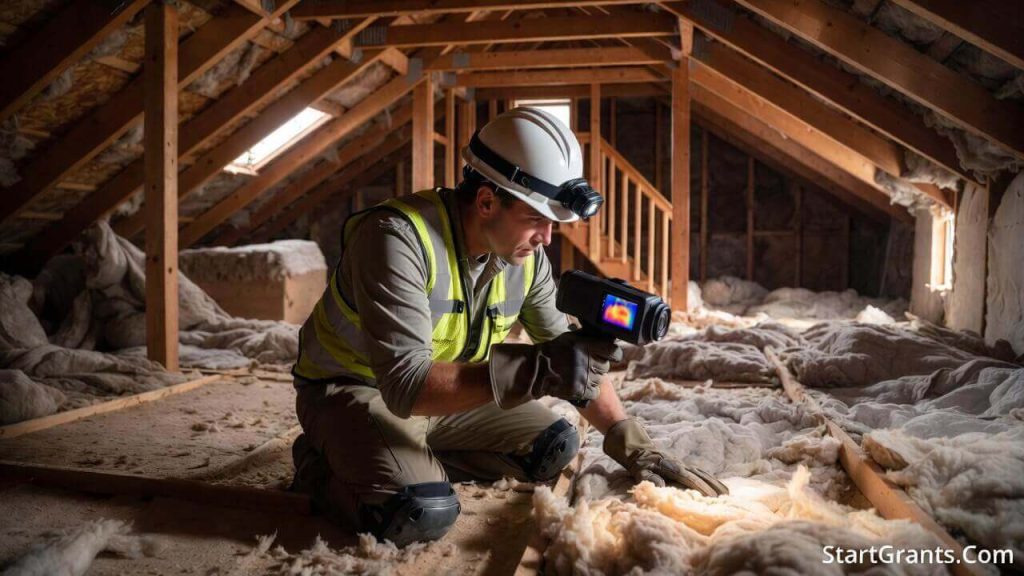
The U.S. Department of Energy’s Weatherization Assistance Program (WAP) funds states, territories, and tribes, which work through local providers. The goal is to reduce energy costs for households with low incomes while supporting health and safety. It is normally a service program—not a reimbursement check for work a homeowner has already arranged.
Under DOE guidance, households at or below 200% of the federal poverty guidelines or receiving Supplemental Security Income are considered income-eligible. A state or territory may instead elect to use the Low Income Home Energy Assistance Program threshold of 60% of state median income. Homeowners and renters can apply, although a renter generally needs landlord cooperation before work begins. Priority rules and waiting lists vary.
An energy audit determines the cost-effective measures for the particular dwelling. Depending on the assessment and local plan, work may include air sealing, insulation, or repair or replacement of eligible energy equipment. WAP does not promise a new furnace, windows, roof, or solar system to every applicant. For Program Year 2026, DOE guidance also directs grantees toward established efficiency measures and states that no renewable electricity-generation technologies are currently approved for WAP.
Use DOE’s official WAP application page to locate your state administrator and local provider.
HUD-funded local repair programs
HUD does not operate a universal direct-to-homeowner improvement grant. Instead, Community Development Block Grant (CDBG) and HOME funds go to participating states and local governments. A community may use part of its allocation for owner-occupied rehabilitation, emergency repairs, accessibility, lead-hazard control, or another locally approved housing activity. HUD’s official home-improvements page distinguishes community programs from FHA-insured renovation loans.
That means the program name, service area, income limit, eligible repairs, property-value rules, lien, contractor process, and funding cycle can differ by city or county. HUD also lists FHA Title I and 203(k) products, but these are insured loans—not grants. Our dedicated guide to HUD Home Improvement Grants and Local Repair Programs explains where homeowners actually apply.
USDA Section 504 Single Family Housing Repair
USDA Rural Development provides loans and grants to eligible homeowners in qualifying rural areas. Applicants must own and occupy the home, meet the very-low-income limit, and be unable to obtain affordable credit elsewhere. Grant applicants must also be age 62 or older and unable to repay a repair loan.
USDA currently publishes these national program limits:
- Loans up to $40,000, repaid over 20 years at a fixed 1% interest rate;
- Lifetime grants up to $10,000 to remove health and safety hazards; and
- A lifetime grant limit up to $15,000 when repairing a home damaged in a presidentially declared disaster area, subject to program rules.
Eligible assistance may reach $50,000 through a standard loan-and-grant combination or $55,000 in a qualifying presidentially declared disaster area. A grant must be repaid if the property is sold within three years. These are maximums, not guaranteed awards, and funding availability varies by area. Applications are generally accepted year-round through the local Rural Development office.

Check the property’s eligibility, current income limits, required documents, and disaster provisions in our USDA Rural Development Home Repair Assistance Guide.
Veteran and accessibility assistance
The Department of Veterans Affairs offers Specially Adapted Housing and Special Home Adaptation grants to qualifying veterans and service members with certain service-connected disabilities. The VA—not a contractor or general grant website—determines disability and housing eligibility. Local aging, disability, and housing programs may also help with ramps, bathroom safety, entrances, or fall prevention.
Because age alone does not create eligibility and programs vary sharply by location, use our guide to Home Improvement Grants and Repair Help for Older Adults to compare USDA, Area Agency on Aging, Medicaid-related possibilities, veterans programs, and nonprofit assistance.
Nonprofit home repair programs
Habitat for Humanity and Rebuilding Together have local affiliates that may offer preservation, critical repair, accessibility, weatherization, or aging-in-place services. Availability is not uniform, and help is not automatically free. A local affiliate may consider income, ownership, residency, repair urgency, willingness to participate, and available funding. Contact the affiliate serving your address rather than assuming the national organization takes applications.
Choose the Right Tier 3 Guide for Your Repair
Some projects require specialized environmental, disaster, or mitigation rules. Use the guide matching the cause and location of the problem:
- Moisture and mold: No single national “mold grant” exists. Assistance may come from disaster aid, local rehabilitation, insurance, weatherization-readiness funds, or a health-and-safety program when the underlying cause and applicant are eligible. EPA guidance also explains that “black mold” and “toxic mold” are not specific species. Start with Government Assistance for Homeowners With Mold.
- Safe rooms and storm shelters: FEMA mitigation funding usually flows through eligible states, tribes, territories, and local governments, which may create subgrant or rebate programs. It is not a standing 75%-off coupon for every homeowner. See FEMA Storm Shelter and Safe-Room Funding.
- New Jersey heating-oil tanks: NJDEP’s Petroleum Underground Storage Tank fund has separate rules for leaking and non-leaking tanks. The state currently reports significant review delays for new applications, so homeowners should not begin a project expecting quick reimbursement. Review New Jersey Oil Tank Removal Grant Rules.
- Declared disasters: FEMA Individual Assistance is available only when a declaration authorizes it for the applicant’s area and household eligibility is established. It does not pay every repair or duplicate insurance. Follow How to Apply for FEMA Disaster Relief Assistance.
How to Find Local Home Repair Assistance
- Describe the problem precisely. Write down the hazard, affected system, when it began, whether it is disaster-related, and whether local code enforcement or a licensed professional has documented it.
- Identify the correct payer. Contact insurance first for a covered sudden loss. For gradual deterioration, check local housing rehabilitation, USDA, WAP, aging, disability, veteran, or nonprofit programs.
- Search official local sources. Use your city or county housing department, state housing finance agency, state weatherization administrator, USDA Rural Development office, Area Agency on Aging, tribal housing office, or 211.
- Ask the program’s exact name. Request the current application, income chart, service area, eligible-work list, funding status, waiting-list policy, and written terms.
- Confirm timing before work starts. Many programs will not reimburse repairs begun or completed before environmental review, inspection, bid approval, or written authorization.
Documents You May Need
Requirements vary, so do not delay an application while trying to assemble documents that were never requested. Common examples include:
- Government-issued identification and Social Security or program-identification information;
- Proof of ownership and primary occupancy;
- Income records for household members;
- Property-tax, mortgage, or homeowners-insurance information;
- Photos, inspection reports, code notices, or repair estimates;
- Insurance claim or disaster-assistance documents;
- Age, disability, veteran-status, or benefit records when relevant; and
- Consent from co-owners, a landlord, or lienholder when the program requires it.
Property taxes do not have to be current under every program, and every applicant is not required to provide two years of tax returns or three months of bank statements. Use the administering agency’s list rather than a generic checklist.
Avoid Home Repair Grant and Contractor Scams
Government programs do not charge a fee merely to search for benefits or submit a standard application. Be cautious when someone promises guaranteed approval, pressures you to sign immediately, asks you to falsify income, or claims a grant is available only if you hire that person’s company.
The Federal Trade Commission recommends checking licensing and insurance, obtaining trusted recommendations, reviewing complaints, and using a written contract. Get multiple written estimates when the program permits you to select a contractor. Do not pay by wire transfer, gift card, or cryptocurrency. Some legitimate projects require a deposit under state law, so the presence of any upfront payment is not by itself proof of fraud—but a demand for large cash payment or payment before a written contract is a major warning sign.
Before signing, confirm:
- The contractor’s legal name, address, license, insurance, and references;
- The exact scope, materials, permits, start and completion dates, and warranty;
- The payment schedule and who receives the grant or loan proceeds;
- Whether the program records a lien or restricts sale, transfer, rental, or refinancing; and
- Who handles change orders and cost overruns.
Tax Treatment and Recordkeeping
Do not assume that every home-repair grant is taxable—or that every award is tax-free. The result can depend on the source, statute, purpose, payment method, and household circumstances. A nontaxable energy subsidy or credit may still reduce the home’s basis, while a different payment may have separate reporting rules. The IRS explains home basis and adjustment principles in Publication 523.
Keep the award letter, tax forms, receipts, invoices, proof of payment, improvement description, and any lien or recapture agreement. Ask the program administrator whether it will issue a tax form, then give the complete documents to a qualified tax professional. A generic statement that “government grants are never taxable” is not reliable advice.
Muslim Perspective: Funding Safe Home Repairs Responsibly
Muslim homeowners can apply for public home-repair programs under the same published eligibility rules as other households. A faith-based concern usually arises not from applying, but from understanding the financial contract, conditions, and use of funds.
Separate assistance from interest-bearing debt
WAP usually provides approved services rather than an interest-bearing loan. A conventional HELOC, personal loan, or USDA Section 504 loan has a repayment obligation and interest terms. Homeowners concerned about riba should request the complete agreement—including interest, fees, late charges, collateral, and default provisions—then consult a qualified scholar familiar with U.S. housing finance.
Do not assume that a product is religiously acceptable merely because it uses “shared equity,” “co-ownership,” “0%,” or “Sharia-compliant” in marketing. The CFPB has warned that home-equity contracts can have complex repayment formulas and may force a sale if the homeowner cannot meet the final obligation. Independent legal and religious review is especially important when the home secures the transaction.
Understand grant conditions and recapture
A government grant does not charge interest, but it may still be restricted. USDA can require repayment of a Section 504 grant when the property is sold within three years. Local rehabilitation assistance may place a lien or become repayable after a sale, refinance, move, rental, or transfer. A Muslim family should treat truthful disclosure, proper use of funds, and compliance with these conditions as part of the financial obligation—not describe every award as an unconditional hibah.
Use community assistance carefully
A mosque, Islamic charity, or community fund may offer zakat, sadaqah, vendor-paid repairs, or a genuine qard hasan. Eligibility and religious classification are case-specific; homeownership or a repair bill alone does not guarantee zakat. Ask whether the aid must be disclosed to a government program, whether it pays the same expense, and whether the household signs any repayment or property agreement.
Do not delay urgent safety work
Religious financial review should not delay evacuation, emergency heating, medical care, stopping a gas or electrical hazard, or protecting occupants from structural collapse, sewage, lead, or extensive mold. Use licensed professionals and emergency services when needed, then compare longer-term funding with complete information.

Frequently Asked Questions
Is there a federal home improvement grant available to every homeowner?
No. Federal programs target specific purposes and populations, and many send funding through state or local administrators. Eligibility can depend on income, location, age, disability, disaster designation, property condition, ownership, occupancy, and available funds.
Can I get a government grant for a new roof?
Possibly, but not simply because the roof is old. A local rehabilitation program, USDA Section 504 assistance, disaster program, or nonprofit may cover an eligible roof that creates a documented health, safety, structural, code, or disaster-related problem. Cosmetic replacement is generally not a priority.
Who qualifies for the Weatherization Assistance Program?
DOE considers households at or below 200% of the federal poverty guidelines or receiving Supplemental Security Income eligible based on income. A state or territory may use the LIHEAP threshold of 60% of state median income. Local priority rules, documentation, landlord permission, and funding availability still apply.
How much does USDA Section 504 provide in 2026?
USDA currently lists loans up to $40,000 at 1% for 20 years and lifetime grants up to $10,000 for eligible homeowners age 62 or older who cannot repay a loan. The grant maximum can reach $15,000 for qualifying repairs to a home damaged in a presidentially declared disaster area. Maximums are not guaranteed awards.
Does HUD give home improvement grants directly to homeowners?
HUD does not offer a universal direct homeowner repair grant. CDBG and HOME funding goes to participating governments, which may create local owner-occupied repair programs. HUD’s FHA Title I and 203(k) options are loans, not grants.
Do I need good credit for a home repair grant?
A grant or direct-service program may focus on income and property eligibility rather than a conventional credit score, but rules vary. Repayable loans can include ability-to-repay, credit, debt, title, or federal-debt requirements. A forgivable or deferred loan may also involve a lien.
Are home improvement grants taxable?
There is no safe universal answer for every federal, state, local, utility, or nonprofit award. Some assistance may be excluded from income but affect the home’s tax basis, deductions, or credits. Keep the award documents and ask the program administrator or a qualified tax professional how the specific payment should be reported.
Can Muslim homeowners use government repair assistance?
Yes, subject to the same program rules as other eligible applicants. Assistance without interest is different from an interest-bearing loan, but grants can contain liens or recapture conditions. Families seeking a religious determination should review the complete agreement with a qualified scholar and legal or financial adviser.