Last Updated: August 2026 | Author: Munir Ardi
Not everyone who works in dentistry wants to look inside a patient’s mouth. If you possess a high degree of manual dexterity, an eye for artistic detail, and a passion for technology (like 3D printing and digital design), becoming a Dental Laboratory Technician is one of the most lucrative “behind-the-scenes” careers in healthcare.
Dental lab techs are the master craftsmen of dentistry. When a dentist prescribes a crown, bridge, veneer, or set of dentures, it is the lab technician who actually builds the prosthetic using advanced CAD/CAM software, ceramics, and gold.
While a two-year Associate Degree or specialized certificate in Dental Laboratory Technology is far cheaper than a four-year university degree, tuition can still range from $5,000 to $20,000. Because the industry is facing a massive wave of retirements, both the federal government and private dental associations are pouring money into educational endowments to train the next generation of technicians.
If you are searching for “grants for dental laboratory technician schools,” you can absolutely fund this training without taking out predatory student loans.
Before exploring specialized laboratory funding, it is crucial to understand the foundational strategies of all medical education funding by reviewing our master directory on dental school grants and scholarships.
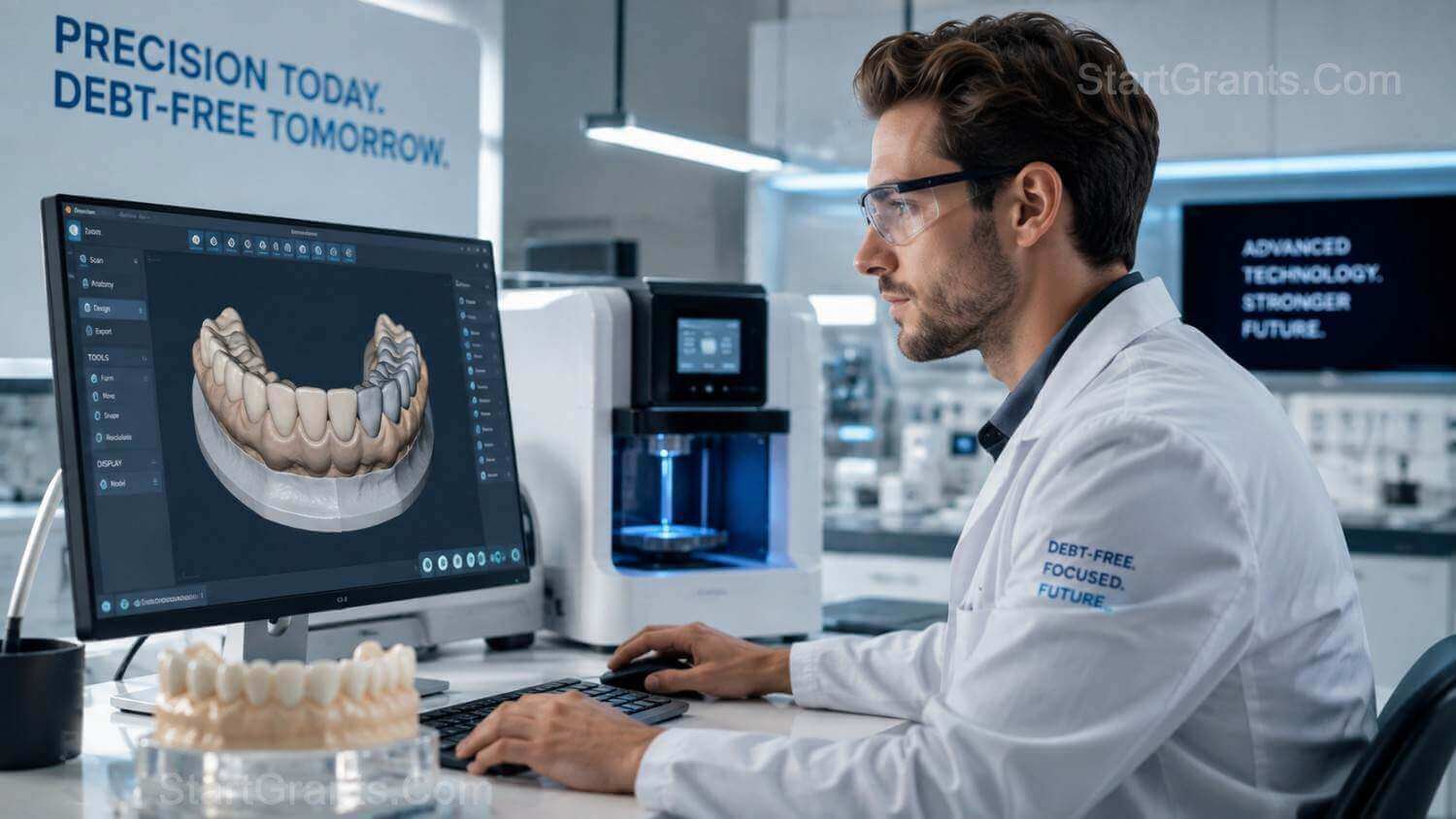
Dental laboratory technology is rapidly shifting from manual sculpting to advanced 3D printing and CAD/CAM design. In 2026, federal grants and specialized foundation scholarships can fully fund your technical degree without the burden of student loans.
Phase 1: Foundation for Dental Laboratory Technology (FDLT)
The most targeted and robust financial support comes directly from the industry itself. The Foundation for Dental Laboratory Technology (FDLT), an arm of the National Association of Dental Laboratories (NADL), was created specifically to advance the profession through accessible education.
The FDLT offers numerous annual scholarships designed for both new students entering the field and current professionals seeking advanced certifications.
Top FDLT Scholarships Available in 2026
- The Pillar Scholarship: This is the premier grant for incoming students. It awards up to $2,500 specifically to students currently enrolled in a Commission on Dental Accreditation (CODA) approved dental laboratory technology program to offset the cost of tuition and lab fees.
- The Fulcrum Grant: If your school requires you to purchase expensive specialized tools (like wax spatulas, calipers, or CAD/CAM software licenses), this grant provides funds directly for educational equipment.
- CDT Certification Grants: Becoming a Certified Dental Technician (CDT) is the gold standard for higher pay. The FDLT offers specific grants that cover the expensive testing fees required to take the written and practical CDT exams.
- Action Step: Application windows open at specific times of the year (usually spring and fall). You must monitor the official FDLT Scholarships Portal and prepare a portfolio of your sculptural or digital design work.
Pro-Tip: Inside the Dental Laboratory
The biggest mistake aspiring lab techs make is attending unaccredited programs. To qualify for the best industry scholarships (and federal financial aid), your school must be officially recognized by the Commission on Dental Accreditation (CODA).Before you apply for your grants, you need to understand exactly what this career entails. Watch this exclusive, behind-the-scenes laboratory tour with Andre, a veteran dental technician. She explains how the industry is rapidly shifting from manual sculpting to 3D printing and digital CAD/CAM design, and why mastering this technology will make you the highest-paid applicant in the lab:
Phase 2: Federal Workforce & Trade Grants
Because dental lab technology is a highly skilled trade, it qualifies for massive federal grants that are often ignored by traditional university students.
1. The Federal Pell Grant (FAFSA)
If your dental lab tech program is offered by a public community college or a Title IV-eligible technical school, you can use the Federal Pell Grant. For the 2025-2026 academic year, the maximum payout is $7,395. Because community college lab programs are heavily subsidized by the state, a maximum Pell Grant will often cover 100% of your tuition, leaving you with leftover funds to purchase your wax kits and sculpting tools.
2. The WIOA Workforce Grant
The Workforce Innovation and Opportunity Act (WIOA) is a Department of Labor program that pays for career retraining. If you are currently unemployed, underemployed, or looking to switch careers, your local American Job Center can issue you an Individual Training Account (ITA) voucher.
Because dental lab technicians are in high demand (especially those trained in digital dentistry), WIOA will frequently pay your full tuition to get you into the workforce faster.
Phase 3: Strategic Integration (Allied Dental Careers)
If you are evaluating dental laboratory technology, you should also compare the educational funding and ROI (Return on Investment) of other fast-track allied dental careers:
- Want to Work with Patients? If you decide you actually enjoy clinical environments and want to work directly alongside the dentist, explore grants for dental assistant programs (a 9-to-12-month pathway).
- Maximizing Salary: If your goal is to earn the highest possible salary with a 2-to-4-year degree, becoming a hygienist is the ultimate clinical pathway. Review our guide on grants for dental hygiene students.
- Diversity Endowments: If you identify as an underrepresented minority, there are massive foundational endowments designed to support your entry into all facets of dentistry. Discover scholarships for minority dental students.
Phase 4: The Islamic Perspective (A Halal Technical Education)
For Muslim students, choosing a career in medical fabrication is an incredibly noble and Halal pursuit. It involves precision, honesty, and directly alleviating the suffering of patients who cannot chew or smile properly. However, financing this education requires vigilance against Islamic prohibitions.
1. The Danger of Trade School Loans (Riba)
If a student’s Pell Grant does not cover the full cost of a private technical institute, financial aid advisors will rapidly push them toward Federal Direct Student Loans or private vocational loans (like Sallie Mae).
Under Islamic jurisprudence (Fiqh al-Mu’amalat), any contract that charges a guaranteed increase (interest) in exchange for lending money is classified as Riba (usury). Engaging in Riba is explicitly forbidden (Haram) in the Quran. Entering a beautiful, highly skilled trade while carrying a spiritually compromised, interest-bearing loan eliminates the blessings (Barakah) of your future income.
2. Halal Financing Avenues for Muslim Students
Muslim students must firmly reject Riba and exhaust all lawful (Halal) financial avenues:
- Maximize Unconditional Grants: Accepting federal Pell Grants, WIOA workforce vouchers, and FDLT industry scholarships is 100% Halal. These are philanthropic or state-funded gifts that require no repayment and carry zero interest.
- Interest-Free Endowments (ACC): If a tuition gap remains, Muslim students must apply for Halal funding through organizations like A Continuous Charity (ACC). ACC provides completely interest-free educational loans to American Muslims. You borrow exactly what you need for your lab tech program and repay the exact same amount when you are employed, keeping your faith completely intact.
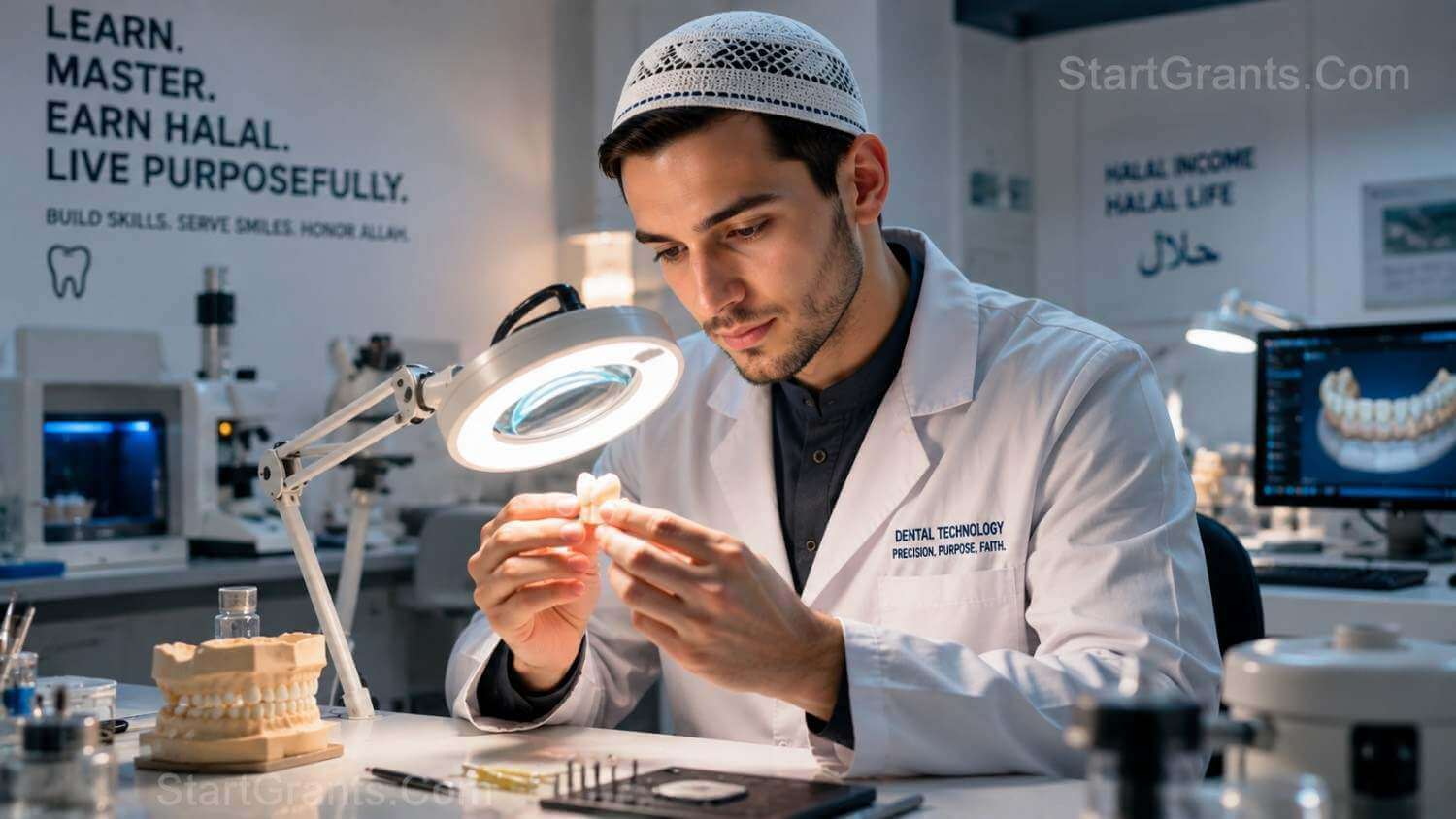
Crafting medical prosthetics is a highly respected skill. By securing federal trade grants and utilizing zero-interest community endowments, Muslim students can fund their laboratory training completely free of Riba (interest), ensuring their future income remains Halal and blessed.
Conclusion: Your Debt-Free Action Plan
Becoming a dental laboratory technician provides a fast, stable, and highly creative entry into the healthcare sector. Securing “grants for dental laboratory technician schools” is entirely possible if you leverage both federal trade funds and industry foundations.
Execute this funding checklist immediately:
- Verify CODA Accreditation: Only apply to lab tech programs that are accredited by the Commission on Dental Accreditation (CODA). This is a strict requirement for winning FDLT scholarships and taking your CDT exams early.
- Submit the FAFSA: Fill out the Free Application for Federal Student Aid to automatically qualify for the $7,395 Federal Pell Grant.
- Visit the Department of Labor: Make an appointment at your local American Job Center to see if you qualify for a WIOA retraining voucher to cover any remaining community college tuition.
- Apply to the FDLT: Bookmark the Foundation for Dental Laboratory Technology website and apply for the Pillar Scholarship during their spring or fall application windows.
- Refuse the Riba Trap: If you are a Muslim student facing a financial shortfall, reject standard federal loans and apply to A Continuous Charity (ACC) for Halal, interest-free funding.
The dental industry is desperate for skilled digital technicians. Master your craft, secure your grants, and build a highly profitable, debt-free career behind the scenes.
Comprehensive Frequently Asked Questions (FAQs)
Q1: What does a dental laboratory technician actually do?
A: Dental laboratory technicians use dentist prescriptions and patient impressions to manufacture dental prosthetics. This includes creating crowns, bridges, dentures, orthodontic appliances, and custom ceramic veneers using both traditional sculpting techniques and advanced CAD/CAM (digital) 3D printing software.
Q2: Do I need a bachelor’s degree to become a dental lab tech?
A: No. While there are a few 4-year bachelor’s programs, the vast majority of dental laboratory technicians enter the field by earning a 2-year Associate of Applied Science (AAS) degree or completing an accredited 12-to-18-month certificate program at a community or technical college.
Q3: Can I use the FAFSA Pell Grant for a trade school?
A: Yes, provided the technical school or community college is Title IV-eligible. The Federal Pell Grant is not just for four-year universities; it is heavily utilized by students entering vocational and trade programs.
Q4: What is the Foundation for Dental Laboratory Technology (FDLT)?
A: The FDLT is a non-profit organization established by the National Association of Dental Laboratories (NADL). Its sole mission is to support the future of the dental lab profession by providing scholarships to students and educational grants to schools.
Q5: What is a CDT and why is it important?
A: CDT stands for Certified Dental Technician. It is the national board certification for the profession. While not legally required in every state to work, earning your CDT proves you have mastered specific specialties (like ceramics, orthodontics, or complete dentures) and significantly increases your salary potential.
Q6: Do dental lab techs work directly with patients?
A: Generally, no. Dental laboratory technicians work behind the scenes in commercial laboratories or in-house clinic labs. The dentist interacts with the patient, takes the impressions (or digital scans), and sends the data to the technician. This makes it an ideal medical career for introverts.
Q7: Will corporate dental labs pay for my schooling?
A: Yes. Because of the shortage of trained technicians, many large commercial laboratories (like Glidewell or National Dentex) offer paid apprenticeships. They will hire you as an entry-level plaster technician and pay for your formal training and CDT exams while you work.
Q8: Is it Halal to accept a federal grant for technical training?
A: Yes, absolutely. Federal grants (like the Pell Grant or WIOA vouchers) are social welfare benefits provided by the government. They do not require repayment and accrue zero interest, making them completely Halal. The Islamic prohibition (Haram) only applies to taking out interest-bearing student loans (Riba).
Important Disclaimer: StartGrants.com is an independent educational portal. We are not a government agency, a dental laboratory, or a financial aid provider. Always verify school accreditation status with CODA and scholarship deadlines directly with the FDLT.