
Last Updated: August 2026 | Author: Munir Ardi
The cost of earning a Doctor of Dental Surgery (DDS) or Doctor of Medicine in Dentistry (DMD) degree is staggering. In 2026, the average graduating dental student carries over $300,000 in educational debt. For many students from underrepresented and marginalized backgrounds, this massive financial barrier discourages them from ever applying to dental school.
However, the U.S. healthcare system recognizes a critical crisis: the dental workforce does not reflect the diverse population it serves. To combat healthcare disparities, the federal government, private philanthropies, and national dental associations have established massive endowment funds specifically to recruit and graduate diverse medical professionals.
If you are an African American, Hispanic, Native American, or first-generation college student, you do not have to finance your doctoral degree entirely through predatory student loans. If you are searching for “scholarships for minority dental students,” this comprehensive guide will break down the most lucrative grants available today.
Before diving into targeted demographic funding, ensure you understand the foundational strategies of medical school financing by reviewing our master directory on dental school grants and scholarships.

Increasing diversity in the dental workforce is a national healthcare priority. In 2026, millions of dollars in federal grants and private foundational scholarships are specifically reserved for underrepresented minority dental students.
Phase 1: National Minority Dental Associations
The most consistent and dedicated sources of funding for minority students come directly from demographic-specific professional dental organizations. These associations offer annual scholarships to offset tuition, equipment costs, and national board exam fees.
1. National Dental Association (NDA) Foundation
The NDA is dedicated to advancing oral health equity among people of color. The NDA Foundation, in partnership with corporate sponsors like Colgate-Palmolive, offers a wide array of scholarships for Black and African American students.
- The Dental Student Scholarship: Awards range from $1,000 to $10,000+ for students currently enrolled in a U.S. dental school.
- Eligibility: Applicants must be student members of the Student National Dental Association (SNDA) and demonstrate a strong commitment to serving minority communities.
2. Hispanic Dental Association (HDA) Foundation
The HDA Foundation provides critical financial support to Hispanic and Latino students entering the dental profession to improve the oral health of the Hispanic community.
- The HDA Foundation Scholarships: Supported by partners like Crest and Oral-B, these grants award between $2,000 and $5,000 to dental students, with specific grants also available for pre-dental and allied health students.
- Eligibility: Open to HDA student members who show an outstanding commitment to improving health disparities in Hispanic communities.
3. Society of American Indian Dentists (SAID)
Native American and Alaska Native populations face some of the highest rates of untreated dental disease in the country. SAID offers direct financial assistance to indigenous students pursuing a DDS/DMD.
- SAID Scholarships: These funds help cover tuition, living expenses, and the high costs of National Board Dental Examinations (NBDE).
- Eligibility: Applicants must provide documented proof of tribal heritage/enrollment and demonstrate a desire to provide clinical care to Native communities upon graduation.
Pro-Tip: Crafting a Winning Diversity Essay
When applying for minority-specific scholarships, your academic transcripts get you in the door, but your personal statement wins the money. Scholarship committees do not want “cookie-cutter” applicants; they want to hear your unique story and how your background drives your passion for underserved communities.Watch this insider breakdown from two successful dental students (who secured massive scholarships themselves) outlining the absolute “Dos and Don’ts” of writing a dental school personal statement, and how to avoid the cliches that will get your scholarship application rejected:
Phase 2: Federal Government Diversity Grants (HRSA)
While private associations provide excellent supplemental aid, the federal government offers the largest full-tuition grants designed to diversify the healthcare workforce.
The Scholarships for Disadvantaged Students (SDS) Program
Operated by the Health Resources and Services Administration (HRSA), the SDS program provides grants to eligible dental schools, which then award the funds directly to enrolled students.
- The Benefit: SDS grants can cover a substantial portion of your tuition, minimizing the need for federal Grad PLUS loans.
- Eligibility: You must be from a disadvantaged background (defined by environmental, educational, or economic indicators) or an underrepresented racial/ethnic minority. You do not apply directly to HRSA; you must apply through your dental school’s financial aid office. Ensure you ask your financial aid counselor if your specific dental school receives HRSA SDS funding.
Phase 3: Strategic Integration (Funding Your Doctoral Pathway)
Because a dental degree is a multi-year, high-cost investment, you must layer different types of funding to graduate debt-free. Integrate your minority scholarships with these advanced strategies:
- Willing to Serve in the Military? The U.S. Armed Forces offer the HPSP scholarship, which pays 100% of your tuition plus a monthly stipend in exchange for active-duty service. Discover the requirements in our guide to military dental school scholarships.
- Post-Graduation Debt Relief: If you do end up taking out loans, you can have them wiped out completely by working in underserved communities. Learn the mechanics in our breakdown of dental school loan forgiveness programs.
- Working in the Countryside? Many state governments offer massive loan repayment grants if you agree to open a clinic in areas with severe dentist shortages. Explore dental scholarships for rural practice.
- Are You a Non-US Citizen? If you are an immigrant or DACA recipient, federal aid is severely restricted. Find private avenues in our guide to dental school scholarships for international students.
Phase 4: The Islamic Perspective (Medical Excellence Without Riba)
For Muslim students pursuing a doctorate in dentistry, the pressure to sign for federal Grad PLUS loans or private medical student loans is immense. However, balancing academic ambition with Islamic commercial jurisprudence (Fiqh al-Mu’amalat) is paramount.
1. The Danger of Compound Interest (Riba)
Standard medical student loans begin accruing compound interest the moment the funds are disbursed, long before the student actually graduates. In Islam, any contract stipulating guaranteed profit strictly on the lending of money is classified as Riba (usury). Riba is explicitly condemned in the Quran (Surah Al-Baqarah 2:275) and is considered one of the major destructive sins. Entering a career of healing should not begin with a foundation of spiritual compromise and oppressive debt.
2. The Halal Alternatives: Zakat for Seekers of Knowledge
Muslim students have robust, lawful (Halal) avenues to fund their dental education:
- Federal Grants & Institutional Aid: Utilizing HRSA diversity grants, institutional tuition waivers, and foundational scholarships (like NDA or HDA) is 100% Halal. These are philanthropic or state welfare funds that do not require repayment and carry zero interest.
- Eligibility for Zakat (Fi Sabilillah): According to many classical and contemporary scholars, a student pursuing essential beneficial knowledge (such as medicine or dentistry) who cannot afford their tuition qualifies for Zakat under the category of Fi Sabilillah (in the path of Allah). Muslim students should confidently approach community Zakat funds or Islamic endowments for assistance.
- A Continuous Charity (ACC): For remaining tuition gaps, students must apply to A Continuous Charity (ACC), a premier Islamic non-profit in the U.S. that issues completely Halal, zero-interest educational loans. You borrow only what you need and repay the exact principal amount, ensuring your future dental practice remains blessed and free of Riba.
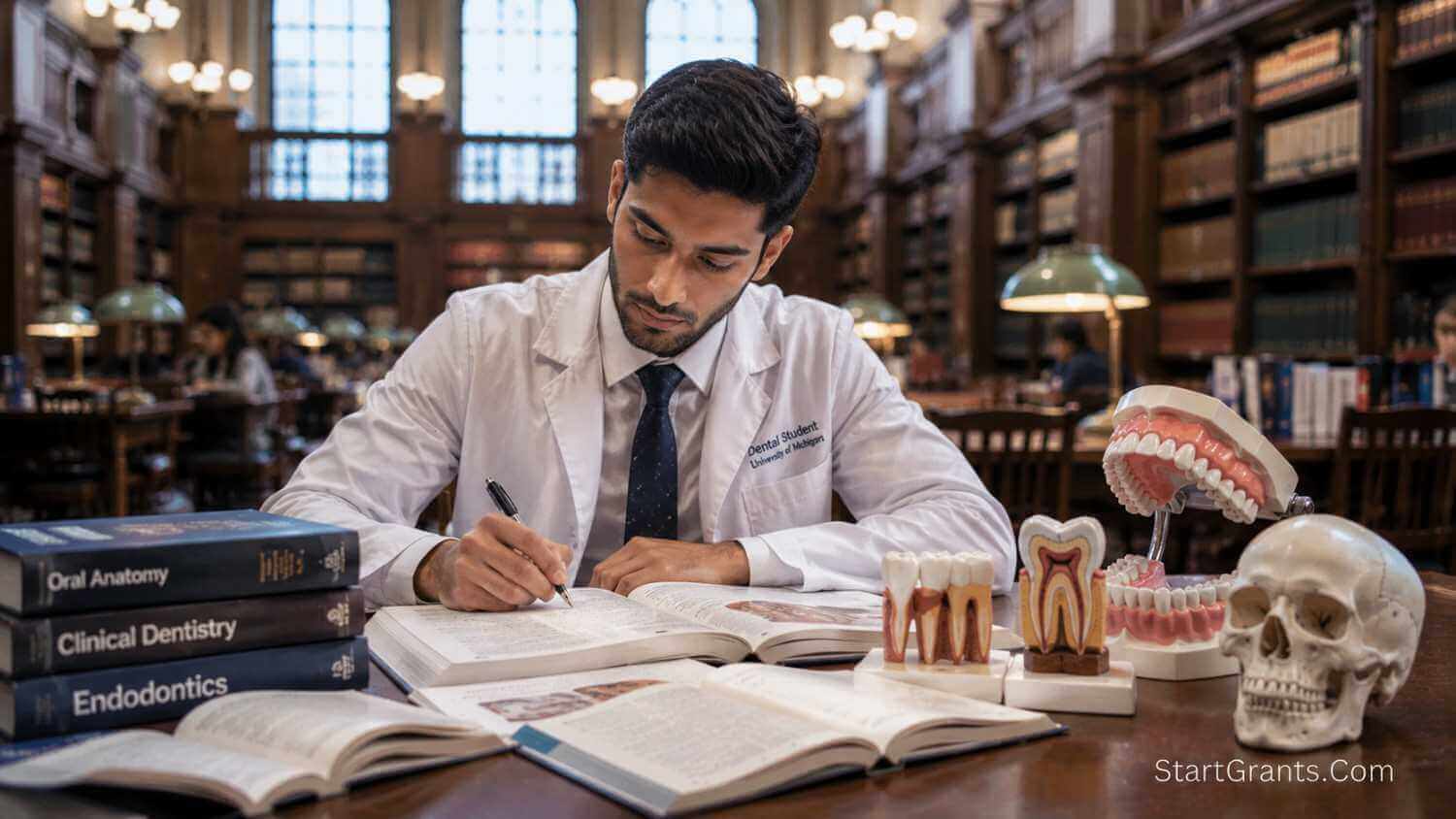
In Islam, the pursuit of medical knowledge is highly revered. Utilizing community endowments, targeted diversity scholarships, and interest-free loans protects Muslim students from the spiritual and financial burden of Riba (usury).
Conclusion: Your Debt-Free Action Plan
Achieving your dream of becoming a dentist does not require accepting a lifetime of debt. Securing “scholarships for minority dental students” requires early preparation, excellent grades, and a demonstrated commitment to your community.
Execute this strategic checklist:
- Join Student Associations Early: During your undergraduate (pre-dental) years, join the Student National Dental Association (SNDA) or Hispanic Student Dental Association (HSDA). Membership is often a strict prerequisite for winning their foundational grants.
- Target HRSA-Funded Schools: When deciding which dental schools to apply to, ask their financial aid office directly: “Does your institution receive HRSA Scholarships for Disadvantaged Students (SDS) funding?” Prioritize schools that have this federal money ready to award.
- Refine Your Diversity Statement: Your personal essay must clearly articulate how your unique background drives your passion to eliminate healthcare disparities in underserved communities.
- Seek Halal Financing: If you face a tuition gap, refuse the Riba-based Grad PLUS loans and apply immediately to A Continuous Charity (ACC) for a zero-interest medical school loan.
The dental profession desperately needs your perspective, your culture, and your skills. Leverage these diversity grants to fund your doctorate, and walk into your future clinic with total financial freedom.
Comprehensive Frequently Asked Questions (FAQs)
Q1: Who qualifies as an “underrepresented minority” in dentistry?
A: The American Dental Education Association (ADEA) generally defines underrepresented minorities in dentistry as populations whose representation in the dental profession is lower than their representation in the general U.S. population. This primarily includes Black/African American, Hispanic/Latino, Native American, and Alaska Native students.
Q2: Can I apply for the HRSA SDS grant before I am accepted into dental school?
A: No. You cannot apply for the HRSA Scholarships for Disadvantaged Students directly through the government. The federal government awards these funds to specific dental schools, and the schools’ financial aid offices disburse the money to enrolled students who meet the disadvantaged criteria.
Q3: Does the ADA (American Dental Association) offer minority scholarships?
A: Yes. The ADA Foundation offers the Underrepresented Minority Dental Student Scholarship. This program awards thousands of dollars annually to second-year dental students who identify as African American, Hispanic, or Native American and demonstrate strong academic excellence.
Q4: Are there specific scholarships for first-generation college students going to dental school?
A: Yes. Many institutional scholarships (funds provided directly by the dental school) have endowments specifically set aside for first-generation college students. When completing your FAFSA and institutional aid profiles, always highlight your status as a first-generation student.
Q5: What is the National Health Service Corps (NHSC) Scholarship?
A: While not exclusively for minorities, the NHSC Scholarship Program pays full tuition, fees, and provides a living stipend for dental students. In return, the student commits to working in a designated Health Professional Shortage Area (HPSA) for at least two years after graduation. Because many minority students intend to serve in these communities anyway, this is a highly strategic full-ride option.
Q6: Can DACA recipients apply for minority dental scholarships?
A: Federal grants (like HRSA and Pell) are strictly limited to U.S. citizens and eligible non-citizens, excluding DACA recipients. However, private associations (like the Hispanic Dental Association Foundation) and specific state-level grants often allow DACA students to apply. You must rely heavily on private foundational money rather than federal aid.
Q7: When should I start applying for these dental scholarships?
A: You should begin applying the summer before your first year of dental school. However, many associations (like the NDA and HDA) also offer specific grants for undergraduate students who are currently in the process of applying to dental school or studying for the DAT (Dental Admission Test).
Q8: Is it Halal to accept a federal grant for dental school?
A: Yes, absolutely. Federal grants, state tuition waivers, and foundational scholarships are unconditional philanthropic or social welfare funds. They do not require repayment and carry zero interest, making them 100% Halal. The prohibition (Haram) applies specifically to taking out student loans that accrue compound interest (Riba).
Important Disclaimer: StartGrants.com is an independent information portal. We are not a government agency, a dental school, or a financial aid provider. Always verify application deadlines and eligibility criteria directly with the respective scholarship foundations and your university’s financial aid office.