Last Updated: August 2026 | Author: Munir Ardi
Hearing your obstetrician say the words “strict bed rest” is a terrifying moment. While the primary concern is the medical safety of you and your unborn baby, a secondary panic immediately sets in: How am I going to pay the bills if I cannot work?
Whether you are suffering from preeclampsia, placenta previa, or risk of preterm labor, bed rest means an instant, unbudgeted loss of income. For single mothers or families living paycheck to paycheck, this medical necessity can quickly lead to eviction notices and empty refrigerators.
You are not alone, and you are not without options. There is specific financial help for pregnant mothers on bed rest designed to bridge this terrifying gap between your last paycheck and the birth of your child.
This 2026 comprehensive guide will walk you through federal cash grants, disability insurance loopholes, housing protection, and faith-based community aid. Before diving into cash assistance, ensure your foundational baby needs are secured by reviewing our main portal on free baby stuff for low-income families.
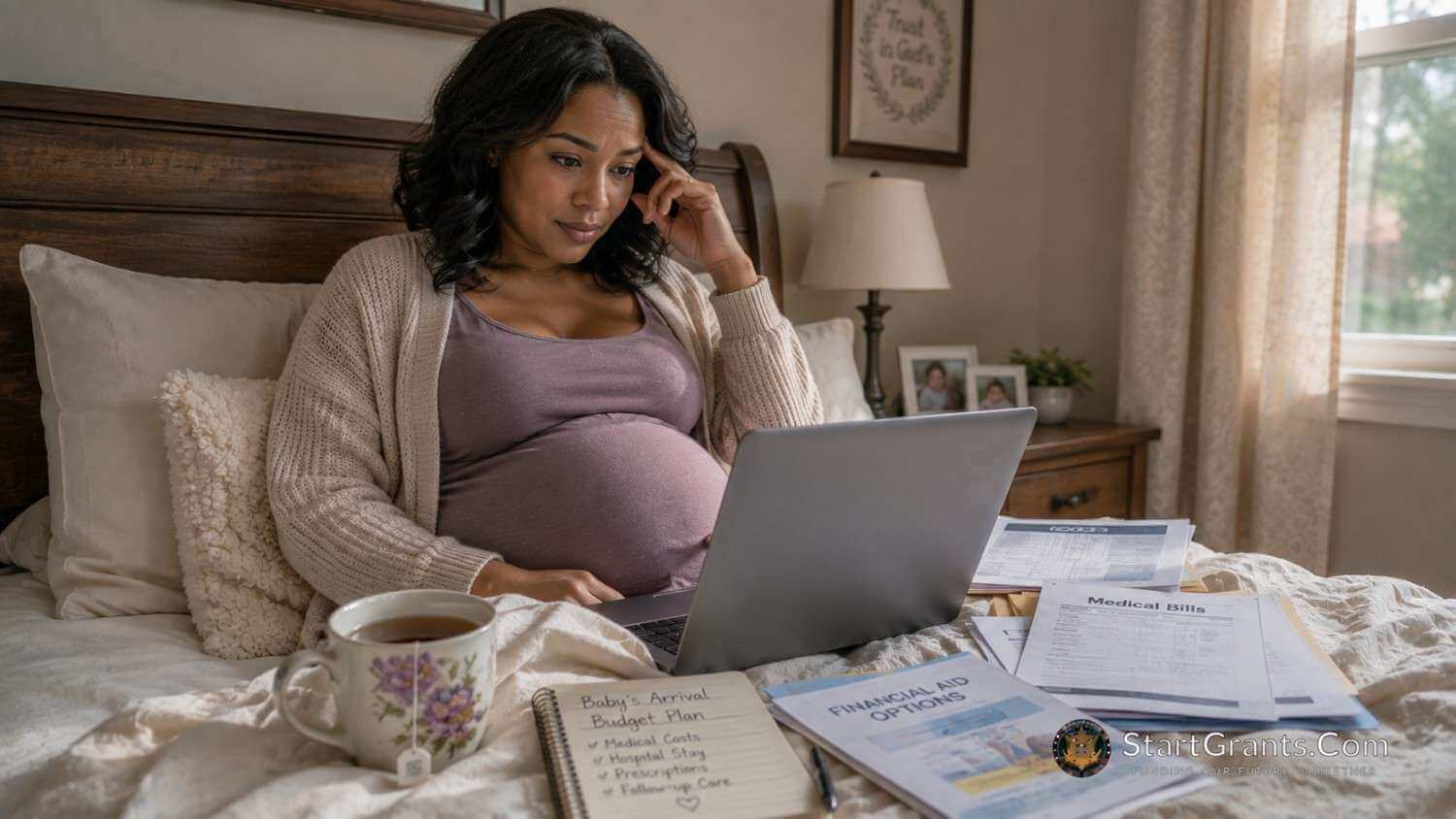
A doctor’s order for strict bed rest is meant to protect your baby’s life, but the sudden loss of income can cause devastating financial stress. Immediate government and community resources are available.
Phase 1: Government Cash Grants (TANF)
When you lose your income due to a medical emergency, your first stop should be the federal safety net.
The Temporary Assistance for Needy Families (TANF) program is a federal block grant distributed by individual states. It provides emergency cash directly to low-income families to help pay for rent, utilities, and groceries.
- The Pregnancy Exception: Historically, TANF was only for families who already had children. However, in most states today, a pregnant woman with no other children can qualify for TANF cash assistance starting in her third trimester, or earlier if a doctor provides written proof of medical incapacitation (bed rest).
- Action Step: You do not need to visit a welfare office in person. Go to the Official HHS TANF Portal to find your state’s online application. Ensure you upload the medical note from your OB-GYN stating you are legally forbidden from working.
Phase 2: Employment Protections & Disability
If you were employed right before your doctor placed you on bed rest, you have distinct legal and financial rights.
1. The Family and Medical Leave Act (FMLA)
First, you must protect your job. Under the FMLA, you are entitled to up to 12 weeks of leave for a serious health condition (which includes pregnancy complications).
- The Catch: FMLA is unpaid. It simply guarantees that you will not be fired while you are in bed, and it forces your employer to maintain your health insurance coverage so you can still afford your hospital delivery.
2. Short-Term Disability (STD) Insurance
Because pregnancy is considered a medical condition, complications that prevent you from working (like bed rest) are covered under Short-Term Disability.
- Employer Policies: Check with your HR department immediately. If your employer provides STD, it will generally pay you 60% to 70% of your normal salary while you are on bed rest.
- State-Sponsored Disability: If your employer does not offer STD, check your state laws. States like California, New York, New Jersey, Rhode Island, and Hawaii have state-mandated disability programs. If you live in California, for example, you can apply for State Disability Insurance (SDI) online and receive up to 70% of your wages paid by the state.
Pro-Tip: Strict vs. Modified Bed Rest (Talk to Your Doctor)
Before you panic about losing your income or file a disability claim, you must clarify your doctor’s exact orders. The American College of Obstetricians and Gynecologists (ACOG) now frequently recommends against “strict” bed rest due to the severe physical and financial strain it causes families. Instead, doctors often prescribe “modified bed rest.” If you are on modified bed rest, you may be legally entitled to work-from-home accommodations from your employer under the Pregnant Workers Fairness Act, saving your paycheck.Watch this excellent breakdown by a certified midwife explaining the medical shift regarding bed rest and how to discuss these modifications with your provider:
Phase 3: Halal Financial Aid (The Islamic Perspective)
For Muslim mothers on bed rest, seeking income replacement often triggers deep concerns regarding Islamic jurisprudence (Fiqh).
The Fiqh of Short-Term Disability Insurance
Many Muslims worry that accepting a disability check constitutes Riba (usury) or Gharar (uncertainty).
- Employer-Paid STD: If your employer pays the premiums for your Short-Term Disability insurance as part of your benefits package, Islamic scholars generally classify this payout as a Hibah (gift) from the employer. It is Halal to accept it.
- State-Mandated SDI: Programs like California’s SDI are state tax programs (similar to unemployment), not commercial gambling. Accepting these state funds during a medical crisis is permissible.
Zakat for Rent and Utilities
If you do not qualify for disability and are facing eviction, your sudden loss of income temporarily places you in the category of Fuqara (the needy).
- Your Right to Zakat: You are strictly entitled to receive Zakat funds to keep a roof over your unborn child’s head.
- Where to Apply: Contact the Zakat committee at your local Masjid. Alternatively, apply for emergency financial assistance through national Muslim organizations like ICNA Relief or the National Zakat Foundation, which specifically provide emergency housing and utility grants to mothers in crisis.

Loss of income due to medical necessity temporarily places families in the category of Fuqara (the needy), making it completely Halal to accept Zakat and community grants.
Phase 4: Emergency Housing & Utility Protection
If cash is running out, you must legally protect your home. You cannot be stressed about eviction while on bed rest—stress spikes blood pressure, which is dangerous for the baby.
- Medical Eviction Stays: In many states, a landlord cannot legally evict you or shut off your utilities (electricity/water) if a doctor provides a “Medical Necessity” form stating that doing so would endanger your life or the baby’s life. Call your local utility company and ask for their Medical Hardship form immediately.
- LIHEAP: Apply for the Low Income Home Energy Assistance Program (LIHEAP) online. This federal grant pays your heating and cooling bills directly so you can use your remaining cash for rent.
Phase 5: Prepare Your “Baby Safety Net” From Bed
Being on bed rest means you cannot go to work, but you can use your smartphone to secure thousands of dollars in free baby gear so you don’t have to buy them later. Use your downtime in bed to apply for these programs online:
- Secure Your Medical Equipment: Since you have Medicaid or insurance, use your phone to contact a DME provider. Learn how to get a free breast pump with Medicaid delivered to your door before you deliver.
- Apply for a Free Bed: Do not buy nursery furniture. Register online for free cribs for low income families through the Cribs for Kids network.
- Secure a Safe Ride: The hospital will require a car seat. Send an email to your local fire department or health agency following our instructions to get a free car seat.
- Stockpile Consumables: Apply for a baby formula assistance program through WIC via a phone interview, and locate emergency diaper assistance programs near me so your partner or family member can go pick them up for you.
Conclusion: Prioritize Your Health
The financial panic of being placed on bed rest is entirely valid, but you must not let it compromise your pregnancy. The government, your employer’s insurance, and faith-based community charities have specific safety nets designed for this exact scenario.
File your disability claim, apply for TANF, and use your time in bed to orchestrate your baby’s logistics from your laptop. Your only true job right now is to keep your baby safe inside you for as long as possible. Let the social safety net handle the rest.
Comprehensive Frequently Asked Questions (FAQs)
Q1: Can I get unemployment benefits if I am put on bed rest?
A: No. To qualify for Unemployment Insurance, you must be “able and available to work.” Because your doctor has declared you medically unable to work, you do not qualify for unemployment. You must apply for Short-Term Disability (STD) instead.
Q2: I am a freelancer/gig worker (Uber, Doordash). Do I get bed rest pay?
A: Generally, independent contractors (1099 workers) do not have employer-sponsored disability insurance. However, if you live in a state with a mandatory state disability program (like California or New York) and you have been paying self-employment taxes into it, you can still claim state disability. If not, your best option is TANF.
Q3: My employer fired me when I went on bed rest. Is this legal?
A: If you qualify for FMLA (you worked there for 12 months, and the company has 50+ employees), firing you is highly illegal. Furthermore, the Pregnant Workers Fairness Act (PWFA) of 2023 requires employers to provide reasonable accommodations. If you were fired illegally, contact the EEOC or a labor lawyer immediately.
Q4: How long does it take for TANF cash assistance to be approved?
A: TANF approval can take 30 to 45 days. However, if you state on your application that you have an “Emergency Need” (e.g., an eviction notice or utility shut-off notice), state agencies are required to expedite your application, often providing emergency cash within 7 days.
Q5: Does bed rest qualify me for SSI (Supplemental Security Income)?
A: No. The Social Security Administration (SSA) only provides disability benefits for conditions that are expected to last for 12 months or result in death. Because a pregnancy bed rest is temporary (lasting only a few weeks or months), it does not meet the strict federal definition of long-term disability.
Q6: Is it Haram to take money from a secular charity if I can’t work?
A: No. Accepting humanitarian financial assistance or food from non-Muslim charities or government entities (like TANF or LIHEAP) is completely permissible in Islam to ensure your survival and the health of your unborn child, as long as there is no requirement to compromise your faith.
Q7: What if my doctor only ordered “Modified Bed Rest”?
A: “Modified bed rest” means you can move around the house but cannot lift heavy objects or stand for long periods. Under the PWFA, your employer must try to accommodate this (e.g., letting you work from home or sit at a desk). If they cannot accommodate you, you may then qualify for short-term disability.
Q8: How do I pay my rent if I’m waiting for disability to kick in?
A: Disability checks often take 2 to 4 weeks to process. Dial 2-1-1 immediately and ask for “Emergency Rental Assistance.” Local charities like the St. Vincent de Paul Society, local Masjids, and the Salvation Army often have rapid-response funds specifically to stop evictions while you wait for your official checks to clear.
Important Disclaimer: StartGrants.com is an independent information portal. We are not a government agency and do not provide direct grants or products. Always verify the current status of programs with the providing organization.