
Last Updated: | Author: Munir Ardi
The Chickasaw Nation currently publishes three separate clothing benefits for eligible citizens: a $350 Youth Services Clothing Grant, a $450 College Clothing Grant, and a $250 Elders Clothing Grant. Each benefit is issued on a nonreloadable Visa card and is restricted to approved clothing purchases. Eligibility, application dates, documentation, and receipt rules differ by program, so applicants should use the official page for their age or student category.
This article focuses specifically on Chickasaw Nation clothing grants. It does not cover the history of Chickasaw clothing or general clothing charities. Readers who are not eligible for a Chickasaw citizen benefit can instead review clothing assistance programs for low-income families.
Current status: As of September 23, 2026, the official Youth Services Clothing Grant page marks the application as available. The published youth application period is June 1 through December 31. Because program terms can change, confirm the current status on the official Chickasaw Nation page before submitting personal documents.
Chickasaw Clothing Grants at a Glance
| Program | Published benefit | Who can apply | Application period |
|---|---|---|---|
| Youth Services Clothing Grant | $350 once per school year | Registered Chickasaw citizens ages 3 through 18, including high school seniors | June 1-December 31 |
| College Clothing Grant | $450 once per school year | Chickasaw citizens enrolled as full-time or part-time college students | August 1-July 31 |
| Elders Clothing Grant | $250 once per year | Chickasaw citizens age 60 or older | January 1-December 31 |
Amounts and dates above were verified against official Chickasaw Nation pages on September 23, 2026. Check the official program page because future funding cycles may change.
Youth Services Clothing Grant
The Youth Services Clothing Grant provides $350 once per school year to an eligible Chickasaw student. The official eligibility list requires the applicant to be a registered Chickasaw citizen between ages 3 and 18, through high school senior year. The program is available to Chickasaw Nation residents and Chickasaws at-large. The official eligibility section does not list a household-income test.
Parents or guardians should use the official Youth Services Clothing Grant page to review the current rules and reach the application. Custody, guardianship, or adoption documents may be required when applicable. A parent or guardian must sign the youth application.
What the youth card can buy
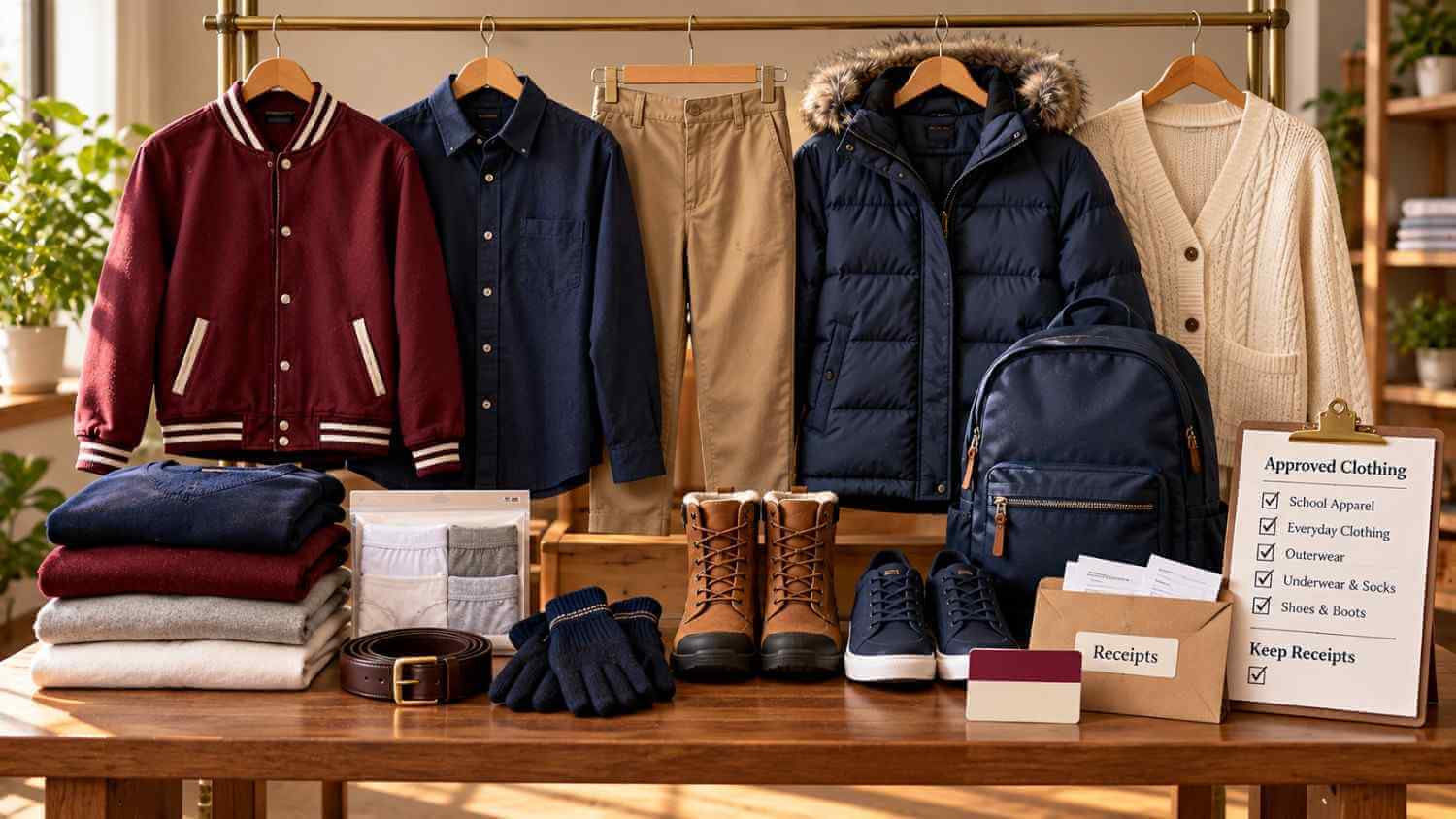
The official purchasing guidelines list eligible items including dresses, shirts, shoes, boots, blouses, pants, shorts, capris, undergarments, school uniforms, jackets, coats, winter gloves, backpacks, and belts.
Published examples of unapproved purchases include groceries, makeup, jewelry, perfume, hair products, flip-flops, tobacco, alcohol, swimsuits, cleats, sports equipment, ball caps, and hats. The examples are not necessarily exhaustive, so ask Youth Services before purchasing an item whose eligibility is unclear.
Receipt and compliance requirements
Youth grant recipients must keep the original receipts. Before the next application period, the official rules require recipients to return those original receipts to the Division of Youth Services by mail or in person, with the student’s first and last name written on each receipt. Transactions are monitored, and a recipient found out of compliance may be placed on probation for the next school year.
This is more specific than simply keeping receipts in case of an audit. Families should follow the current submission instructions from Youth Services and retain copies or photographs for their own records before sending original receipts.
College Clothing Grant
The official Chickasaw Nation College Clothing Grant provides a nonreloadable $450 Visa card to eligible full-time and part-time Chickasaw college students. The official page says funding is provided once per school year and must be used for clothing purchases only.
Documents listed by the official program
- A completed application
- A high school transcript for freshman applicants
- A current class schedule
- A college transcript for sophomore, junior, and senior applicants
The official page advises applicants to allow six to eight weeks for processing and approval. Approved applicants receive an award letter and nonreloadable Visa card by U.S. mail. The card must be activated after arrival. The program states that $10 is deducted for a replacement card.
Elders Clothing Grant
The official Elders Clothing Grant provides $250 once per year to eligible Chickasaw citizens age 60 or older. Applications are accepted January 1 through December 31, according to the current official page.
The benefit is delivered on a nonreloadable Visa card for clothing purchases. The elder program publishes a six-to-eight-week processing estimate, sends an award letter and card by U.S. mail, and deducts $10 for a replacement card. Its approved and unapproved purchase examples are similar to the college program, although applicants should always follow the rules displayed for their specific benefit.
How to Apply Safely
- Choose the correct program. Youth, college students, and elders use separate program pages and eligibility rules.
- Open the application from Chickasaw.net. Do not upload citizenship, custody, transcript, or identity documents to an unofficial grant directory.
- Review the current application dates. A program page may remain online outside its application window.
- Prepare only the documents requested for your program. Youth applicants may need legal custody documents when applicable; college students have academic-document requirements.
- Confirm the mailing address. Award letters and cards are sent by U.S. mail, so contact the program if your address has changed.
- Allow for processing. The college and elder pages publish a six-to-eight-week estimate. The youth page does not currently publish that same estimate, so ask Youth Services rather than assuming a delivery date.
- Activate the card and follow the purchase rules. Keep program-specific records, especially the original receipts required by the youth program.
The Chickasaw Nation notes that the Youth Services Clothing Grant application process has changed. Applicants should follow the current link on the official program page instead of relying on an old portal bookmark or an outdated third-party tutorial.

Save This Chickasaw Clothing Grant Checklist
[ ] Confirm that you are using the youth, college, or elder program page.
[ ] Check the current application window on Chickasaw.net.
[ ] Confirm Chickasaw citizenship and age or student-status requirements.
[ ] Gather custody documents or academic records only when required.
[ ] Verify the mailing address used for the award letter and card.
[ ] Read the approved and unapproved purchase lists before shopping.
[ ] Keep receipts and follow the youth program’s original-receipt return rule when applicable.
[ ] Contact the official program before making an uncertain purchase.
If You Are Not Eligible
These benefits are limited to eligible Chickasaw citizens. They are not nationwide clothing grants for anyone with Native ancestry, and StartGrants.com cannot determine citizenship or enroll a person in the Chickasaw Nation. Families who do not qualify can look for school clothing closets, local 211 referrals, community action agencies, tribal programs for citizens of their own nation, and nonprofit clothing assistance. The broader clothing-assistance guide linked near the beginning of this article covers those alternatives.
A Muslim Perspective
A restricted clothing benefit is not a loan and does not create interest charges merely because it is delivered on a prepaid card. The important ethical issue is amanah: applicants should state eligibility truthfully, use the benefit only for permitted items, and preserve or return receipts as required. A Muslim family should not assume that financial hardship automatically establishes eligibility for zakat or for a tribal citizen benefit; each program has its own rules. Those considering zakat, sadaqah, or community assistance as an alternative may wish to consult a knowledgeable local scholar and the organization administering the funds.
Frequently Asked Questions
How much is the Chickasaw Nation Youth Services Clothing Grant?
The official program currently provides $350 once per school year to an eligible Chickasaw student. The amount should be confirmed on the official program page before applying because future funding cycles may change.
Who qualifies for the Youth Services Clothing Grant?
The official eligibility list covers registered Chickasaw citizens ages 3 through 18, including high school seniors. Legal documents for custody, guardianship, or adoption may be required when applicable.
Can Chickasaw citizens living outside the Chickasaw Nation apply?
Yes. The official youth program page identifies both Chickasaw Nation residents and Chickasaws at-large as service populations.
Can the youth clothing card pay for a backpack?
Yes. Backpacks appear on the youth program’s current list of eligible purchases. Sports equipment, ball caps, hats, groceries, makeup, jewelry, and other listed non-clothing items are not approved.
Does the youth program require original receipts?
Yes. Before the next application period, the official rules require all original receipts to be returned to the Division of Youth Services by mail or in person, with the student’s first and last name written on each receipt.
Is there a Chickasaw clothing grant for college students?
Yes. The current College Clothing Grant provides a nonreloadable $450 Visa card once per school year to eligible full-time and part-time Chickasaw college students.
Is there a Chickasaw clothing grant for elders?
Yes. The current Elders Clothing Grant provides $250 once per year to eligible Chickasaw citizens age 60 or older.
Is the Chickasaw clothing grant based on household income?
The current official eligibility lists reviewed for this article do not state a household-income test. They instead list Chickasaw citizenship and the applicable age or college-enrollment requirements. Applicants should check the current official page for any revised conditions.
Disclaimer: StartGrants.com is an independent information portal. It is not affiliated with the Chickasaw Nation, does not administer these programs, cannot determine citizenship or eligibility, and does not accept applications or personal documents. Program amounts, dates, purchasing rules, and application procedures can change. Confirm all terms directly with the Chickasaw Nation before applying or spending award funds.