
Last Updated: May 2026 | Author: Zee
In the 2026 academic landscape, technology is no longer a luxury; it is the primary weapon for student success. However, the cost of high-performance laptops and essential software can create a massive financial breach for many families. While our pilar manual on securing free government laptops for low-income families provides a strong baseline defense, there is a specialized sector of funding known as technology grants that many students overlook.
Technology grants for higher education are designed to bridge the digital divide. Unlike generic scholarships, these funds are specifically earmarked for hardware, software, and internet connectivity. By understanding how to activate federal, corporate, and institutional grants, you can equip yourself with a professional-grade digital command center for $0 out-of-pocket.
In this 2026 tactical guide, we will reveal the “federal tech loophole,” identify massive corporate grant opportunities, and establish a protocol for securing emergency technology funding from your institution.
Before deploying these tactics, ensure you understand the specific requirements for students by reviewing our support guide on how to get a free laptop for college to maximize your potential for a double-award.

Mastering technology grants is the key to building your digital command center without getting trapped in hardware debt.
Phase 1: The Federal Tech Loophole (Pell Grant Activation)
The most common source of technology funding is hidden in plain sight within your federal aid package. Federal regulations allow for “Cost of Attendance” (COA) adjustments that specifically include the purchase of a personal computer.
Converting Aid into Hardware
If you receive a Federal Pell Grant, the funds are first applied to your tuition. However, any remaining balance is disbursed to you as a refund. Under Title IV federal guidelines, you are legally permitted to use these funds for “educational expenses,” which explicitly includes a laptop and necessary software. Furthermore, you can request a “Professional Judgment” from your financial aid office to increase your budget for a one-time computer purchase, which may trigger additional grant eligibility.
To understand the exact programs available and how to navigate federal regulations regarding the use of financial aid and non-profit grants for technology, review this comprehensive briefing:
Phase 2: Corporate & Private Technology Artillery
Massive technology corporations have established grant foundations to ensure the next generation of workers is digitally equipped. These are not loans; they are pure endowments for students in high-need categories.
Corporate Command: Dell, Google, and Microsoft
Programs like the Dell Scholars provide a $20,000 scholarship that specifically includes a brand-new Dell laptop with a full technology support package. Similarly, Google and Microsoft offer specialized grants for students entering STEM fields that provide hardware stipends. These corporate grants often have early deadlines, typically in the fall semester, so you must have your academic transcripts and personal statements ready for deployment ahead of time.
Phase 3: Institutional Emergency Tech Grants
If your laptop fails in the middle of a semester, you do not have time to wait for a federal refund cycle. This is where you activate the Emergency Technology Fund at your specific university.
Triggering the Emergency Override
Most universities, especially after the digital shift of the early 2020s, maintain an emergency grant reserve for students facing “technology insecurity.” By visiting the Dean of Students or the Financial Aid Office, you can apply for an emergency grant (often ranging from $500 to $1,500) to replace a broken computer or pay for high-speed internet. These grants are usually awarded once per academic career and do not need to be repaid.
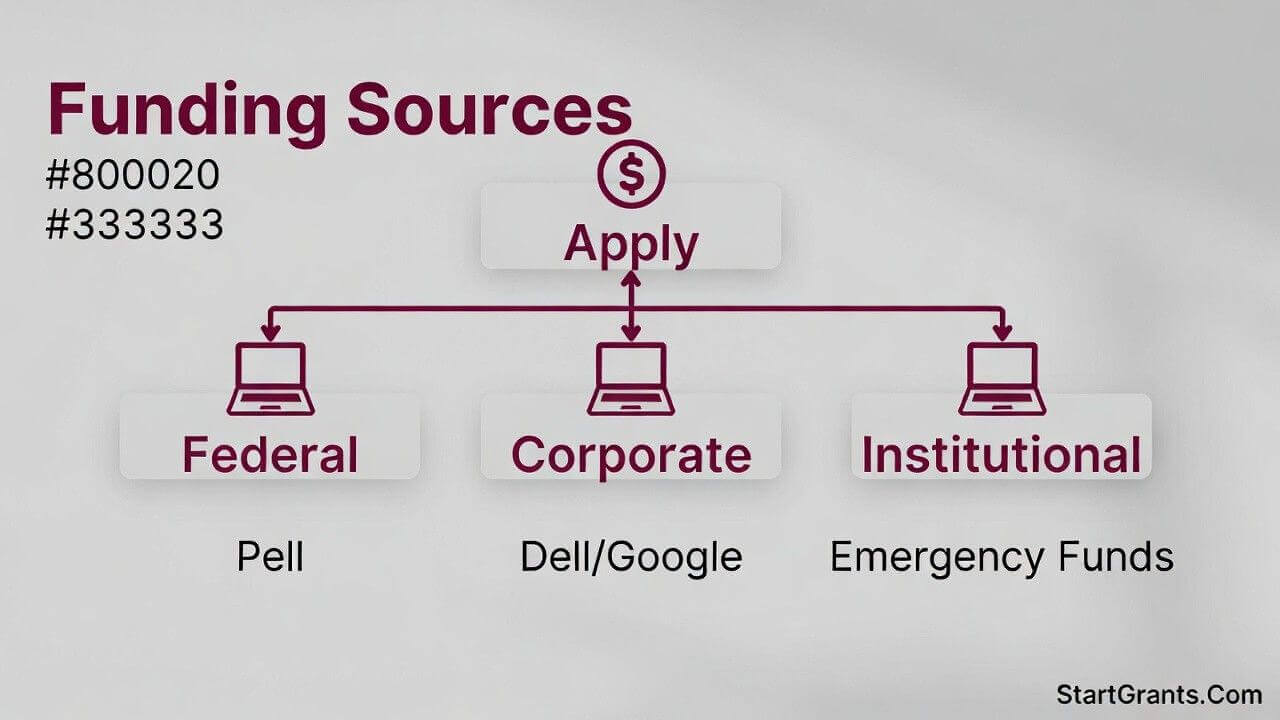
Don’t rely on just one source; diversify your search for technology grants to ensure 100% coverage of device costs.
Phase 4: The Halal Tech Protocol (Riba-Free Gear)
For Muslim students committed to avoiding Riba (interest), purchasing expensive technology often leads to a trap: high-interest credit cards or “Buy Now Pay Later” schemes that include hidden interest penalties.
Securing a 0% Interest Digital Edge
The Halal Tech Protocol requires you to prioritize “Gift Aid” (Grants) over any form of financing. By aggressively targeting corporate technology grants and institutional emergency funds, you ensure that you own your hardware outright. Owning your computer without interest-bearing debt allows you to focus 100% of your energy on your studies. To master the broader strategy of a debt-free education, execute our master guide on getting grants and scholarships for Muslim college students in the U.S.
Conclusion: Your Technology Action Plan
Securing a high-end laptop for college is a tactical process, not a matter of luck. By stacking federal, corporate, and institutional grants, you can eliminate the “digital gap” entirely.
Execute this tactical checklist to secure your tech gear:
- Verify Pell Disbursement: Check your student portal to see when your refund check will be issued, and earmark those funds for your laptop purchase.
- Apply for Dell Scholars: If you are eligible, this is the gold standard for tech grants; apply as soon as the window opens in October.
- Locate the Emergency Fund: Find the specific “Emergency Grant” application on your university’s website today so you know exactly where to go if your tech fails.
Frequently Asked Questions (FAQs)
Q1: Can technology grants be used for tablets or software?
A: Yes. Most technology grants are flexible and can be used for any hardware (laptops, tablets, printers) or software (Adobe Creative Cloud, Microsoft 365) required for your specific degree program.
Q2: Do technology grants have to be paid back?
A: No. Grants are considered “gift aid.” As long as you maintain your enrollment and meet the academic requirements of the grant, you never have to repay the funds.
Q3: How do I prove I need a technology grant?
A: Universities typically use your FAFSA data to determine financial need. For emergency grants, you may need to provide proof of a broken device or a letter explaining why your current tech is insufficient for your coursework.
Q4: Can I get more than one technology grant?
A: Yes. You can “stack” grants. For example, you can use a portion of your Pell Grant for a laptop and still apply for a corporate technology scholarship or a campus emergency grant.
Q5: Is there a specific grant for internet access?
A: While the federal ACP program has changed, many states and universities offer specific “Digital Equity” grants or hotspots for students to ensure they have stable internet for remote learning.
Important Disclaimer: StartGrants.com is an independent information portal. We are not a government agency and do not provide direct grants or products. Always verify the current status of programs with the providing organization.