
Last Updated: | Author: Munir Ardi
CPP financial aid may include federal, California state, university, and private assistance, including grants and scholarships for eligible students. To get started, submit the FAFSA or California Dream Act Application (CADAA) that applies to you, review your offer in BroncoDirect, and apply separately for campus scholarships through the Bronco Scholarship Portal. Aid depends on eligibility, program, enrollment, available funding, and each award’s terms; applying does not guarantee a grant or a debt-free degree.
For the 2026–27 academic year, CPP says the FAFSA and CADAA priority deadline has passed, but applications are still being accepted for fall 2026, spring 2027, and summer 2027. Apply as soon as possible and ask the CPP Financial Aid and Scholarships Office which aid remains available to you. Missing a priority deadline can affect eligibility for some California and CPP grants.
For a broader explanation of campus-based grants and endowments, see our guide to university-specific grants and endowments. Students comparing financial-aid procedures at another California State University campus can also review our San José State University financial aid guide.
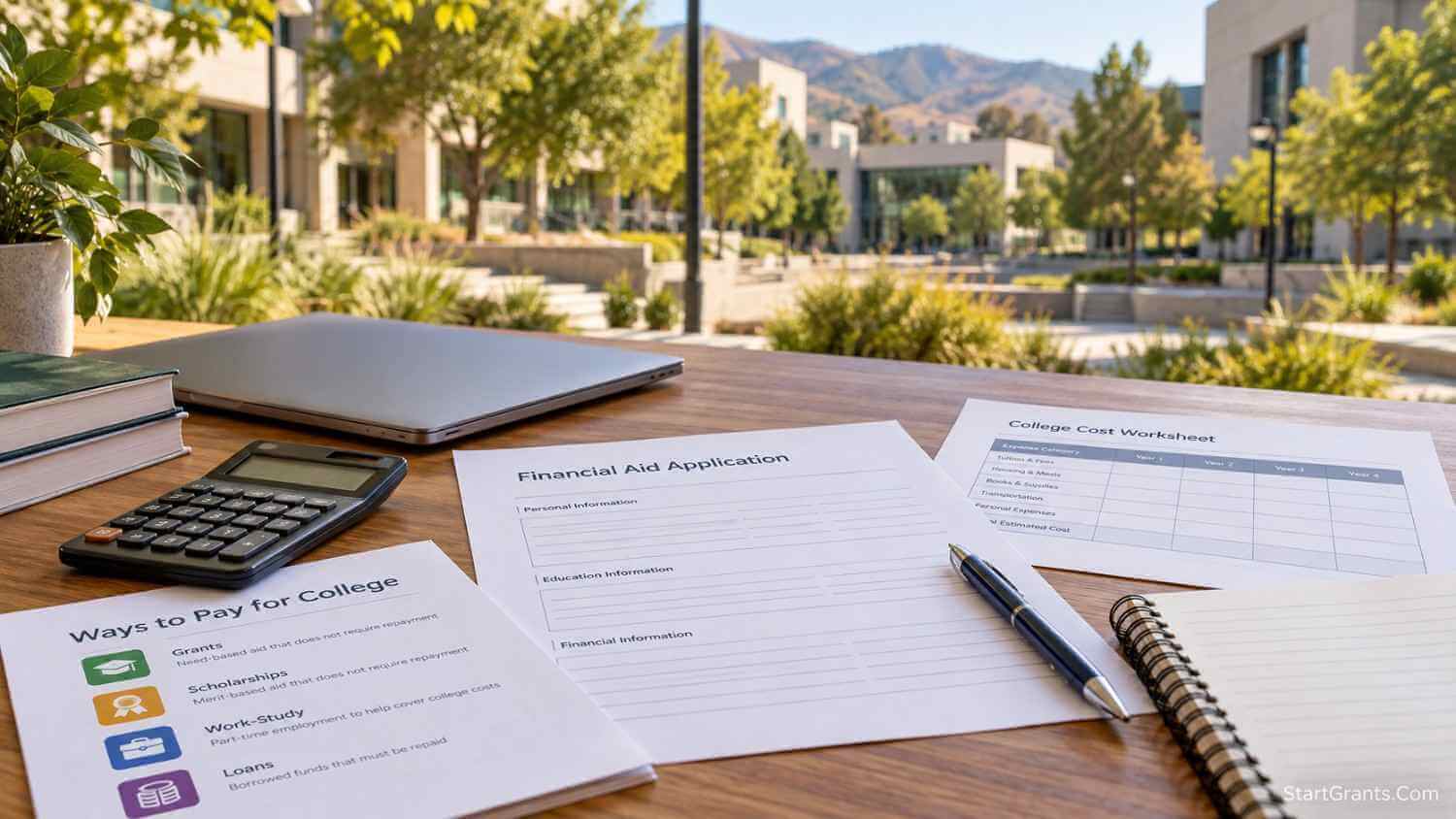
Start With FAFSA or the California Dream Act Application
For federal student aid, eligible U.S. citizens and eligible noncitizens generally submit the Free Application for Federal Student Aid (FAFSA). Students who are not eligible to file FAFSA but meet California Dream Act requirements may use the California Dream Act Application (CADAA) for certain California and campus aid. Use the application that fits your status; the two forms do not provide identical types of aid.
Add Cal Poly Pomona to your application using federal school code 001144. CPP says its 2026–27 priority deadline has passed, but FAFSA and CADAA submissions are still being accepted. Late applicants may not qualify for every state-funded or CPP grant, so submit promptly and ask the financial-aid office what remains possible for your situation. Check CPP’s current Financial Aid and Scholarships announcements for updated instructions and deadlines.
Financial aid is not limited to California residents. Federal aid and private scholarships have their own eligibility rules. However, many California state and CPP grant programs require California residency or an eligible AB 540 status, a qualifying program, financial need, and a timely FAFSA or CADAA.
Cal Poly Pomona Grants and Financial Aid Options
| Aid option | What it may help with | What to verify |
|---|---|---|
| Federal Pell Grant | Need-based federal gift aid for eligible undergraduate students. | FAFSA, federal eligibility, enrollment, and award amount. |
| Cal Grant and State University Grant (SUG) | California aid that may help with the CSU systemwide tuition fee. | Residency or AB 540 status, financial need, timely application, and how CPP coordinates tuition-paying awards. |
| Middle Class Scholarship (MCS) | A California scholarship for eligible undergraduate students and teaching-credential students. | Current income and asset ceilings, FAFSA/CADAA deadline, enrollment, other aid, and the final CSAC-calculated award. |
| CPP and donor-funded scholarships | Campus, college, department, organization, or donor awards; criteria vary. | Bronco Scholarship Portal requirements, supplemental essays, eligibility, and each award deadline. |
| Work-Study and loans | Work-Study is earned through a job; loans are borrowed funds that must be repaid. | Job availability, offered amount, interest, fees, repayment terms, and whether borrowing is necessary. |
A financial aid offer may combine several aid types. Compare gift aid, wages, and loans separately, and review the net price you would still need to cover. CPP’s current undergraduate aid-program page explains the programs and how they are coordinated.
Federal Aid: Pell Grants, FSEOG, Work-Study, and Loans
For the 2026–27 award year, CPP lists the maximum Federal Pell Grant as $7,395. Pell is generally for eligible undergraduates who have not earned a bachelor’s, graduate, or professional degree. Your individual amount may be lower and depends on federal eligibility and enrollment rules.
Some Pell-eligible students with exceptional financial need may also be considered for the Federal Supplemental Educational Opportunity Grant (FSEOG). Funding is limited, so not every eligible student receives it. Federal Work-Study is different: it offers the opportunity to earn wages in an approved job and is not an upfront tuition grant or a guaranteed job placement.
Federal student loans are borrowed funds. Before accepting a loan, review the amount you need, interest and fees, repayment terms, and other aid available to you. The aid offer should identify which funds are grants, scholarships, work-study, and loans.
California Grants: Cal Grant and State University Grant
California residents and students with qualifying AB 540 status may be considered for state grants after filing FAFSA or CADAA and meeting the applicable eligibility rules. Cal Grant A and B may help with the CSU systemwide tuition fee; Cal Grant B may also include an access award for eligible non-tuition expenses. The California Student Aid Commission (CSAC) determines Cal Grant eligibility.
CPP’s State University Grant (SUG) is a need-based grant for eligible students who meet CPP and CSU rules. It is intended for the systemwide tuition fee, and funding is limited. Cal Grant and SUG are not two awards to count on stacking in full: CPP says a Cal Grant supersedes SUG because both assist with the state tuition fee. Review your actual offer and ask CPP how it coordinated any other tuition scholarship or waiver.
CPP’s page currently states that the 2026–27 priority filing date for California and campus grants has passed. It also says late FAFSA and CADAA applications are still being accepted for 2026–27. A late application may still be useful for federal aid or other opportunities, but do not assume it restores eligibility for a missed state or campus grant deadline.
Middle Class Scholarship: Check the Current-Year Rules
The California Middle Class Scholarship is for eligible undergraduates and students in qualifying teaching-credential programs. It is not simply a flat discount based only on family income. CSAC calculates an award using eligibility rules, the school’s cost of attendance, other gift aid, and required student or parent contributions. Estimated awards can change when other aid or eligibility information changes.
For 2026–27, CSU lists income and asset ceilings of up to $250,000 each for dependent students and independent students with dependents other than a spouse. Different income and asset limits apply to independent students without dependents. Being under a ceiling does not guarantee an award; students also must meet the program’s other requirements and apply by the relevant priority deadline. See the current CSU Middle-Class Scholarship eligibility and award information and the annual CSAC limits before relying on an estimate.
Apply for Campus Scholarships Through the Bronco Scholarship Portal
CPP’s campus scholarship system is called the Bronco Scholarship Portal (BSP). The general application can match students to awards based on the information they provide, but some scholarships require extra questions or documents. Applicants should review each listing and its full criteria rather than assuming one application completes every requirement.
The 2026–27 scholarship application cycle has closed. CPP’s portal says it is scheduled to reopen on October 1, 2026 for the 2027–28 cycle. CPP describes Scholarship Season as running from October 1 through March 2, while individual awards may have different supplemental requirements. Check the official CPP scholarship instructions and Bronco Scholarship Portal status before applying; dates and opportunities can change.

CPP says its scholarships may be based on academic and career goals, achievement, financial need, service, organizational affiliation, or other award-specific criteria. Not every award is need-based. Check the portal periodically because opportunities may be added at different times. Awards can affect the rest of a financial aid package, so report outside scholarships as CPP instructs.
Monitor Your Aid Offer and Follow Up on To-Do Items
After filing FAFSA or CADAA, check BroncoDirect and your CPP email for missing documents, verification requests, award notices, and changes to your offer. A verification request is not a rejection, but CPP may need the requested documents before it can complete processing. Respond through the method specified by the university and use secure university channels for sensitive records.
CPP’s financial-aid office notes that enrollment and satisfactory academic progress can affect aid. If your enrollment, residency classification, program, or family circumstances change, contact the office to learn how that may affect your award. Read the conditions before withdrawing from courses or accepting a loan.
A Muslim Perspective: Evaluate the Funding Terms
Muslim students who are concerned about riba may want to distinguish grants and scholarships from loans, employment, and tuition benefits before accepting an aid package. Awards and contracts have different conditions, and no single religious ruling applies to every financial product or personal situation.
- Read whether the offer is gift aid, wages from a campus job, a tuition benefit, or a loan that must be repaid with interest. Ask the financial-aid office how a scholarship or outside award changes the rest of your package.
- Compare grants, scholarships, paid work, and family or community support before borrowing. Some mosques or Muslim organizations may offer scholarships or qard hasan (interest-free loans), but confirm availability and written terms directly.
- If asking about zakat support, follow the sponsoring organization’s eligibility rules; financial need alone does not establish zakat eligibility.
- For a specific loan agreement or scholarship contract, consult a qualified Islamic-finance scholar familiar with U.S. education financing. Do not rely on a general article as a fatwa.
For broader scholarship ideas, see our guide to grants and scholarships for Muslim college students.
Save This Cal Poly Pomona Financial Aid Checklist
- [ ] File the FAFSA or CADAA that applies to your situation and add CPP code 001144.
- [ ] If applying for 2026–27 aid after the priority deadline, contact CPP to ask which aid is still available.
- [ ] Compare grants, scholarships, work-study, and loans as separate aid types.
- [ ] Check BroncoDirect and CPP email for verification requests and missing documents.
- [ ] Check the Bronco Scholarship Portal when it reopens October 1, 2026, for the 2027–28 cycle.
- [ ] Read each scholarship’s eligibility, supplemental requirements, deadline, and award conditions.
- [ ] Review how enrollment changes, withdrawals, or outside scholarships may affect your aid.
Frequently Asked Questions
Is Cal Poly Pomona still accepting FAFSA or CADAA applications for 2026–27?
Yes. CPP says the 2026–27 priority deadline has passed, but applications are still being accepted for fall 2026, spring 2027, and summer 2027. A late application may affect eligibility for some state or CPP grants, so contact the university about your options.
What is Cal Poly Pomona’s federal school code?
Cal Poly Pomona’s federal school code is 001144. Add it to your FAFSA so the university can receive your information.
Can I receive both a Cal Grant and the State University Grant at CPP?
Do not count on receiving both in full. CPP says Cal Grant supersedes SUG because both help pay the CSU systemwide tuition fee. Ask CPP how it has coordinated your specific award and any other tuition-designated aid.
How do I apply for Cal Poly Pomona scholarships?
Use the Bronco Scholarship Portal. Complete the general application, then check each recommended scholarship for additional eligibility requirements, essays, documents, and deadlines.
Does the Middle Class Scholarship guarantee an award if my family income is below the limit?
No. Income and asset ceilings are only part of eligibility. CSAC calculates the award using current program rules, cost of attendance, other gift aid, and required contributions. Awards can change after initial estimates.
Does Cal Poly Pomona guarantee that students can graduate without loans?
No. Financial aid varies by student, program, eligibility, and available funding. Compare your aid offer with the total cost of attendance and decide whether any remaining gap requires borrowing or another funding source.
Important disclaimer: StartGrants.com is an independent information portal. It is not Cal Poly Pomona, a government agency, or a scholarship provider. Financial-aid eligibility, deadlines, award amounts, and program rules can change. Verify your status and award details with CPP, the California Student Aid Commission, and the relevant federal agency before making enrollment or borrowing decisions.