
Last Updated: May 2026 | Author: Zee
In the high-stakes arena of college funding, most students spend their time polishing generic essays and obsessing over standardized test scores. While these are valid tactics, they often lead you into a “Red Ocean” of overwhelming competition. To truly win the tuition war, you must sometimes look for the “hidden keys”—highly specific endowments that most applicants literally cannot touch.
One of the most legendary examples of this is the Zolp Scholarship from Loyola University Chicago. This is not a scholarship based on athletic prowess or scientific breakthroughs; it is a legacy grant based on something you were born with: your last name. If your name is Zolp and you meet the religious requirements, you have unlocked one of the most exclusive financial vaults in American higher education.
In this 2026 tactical guide, we will dismantle the requirements for the Zolp Scholarship. We will explain the administrative “Identity Moat,” provide a strategy for verifying your lineage, and explore how Loyola’s wider institutional endowments can fund your degree even if you aren’t a Zolp.
Before deploying this niche identity strategy, ensure you have mapped out the entire institutional landscape. Review our master command manual on university-specific institutional grants and endowments to see how this fits into your broader operation.
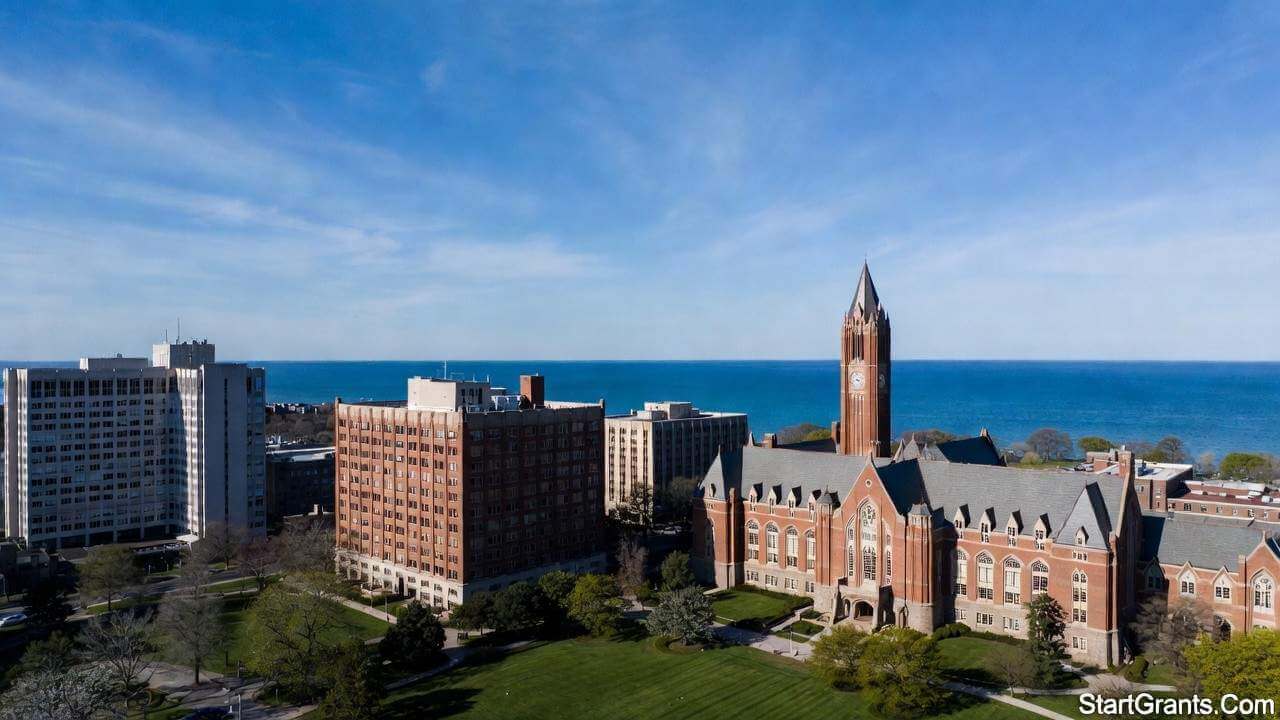
Loyola University Chicago not only offers a world-class education but also houses one of the most unique endowments in America: the Zolp Scholarship.
Phase 1: The Power of a Last Name (The Zolp Requirement)
The Zolp Scholarship is an “endowed” fund, meaning it was created by a specific donor with very rigid rules. Unlike the broad merit systems at the Vanderbilt University, this grant targets a hyper-specific demographic.
The Eligibility Matrix
To be considered for this specific fund at Loyola University Chicago, you must satisfy two primary conditions:
- The Name Test: Your legal last name must be “Zolp” at the time of birth and at the time of application. Marriage-based name changes generally do not qualify unless the birth name was Zolp.
- The Faith Component: You must be a practicing Catholic. This usually requires proof of baptism or a letter from your parish.
To understand the values, the prestigious environment, and how the financial aid process operates at an institution that manages such unique legacy endowments, watch this official Financial Aid Overview from Loyola University Chicago:
Phase 2: Administrative Verification (Breaching the Identity Moat)
Because this scholarship is so specific, the administrative scrutiny is intense. You cannot simply “claim” to be a Zolp; you must prove it through a series of legal and religious documents.
The Documentation Strategy
To successfully breach the administrative moat, gather the following documentation before the financial aid deadline:
- Certified Birth Certificate: This is the ultimate proof of your birth name. Ensure it is a certified copy from the state or county records.
- Baptismal Records: Since Loyola is a Jesuit Catholic institution, verifying your faith status via a baptismal certificate is a mandatory step for the Zolp fund.
- FAFSA Submission: Even for legacy scholarships, Loyola requires the FAFSA to be on file to coordinate your total financial aid package.

In this battle for a scholarship, your surname is your strongest ammunition. Valid administrative proof is the key to unlocking this legacy vault.
Phase 3: Loyola’s Wider Endowment (If You Aren’t a Zolp)
If your last name isn’t Zolp, do not retreat. Loyola University Chicago manages hundreds of other institutional grants that are less famous but significantly more accessible to the general student body.
Merit-Based Fortresses
Loyola automatically considers all freshmen for merit scholarships ranging from $15,000 to $28,000 per year. These are based on your high school GPA and academic rigor. Unlike the Zolp grant, these are “broad-spectrum” weapons designed to attract talent from all backgrounds.
Phase 4: The Halal Financial Defense (Muslim Perspective)
For Muslim students, the existence of scholarships like the Zolp grant highlights a critical tactical lesson: Exploit the Niche. While you may not qualify for a Catholic last-name grant, the strategy of hunting for “hidden” institutional money is the most effective way to avoid Riba (interest-bearing debt).
Niche Hunting as a No-Riba Strategy
Your goal is to find the equivalent of the “Zolp” fund for your specific identity—whether that is based on your field of study, your community service, or your ethnic background. By stacking these niche institutional grants with your federal aid, you can eliminate the need for predatory student loans. If a gap remains, always prioritize zero-interest (Qard Hasan) funding. To secure a debt-free degree, execute our master guide on grants and scholarships for Muslim college students.
Conclusion: Your Loyola Action Plan
Whether you are a Zolp or a high-achieving student from a different background, Loyola Chicago’s vault is open to those who follow the proper protocol.
Execute this tactical checklist to secure your Loyola funding:
- Apply Early: Legacy and endowed scholarships often have earlier internal deadlines than general admission.
- Gather Legal Proof: If you are applying for a name-based or legacy grant, have your certified documents ready before you even hit “Submit.”
- Exhaust the Portal: Once you are admitted to Loyola, log into their internal scholarship portal to find hundreds of smaller, niche endowments that are often ignored by other students.
Frequently Asked Questions (FAQs)
Q1: Is the Zolp Scholarship real?
A: Yes. It is a legitimate endowed scholarship at Loyola University Chicago specifically for students whose last name is Zolp and who are of the Catholic faith.
Q2: How much money is the Zolp Scholarship worth?
A: The amount varies depending on the annual return of the endowment fund, but it typically covers a significant portion of tuition for eligible students.
Q3: Can I get the Zolp scholarship if I changed my name?
A: Generally, the name Zolp must be your birth name and your legal name at the time of application. Administrative proof (birth certificate) is required.
Q4: What if I am not Catholic but my name is Zolp?
A: The specific requirements of the Zolp endowment include being of the Catholic faith. You would likely be disqualified without proof of church affiliation.
Q5: Does Loyola Chicago offer other scholarships?
A: Absolutely. Loyola offers millions of dollars in merit-based scholarships (up to $28,000/year) and other niche endowed scholarships that are not based on your last name.
Q6: Are there similar scholarships for other last names?
A: Yes. Several universities across the US have hyper-specific name-based scholarships (like the Gatlin or Scarpinato scholarships at other schools). Always check the “Endowed Scholarships” list in any university’s financial aid portal.
Important Disclaimer: StartGrants.com is an independent information portal. We are not a government agency and do not provide direct grants or products. Always verify the current status of programs with the providing organization.