
Last Updated: July 2026 | Author: Munir Ardi
The fight against climate change, deforestation, and urban pollution cannot be won through good intentions alone. Rebuilding ecosystems, transitioning to renewable energy, and conducting critical ecological studies require massive, sustained financial investment. To shoulder this burden, the United States government relies heavily on local communities, dispersing billions of dollars annually through government grants for environmental projects.
However, securing this capital is a complex bureaucratic process. Federal agencies do not hand out checks to random individuals with a green idea. They award these massive funds to highly organized, legally compliant entities that can prove their projects will yield measurable, long-term ecological benefits.
Before you begin drafting an environmental proposal, you must ensure your organization is legally recognized and ready to handle federal capital. Review the foundational prerequisites in our master guide on Government Grants for Nonprofit Organizations & 501(c)(3) Opportunities.
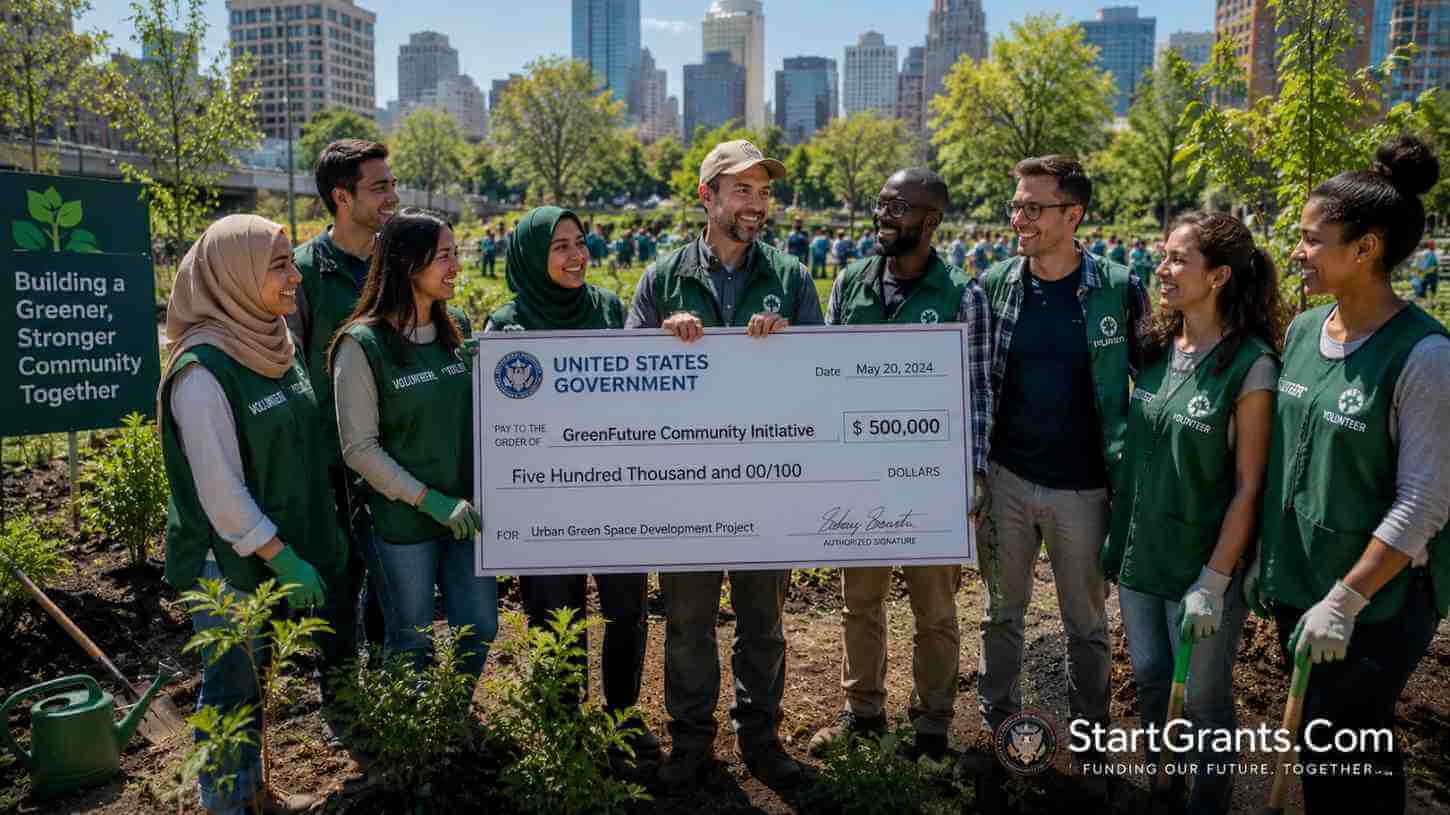
Securing government grants for environmental projects enables local nonprofits to execute massive conservation, sustainability, and reforestation efforts without incurring institutional debt.
Phase 1: The Environmental Funding Ecosystem
Unlike simple community block grants, environmental funding is highly compartmentalized. The capital flows primarily from three massive federal agencies: the Environmental Protection Agency (EPA), the Department of Agriculture (USDA), and the Department of the Interior (DOI).
To win a grant, your organization must align its mission with the specific strategic goals of these agencies. Whether your goal is to clean up a polluted local river, build a community solar grid, or plant an urban forest, you must target the specific sub-category of funding designed for that exact purpose. The three most lucrative funding avenues are Research, Sustainability, and Conservation.
Phase 2: How to Get Environmental Research Grants
The foundation of all environmental policy is hard data. Before the government can pass laws to restrict a chemical or protect a specific watershed, they need scientific proof. Because the EPA cannot employ enough scientists to monitor every square mile of the country, they offer massive environmental research grants to universities, laboratories, and specialized 501(c)(3) organizations.
Targeting the P3 and STAR Programs
The EPA’s Science to Achieve Results (STAR) program is the holy grail for environmental researchers. This program funds cutting-edge studies on air quality, safe drinking water, and the ecological impacts of manufactured chemicals. Additionally, the People, Prosperity, and the Planet (P3) program offers grants to student-led research teams (operating under their university’s umbrella) to design sustainable technologies.
Securing these funds requires an uncompromising level of scientific rigor. Your methodology must be flawless, and your proposal must survive a brutal peer-review process by other PhD-level scientists. To ensure your scientific proposal meets federal standards, master the specific tactics outlined in our guide on Applying for Research Grants: The Ultimate Tips.
Phase 3: How to Get Environmental Sustainability Grants
While research identifies the problem, sustainability focuses on the long-term solution. If you are wondering how to get environmental sustainability grants, your project must focus on creating systems that meet current human needs without compromising future generations. This is where the heaviest capital investment is currently flowing.
Renewable Energy and Zero-Waste
The Department of Energy (DOE) and the EPA heavily fund community-level sustainability. Local nonprofits and municipalities can apply for grants to retrofit community centers with solar panels, establish city-wide composting and zero-waste initiatives, or transition local public transportation to electric vehicles.
To win a sustainability grant, your proposal must prove a Return on Investment (ROI). The federal reviewers want to see the math. If they give your nonprofit $200,000 to install solar micro-grids in low-income neighborhoods, your budget narrative must explicitly calculate how many tons of carbon emissions will be reduced and how much money the community will save on utility bills over the next ten years.
Pro-Tip: Navigating the EPA Grant Portal
Applying for EPA sustainability funding requires navigating complex federal application portals and specific scoring criteria. To help your nonprofit craft a highly competitive application and understand exactly what federal reviewers expect, watch this excellent breakdown: EPA Grant Writing Tips: Tools to Defeat Your ARC Nemesis:
Phase 4: Grants for Planting Trees & Conservation
Urban expansion and industrial logging have devastated natural habitats. In response, one of the most accessible and visually impactful funding avenues available to grassroots charities are grants for planting trees and executing local conservation efforts.
Urban Forestry and the USDA
The U.S. Forest Service (a branch of the USDA) manages the Urban and Community Forestry (UCF) Program. This program provides massive grants to local nonprofits and city governments specifically to plant trees in urban “heat islands.” Trees reduce city temperatures, improve air quality, and manage stormwater runoff.
When applying for a tree-planting grant, your project design must be hyper-specific. You cannot simply state, “We will plant 1,000 trees.” Your proposal must detail the exact native species you will plant, the exact GPS coordinates of the planting sites, and most importantly, your 3-year maintenance plan. The government knows that planting a sapling is easy, but keeping it alive requires watering, pruning, and long-term community dedication. A proposal without a detailed post-planting maintenance budget will be rejected immediately.
Pro-Tip: Securing Urban Forestry Funding
Before a federal agency will fund your tree-planting initiative, your proposal must articulate the measurable economic and ecological benefits of the project. To understand how to properly frame the impact of your urban canopy to federal reviewers, watch this insightful presentation on the Value Of Urban Forests:
Phase 5: Educational and Individual Outliers
The vast majority of the grants detailed above are strictly for 501(c)(3) nonprofits, municipalities, and research institutions. If you are an individual citizen, a K-12 school teacher, or a college student, applying for massive EPA sustainability grants will result in immediate disqualification.
However, the government has specific “Silos” of funding set aside just for you. Please redirect your efforts to the appropriate portals to ensure you are applying for funds you are legally eligible to receive:
- For K-12 Teachers & Schools: If you want to fund a school garden or teach students about climate change, review our guide on How to Get an EPA Environmental Education Grant.
- For College Students: If you are an individual seeking funding to pay for an environmental science degree, explore our breakdown of Environmental Science Scholarships and Grants.
Phase 6: The Muslim Perspective (Khalifah fil Ardh, Waqf, & Riba)
For Islamic community centers, Muslim-led NGOs, and charities operating in the United States, participating in environmental projects is not just a civic duty; it is a profound religious obligation. In Islam, humans are designated as Khalifah fil Ardh (Stewards or Vicegerents of the Earth). We are commanded by Allah to protect nature, conserve water, and avoid waste (Israf). However, funding these massive green projects requires strict adherence to Islamic financial law.
Avoiding the Riba Trap in Green Tech
Transitioning an Islamic Center to renewable energy is highly encouraged. However, the Western standard for funding a $100,000 solar panel installation is to secure a commercial “green loan” from a bank, paying compounding interest over 15 years. In Islamic jurisprudence, paying this interest is explicitly Riba, which is strictly Haram (forbidden) and destroys the spiritual Barakah of the project.
Therefore, Muslim nonprofits must aggressively pursue government sustainability grants. Because a grant is classified as Hibah (a gift) and requires zero repayment with interest, it is a 100% Halal method to fund solar installations, community gardens, or zero-waste initiatives. If a reimbursement grant requires upfront capital, the organization must rely on internal cash reserves or seek Qard Hasan (zero-interest loans) from the community, entirely bypassing the commercial banking trap.
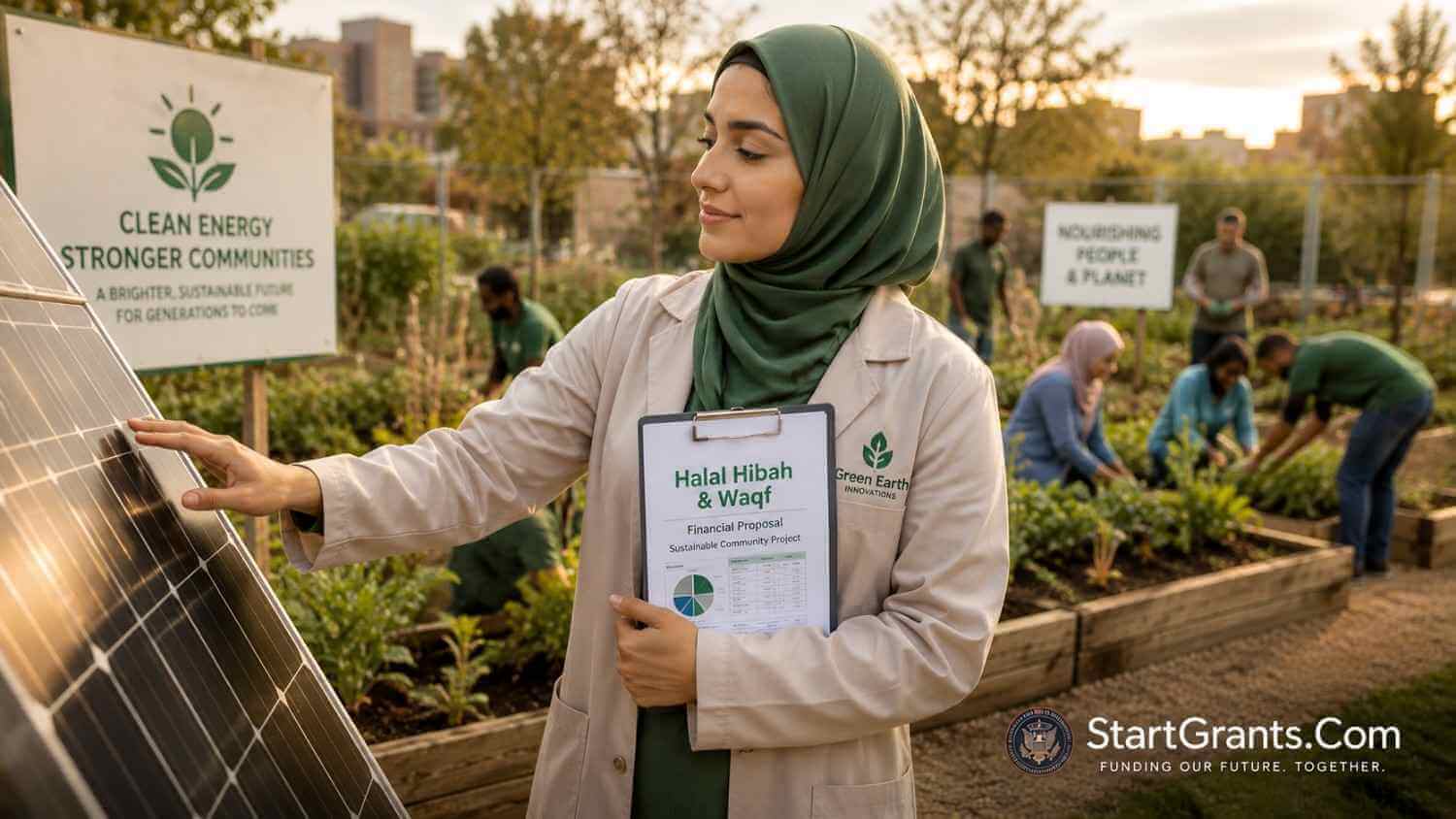
Operating as ‘Khalifah fil Ardh’ (stewards of the earth) requires Muslim nonprofits to fund green initiatives ethically, utilizing government grants (Hibah) and Waqf while strictly avoiding interest-bearing loans (Riba).
Environmental Waqf (Endowments)
Beyond securing federal grants for planting trees, the Islamic tradition offers a powerful conservation tool: the Waqf (irrevocable endowment). In Islamic history, planting a tree from which humans and animals eat is considered Sadaqah Jariyah (continuous charity). Muslim organizations in the U.S. can establish a Waqf specifically for land conservation, purchasing urban lots, planting native forests, and legally protecting the land from commercial development in perpetuity.
Navigating Gharar in Project Insurance
Massive environmental grants—such as those for heavy terrain restoration or solar grid construction—will legally mandate that the nonprofit carries comprehensive Liability Insurance to protect the workers and the federal investment. Standard commercial insurance involves Gharar (excessive uncertainty) and Maisir (elements of gambling).
To maintain Halal integrity, Muslim nonprofits should strive to utilize Takaful (Islamic cooperative insurance) models to meet these federal mandates. If adequate commercial Takaful for heavy construction is unavailable in their state, Islamic scholars widely permit the purchase of the minimum required commercial policy under the principle of Dharurah (legal necessity), ensuring the project can legally proceed to benefit the environment and the community.
Conclusion
Securing government grants for environmental projects is the ultimate catalyst for executing large-scale ecological change. Whether you are targeting EPA research grants, DOE sustainability funds for renewable energy, or USDA grants for planting trees, your nonprofit must present a proposal that is rooted in verifiable data, precise methodology, and a long-term maintenance plan.
For Muslim-led organizations, embracing the role of Khalifah fil Ardh means executing these projects with absolute financial purity. By aggressively targeting Halal government Hibah and utilizing community Waqf—while strictly avoiding the destructive trap of Riba-based commercial loans—Islamic charities can lead the charge in environmental sustainability, protecting the Earth while honoring their faith.
Frequently Asked Questions (FAQs)
Q1: Who is eligible to apply for government environmental grants?
A: The vast majority of major environmental grants are restricted to officially recognized 501(c)(3) nonprofit organizations, state and local governments, tribal nations, and accredited research universities. Individuals and for-profit businesses are generally not eligible for these specific public grants.
Q2: What is the difference between an environmental research grant and a sustainability grant?
A: A research grant funds the scientific study and data collection needed to understand an environmental problem (e.g., studying the effects of microplastics). A sustainability grant funds the actual execution of a physical solution (e.g., building a recycling facility or installing solar panels to reduce emissions).
Q3: Can I get a grant to plant trees in my own private backyard?
A: No. Government grants for planting trees are designed for public benefit, such as reforesting public parks, restoring urban heat islands, or protecting communal watersheds. Federal funds cannot be used to landscape private, individual residential properties.
Q4: Why is it Haram to use a commercial bank loan to fund a community solar project?
A: Commercial bank loans require the borrower to pay back the principal along with compounding interest over time. In Islamic finance, any transaction that generates profit from lending money is classified as Riba, which is strictly forbidden (Haram). Islamic nonprofits must use existing reserves, Waqf funds, or Halal government grants instead.
Q5: Is it Halal for an Islamic charity to accept an EPA grant?
A: Yes, it is completely Halal. A government grant is classified as Hibah (a gift) because it does not require repayment with interest. Accepting these funds to protect the environment aligns perfectly with the Islamic mandate of being a Khalifah (steward) of the Earth, provided the execution of the project avoids Riba and Gharar.
Disclaimer: The information provided in this article is for educational and informational purposes only and does not constitute legal, financial, or tax advice. Federal grant regulations are highly complex and subject to change. Always consult with a certified CPA, legal counsel, or a qualified Islamic finance scholar regarding grant compliance, IRS taxation rules, and Halal financial structuring before signing any federal contracts.