Last Updated: | Author: Munir Ardi
There is no single nationwide grant that automatically pays someone to start or expand a hydroponic farm. Relevant support does exist, but it is usually tied to a specific purpose: agricultural research, urban food access, conservation, technology development, value-added marketing, or farm credit. The applicant type matters just as much as the growing method.
Start with our urban farming grants and funding overview for the broader funding landscape. This page narrows the search to hydroponic projects and explains which federal options are grants, which are loans, and which commonly cited programs do not pay for a commercial hydroponic buildout.
What Hydroponic Funding Can—and Cannot—Cover
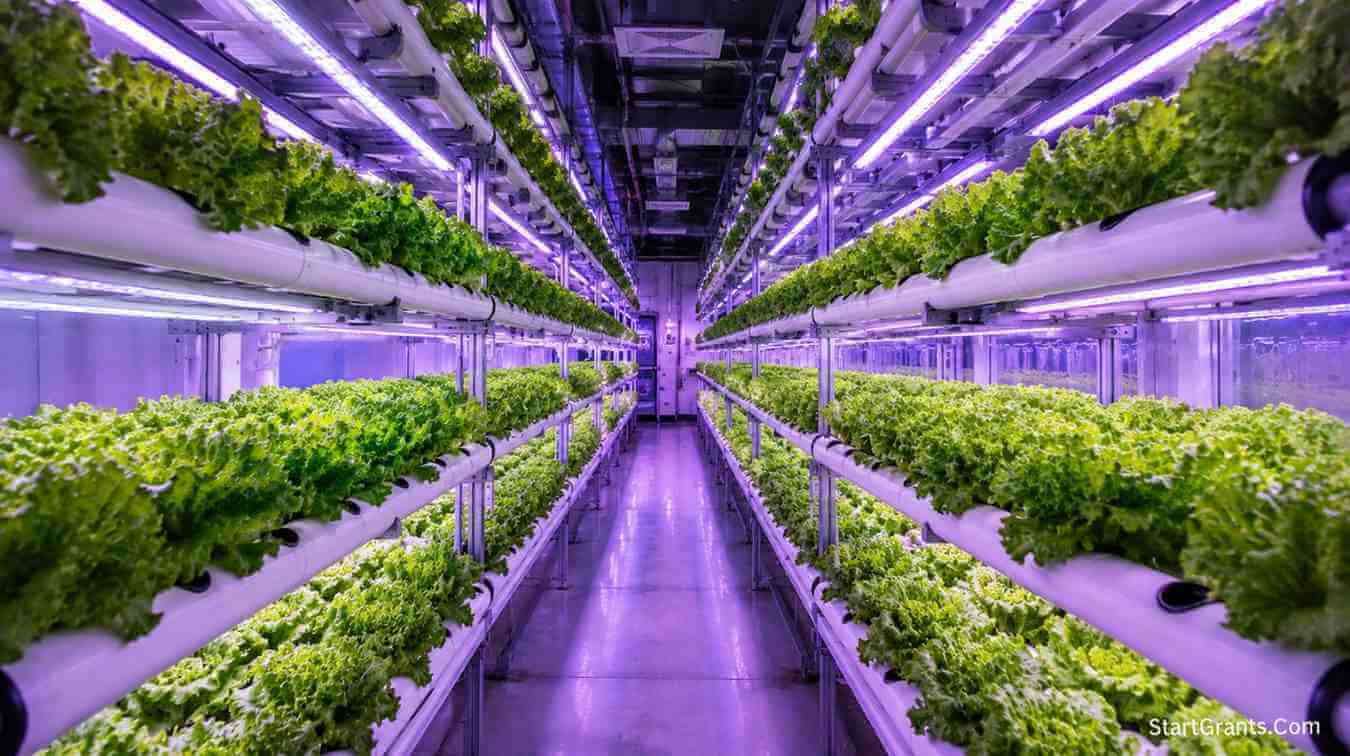
A strong funding search begins with the expense you need to pay, not with the word “hydroponics.” A research grant may support trials, sensors, nutrient-management studies, or outreach. An urban-agriculture award may support a community food project. A farm loan may finance equipment or operating costs. These programs are not interchangeable.
- Potential grant fit: defined research, education, demonstration, food-access, or technology-development work that matches a current notice.
- Possible loan fit: pumps, tanks, lighting, supplies, minor improvements, and other eligible farm operating needs when repayment is feasible.
- Usually a weak grant request: an unrestricted request to buy a complete private indoor farm with no public, research, conservation, or program-specific outcome.
- Never assume: that an eligible crop or production method makes every related expense allowable.
Verified Federal Programs to Check
The table separates direct grants from research funding, conservation assistance, and credit. “Closed” refers to the most recently verified national competition as of the update date; future notices may use different dates, award ranges, eligibility rules, and application systems.
| Program | Type and current status | Potential hydroponic fit | Important limitation |
|---|---|---|---|
| NIFA Urban, Indoor, and Emerging Agriculture (UIE) | Competitive research, education, and Extension grant; FY 2026 application window closed July 27, 2026. | Projects addressing important problems in indoor or emerging agricultural systems and their value chains. | The FY 2026 notice listed $4 million in estimated funding, awards of $50,000 to $500,000, and no match. It was not an unrestricted equipment grant. |
| USDA Urban Agriculture and Innovative Production (UAIP) | Competitive project grant; no current national application window was displayed on the official landing page during this review. | Urban or suburban projects involving food access, education, new-farmer support, infrastructure, or policy work. | Do not treat archived projects or old deadlines as an open competition. Applicant eligibility and allowable costs are notice-specific. |
| USDA NIFA SBIR/STTR | Small-business research and development grants; competition dates vary by notice. | A genuinely novel hydroponic technology with a defined R&D question and commercialization pathway. | This is not routine farm startup capital. Phase II is limited to qualifying prior Phase I awardees. |
| AFRI Foundational and Applied Science | Research, education, and Extension funding; deadlines and eligibility vary by program-area priority. | Some FY 2026 priorities expressly included hydroponics, aquaponics, or controlled-environment production. | Most commercial growers will need an eligible research partner or institution and a proposal responsive to one exact priority. |
| Sustainable Agriculture Research and Education (SARE) | Regional research and education grants; calendars and rules differ among the four SARE regions. | On-farm trials, demonstrations, or education addressing a sustainable-agriculture question. | SARE is not general startup funding. Regional programs commonly restrict major equipment, buildings, and ordinary operating costs. |
| FSA Operating Microloan | Interest-bearing farm loan, not a grant; applications are handled through local FSA offices. | Up to $50,000 for eligible uses such as equipment, seed, supplies, minor improvements, and marketing costs. | Credit, farm-management experience or education, citizenship/status, repayment ability, and other loan rules apply. |
| Value-Added Producer Grant (VAPG) | Planning or working-capital grant; FY 2026 competition closed April 22, 2026. | Eligible producers developing and marketing a qualifying value-added agricultural product. | It requires a dollar-for-dollar match and is not a grant to construct a hydroponic facility or buy production equipment. |
For a deeper explanation of the federal research portfolio, see our USDA NIFA grants and eligibility overview. NIFA can be relevant to controlled-environment agriculture, but most of its awards fund defined research, education, or Extension projects rather than ordinary farm expansion.
A Common Error: EQIP High Tunnels Are Not Hydroponic Greenhouses
Many funding lists say that the Environmental Quality Incentives Program will pay for a hydroponic greenhouse. That claim is too broad. The national NRCS High Tunnel System conservation practice standard says that the practice does not apply to crops grown on tables, benches, in portable pots, or hydroponically. Crops must grow in the natural soil profile; raised beds are limited to 12 inches.
NRCS may still evaluate other conservation practices or resource concerns on an operation, but that is a site-specific decision made through a conservation plan. Speak with the local USDA Service Center before purchasing equipment or assuming that reimbursement will be available. Do not begin work in anticipation of an EQIP payment unless NRCS has approved the contract and practice.
How to Build a Fundable Hydroponic Project
1. Define the applicant and the project beneficiary
Write down whether the applicant is an individual producer, for-profit company, nonprofit, university, school, local government, Tribal entity, or partnership. A program that supports indoor agriculture may still exclude your entity type. Also distinguish a privately owned commercial asset from a community, research, or educational project.
2. Separate the budget into fundable components
List the greenhouse or building, racks, tanks, pumps, plumbing, lighting, HVAC, backup power, monitoring equipment, seeds, nutrients, labor, research evaluation, education, and marketing separately. This makes it easier to match an eligible cost to the right program—and to identify what must be financed from revenue, owner capital, a loan, or a partner contribution.
3. Prove the need with local evidence
A reviewer needs more than general claims about water savings or food deserts. Use site-specific utility estimates, customer or institutional demand, production assumptions, local food-access data, letters from partners, and realistic operating costs. State how results will be measured and who will benefit.
4. Search by purpose, not only by crop system
Search official portals for terms such as “controlled environment agriculture,” “indoor agriculture,” “urban agriculture,” “specialty crops,” “water efficiency,” “agricultural technology,” and “food systems.” Review the current notice, not a blog’s summary or an archived award announcement.
5. Confirm registrations and timing before drafting
Federal applications submitted through Grants.gov may require organizational registrations, a Unique Entity Identifier, and an active SAM.gov registration. The exact path depends on the applicant and notice. Start early, but do not create an LLC, obtain an EIN, or register in SAM.gov solely because an unofficial list says these steps are universally required.
6. Plan the financing gap
Even a grant may be paid through reimbursement, require matching funds, exclude construction, or release funds only after an agreement is signed. Ask how you will cover deposits, overruns, ineligible equipment, working capital, and the period before reimbursement. Our farm equipment funding guide explains why grants, loans, cost-share arrangements, and dealer financing should be evaluated separately.
Save This Hydroponic Funding Checklist
- [ ] Identify the applicant type and confirm it appears in the current eligibility section.
- [ ] Separate research, equipment, construction, operating, outreach, and marketing costs.
- [ ] Verify that the current notice is open and record its deadline and time zone.
- [ ] Check whether the award is advance-funded, reimbursed, or requires matching funds.
- [ ] Obtain written vendor estimates and realistic energy, water, labor, and maintenance assumptions.
- [ ] Confirm zoning, building, electrical, water-discharge, food-safety, and business requirements locally.
- [ ] Do not order equipment or start reimbursable work before receiving written authorization.
- [ ] Read reporting, record-retention, repayment, publicity, privacy, and intellectual-property terms before accepting an award.
Hydroponics, Aquaponics, and Organic Claims Are Different
Hydroponics grows plants without soil using a nutrient solution. Aquaponics combines plant production with aquatic animals and biological nutrient cycling. Because the systems, regulations, and funding categories can differ, readers considering fish production should use our separate aquaponics grant and funding guide.
Do not advertise produce as USDA organic merely because inputs appear “natural.” USDA organic certification requires compliance with the regulations and review by a USDA-accredited certifying agent. USDA materials state that hydroponic certification is currently possible when the certifier can demonstrate compliance, but approval is operation-specific. Contact a certifier before designing the system around an organic price premium.
Scams and Costly Mistakes to Avoid
- Paying for a “guaranteed” government grant: legitimate programs do not guarantee an award because you paid a consultant or membership fee.
- Using an old announcement: an award list or expired notice proves that a program existed, not that applications are open today.
- Calling a loan a grant: FSA microloans charge interest and must be repaid.
- Buying first and applying later: pre-award purchases are often ineligible for reimbursement.
- Forcing the project into the wrong program: EQIP High Tunnel Practice 325 expressly excludes hydroponic crop production.
- Ignoring operating economics: a grant does not eliminate electricity, labor, replacement, insurance, distribution, and market risks.
A Muslim Perspective: Funding a Hydroponic Farm Responsibly
A grant may resemble a gift, but its actual agreement may impose restricted uses, reporting, matching contributions, reimbursement rules, or repayment and clawback provisions. A Muslim applicant should review the written terms rather than assuming every award is automatically an unrestricted hibah.
An interest-bearing loan, including an FSA microloan or conventional credit, raises riba concerns. Possible alternatives may include owner savings, retained earnings, a genuine interest-free qard hasan, transparent crowdfunding, preorders, or a properly structured equity or profit-sharing arrangement. Each option carries legal, tax, governance, and risk implications, and the substance of the contract matters more than its marketing label.
Community assistance from a mosque, sadaqah fund, waqf, or zakat administrator may be available in some places, but eligibility and permitted use must be confirmed with the organization. Questions about zakat on crops, cash, inventory, receivables, or business assets require facts that this general article cannot resolve. Review the actual funding contract and consult a qualified Islamic finance scholar, attorney, and tax professional for advice suited to your circumstances.
Frequently Asked Questions
Are there federal grants specifically for starting a hydroponic farm?
There is no universal federal grant that automatically pays an individual to start a hydroponic farm. A project may qualify under a current research, urban agriculture, food-system, or technology notice when the applicant, activities, costs, and outcomes match its rules.
Is the USDA UIE grant open now?
No. The verified FY 2026 Urban, Indoor, and Emerging Agriculture application window closed on July 27, 2026. USDA NIFA may issue another notice, but applicants should not assume that future dates, funding, or eligibility will be identical.
Can EQIP pay for a hydroponic high tunnel?
Not under NRCS High Tunnel System Practice 325. The national standard requires crops to grow in the natural soil profile and expressly excludes crops grown hydroponically, on tables or benches, or in portable pots.
Can an FSA microloan buy hydroponic equipment?
An FSA Operating Microloan may finance eligible equipment, supplies, minor improvements, and other approved operating needs, but it is an interest-bearing loan rather than a grant. The maximum is $50,000 per operating microloan, and credit, experience, status, security, and repayment rules apply.
Can a home or garage hydroponic setup receive a farm grant?
A hobby setup is unlikely to fit a federal agricultural grant merely because it grows food. Eligibility depends on the current notice, commercial or public purpose, applicant type, site control, measurable outcomes, and whether the proposed costs are allowed.
Do I need an LLC, EIN, UEI, or SAM.gov registration?
Not every funding source requires all four. Federal organizational applications often require a Unique Entity Identifier and active SAM.gov registration, while tax identification and legal-entity requirements vary. Follow the exact current notice instead of creating registrations based on a generic checklist.
Can SARE fund a commercial hydroponic greenhouse?
SARE may support a qualifying regional research, demonstration, or education project, but it is not general startup capital. Regional rules commonly restrict major buildings, durable equipment, and ordinary farm operating expenses.
Can hydroponic produce be certified USDA organic?
USDA materials state that hydroponic certification is currently possible when an accredited certifying agent can demonstrate compliance with the organic regulations. Certification is operation-specific, so producers should consult a certifier before making an organic claim or relying on an expected premium.
Must a hydroponic grant be repaid?
A properly used grant ordinarily is not repaid like a loan, but an agreement may require repayment or other remedies for ineligible spending, nonperformance, false statements, or violated terms. Reimbursement, matching, reporting, and record-retention obligations may also apply.
Where should I look for local hydroponic funding?
Check state departments of agriculture, city or county food-system offices, utilities, economic-development agencies, land-grant university Extension offices, and regional SARE programs. Confirm the responsible sponsor, current application page, deadline, eligibility, and allowable costs before preparing a proposal.
Conclusion
The most credible route to hydroponic funding is to match one defined project to one current program. Research and public-purpose grants can be relevant, but they are not substitutes for a viable business plan. Verify the applicant rules, allowable costs, deadline, match, reimbursement method, and post-award obligations on the official notice before spending money or submitting an application.
Important disclaimer: StartGrants.com is an independent information portal. It is not a government agency, grantmaker, application administrator, certifying body, lender, law firm, tax adviser, or religious authority. StartGrants.com does not issue grants, loans, certifications, legal advice, tax advice, financial advice, or fatwas. Program availability, deadlines, eligibility, award amounts, fees, matching requirements, reimbursement rules, and terms can change. Verify every opportunity with the responsible agency or sponsor and seek qualified professional guidance for your circumstances.