Last Updated: May 2026 | Author: Zee
The “back-to-school” season is supposed to be a time of excitement and new beginnings for children. However, for low-income families, single parents, and households struggling with inflation, the months of July and August represent a period of severe financial anxiety. Between backpacks, graphing calculators, winter coats, and seemingly endless lists of classroom requirements, outfitting a single child can easily cost hundreds of dollars. For families with multiple children, these expenses can force parents to choose between buying groceries, paying rent, or sending their kids to school prepared.
You do not have to go into debt, max out your credit cards, or let your child start the school year feeling unprepared.
Strategic Navigation: While this article focuses strictly on securing physical school supplies, parents should also review our master guide on Financial Assistance for K-12 Students and Parents. That central hub will teach you how to unlock overarching federal safety nets, such as the McKinney-Vento Act, to waive transportation fees and secure uniform vouchers.
The Baseline Strategy: There is a massive, multi-million dollar infrastructure of corporate grants, national non-profits, and local community action programs specifically designed to absorb the financial shock of the back-to-school season. In this comprehensive guide, we will break down exactly how low-income families can access free school supplies, clothing vouchers, and backpacks. Whether you need to leverage major retailers like Walmart, tap into national charities, or apply for mail-in programs, this guide will serve as your tactical roadmap to surviving the back-to-school season completely debt-free.

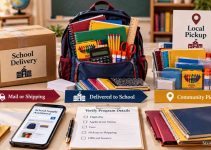
National non-profits and corporate grants ensure that low-income families can send their children back to school fully equipped without financial stress.
Phase 1: The Big Box Strategy (The Walmart Angle)
When parents look for affordable school supplies, their first instinct is usually to head to massive retail chains. What many families do not realize is that you do not actually have to pay for the items in your cart if you know how to navigate local corporate philanthropy.
If you have been searching specifically for Walmart school supplies assistance, you are on the right track, but you must understand how the funding works. Major corporations like Walmart, Target, and Staples rarely hand out cash directly to individual families. Instead, they operate through localized community grants.
How to Access Retailer Grants
Through the Walmart Local Community Grants program, individual store managers are authorized to distribute funding (often in the form of Walmart gift cards or bulk merchandise donations) to local organizations, schools, and non-profits.
To get your hands on these free Walmart supplies, you must identify the “middleman.” Look for local churches, Boys & Girls Clubs, or YMCA chapters in your zip code that are hosting “Back-to-School Bashes” or backpack drives in late July or early August. These events are heavily sponsored by the local Walmart or Target down the street. By registering your child for these local events, you can effectively receive brand-new, store-bought backpacks, clothing, and supplies entirely funded by corporate retail grants.
Phase 2: National Non-Profit Powerhouses
If you live in an area where local retail events are scarce, your next strategic move is to target the national non-profit organizations that have dedicated, year-round funding for low-income education.
The Salvation Army’s “Back-to-School” Initiatives
The Salvation Army is arguably the most powerful resource for low-income families during the late summer months. Every year, thousands of local Salvation Army chapters across the United States operate specialized back-to-school assistance programs.
These programs go far beyond handing out a few pencils. Depending on the funding in your specific county, eligible families can receive heavily stocked backpacks, vouchers for free back-to-school clothing and shoes at Salvation Army thrift stores, and even free haircuts for children before the first day of class. Because these programs operate on a first-come, first-served basis, you must contact your local Salvation Army Family Services office by early July to find out when their registration window opens. You will typically need to provide basic documentation, such as proof of income, a state ID, and the child’s birth certificate or school enrollment record.
The United Way 2-1-1 System
If you are struggling to locate specific corporate grants or Salvation Army drives in your immediate area, your most powerful tool is the United Way. The United Way operates the national 2-1-1 helpline, which is a free, confidential service that connects families to local community resources.
By simply dialing 2-1-1 from your phone in late summer, you can speak directly to a local operator who has a comprehensive, zip-code-specific database of every single church, community center, and retail-sponsored event handing out free backpacks and school supplies. They will tell you exactly where to go, what time the event starts, and what documents you need to bring to secure your child’s supplies.
The most effective way to secure free school supplies is through local community action programs. Watch this local news breakdown showing how the United Way partners with local organizations to distribute fully-stocked backpacks to low-income families before the school year begins:
Phase 3: The Military & Mail-In Alternatives
For specific demographics, standing in line at a local community center is either impossible or unnecessary. There are highly specialized grant programs designed to bypass local events entirely.
Operation Homefront (For Military Families)
If you are a military family, the financial strain of frequent relocations combined with back-to-school shopping can be overwhelming. Operation Homefront, a massive national non-profit, runs the annual “Back-to-School Brigade.” This program is specifically designed to distribute free backpacks filled with essential school supplies to the children of active-duty military personnel and post-9/11 wounded, ill, or injured veterans. These events operate on military bases and in local communities across the country.
Securing Supplies Through the Mail
For families living in extremely rural areas, or parents who work multiple jobs and cannot attend daytime back-to-school bashes, community events are ineffective. Instead of giving up, you must pivot to national charities that offer direct shipping. To execute this strategy effectively, you must review our dedicated guide on how to register for free school supplies by mail so your child’s backpack is delivered directly to your doorstep.

By leveraging community grants, non-profits, and mail-in programs, you can ensure your child walks into the classroom on day one fully prepared and confident.
Phase 4: Academic Survival & Deflecting School Costs
The final tactical shift you must make is changing how you view the “Required School Supply List” sent home by your child’s school. Many low-income parents panic when they see requests for expensive graphing calculators, bulk dry-erase markers, or classroom technology.
Do not assume you have to buy everything on that list. The federal government and private foundations pour millions of dollars directly into school districts so that educators can stock their own classrooms without passing the cost onto low-income parents. If your child’s school requires expensive tablets or laptops, do not go into debt to buy one. Communicate directly with your child’s teacher or principal; if you qualify for free or reduced lunch, the school is legally and financially equipped to provide these tools for your child through internal Title I funding.
Furthermore, physical supplies are only half the battle. If your child is fully equipped with backpacks and pencils but is still falling behind in subjects like math or reading, do not let the cost of private tutoring deter you. Many private academic centers offer financial aid. We highly recommend exploring our guide on applying for scholarships for Sylvan Learning Center to ensure your child receives the academic rescue they need without breaking the bank.
Conclusion: Executing Your Back-to-School Strategy
Outfitting your child for the new academic year should not jeopardize your family’s financial stability. By treating the back-to-school season as a strategic operation, you can bypass the retail markup entirely.
Start by utilizing the United Way 2-1-1 system to locate local community bashes funded by Walmart and Target grants. Register early for massive distribution events hosted by the Salvation Army, or tap into Operation Homefront if you are a military family. If local events are inaccessible, pivot to mail-in donation programs. Finally, maintain open communication with your child’s teachers regarding expensive classroom technology, and seek out tutoring scholarships if academic intervention is required. Your child deserves to start the school year with confidence, and these resources are built to ensure they do.
Frequently Asked Questions (FAQs)
Q1: How can I get free school supplies from Walmart?
A: Walmart does not typically hand out free supplies directly to individual shoppers. Instead, they provide “Local Community Grants” to non-profits, churches, and schools. To get these Walmart-funded supplies, you must attend local “Back-to-School” backpack drives hosted by these community organizations in your area.
Q2: Does the Salvation Army give out free backpacks?
A: Yes. Every summer, local Salvation Army chapters run back-to-school assistance programs. Depending on the location, eligible low-income families can receive fully stocked backpacks, vouchers for school clothes, and even free haircuts. You must contact your local chapter early to register.
Q3: What is the best way to find free school supply events near me?
A: The most efficient method is to dial 2-1-1. This is a free, national helpline operated by the United Way. The operator will access a local database and tell you exactly which churches, community centers, and charities in your zip code are handing out free school supplies.
Q4: Are there free school supplies for military families?
A: Yes. Operation Homefront operates the “Back-to-School Brigade,” a massive annual program that distributes free backpacks and essential school supplies specifically to the children of active-duty military members and post-9/11 veterans.
Q5: What if I cannot afford the expensive technology on my child’s supply list?
A: Do not buy it. If your child’s public school requires expensive items like iPads or graphing calculators and you are a low-income family, communicate with the teacher or principal. Schools receive specialized technology grants and Title I funding to provide these items directly to students who cannot afford them.
Important Disclaimer: StartGrants.com is an independent information portal. We are not a government agency and do not provide direct grants or products. Always verify the current status of programs with the providing organization.