
Last Updated: May 2026 | Author: Zee
Spring cleaning and household decluttering often leave us with piles of gently used items we no longer need. For many animal lovers, the immediate instinct is to load up the trunk and drop these items off at the local Humane Society or rescue center.
However, an animal shelter is a highly regulated medical and housing facility, not a thrift store. While they desperately rely on community support—as detailed in our complete guide to animal rescue and shelter donations—dropping off the wrong items creates a massive logistical nightmare for their volunteers, often forcing the shelter to pay expensive disposal fees to throw your “donations” in the landfill.
If you want your contribution to actively save lives and reduce the operational costs of your local rescue, you must be strategic. In this 2026 guide, we break down the 12 necessary things to donate to animal shelters, the dangerous items you must avoid, and the profound Islamic perspective on providing sustenance to vulnerable creatures.
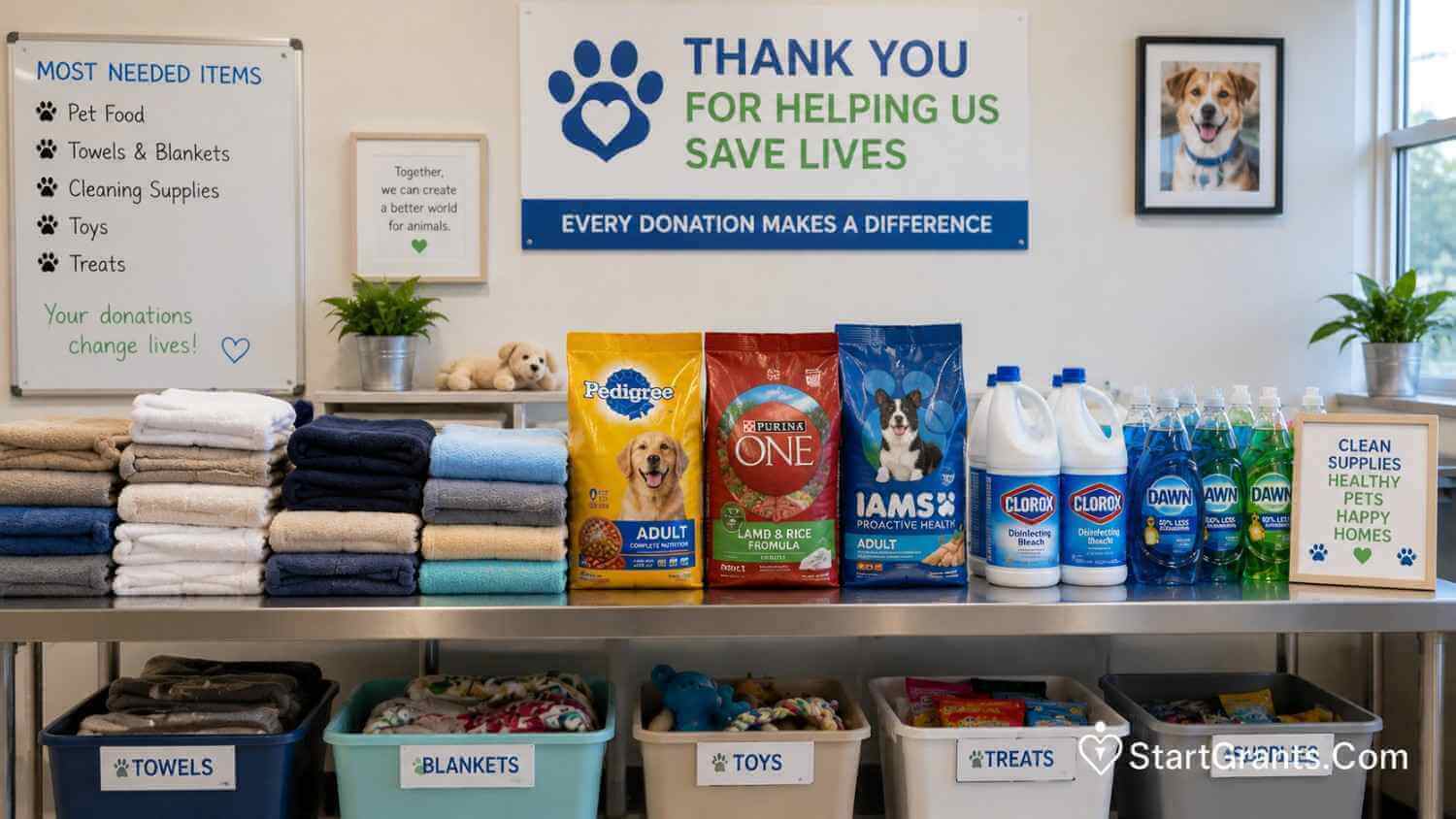
Animal shelters operate on razor-thin budgets. Donating the correct everyday household and cleaning items directly saves the rescue thousands of dollars a month.
Phase 1: The Golden Rule of Shelter Donations
Before you pack a single box, you must understand the primary enemy of any animal shelter: infectious disease. Viruses like Canine Parvovirus and Feline Panleukopenia can wipe out an entire facility in days. Because of this, everything in a shelter must be easily washable, heavily sanitizable, or brand new.
The Golden Rule: If an item cannot withstand being washed in a commercial washing machine with industrial-grade bleach at boiling temperatures, a shelter cannot use it.
Pro-Tip: Straight from the Source
To understand why sanitation drives a shelter’s wish list, watch this quick breakdown from an active animal shelter technician explaining exactly what items they burn through on a daily basis:
Phase 2: The Master List (12 Essential Items)
If you want to make an immediate, highly valued impact, stick strictly to these 12 heavily requested items:
1. Flat Towels and Washcloths
Used bath towels, hand towels, and washcloths are the number one most requested item by rescues. They are used for drying dogs after baths, cleaning up massive messes, and lining small cages. (Note: They must be standard flat towels. No heavily frayed edges or micro-beads).
2. Fleece Blankets and Flat Sheets
Fleece blankets provide warmth and comfort on cold concrete kennel floors without possessing dangerous stuffing. Flat bed sheets are used to cover cages to reduce anxiety for feral cats or fearful dogs.
3. Unopened Pet Food (Wet and Dry)
Shelters burn through hundreds of pounds of food a week. All donated food must be completely sealed in its original, unopened factory packaging. They cannot accept Ziploc bags of loose kibble due to the risk of contamination, mold, or intentional poisoning.
4. Cleaning Supplies (Bleach & Dawn Dish Soap)
Shelters spend thousands of dollars on sanitation. The two most critical liquids you can donate are unscented, standard household Bleach (for killing viruses on concrete and in laundry) and original blue Dawn Dish Soap (used for washing food bowls and safely removing fleas from newborn kittens).
5. Kitten Milk Replacer (KMR)
During “kitten season” (spring and summer), shelters are flooded with orphaned neonate kittens. They desperately need powdered Kitten Milk Replacer (KMR) and specialized nursing bottles. Regular cow’s milk will kill a kitten.
6. Heavy-Duty Chew Toys
Dogs in kennels suffer from severe boredom. Shelters desperately need heavy-duty, indestructible rubber toys like KONGs or thick Nylabones. These can be stuffed with peanut butter, frozen, and safely given to aggressive chewers, and they can be easily sanitized in a dishwasher.
7. Office Supplies
It is not glamorous, but running an adoption center requires massive amounts of paperwork. Donating printer paper, pens, sticky notes, and staples saves the administrative team money that can be redirected to the veterinary fund.
8. Stainless Steel Bowls
Plastic bowls hold bacteria in microscopic scratches, which can cause feline acne and spread kennel cough. Shelters only use stainless steel bowls because they are highly durable and can be effectively sterilized in boiling water.
9. Heating Pads (Without Auto-Shutoff)
Orphaned puppies and kittens cannot regulate their own body temperature. Rescues constantly need electric heating pads that do not have an automatic shut-off feature, ensuring the neonates stay warm through the entire night.
10. Old Newspapers
A completely free donation! Clean, old newspapers are used to line the bottoms of puppy pens, bird cages, and small animal enclosures. Ensure you remove the glossy coupon inserts, as the ink can be toxic if chewed.
11. Non-Clumping Cat Litter
While clumping litter is great for a home, shelters with hundreds of cats prefer cheap, non-clumping clay litter or pine pellets. Clumping litter can be dangerous for young kittens who might ingest it, causing lethal intestinal blockages.
12. Digital Assets or Professional Services
As explored in our guide on the 6 most surprising ways to donate to an animal shelter, donating your professional skills—like web development, photography, or granting them your old stock portfolios—is often more valuable than physical goods.
Phase 3: The Danger Zone (What NEVER to Donate)
To avoid burdening the shelter with disposal fees, never drop off the following items:
- Pillows, Cushions, or Mattresses: Dogs will rip these apart and swallow the foam or synthetic stuffing, requiring emergency bowel surgery.
- Fitted Bed Sheets: The elastic bands on the corners pose a severe strangulation hazard to animals left alone in a kennel.
- Open Food or Expired Meds: Federal regulations prohibit shelters from distributing unsealed food or expired veterinary medications.
- Retractable Leashes: These are considered highly dangerous in a chaotic shelter environment. Shelters only accept sturdy, 6-foot nylon or leather slip-leashes.
For a complete list of federally banned shelter items and safety standards, always check the guidelines published by the ASPCA before making your drop-off.
Phase 4: The Muslim Perspective (Sadaqah Through Sustenance)
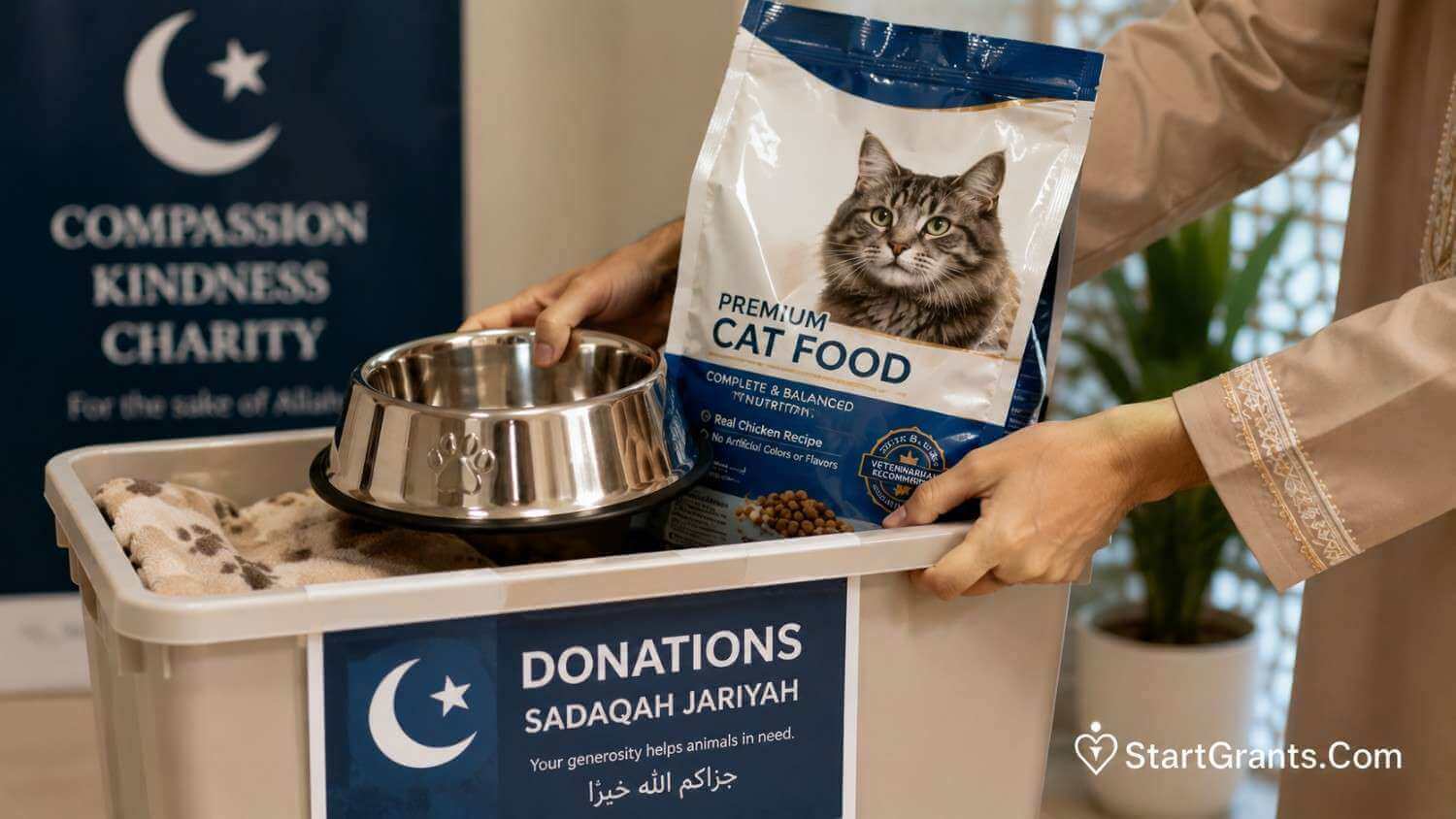
Providing the physical means for an animal’s survival—such as food, water bowls, and medical supplies—is a direct manifestation of Islamic mercy and constitutes valid Sadaqah.
In the modern philanthropic landscape, Muslim donors frequently seek ways to align their charitable giving with the principles of Islamic jurisprudence (Fiqh). When it comes to animal welfare, donating necessary physical supplies is one of the most direct ways to perform Sadaqah (voluntary charity).
The Concept of Nafaqah (Provision)
In Islam, there is a clear distinction between the rulings of physical purity and the obligation of mercy. While the saliva of a dog is Najis (impure), providing sustenance to save its life is a deeply revered act. Purchasing an unopened bag of dog food or stainless steel water bowls and donating them to a rescue facility ensures that starving, vulnerable creatures are fed.
By donating physical items like blankets to keep animals from freezing on concrete floors, or cleaning supplies to prevent the spread of lethal diseases, you are directly facilitating the preservation of life. The Prophet Muhammad (PBUH) stated, “Those who are merciful will be shown mercy by the Most Merciful.” Donating these 12 necessary items is a tangible, highly rewarded manifestation of that mercy.
Phase 5: The Drop-Off Logistics
Once you have gathered your acceptable items, do not just leave them anonymously on the shelter’s front porch. Items left outside overnight can be ruined by rain or contaminated by wild animals.
Always call the shelter beforehand to confirm their specific current needs and their designated drop-off hours. Alternatively, if you want to support them without leaving your house, find their organization on Chewy Gives Back or Amazon, where you can purchase these exact 12 items and have them shipped directly to their loading dock.
Conclusion: Declutter with Purpose
Donating to an animal shelter should be a strategic act, not just an excuse to empty your closets. By understanding the stringent safety and sanitation requirements of a rescue environment, you can ensure your gifts actually make an impact.
Focus strictly on the 12 necessary items—flat towels, unopened food, heavy-duty toys, and crucial cleaning supplies like bleach. Whether you are seeking a secular tax deduction or the spiritual rewards of Islamic Sadaqah, providing these essential physical goods directly sustains the lives of the voiceless animals waiting for their forever homes.
Frequently Asked Questions (FAQs)
Q1: Will animal shelters take used dog beds?
A: Most municipal shelters and large rescues will NOT accept used, plush dog beds. They are extremely difficult to sanitize and can harbor fleas, bed bugs, or Parvovirus. They prefer easily washable fleece blankets.
Q2: Can I donate carpet scraps to line cages?
A: No. Carpet holds immense amounts of bacteria, cannot be washed in a machine, and if a dog chews and swallows the synthetic fibers, it can cause a lethal intestinal blockage. Use newspaper instead.
Q3: Are rawhide bones good to donate?
A: No. Many shelters have banned rawhide because it presents a severe choking hazard and can cause gastrointestinal blockages. Stick to heavy-duty rubber toys like KONGs.
Q4: Is it Halal to buy dog food specifically to donate to a shelter?
A: Yes. Purchasing commercial dog food to feed hungry, abandoned animals is completely Halal and is considered a beautiful act of charity in Islam. The prohibition lies in the consumption of forbidden items by humans, not in providing standard nutrition to animals.
Q5: Do shelters accept open bags of cat or dog food if it is almost full?
A: Generally, no. For liability and safety reasons, shelters must discard open bags to prevent the risk of intentional poisoning, mold, or insect infestation. However, some local, specialized wildlife rescues or feral cat trap-neuter-return (TNR) groups might accept them on a case-by-case basis. Always ask first.
Important Disclaimer: StartGrants.com is an independent information portal. We are not an animal rescue or government facility. Donation guidelines and accepted items fluctuate based on individual shelter policies and local health regulations. Always verify the current wish list directly with the receiving organization before making a drop-off.