
Last Updated: | Author: Munir Ardi
Veterans can receive valuable help starting or expanding a farm, but the phrase farm grants for veterans can be misleading. There is no single federal check that pays for land, a tractor, livestock, and operating expenses simply because an applicant served in the military.
What does exist is a practical mix of competitive grants, conservation contracts, cost-share payments, training, vendor-paid equipment awards, disaster assistance, and repayable farm loans. Some USDA provisions give qualifying veteran farmers and ranchers priority, higher payment rates, advance payments, or access to reserved funding. Each benefit has its own definition and application rules.
This guide separates those options so you can pursue the right program without mistaking a loan for a grant or spending money on an application that is currently closed.
Farm Funding for Veterans: Know What You Are Applying For
| Type of help | Typical example | Repayment? | Important limitation |
|---|---|---|---|
| Competitive grant | Value-Added Producer Grant | Normally no, if terms are met | Restricted uses, competition, reporting, and often matching funds |
| Conservation contract | EQIP or CSP | Normally no, if the contract is completed | Pays for approved practices, not unrestricted startup cash |
| Vendor-paid private award | Farmer Veteran Fellowship Fund | No | Competitive; the organization pays an approved vendor |
| Loan | FSA ownership or operating loan | Yes, with interest | Underwriting, collateral, eligibility, and repayment apply |
| Training or technical help | Armed to Farm, AgrAbility, or a 2501-funded provider | No | May not provide cash or equipment |
Who Counts as a Veteran Farmer for USDA Preferences?
Military service alone does not create permanent preference in every USDA program. For special Farm Service Agency (FSA) and Natural Resources Conservation Service (NRCS) provisions, USDA generally describes a veteran farmer or rancher as someone who served in the U.S. Armed Forces and was released under conditions other than dishonorable, and who either:
- has operated a farm or ranch for fewer than 10 years; or
- first obtained veteran status during the most recent 10-year period.
Rules can differ for crop insurance and for legal entities. For some NRCS benefits, every individual member of an entity must independently meet the applicable veteran definition. Review the current USDA Military Veteran Farmers page and let the local agency confirm your status rather than assuming that a veteran-owned LLC automatically qualifies.
1. EQIP and CSP: Conservation Help, Not General Startup Grants
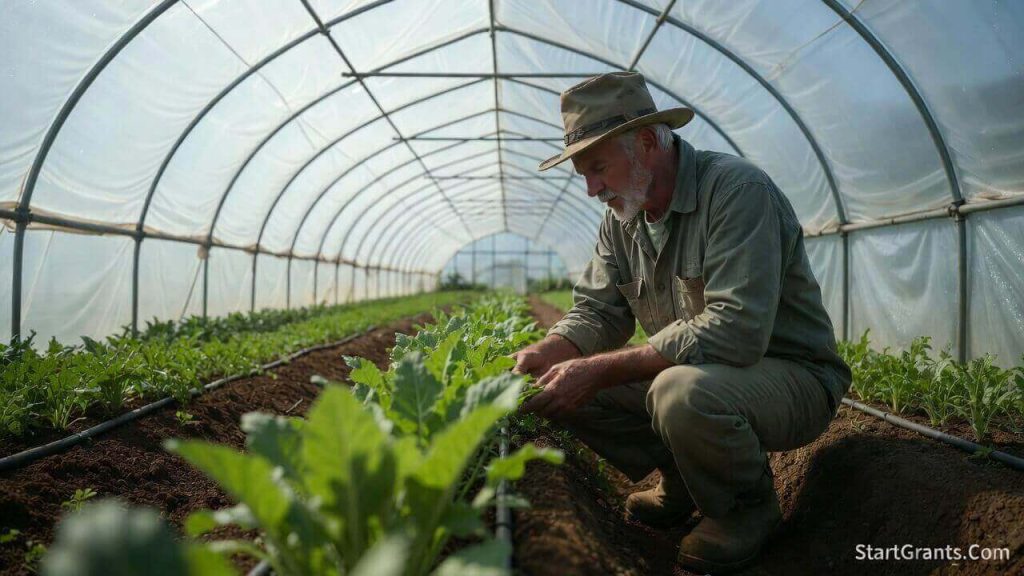
The Environmental Quality Incentives Program (EQIP) helps agricultural producers address resource concerns through an approved conservation plan and contract. Depending on the operation, eligible practices may include high tunnels, irrigation improvements, fencing for prescribed grazing, erosion control, nutrient management, or wildlife habitat work. The Conservation Stewardship Program (CSP) supports producers who maintain and expand conservation across an operation.
Applications are generally accepted continuously, but NRCS ranks them in state or local funding cycles. A submitted application is not a promise of funding. The producer must control or own eligible land, meet conservation-compliance and payment-limit rules, maintain required farm records, and wait for authorization before beginning the contracted practice.
What qualifying veteran producers may receive
- Consideration under historically underserved provisions and, where applicable, priority or reserved funding.
- A higher payment rate than the standard rate for an approved practice. The exact dollar amount comes from the current state payment schedule, so a nationwide “90% reimbursement” promise is not reliable for every practice.
- An advance payment of at least 50% of the contracted payment to buy materials or services. NRCS says advance funds generally must be spent within 90 days.
Use the official NRCS EQIP application guide and ask the local conservationist which practices address a documented resource concern on your land. EQIP is not intended to pay for a tractor, buy a farm, or reimburse work completed before authorization.
2. Value-Added Producer Grants: Correct FY2026 Limits and Status
The Value-Added Producer Grant (VAPG) supports eligible agricultural producers who turn raw commodities into value-added products or develop related markets. Examples may include converting fruit into a packaged food product, processing milk into cheese, or marketing a differentiated agricultural product. It is not a general grant for buying land or starting agricultural production from nothing.
For fiscal year 2026:
- The application deadline was April 22, 2026; that round is closed.
- Planning grants were limited to $50,000.
- Working-capital grants were limited to $200,000.
- A 1-to-1 match was required.
- Ten percent of available funding was reserved collectively for beginning farmers or ranchers, veteran farmers or ranchers, and socially disadvantaged farmers or ranchers. It was not a 10% pool reserved only for veterans.
Eligible matching contributions and project expenses are defined by the notice; do not assume all owner labor will qualify. Monitor the official USDA Rural Development VAPG page for a future funding notice. Build the feasibility study, business plan, ownership records, market evidence, and match documentation before the next window opens.
3. REAP Energy Grants Are Currently Closed
The Rural Energy for America Program (REAP) can support eligible agricultural producers and rural small businesses with renewable-energy systems and energy-efficiency improvements. However, old articles that direct farmers to submit an FY2026 grant application are outdated.
As of this update, USDA says it is not accepting REAP grant applications and will not make further grant awards until revised regulations take effect. USDA expects to publish a new notice after that process. REAP guaranteed-loan applications remain available, but a loan guarantee is not a grant and the borrower still owes principal, interest, and lender-approved costs.
Check the status banner on the official REAP program page before paying for an energy audit or preparing an application. Never start construction on the assumption that a future award will cover it.
4. FSA Microloans and Farm Loans Must Be Repaid
USDA itself explains that it does not offer grants to purchase farmland and that most available grants are limited or have narrow purposes. When land, livestock, equipment, seed, or operating cash is the actual need, an FSA loan may be relevant—but it is conventional debt.
FSA currently offers:
- Operating Microloans: up to $50,000 for eligible expenses such as livestock, equipment, feed, seed, minor improvements, marketing, and certain family living costs. Terms vary by purpose and do not exceed seven years.
- Ownership Microloans: up to $50,000 for eligible farmland, buildings, improvements, infrastructure, or down-payment needs, with terms that may extend up to 25 years.
- Larger direct and guaranteed loans: for eligible family farms that need more capital and satisfy the applicable credit, experience, security, and repayment rules.
Military leadership or business experience may help satisfy part of a farm-management requirement in some cases, but it does not replace every eligibility factor or guarantee approval. The published loan rate changes, and interest accrues. Review the official USDA farm-loan options, use the Loan Assistance Tool, and request a written estimate of rate, term, payment, collateral, fees, and total repayment.
5. Farmer Veteran Fellowship Fund: A Real Private Award
The Farmer Veteran Coalition’s Fellowship Fund is one of the clearest veteran-specific options. Awards generally range from $1,000 to $5,000. Selected recipients identify an approved item—such as fencing, livestock, feed, beekeeping equipment, a freezer, or a tractor implement—and the fund pays the approved third-party vendor on the veteran’s behalf.
The 2026 cycle is complete. It opened January 5, closed February 17, and recipients were announced May 1. Applications are normally accepted once per year for at least four weeks, but dates can change. Applicants should prepare proof of service, a business plan, farm experience, a specific funding request, and clear short- and long-term goals. Watch the official Fellowship Fund page for the next announcement.
The associated Kubota Geared to Give opportunity is integrated into the fellowship application, but equipment is limited and competitive. Do not describe it as an annual tractor entitlement.
6. AgrAbility, Armed to Farm, and USDA-Funded Training
AgrAbility: technical help, not an equipment grant
AgrAbility helps farmers, ranchers, agricultural workers, and family members affected by disability. State or regional projects may provide farm assessments, education, assistive-technology information, and referrals to possible funding sources.
National AgrAbility states plainly that it does not provide grants, equipment, or other direct funding. Its specialists may help identify a safer work method or suitable technology and connect a client to vocational rehabilitation or another funder, but approval and payment come from that separate organization. This distinction is especially important for veterans planning expensive tractor lifts or adaptive controls.
Armed to Farm: training before capital
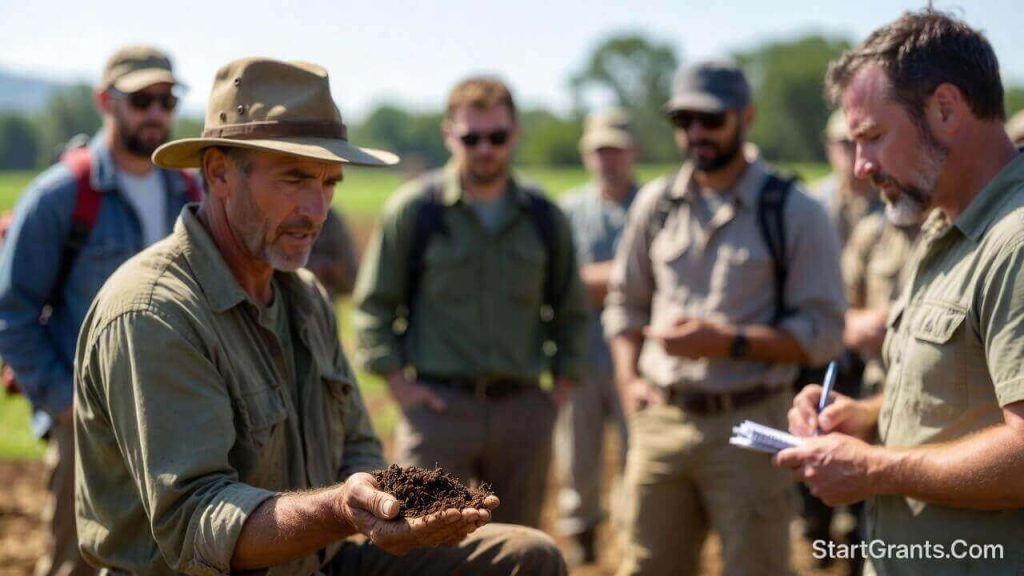
NCAT’s Armed to Farm offers veteran-focused sustainable-agriculture training with classroom sessions, farm visits, and practical instruction. Event schedules, geography, participant priorities, meals, lodging, and travel support can differ. Read the terms for the specific event rather than assuming every cost is covered nationwide.
2501 and BFRDP: find the funded provider
USDA’s 2501 Program and Beginning Farmer and Rancher Development Program (BFRDP) are often mislabeled as grants that an individual veteran can claim. Their federal awards generally go to eligible organizations, partnerships, universities, agencies, and community groups that deliver outreach, training, mentoring, or technical assistance.
An individual farmer should search for a funded project serving the local area rather than submit a personal grant application. BFRDP explicitly excludes applications from individuals. Training may still be highly valuable—and an approved GI Bill education or on-the-job program may help eligible veterans—but the course, apprenticeship, and benefit must be verified through VA tools. If formal online study is part of your plan, compare the claims carefully in our veteran online education funding guide.
7. Homegrown By Heroes and VetCert Are Marketing Tools, Not Grants
The Farmer Veteran Coalition’s Homegrown By Heroes label helps eligible veteran producers identify products as veteran-owned and produced. It can differentiate a business, but it does not guarantee premium prices, retail placement, wholesale contracts, or profit.
SBA VetCert is also not a grant. A qualifying veteran-owned or service-disabled veteran-owned farm business may use certification to compete for certain federal contracting opportunities. Certification creates eligibility to compete; it does not award a contract automatically. Farmers considering procurement should review our Service-Disabled Veteran-Owned Small Business funding and certification guide and verify current requirements through SBA.
Muslim Veteran Farmers: Separating Grants, Cost-Share, and Riba

For a Muslim veteran concerned about riba, the most useful first step is classification—not a marketing label. Ask what the recipient is legally required to return and what happens after a missed payment or incomplete project.
- Competitive grants and vendor-paid awards: VAPG or the Farmer Veteran Fellowship normally does not create a repayment schedule when all award conditions are met. However, funds are restricted, noncompliance can trigger repayment, and tax treatment may still apply.
- EQIP or CSP contracts: These are payments for approved conservation practices, not consumer loans. The contract can still require repayment if funds are misused or the practice is not completed.
- FSA and REAP guaranteed loans: These are repayable financing with interest. A low rate, federal guarantee, or veteran preference does not turn them into grants.
- Matching funds: VAPG’s match does not have to come from an interest-bearing loan, but every proposed source must meet the current notice. Personal funds, eligible in-kind contributions, partner capital, advance purchase commitments, or other lawful sources may be considered only if program rules permit them.
- Crowdfunding, leases, partnerships, and “Islamic financing”: None is automatically suitable merely because it avoids the word interest. Review ownership, markup, late-payment terms, collateral, insurance, default, fees, and risk allocation with a qualified attorney, tax professional, and trusted Islamic-finance scholar.
One nonreligious option worth comparing is Kiva U.S., which currently advertises qualifying small-business loans at 0% interest with no fees, collateral, or minimum credit score. It still requires approval, community-based fundraising, and repayment, and its rules can change. A local masjid or zakat organization may sometimes help with essential household needs, but assistance for farm capital is not universal and local scholars differ on eligible uses. Do not budget anticipated zakat or donations until approval is documented.
If disability affects both farm work and the home, keep the two applications separate: AgrAbility or vocational rehabilitation may address work access, while VA housing benefits have their own eligibility and construction rules. See our housing assistance guide for disabled veterans.
How to Apply Without Wasting Time
- Define one precise need. “I need farm money” is too broad. Identify whether you need land, annual inputs, a conservation practice, energy equipment, adaptive technology, training, processing, or marketing.
- Prepare a basic farm plan. Include production experience, land access, buyers, realistic prices, monthly cash flow, insurance, labor, and a contingency plan.
- Visit the USDA Service Center. Bring identification, proof of entity authority if applicable, deeds or leases, maps, tax identification details, and available production records. If you already control land, staff can establish or update farm records and a farm number needed for many USDA programs.
- Ask each agency separately. FSA handles farm loans and many farm records; NRCS handles conservation assistance; Rural Development administers programs including VAPG and REAP. One office cannot promise another agency’s award.
- Request the current written rules. Ask for the active notice, ranking date, payment schedule, match rules, eligible-cost list, and preapproval requirements.
- Do not begin early. A signed estimate, paid deposit, construction start, or equipment order can make a cost ineligible.
- Keep farm and household crises separate. If groceries, utilities, housing, or immediate safety are at risk, use our emergency financial assistance for veterans guide instead of diverting restricted farm funds.
Scam, Tax, and Recordkeeping Warnings
- USDA and SAM.gov registration are free. Be cautious when a consultant implies that a fee guarantees a farm number, SAM registration, grant approval, or priority status.
- Never pay to “unlock” a federal grant. Confirm the web address ends in
.govand call the agency using contact information obtained independently. - Most agricultural program payments may affect taxes. IRS Publication 225 says most government agricultural payments are included in income, although limited exclusions can apply to certain conservation cost-sharing payments. Vendor-paid property can also have tax and basis consequences.
- Keep a separate file for every award. Save the signed agreement, approved budget, receipts, invoices, proof of match, photos, inspection records, and correspondence.
- A grant does not prove the farm is viable. Compare the project’s full lifetime cost, maintenance, labor, insurance, taxes, replacement cycle, and expected revenue before accepting an award.
Veterans managing service-connected injuries, rehabilitation, or related family strain may also benefit from the distinct support options in our financial assistance for wounded warriors guide. Those benefits should not be presented as agricultural business capital unless the provider explicitly allows that use.
Frequently Asked Questions
Are there federal farm grants only for veterans?
No single federal program gives every veteran unrestricted startup cash. Qualifying veteran farmers may receive preferences or special provisions in certain USDA programs, while private organizations such as the Farmer Veteran Coalition offer veteran-specific competitive awards.
Can a veteran get a grant to buy farmland?
USDA states that it does not offer grants to purchase farmland. Eligible applicants may consider FSA ownership loans, land leases, partnerships, state or local opportunities, or private capital, but each option has separate costs and risks.
Does EQIP pay 90% of every veteran’s project?
No. Qualifying historically underserved producers may receive higher payment rates, but the payment depends on the approved practice and current state schedule. Funding is competitive, and work must follow an executed contract.
Can EQIP provide money before work begins?
A qualifying historically underserved producer may elect an advance of at least 50% of the contracted payment for materials or services. NRCS generally requires the advance to be spent within 90 days, and all contract conditions still apply.
Is the Value-Added Producer Grant open now?
The fiscal year 2026 VAPG application window closed on April 22, 2026. Monitor USDA Rural Development for a future notice rather than submitting materials under the expired announcement.
Is the REAP energy grant accepting applications?
No. As of September 2, 2026, USDA says REAP grant applications are not being accepted while regulations are updated. Guaranteed-loan applications may continue, but those are repayable loans.
Does AgrAbility buy adaptive farm equipment?
AgrAbility does not provide grants, equipment, or direct funding. It may offer assessments, technical information, education, and referrals to a separate organization that could consider funding.
Are farm grants taxable?
Many agricultural program payments are included in income, but exceptions and basis rules can apply to certain conservation payments. Keep all award records and ask a qualified farm tax professional how the specific payment or vendor-purchased asset should be reported.
Bottom Line
The most useful farm assistance for a veteran is rarely found by searching for one large “veteran farming grant.” Start with the exact expense and match it to the right category: EQIP or CSP for approved conservation work, VAPG for an eligible value-added project, the Farmer Veteran Fellowship for a small vendor-paid item, AgrAbility for disability-related assessment and referrals, and FSA only when a repayable loan fits the budget and personal principles.
Verify the open status, receive written authorization before spending, and calculate the farm’s economics without assuming an award. That approach is less dramatic than a promise of free land or equipment—but it is far more likely to protect both the business and the veteran behind it.
Important disclaimer: StartGrants.com is an independent information portal. It is not affiliated with USDA, VA, SBA, the Farmer Veteran Coalition, or any other government agency or funding provider. StartGrants.com does not award grants, approve applications, provide legal, tax, financial, or religious advice, or guarantee eligibility. Program rules, funding, deadlines, tax treatment, and availability can change. Verify all information directly with the administering organization before applying, spending money, or signing a contract.