
Last Updated: | Author: Munir Ardi
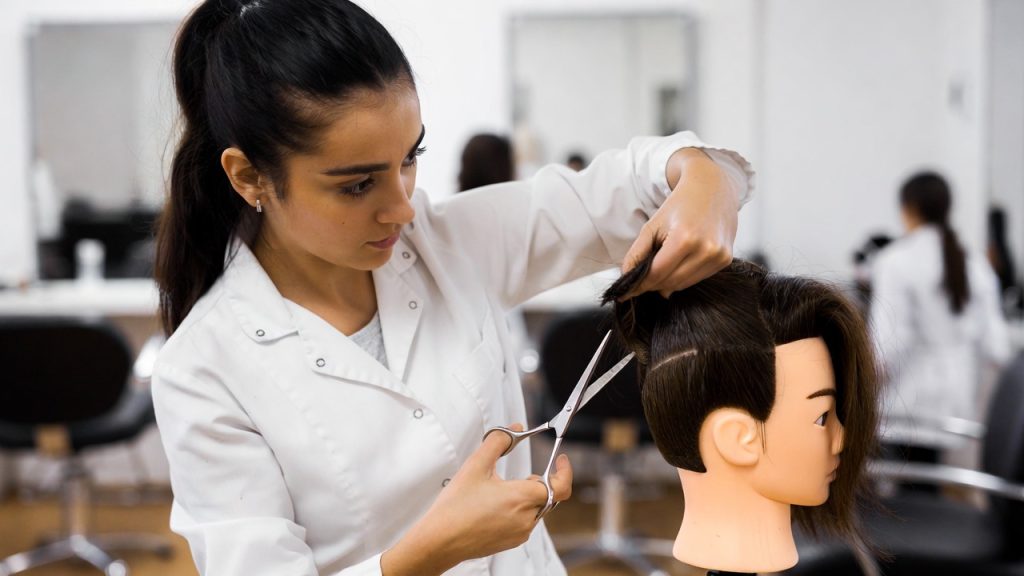
Cosmetology school grants can reduce what you pay for training, but there is no single federal grant reserved for future cosmetologists. The strongest funding plans usually combine aid for which the student and program qualify: a Federal Pell Grant, state or school aid, workforce funding, private scholarships, savings, and—only if necessary—carefully evaluated borrowing.
The first question is not “Which school offers the biggest scholarship?” It is “Will this exact program prepare me for my state license, and is it eligible for the aid being advertised?” A school may be state-approved but not participate in federal student aid. It may be accredited but offer a particular short program that is not Pell-eligible. Verify each layer before signing an enrollment agreement.
What Can Actually Help Pay for Cosmetology School?
| Funding source | How it works | Important limitation |
|---|---|---|
| Federal Pell Grant | Need-based federal aid for eligible undergraduates at participating schools and eligible programs. | FAFSA completion does not guarantee an award or full tuition coverage. |
| Workforce Pell | Beginning July 1, 2026, Pell may be available for certain approved short-term workforce programs. | A short program must receive the required state certification and U.S. Department of Education approval; length alone is not enough. |
| State and school grants | Aid may come from a state higher-education agency or the school itself. | Deadlines, eligible schools, residency rules, and available funds vary. |
| WIOA-funded training | A local workforce board may approve training or supportive services for an eligible job seeker. | The student, occupation, provider, and funding request must meet local rules; payment is not guaranteed. |
| Private scholarships | Beauty organizations and sponsors make competitive awards. | Deadlines and eligibility change, and an application is never a promise of funding. |
| Federal Work-Study | Eligible students earn wages through an approved job. | A work-study amount in an aid offer is not cash paid upfront; the student must obtain and work the job. |
| Student or private loans | Borrowed money may fill a remaining gap. | Loans must be repaid, generally with interest, and should not be described as grants. |
For a broader view of career-school funding, see grants for vocational and trade schools. Students comparing overlapping beauty programs may also find the guide to beauty school grants and scholarships useful.
Verify the School Before You Apply for Aid
A polished website and an enrollment counselor are not proof that a program is a sound investment. Before paying an application fee or deposit, verify the following in writing:
- State approval for licensure. Ask your state cosmetology or barbering board whether the exact campus and program meet its education requirements. Requirements and approved providers differ by state.
- Institutional accreditation. Search the U.S. Department of Education’s Database of Accredited Postsecondary Institutions and Programs. NACCAS accredits many beauty schools, but it is not the only institutional accreditor recognized by the Department.
- Federal-aid participation. Ask the financial-aid office for the school’s federal school code and whether your exact cosmetology program is eligible for Title IV aid. Accreditation is important, but it does not by itself prove that every program receives Pell Grants.
- Outcomes and costs. Use College Scorecard when the school or program is listed, then request the school’s completion, licensing-exam, job-placement, debt, and net-price information.
- Written policies. Read the attendance, satisfactory academic progress, leave, withdrawal, refund, kit, overtime-hour, and transfer-hour policies before enrolling.
All states require barbers, hairstylists, and cosmetologists to be licensed. Candidates typically need to graduate from a state-approved program and pass an examination, according to the Bureau of Labor Statistics. Do not assume that a school approved in one state will satisfy another state’s requirements or that training hours will transfer automatically.
Federal Pell Grants and the 2026–27 FAFSA

The maximum Federal Pell Grant for the 2026–27 award year is $7,395. The actual amount can be smaller and depends on federal eligibility rules, financial circumstances, enrollment intensity, the program’s academic calendar, cost of attendance, and remaining lifetime eligibility. A Pell Grant generally does not have to be repaid, although repayment can be required in limited circumstances such as certain enrollment or withdrawal changes. See the current Federal Student Aid Pell Grant guidance.
Submit the FAFSA form at StudentAid.gov as early as practical. For 2026–27 federal aid, the federal deadline is June 30, 2027, but a state or school deadline may be much earlier and some funds are limited. Each required contributor uses a separate StudentAid.gov account, provides consent for the transfer or use of federal tax information, and signs their own section. Being a contributor does not make that person responsible for paying the student’s bill.
After processing, the FAFSA Submission Summary displays estimates—not an award guarantee. A negative Student Aid Index indicates greater financial need, but it is not a bill and does not by itself promise the maximum Pell Grant. The school’s written financial-aid offer is the best source for the aid it is actually offering.
If Your Income Changed
The 2026–27 FAFSA generally uses 2024 tax information. If job loss, reduced hours, divorce, unusually high medical expenses, or another documented change makes that information unrepresentative, submit the FAFSA as instructed and contact the school’s financial-aid office. Ask for a review of special financial circumstances, often called professional judgment. The school decides whether an adjustment is supported; it is not automatic.
Workforce Pell Changed the Old “600-Hour Rule”
Older articles often say that any program below 600 clock hours is automatically ineligible for Pell. That blanket statement became outdated on July 1, 2026. Workforce Pell can cover certain approved short-term programs lasting at least eight weeks but less than 15 weeks and containing at least 150 but fewer than 600 clock hours, or the applicable credit-hour equivalent.
However, this does not mean every short nail, esthetics, barbering, or cosmetology program now accepts Pell. The program must meet federal criteria, receive state certification, and be approved by the U.S. Department of Education. Institutions could begin seeking that approval on July 1, 2026. The Department’s Workforce Pell approval notice explains that process.
Ask the school a precise question: “Is this exact program approved by the U.S. Department of Education as an eligible workforce program, and where can I verify that approval?” Do not rely on a recruiter saying only that the program is “Pell compatible” or “expected to qualify.”
Other Federal, State, and School Aid
Federal Supplemental Educational Opportunity Grant
A participating school may award Federal Supplemental Educational Opportunity Grant funds to undergraduates with exceptional financial need. Campus funds are limited, and not every school participates. Completing the FAFSA early can help, but there is no guarantee.
Federal Work-Study
Federal Work-Study is earned through employment. Even if it appears in an aid offer, the student normally must find an eligible job, work the hours, and receive wages. It is not an upfront tuition grant, and positions may be limited.
State and Institutional Aid
Some state agencies and schools offer need-based grants, tuition discounts, payment plans, or scholarships. Ask whether the award is renewable, whether it disappears after a leave or failed attendance requirement, and whether it is restricted to tuition rather than kits or licensing costs. Verify state aid through the state’s official higher-education or student-aid agency, not a paid “grant finder.”
Can WIOA Pay for Cosmetology Training?
Possibly. The Workforce Innovation and Opportunity Act supports employment and training services administered through state and local workforce systems. An American Job Center may assess whether you qualify, whether cosmetology is supported as an in-demand occupation locally, and whether the program appears on the applicable Eligible Training Provider List.
Start with the official American Job Center finder and WIOA training finder. Ask whether tuition, fees, tools, transportation, childcare, or testing can be covered in your case. Local caps, priority rules, approved providers, and available funding vary. WIOA is not a nationwide promise to pay 100% of beauty-school costs.
Cosmetology Scholarships Open in September 2026
Private scholarships can reduce the gap left after federal, state, and workforce aid. Apply only through the sponsoring organization’s official page, and recheck the deadline immediately before submission.
- Beauty Changes Lives: Its Fall 2026 page lists applications from September 1 through October 31, 2026. Verified examples include two Jerry Alexander Gorman Foundation “Passion to Succeed” cosmetology scholarships of up to $6,500, four L’Oréal PPD “Inspiration Through Education” scholarships of up to $5,000, and two Leo Passage “Dare to Lead” student scholarships of up to $7,500. Eligibility differs by award. Review the current Beauty Changes Lives opportunities.
- Professional Beauty Association: Its current page lists the Joseph L. Weir Memorial Scholarship deadline as September 30, 2026; the Minerva Beauty Scholarship deadline as October 15, 2026; Schwarzkopf Professional Shaping Futures as October 31, 2026; and Moroccanoil as November 30, 2026. Award amounts and membership, age, citizenship, school, or program requirements differ. Verify them on the PBA scholarship page.
Scholarship listings change quickly. A past award, archived application, or blog post does not prove that a scholarship is currently accepting applications. Never pay a fee merely to submit a scholarship application, and do not provide bank credentials to an unverified sponsor.
Calculate the Real Cost Before Enrolling
There is no reliable single national price that describes every cosmetology program. Program length, local licensing rules, public or private ownership, and included supplies all affect cost. Request a written breakdown covering:
- tuition and mandatory school fees;
- books, digital access, mannequin heads, tools, products, uniforms, and replacement supplies;
- state examination, application, background-check, and initial license fees;
- charges for extra hours, repeated coursework, late payment, or withdrawal;
- transportation, parking, meals, childcare, and income lost while attending;
- which items are included in the school’s official cost of attendance; and
- how grants and scholarships will be applied to the student account.
Compare schools using net price: total education costs minus grants and scholarships. Do not subtract a loan from the price as if it were a discount. A loan changes when the bill is paid; it does not eliminate the bill. Federal Student Aid’s aid-offer comparison guidance recommends considering grants and scholarships first, then work-study, and loans afterward.
| Comparison item | School A | School B |
|---|---|---|
| Total tuition and mandatory fees | $_____ | $_____ |
| Kit, books, uniform, and supplies | $_____ | $_____ |
| Exam and license costs | $_____ | $_____ |
| Grants and scholarships | $_____ | $_____ |
| Remaining amount before loans | $_____ | $_____ |
Muslim Perspective: Training, Modesty, and Avoiding Riba
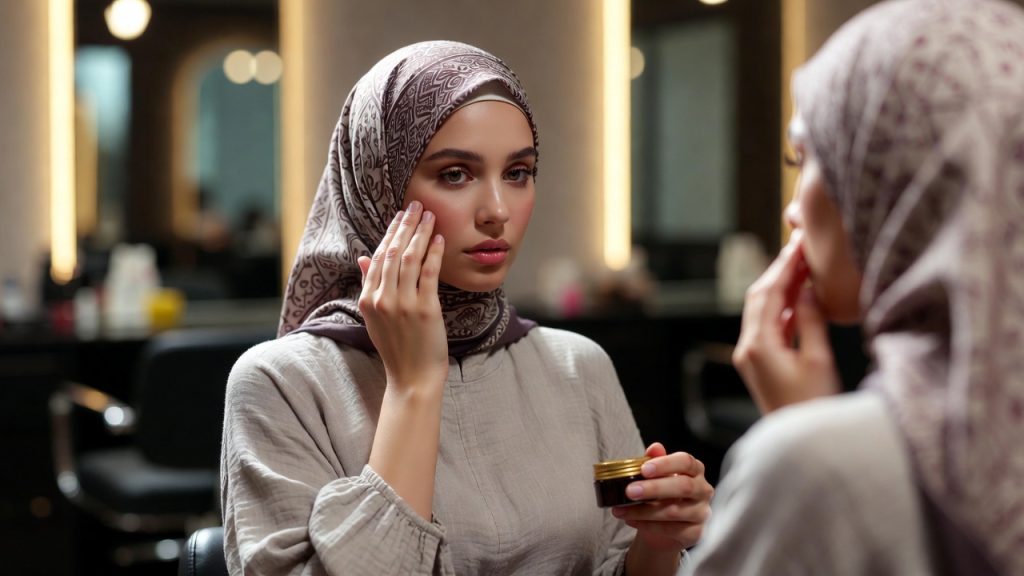
Muslim students may need to evaluate both financing and the day-to-day training environment. Practices and scholarly opinions differ, so this article does not issue a religious ruling. Use the following questions to obtain concrete information, then discuss unresolved religious concerns with a trusted, qualified scholar.
Ask About Training Requirements Before Paying
- Which services must be performed on live clients or classmates, and can the school offer lawful, competency-equivalent arrangements for privacy or modesty concerns?
- Does the uniform and sanitation policy accommodate hijab or other religious dress without creating a safety or infection-control problem?
- Is there a practical place and schedule for daily prayer?
- Will students handle products containing ingredients they wish to avoid? Can ingredient lists and safety data be reviewed in advance?
- For nail training, what must be demonstrated for the state examination, and which products or services are mandatory?
Ask for responses in writing. A mannequin or alternative client may not satisfy every state competency or required hour, so confirm any accommodation with both the school and licensing board. Religious anti-discrimination protections may apply, but an accommodation can depend on the facts and whether it conflicts with essential training or safety requirements.
A Riba-Conscious Funding Order
- Choose an affordable, state-approved program with acceptable outcomes.
- Use grants and scholarships that do not require repayment, subject to their written conditions.
- Ask the workforce office, school, employer, union, or community organization about tuition assistance.
- Use savings, a manageable installment plan with no interest or hidden finance charge, or verified family/community help if available.
- If considering qard hasan, zakat, or sadaqah through a mosque or Muslim nonprofit, confirm eligibility, availability, payment timing, and whether the money is a gift or must be repaid.
- Before accepting any federal, private, school-financed, or income-based financing product, read the promissory note and total repayment terms. Ask a qualified scholar and an independent financial counselor about any riba concern.
A label such as “Islamic,” “interest-free,” or “no credit check” is not enough. Check late fees, origination charges, required markups, collection terms, and the total amount due. A private payment arrangement can still be expensive even when it does not use the word “interest.”
Career Reality: Licensing Does Not Guarantee Income
Cosmetology can provide flexible and creative work, but no school can guarantee a job, clientele, tips, or self-employment income. BLS reports a May 2025 median hourly wage of $17.21 for hairdressers, hairstylists, and cosmetologists. Its wage figures include tips but exclude self-employed workers. Earnings vary with location, schedule, experience, services, clientele, and employment arrangement.
BLS projects overall employment of barbers, hairstylists, and cosmetologists to grow 7% from 2025 to 2035, with about 80,300 openings per year on average, many resulting from workers leaving the occupation. Projections describe the labor market, not an individual graduate’s outcome.
If you are still comparing personal-care careers, training and licensing requirements can be quite different; the guide to funding massage therapy school can help you compare another licensed service occupation. Students interested in the business side of creative services may also explore funding resources for fashion designers, but business grants generally do not replace the education funding needed for a cosmetology license.
Warning Signs of a Bad School or Funding Offer
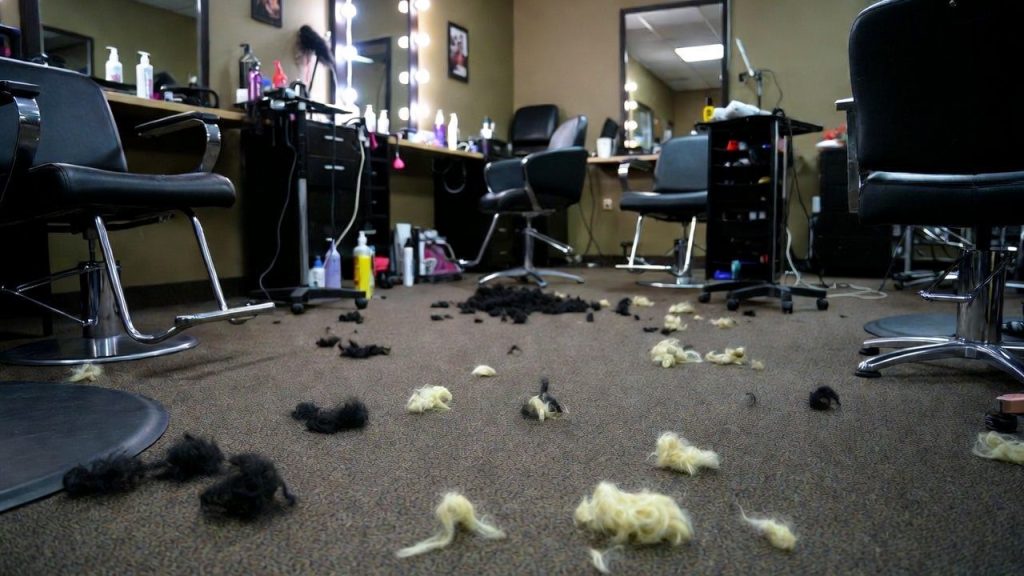
- The recruiter guarantees a grant, license, job, salary, or full client book.
- The school will not identify the state agency that approves the program.
- “Financial aid available” is advertised, but staff will not confirm eligibility for the exact program in writing.
- You are pressured to sign immediately or discouraged from comparing schools.
- Costs for kits, supplies, repeat hours, examinations, or withdrawal are missing from the contract.
- Employment claims do not define whether graduates are working in the field, part time, self-employed, or in unrelated jobs.
- A scholarship service asks for an application fee, bank login, gift card, or payment to “release” an award.
- The school directs students toward high-cost private financing before explaining grants, scholarships, and federal aid.
The Federal Trade Commission’s career-school checklist recommends comparing costs, facilities, completion, job placement, debt, and written cancellation terms before enrolling.
A Practical Application Plan
- Identify the license you want and obtain the requirements from your state board.
- Shortlist at least two state-approved programs.
- Verify accreditation, federal-aid participation, and eligibility of the exact program.
- Submit the FAFSA for free and meet state and school deadlines.
- Contact an American Job Center before training begins; approval after enrollment may not be available.
- Apply separately for current beauty-industry scholarships.
- Request written aid offers and a complete cost breakdown from each school.
- Compare the remaining price before loans, licensing outcomes, schedule, travel, childcare, and refund policy.
- Accept only the aid you understand. A student may generally decline or reduce an offered loan.
Frequently Asked Questions
Can I get a Pell Grant for cosmetology school?
Possibly. You must meet federal student-aid requirements and attend a participating school in an eligible program. Submit the FAFSA and ask the school to confirm the exact program’s Title IV eligibility in writing.
What is the maximum Pell Grant for 2026–27?
The maximum Federal Pell Grant for the 2026–27 award year is $7,395. An individual award may be smaller and depends on eligibility, financial circumstances, enrollment intensity, cost of attendance, and remaining Pell eligibility.
Can a cosmetology program under 600 hours receive Pell?
Some short programs may qualify for Workforce Pell beginning July 1, 2026, but only if they meet federal requirements and receive the required state certification and U.S. Department of Education approval. A program does not qualify merely because it has 150 to 599 clock hours.
Does accreditation guarantee that my program accepts FAFSA aid?
No. Accreditation is one part of the review. The institution must participate in federal student aid, and the exact program must be eligible. Also verify state approval for the license you intend to pursue.
Will WIOA pay the full cost of cosmetology school?
Not necessarily. Local workforce agencies determine eligibility, approved occupations and providers, funding limits, and supportive services. Contact an American Job Center before enrolling and obtain any approval in writing.
Can grant money pay for a cosmetology kit?
It depends on how the school includes required supplies in its cost of attendance, how charges are placed on the student account, and the terms of each award. Ask the financial-aid office for a written explanation; do not assume a cash refund will be available for the kit.
Will I have to repay aid if I leave cosmetology school?
You may owe the school or have federal aid returned if you withdraw, stop attending, or become ineligible. The result depends on timing and the applicable refund and federal-aid calculations. Speak with the financial-aid office before withdrawing whenever possible.
Is a private scholarship the same as a government grant?
No. A private scholarship comes from a nonprofit, association, company, school, or donor and follows the sponsor’s rules. A government grant is funded and administered under a public program. Neither should be confused with a loan that must be repaid.
Important disclaimer: StartGrants.com is an independent information portal. It is not a government agency, school, accreditor, licensing board, scholarship sponsor, lender, financial-aid administrator, or religious authority. Program rules, appropriations, deadlines, award amounts, and school eligibility can change. Confirm all information with StudentAid.gov, your state licensing board, the school’s financial-aid office, the relevant workforce agency, and each scholarship provider before enrolling or paying. This article provides general educational information, not financial, legal, tax, or religious advice.