
Last Updated: | Author: Munir Ardi

Free makeup samples by mail are real, but they are not a dependable source of monthly cosmetics. The legitimate opportunities available in the United States generally fall into three groups: product-testing campaigns that select participants, retailer samples included with a purchase, and limited loyalty gifts. Availability, eligibility, product category, and campaign rules can change without notice.
This distinction matters. A product sent in exchange for an honest review is not the same as a no-obligation sample, and a “free gift” unlocked by a $50 order is still purchase-linked. This guide explains which current programs can be verified, what each one expects from you, and how to avoid subscription traps, fake review schemes, and unsafe products.
Are Free Makeup Samples by Mail Really Free?
Sometimes—but read the conditions before calling an offer free. The most useful way to compare an opportunity is to ask what you must give in return.
| Offer type | Purchase required? | What you may need to do | What to expect |
|---|---|---|---|
| Product-testing campaign | Usually no | Provide accurate profile information, test the item, complete campaign tasks, and share honest feedback | Selection is limited; the item may be makeup, another category, or nothing at all |
| Sample with an online order | Yes | Buy qualifying merchandise and choose available samples | Samples may be substituted, limited, or unavailable |
| Gift with purchase | Yes | Meet a brand or cart-value threshold | Time-limited and while supplies last |
| Loyalty birthday gift | Depends on redemption method | Join the program and follow its current birthday terms | Usually one gift per eligible member per year; choices can sell out |
| Free trial or subscription box | Payment details are often required | Cancel before a stated deadline to avoid later charges | Not a no-obligation free sample |
A shipping charge does not automatically prove fraud; some legitimate promotions charge shipping. It does mean the offer is not completely free, and payment details may expose you to recurring billing. Read the price, renewal terms, cancellation method, and privacy policy before entering a card number.
Verified Product-Testing Programs Worth Checking
These programs have official websites and explain how selection or product testing works. None promises makeup, a full-size item, or regular deliveries. Never pay a third party for an invitation or “priority access.”
1. Influenster
Influenster says its members may receive a free VoxBox containing products from categories that can include beauty, food, pets, home, and wellness. To be eligible, users sign up, download the app, and complete a profile about their preferences. The platform uses that information to match members with possible campaigns and asks recipients for candid feedback.
Complete your profile truthfully. Do not inflate your income, alter your age, or claim interests you do not have in an attempt to attract luxury products. A false profile can produce unsuitable matches and may violate platform rules. Receiving one campaign also does not mean another box will follow.
2. BzzAgent
BzzAgent matches members to limited campaigns using profile information and survey responses. If selected, a participant tries the product and completes the activities listed in that campaign’s instructions, which may include a review or survey. BzzAgent explicitly asks for honest opinions and disclosure that the product was received free.
The service currently states that it is open to residents of the United States, Canada, and the United Kingdom. An account does not guarantee an invitation. Multiple or fake accounts, someone else operating your account, and selling or trading campaign contents are among the practices the platform says are not allowed.
3. Home Tester Club
Home Tester Club is a consumer product-testing community where members can apply for current tests and review products. Its catalog is not limited to cosmetics, so check the live testing page instead of assuming a beauty campaign is available. Product selection remains competitive, and an application is not an approval.
How to improve your chances ethically
- Use one account with your real household, demographic, skin, hair, and product-preference information.
- Complete only campaigns whose timing and required activities you can realistically handle.
- Write specific, balanced reviews after actually using the product. Mention texture, wear, packaging, shade, and any reaction without inventing benefits.
- Keep your email and mailing address current, and use a strong, unique password.
- Respond promptly to genuine invitations, but verify that links lead to the platform’s official domain.
Retailer Samples and Birthday Gifts: Read the Purchase Rules

Sephora samples with an order
According to Sephora’s current sample policy, customers may select two free samples with an online merchandise order. The samples are shipped only with a merchandise purchase, are limited, and change often. Sephora also says requested samples are not guaranteed and may be missing or substituted. Gift cards do not count as merchandise for this purpose.
Sephora Beauty Insider birthday gift
For 2026, an eligible Beauty Insider member can redeem one birthday gift per year while supplies last. Sephora’s birthday terms state that online redemption at Sephora.com requires a merchandise purchase of at least $25 before tax and shipping; in-store choices and availability can differ. Use only your own legitimate membership. Creating duplicate accounts or using other people’s birthdays to collect extra gifts can breach program rules and deprive other members of limited inventory.
Ulta gifts with purchase
Ulta’s live gift-with-purchase page lists offers with specific brand, spending, channel, expiration, and inventory conditions. These are promotional gifts, not samples mailed with no purchase. Do not buy an item you do not need merely to “save” the retail value of a gift.
Direct Brand Samples: How to Check an Offer
Brands sometimes run limited sampling campaigns through their own sites, email lists, stores, social advertisements, or third-party fulfillment pages. Because these campaigns can end quickly, a permanent list of “always available” links would be misleading.
- Start at the brand’s verified website. Look for a promotion page, newsletter, or social account linked from that site.
- Confirm the country and deadline. A valid campaign may be restricted by location, age, inventory, or household.
- Read the full terms. Check whether the offer is a sweepstakes, product test, rebate, gift with purchase, free trial, or subscription.
- Inspect the destination domain. A fulfillment partner can be legitimate, but the brand should identify or link to it. Avoid shortened or misspelled domains.
- Give only necessary information. A mailed sample reasonably needs a name and address; it should not require a Social Security number, bank login, or identity document.
Polite outreach can sometimes produce information about where to test a shade or find a current sample, but a company is not obligated to send a product. Avoid mass-email scripts that promise coverage you cannot deliver. If you offer to publish content, accurately describe your audience and disclose any product you receive.
Do Not Use “Hacks” That Require Dishonesty
Previous versions of freebie guides often recommended manipulating surveys or exploiting loyalty accounts. Those tactics are neither necessary nor responsible. Avoid:
- claiming a higher household income or different skin concern to influence campaign matching;
- opening several accounts for one person or managing an account in someone else’s name;
- posting a review before trying the item, copying someone else’s review, or hiding a negative experience;
- promising a social post or professional endorsement when you cannot deliver it;
- selling items when campaign terms prohibit resale; and
- pressuring store staff to provide large quantities of testers or samples.
The practical strategy is less dramatic: maintain an accurate profile, apply consistently, follow each campaign’s rules, and treat selection as occasional rather than guaranteed.
FTC Disclosure Rules for Free Products
If a brand or testing platform gives you something of value and you endorse or mention the product, the relationship may be a “material connection.” The Federal Trade Commission’s influencer guidance says the disclosure should be clear, hard to miss, and placed with the endorsement itself. A disclosure buried at the end of a post, behind “more,” or among many hashtags may not be adequate.
Simple wording such as “I received this product free from [brand/platform]” is clearer than vague phrases such as “collab.” For video, the FTC recommends disclosure in the video—not only in the description. You must also describe your real experience: receiving a free item does not permit unsupported health claims or a positive review you do not believe.
Cosmetic Safety: A Free Product Still Needs Care
In the United States, cosmetics and most cosmetic ingredients do not receive FDA premarket approval; color additives are an important exception. The company marketing a cosmetic is responsible for product safety, and “FDA approved” should not be assumed merely because an item is sold or sampled.
- Read the label, directions, ingredient information, and warnings before use.
- Wash your hands before applying makeup, and do not share eye or lip products.
- Do not add water or saliva to mascara. Discard eye makeup used during an eye infection.
- Do not use a product if the seal is broken, the container looks tampered with, or its smell, color, or texture has changed.
- For a new leave-on product, follow any manufacturer patch-test directions. People with allergies or sensitive skin may need advice from a qualified clinician.
- If you develop an unexpected rash, burn, swelling, or other reaction, stop using the product. Seek appropriate medical care and consider reporting a serious problem to FDA.
Muslim Perspective: Halal Ingredients, Honest Reviews, and Avoiding Riba

A complimentary cosmetic sample is not automatically a loan and does not ordinarily create interest. The financial concern arises when a “free” offer requires a credit product, pay-later plan, trial membership, or subscription that can create debt, fees, or recurring charges.
Keep “free” separate from credit
- If the sample requires no purchase and no repayment, it is different from borrowing money.
- If checkout offers buy now, pay later (BNPL), remember that BNPL is a form of credit. The Consumer Financial Protection Bureau notes that many plans do not charge interest but may charge late fees; linked bank accounts can also incur overdraft or insufficient-funds fees.
- Do not finance an unnecessary purchase merely to unlock a gift. A free sample is rarely worth a payment obligation.
- For a religious ruling about a particular credit agreement or fee, show the complete contract to a trusted, qualified scholar. This article does not issue a fatwa.
Halal, vegan, and cruelty-free are different claims
“Vegan” generally addresses animal-derived ingredients, while “cruelty-free” concerns animal-testing practices. Neither term by itself proves that a product meets a particular halal standard. Likewise, a halal logo is meaningful only when you can identify the certifier, the exact product covered, and the certification’s current scope.
For a mailed sample, locate the manufacturer’s current ingredient list and packaging. FDA explains that retail cosmetics generally must list ingredients by their common or usual names, typically in descending order of predominance, although fragrances, colors, and small sample packaging can complicate what appears on the container. The FDA ingredient-name guidance is useful for understanding labels, but FDA labeling compliance is not halal certification.
If an ingredient’s source matters to you—such as glycerin, gelatin, collagen, stearates, carmine/cochineal, or alcohol—ask the manufacturer for the source and manufacturing details. Different scholars and halal standards may assess particular ingredients or transformations differently, so avoid telling others that one universal answer applies.
Wudu and “breathable” nail products
A “breathable” or water-permeable marketing claim is not, by itself, a religious determination that wudu is valid. Product formulation, application thickness, testing method, and scholarly interpretation can differ. Consumers who follow a specific view should consult a trusted scholar and examine evidence for the exact product rather than relying on an advertisement or an informal home test.
Honesty is part of the review
Do not hide that a product was free, exaggerate benefits, or manipulate personal data to obtain a box. A useful Muslim-conscious review can instead state which certification was checked, whether the ingredient source was confirmed, and which questions remain unresolved. That approach respects both the audience and the campaign’s rules.
Free Trials, Subscription Traps, and Privacy Red Flags
A request for a card is not proof of fraud—retail orders and genuine trials can require payment details—but it changes the risk. The FTC’s consumer advice on free trials warns that a trial may convert into recurring charges if it is not canceled on time.
Before signing up, check:
- the total charged today, including shipping and handling;
- the date and amount of the next charge;
- whether a prechecked box enrolls you in another offer;
- how to cancel and whether the process is available before checkout;
- the return, refund, and recurring-shipment terms;
- the company name that will appear on your statement; and
- what personal data the company collects, shares, or uses for advertising.
Walk away if the page impersonates a brand, hides its terms, requires unrelated paid offers, demands sensitive identity information, or promises an expensive product to every visitor. Save the confirmation and terms when you knowingly join a trial. If you are charged without consent and the seller will not resolve it, contact the card issuer promptly to ask about disputing the charge.
If Your Goal Is a Beauty Career, Look Beyond Samples
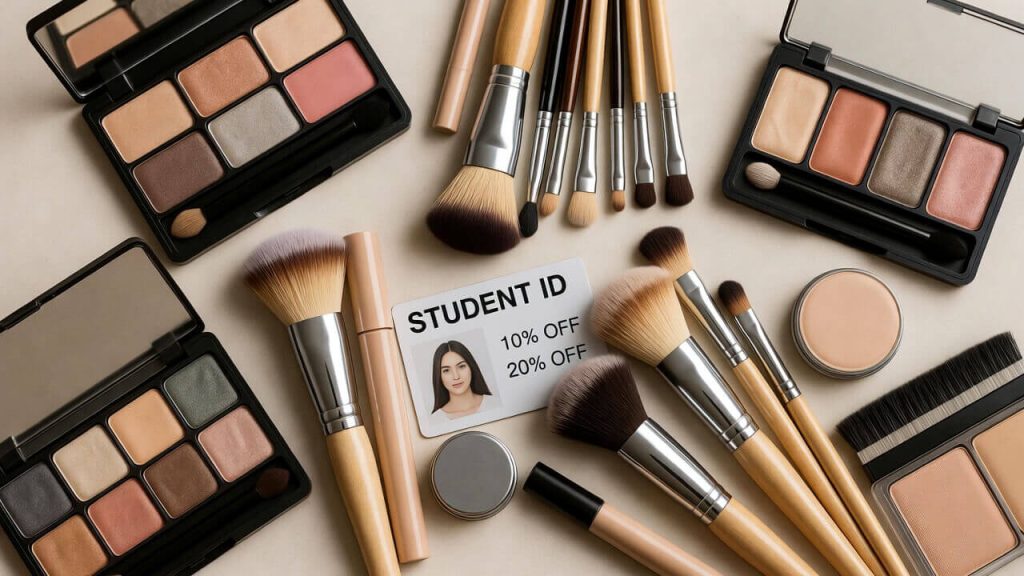
Someone building a professional kit has a different need from a consumer seeking occasional samples. Product-testing boxes are unpredictable, may contain unsuitable shades, and may prohibit resale. They should not be treated as a reliable way to equip a cosmetology program or serve clients.
For training costs, compare the school’s complete cost of attendance, required kit, state licensing requirements, refund policy, accreditation, and eligibility for federal student aid. Start with our broader guide to grants for vocational and trade schools. Students committed to this field can then review ways to pay for cosmetology school and the related beauty school grants and scholarships guide.
Professional or student discount programs can reduce the cost of eligible purchases, but they are not grants or free samples. Verify the current discount, membership fee, documentation, exclusions, and renewal rules directly with the brand before relying on it in your budget.
A Practical 10-Minute Application Routine
- Create a separate email folder for product-test invitations—not a false identity or extra platform account.
- Join no more than two or three verified panels initially and complete each profile accurately.
- Check the official retailer promotion pages only when you already need to make a purchase.
- Review every invitation for purchase, subscription, disclosure, content, and deadline requirements.
- Photograph the package and label when it arrives, especially the lot information if available.
- Use the product safely and record your genuine observations.
- Complete required feedback on time and include a clear free-product disclosure wherever you endorse it.
The realistic goal is an occasional opportunity that matches your profile—not a guaranteed mailbox full of luxury makeup. Being selective protects your time, data, skin, and budget.
Frequently Asked Questions
Are free makeup samples by mail legitimate?
Yes, some brands and product-testing communities mail samples or full-size products to selected consumers. However, campaigns are limited, makeup is not always the product category, and registration does not guarantee selection.
Which options may send products without a purchase?
Influenster, BzzAgent, and Home Tester Club may send selected members products to test without requiring a retail purchase. Participants may need to complete campaign activities and provide honest feedback. Always check the current rules for the specific campaign.
Does Sephora mail free samples without an order?
No. Sephora’s current policy says its two selectable online samples ship with merchandise purchases only. Its Beauty Insider birthday gift can be redeemed in store, subject to availability, while online redemption at Sephora.com requires a merchandise purchase of at least $25.
Are Influenster or BzzAgent boxes guaranteed?
No. Both platforms match members to limited campaigns using profile and campaign information. You may wait a long time, receive a non-beauty product, or never be selected.
Should I change my income or demographics to receive luxury makeup?
No. Enter accurate information and maintain only legitimate accounts. Misrepresenting yourself can produce unsuitable matches, undermine research, and violate platform or loyalty-program rules.
Must I disclose that a reviewed product was free?
If you endorse or mention a product and received it free or at a discount from the brand or campaign, clearly disclose that material connection where people will notice it. Follow both the FTC guidance and the campaign’s instructions.
Do vegan or cruelty-free labels mean a cosmetic is halal?
No. Vegan, cruelty-free, and halal claims address different questions. Verify the exact ingredients, their sources when relevant, and the scope of any halal certification. Consult a qualified scholar for religious guidance on uncertain ingredients or wudu.
What should I do if a “free sample” asks for a credit card?
Read the complete price, shipping, renewal, and cancellation terms before proceeding. A card request may indicate a purchase-linked offer or free trial rather than a no-obligation sample. Do not continue if charges or cancellation rules are unclear.
Important disclaimer: StartGrants.com is an independent information portal. We are not affiliated with the U.S. government, the retailers, testing platforms, brands, or certification bodies mentioned in this article. We do not distribute samples, approve applications, provide grants, issue religious rulings, or guarantee selection. Offers and terms can change; verify every opportunity on the provider’s official website before sharing personal or payment information.
