Last Updated: July 2026 | Author: Munir Ardi
The digital divide in the United States has reached a critical tipping point. In 2026, a smartphone is no longer a luxury or a status symbol; it is an absolute survival tool. Without a reliable mobile device and an active data connection, applying for jobs, attending telehealth medical appointments, accessing digital banking, or calling 911 during an emergency is virtually impossible. For low-income families, the cost of a modern smartphone and a monthly cellular plan is a devastating financial burden.
Fortunately, the federal government recognizes that digital connectivity is a fundamental utility, much like water or electricity. If you know how to navigate the bureaucratic system, you can secure premium technology without spending a single dollar. Whether you are searching for free government phone programs how to get a free iphone, or wondering exactly how to get a free iphone from the government, you must understand a critical fact: the government does not manufacture phones; they subsidize private telecom companies to provide them to you.
Before you begin the application process for a mobile device, it is crucial to understand the broader ecosystem of digital equity and federal technology grants. Establish your foundational strategy by reviewing our master pillar: Free Government Laptops for Low Income Families.
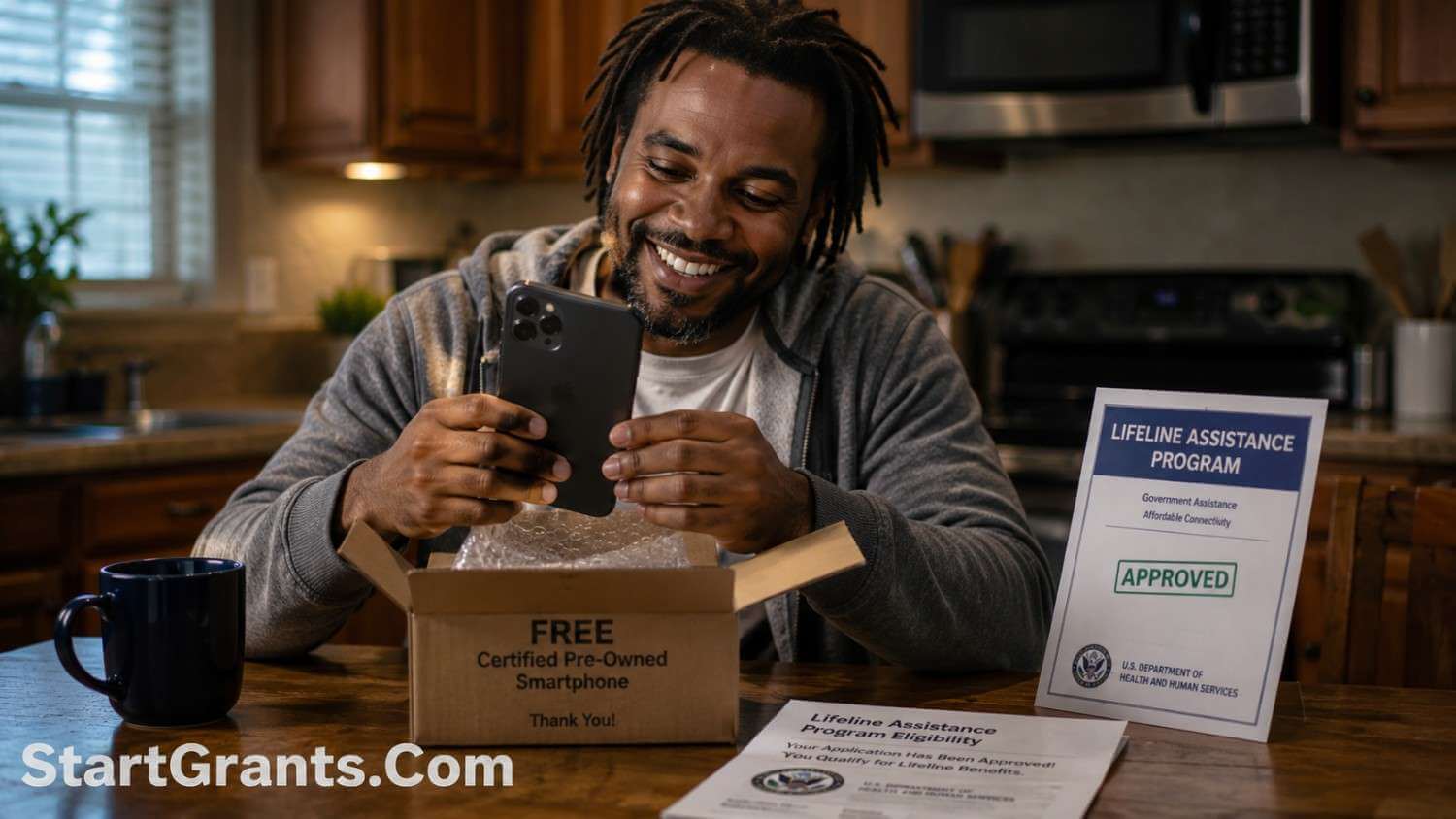
In 2026, a smartphone is not a luxury; it is a critical tool for employment, education, and telehealth. Through the federal Lifeline program, eligible low-income families can secure free mobile devices and monthly cellular service.
Phase 1: The Lifeline Assistance Program (The Federal Engine)
If you are searching for how to get free wireless phones for low income households, you must first understand the financial engine powering the initiative. The President of the United States is not shipping iPhones out of the White House. The funding comes from the Lifeline Assistance Program, a long-standing federal initiative managed by the Federal Communications Commission (FCC) and administered by the Universal Service Administrative Company (USAC).
Following the expiration of the Affordable Connectivity Program (ACP), Lifeline remains the premier federal safety net for digital access. The program provides a monthly subsidy directly to participating wireless carriers, who then pass that subsidy on to you in the form of a free mobile device and a zero-cost monthly cellular plan (talk, text, and data).
Do You Qualify for Lifeline?
You cannot simply request a free phone; you must prove extreme financial hardship. You automatically qualify for the Lifeline program if you (or a dependent in your household) meet one of the following criteria:
- Income-Based: Your total household income is at or below 135% of the Federal Poverty Guidelines.
- Program-Based: You actively participate in SNAP (Food Stamps), Medicaid, Supplemental Security Income (SSI), Federal Public Housing Assistance (Section 8), or the Veterans Pension and Survivors Benefit.
You must verify your eligibility through the government’s centralized National Verifier portal at LifelineSupport.org before a carrier will approve your phone application.
Phase 2: Navigating Carriers for Premium Devices (The iPhone Hack)
Here is the reality of the Lifeline program: because the government only provides a fixed monthly subsidy to the wireless carriers, the vast majority of Lifeline providers will only issue a basic, entry-level Android smartphone. These base models are notorious for poor battery life, low-resolution cameras, and sluggish processors.
However, the telecommunications market is highly competitive. To attract your government subsidy, specific Mobile Virtual Network Operators (MVNOs) have begun offering premium, Certified Pre-Owned Apple iPhones (such as the iPhone 7, iPhone 8, iPhone X, and occasionally the iPhone 11) as aggressive sign-up incentives.
Providers like AirTalk Wireless and Cintex Wireless have built their entire business model around this premium offering. To get a free iPhone, you must specifically target these exact carriers rather than defaulting to the first provider you see advertised.
Pro-Tip: Executing the “iPhone Hack”
Applying for a premium device requires bypassing standard carriers and understanding exactly which providers offer Apple products in your state. To see the exact bureaucratic steps to qualify for and secure a free Apple device without paying hidden shipping or activation fees, watch this excellent step-by-step breakdown: How to Get a Free iPhone from AirTalk Wireless in 2025/2026:
Phase 3: The Assurance Wireless Ecosystem
If securing an iPhone is not your primary goal, and you prioritize massive network reliability and unmetered data, your primary target should be Assurance Wireless. Backed by the T-Mobile network, Assurance is one of the oldest, largest, and most trusted Lifeline providers in the nation.
Many consumers who are already in the system frequently ask how to get a new assurance wireless phone, whether they are applying for the first time, looking to upgrade an outdated model, or needing to replace a broken device. Here is the exact protocol to navigate their ecosystem:
- The Initial Application: After verifying your eligibility on the National Verifier, you apply directly at AssuranceWireless.com. If approved, they will ship you a free Android smartphone (models vary by current inventory, frequently including brands like REVVL or Wiko) along with a free monthly plan that typically includes generous data caps and unlimited texts.
- Upgrading Your Device: If you have been an Assurance customer for an extended period and your free phone is becoming obsolete, you can log into your online account portal. Assurance frequently offers internal “Upgrade” options, allowing you to purchase a significantly better smartphone at a heavily subsidized, below-market price.
- Replacing a Lost or Broken Phone: If you drop your free government phone and shatter the screen, or if it is stolen, you are not permanently disconnected. You must call Assurance Wireless Customer Care immediately to suspend your service to prevent fraud. They will issue a replacement phone, though it typically incurs a modest replacement fee (usually around $20 to $30) to cover shipping and hardware costs.
Phase 4: Synergizing Your Tech Relief
If your household cannot afford a cellular phone bill, it is highly likely that you are also lacking other critical digital infrastructure. A smartphone is excellent for communication, but you cannot efficiently write a college thesis or manage a complex remote job on a 6-inch screen. You must “stack” your technology grants to fully bridge the digital divide.
- The Hardware Expansion: Once your Lifeline phone is secured, you must pivot to acquiring a larger workstation for your family’s educational and employment needs. Discover how to secure larger hardware in our directory of the 5 Non-Profits Organizations That Offer Free Laptops for Low-Income Families.
- The Disability Synergy: If you qualified for the Lifeline program by proving you receive Supplemental Security Income (SSI) due to a physical or mental disability, you hold a massive bureaucratic advantage. Your SSI status automatically qualifies you for specialized technology grants. Maximize your benefits by exploring Free Computers for Disabled People.
Phase 5: The Muslim Perspective (Hajat, Riba, Gharar, & Sadaqah)
For Muslim families residing in the United States, navigating federal assistance programs requires more than just verifying income limits; it requires extreme spiritual vigilance. While maintaining digital connectivity is essential for modern survival, the telecommunications industry is heavily laden with predatory financial contracts that violate Islamic jurisprudence (Shariah).
The Smartphone as Hajat (Basic Need)
In Islamic law (Maqasid ash-Shariah), preserving one’s wealth and ability to earn a lawful livelihood is known as Hifz al-Mal. In the modern era, a smartphone is not an extravagant luxury; it is a Hajat (a fundamental necessity) required to secure a job, communicate with family, and access essential services. Therefore, utilizing the federal Lifeline program to obtain a free smartphone is entirely permissible. Because the phone and the cellular service are provided as Hibah (a government gift) requiring no repayment, it is a 100% Halal resource that Muslim families should utilize to protect their finances.
The Trap of Riba in “Device Financing”
The greatest spiritual hazard occurs after you receive your free phone. Carriers constantly bombard Lifeline customers with aggressive marketing to “Upgrade to the latest iPhone 15 Pro” using Device Financing (monthly installment plans).
These contracts often feature exorbitant hidden fees, and if you miss a single payment, they trigger massive compounding interest and late penalties. In Islam, intentionally engaging in a contract that stipulates the payment of interest is explicitly Riba, which is strictly Haram (forbidden) and eradicates the Barakah (blessing) from your household. A Muslim must adamantly refuse these financed “upgrades.” You must either accept the 100% free device provided by the government or save your money to buy a used phone outright in cash.
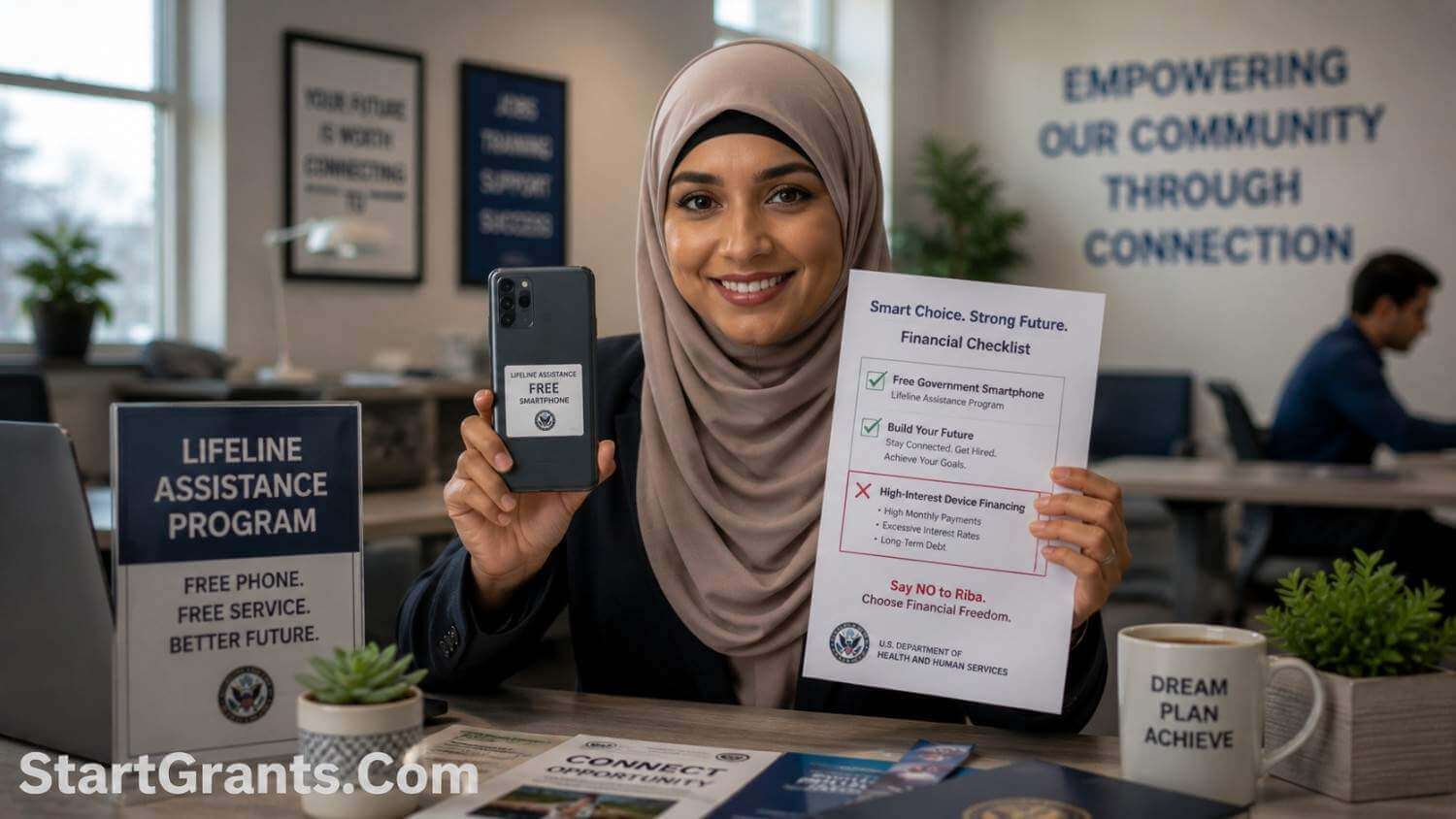
For Muslim families, utilizing the government’s Lifeline program provides a 100% Halal (Hibah) method to stay connected. However, applicants must exercise extreme spiritual vigilance and fiercely reject any “upgrade” offers that involve Riba-laced installment plans.
Gharar and Device Protection Plans
When you activate your new phone, the carrier will aggressively push you to buy “Phone Insurance” or a “Device Protection Plan” for $7 to $15 a month. Traditional commercial insurance is structurally problematic in Islam due to Gharar (excessive uncertainty) and elements of gambling.
While Islamic scholars often permit health insurance or auto insurance under the principle of Dharurah (absolute, life-saving necessity), a shattered phone screen rarely reaches the strict theological threshold of absolute necessity. Therefore, paying for commercial phone insurance is widely considered impermissible by many scholars. The Halal alternative is to reject the insurance and instead build a personal emergency cash fund to cover the $30 replacement fee if the phone breaks.
Islamic Institutions and Emergency Tech
If you do not qualify for the federal Lifeline program due to a bureaucratic technicality, but you are destitute and desperately need a phone for an upcoming job interview, you are not abandoned. You qualify as Al-Masakin (the needy) and are eligible to receive Zakat. Organizations like ICNA Relief operate extensive domestic family service programs that provide emergency assistance, ensuring vulnerable Muslims can secure the technology they need without falling into predatory, Riba-bearing debt.
Conclusion
Understanding free government phone programs how to get a free iphone requires navigating past the standard-issue Android providers and explicitly targeting MVNOs like AirTalk Wireless that specialize in certified pre-owned Apple products. For those seeking absolute network stability, mastering the Assurance Wireless ecosystem ensures you remain connected, even if you need to navigate the bureaucracy of replacing a broken device.
For the Muslim family, claiming this federal benefit is a brilliant, Halal strategy to maintain modern connectivity. By fiercely rejecting the predatory trap of Riba-laced device financing for luxury upgrades, avoiding the Gharar of commercial phone insurance, and treating the smartphone as a tool for lawful provision, your digital access becomes a shielded asset, protecting both your earthly finances and your spiritual purity.
Frequently Asked Questions (FAQs)
Q1: Are the free iPhones provided by the government brand new?
A: No. The federal government subsidy is not large enough to cover the cost of a brand-new, $1,000 Apple product. Providers that offer iPhones through the Lifeline program provide “Certified Pre-Owned” or refurbished models, typically older generations such as the iPhone 7, iPhone 8, or iPhone X.
Q2: Can I get a free government phone if I already have a cell phone plan?
A: The Lifeline program is strictly limited to one benefit per household, not per person. If someone in your household (who shares your income and expenses) already receives a Lifeline phone or internet discount, you cannot apply for a second one. You can, however, transfer your existing benefit to a new carrier if you wish.
Q3: How do I get a new Assurance Wireless phone if mine is broken or lost?
A: If your Assurance Wireless phone is lost, stolen, or broken beyond repair, you must contact their customer service immediately to suspend your line. You can then request a replacement device. While the monthly service remains free, Assurance Wireless typically charges a modest replacement fee (around $20 to $30) to ship you a new phone.
Q4: Why is it Haram to finance a phone upgrade through my wireless carrier?
A: Most wireless carrier “device financing” or installment plans involve credit checks and stipulate that if you miss a payment or default on the contract, compounding interest and severe late penalties will be applied. In Islamic jurisprudence, entering a contract that includes a clause for paying interest is classified as Riba, which is strictly forbidden (Haram).
Q5: Can I use Zakat money to buy a smartphone?
A: Yes, under specific circumstances. If a person is destitute (Al-Masakin) and desperately needs a basic smartphone to secure employment, arrange medical care, or access essential government services, the phone is considered a “Hajat” (basic necessity). Zakat funds can be used by an Islamic charity to provide this essential tool so the individual can achieve self-sufficiency.
Disclaimer: The information provided in this article is for educational and informational purposes only. We are not a telecommunications provider, a federal agency, or a religious fatwa council. FCC Lifeline regulations, carrier inventory (like iPhone availability at AirTalk Wireless), and Assurance Wireless replacement policies are subject to constant changes. Always consult the official National Verifier (LifelineSupport.org) for eligibility, and seek guidance from a qualified Islamic finance scholar regarding Halal financing, avoiding Riba in device contracts, and Gharar in device insurance.