
Last Updated: | Author: Munir Ardi
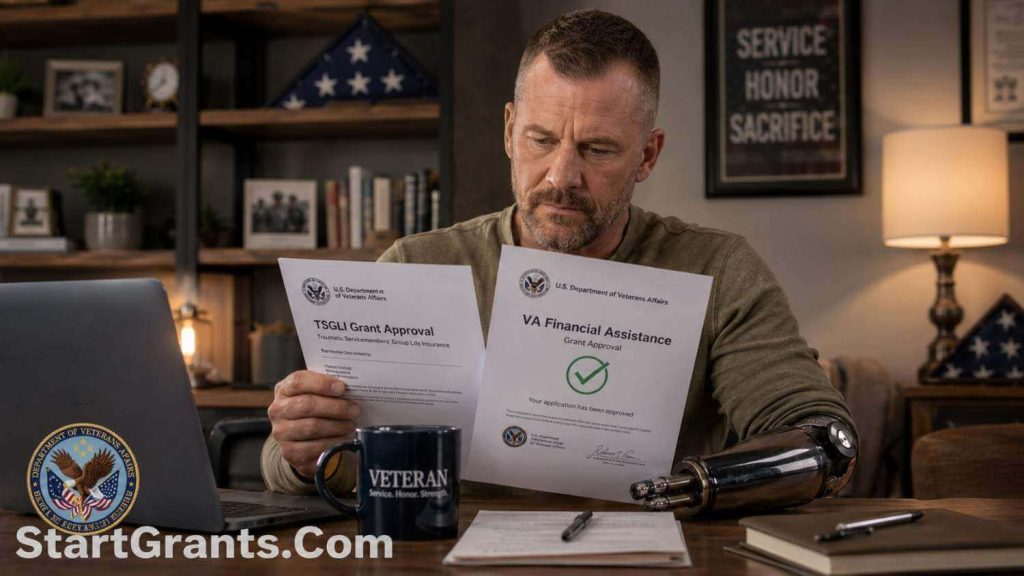
There is no single federal “wounded warrior grant” that every injured service member or veteran automatically receives. Financial assistance for wounded warriors comes through separate programs, each with its own definition of qualifying service, injury, disability, financial need, and application process.
The fastest route depends on the problem you need to solve. A past-due utility bill calls for a different program than monthly disability compensation, a wheelchair-accessible home, caregiver support, or retraining for a new career. This guide explains what the major programs actually provide, where to apply, and which common claims should not be trusted.
Need help immediately?
- If you may lose housing, call the VA National Call Center for Homeless Veterans at 877-424-3838, available 24/7.
- If you are in emotional crisis or concerned about a veteran, call or text 988, then press 1, or text 838255.
- For overdue essential bills, use the action steps in Emergency Financial Assistance for Veterans while also contacting an accredited Veterans Service Organization and relevant military relief society.
Start With the Right Type of Assistance
| Your need | Program to investigate | What it is |
|---|---|---|
| Ongoing service-connected disability | VA disability compensation; possibly Special Monthly Compensation | Monthly benefits based on VA eligibility and rating rules |
| Qualifying traumatic injury and scheduled loss | TSGLI | Insurance benefit, not a general grant |
| Immediate essential bill | Operation Homefront, military relief society, county/state veteran office, or local nonprofit | Need-based, limited assistance; approval is not guaranteed |
| Home accessibility | SAH, SHA, or TRA | VA housing grants for specific qualifying disabilities and housing arrangements |
| Daily personal care | PCAFC or general caregiver support | Training and support; qualifying primary caregivers may receive a stipend |
| Work, retraining, or independent living | Veteran Readiness and Employment | Rehabilitation, education, employment, or independent-living services—not unrestricted cash |
VA Disability Compensation: The Monthly Foundation
VA disability compensation is a tax-free monthly benefit for veterans with disabilities caused or aggravated by active military service. An injury, illness, or mental health condition can qualify if the evidence establishes service connection; combat service is not required for every claim.
The amount is not based on the informal label “wounded warrior.” It depends on the VA disability rating, dependent status for ratings of 30% or higher, and any additional benefit for which the veteran qualifies. Under the 2026 VA compensation table, effective December 1, 2025:
- a 10% rating pays $180.42 per month;
- a 20% rating pays $356.66 per month; and
- a 100% rating for a veteran without dependents pays $3,938.58 per month.
Those examples are not personalized estimates. Rates for 30% through 100% can change with qualifying dependents, and some veterans qualify for Special Monthly Compensation because of particular disabilities, loss of use, or the need for aid and attendance. VA adjusts rates periodically, so always use the current official table.
How to Build a Strong, Accurate Claim
- Identify each condition. Include physical and mental health conditions you believe began during service, were aggravated by service, or developed secondary to an already service-connected condition.
- Collect evidence. This may include service treatment records, current medical records, relevant military personnel records, and competent statements describing onset and functional impact.
- Use accredited help. A VA-accredited VSO representative can help at no charge. Attorneys and claims agents may charge only under applicable VA rules. Verify accreditation through VA’s accredited-representative service.
- Attend examinations. If VA schedules a compensation and pension examination, confirm the date and explain the condition accurately without minimizing or exaggerating symptoms.
- Review the decision. Check the effective date, rating, dependent information, and denied issues. A decision letter explains the review options and deadline.
A fee-charging company cannot guarantee a rating or faster approval. Be cautious when a business asks for a percentage of future benefits, requests your VA login, or claims it can create evidence that does not exist.
TSGLI: Insurance for Specific Traumatic Losses
Traumatic Servicemembers’ Group Life Insurance, or TSGLI, is frequently mislabeled as a government cash grant. It is an insurance benefit associated with Servicemembers’ Group Life Insurance. Full-time SGLI coverage includes TSGLI through a $1 monthly premium.
According to VA’s current TSGLI rules, an eligible claimant may receive $25,000 to $100,000, depending on the scheduled loss. A severe diagnosis or disability rating alone does not establish eligibility. Among other requirements:
- the claimant generally must have been covered by SGLI when the traumatic injury occurred;
- the injury must directly cause a loss listed in the TSGLI schedule;
- the scheduled loss must occur within 730 days of the injury;
- the service member must survive at least seven full days after the injury; and
- specified exclusions apply.
For injuries on or after December 1, 2005, coverage may apply whether the injury occurred on or off duty, provided the requirements are met. VA also provides a separate retroactive pathway for some injuries between October 7, 2001, and November 30, 2005. Submit Form SGLV 8600 to the address for the appropriate service branch. If a claim is denied, follow the instructions and appeal deadline in the branch’s decision letter.
Important distinction: TSGLI does not replace VA disability compensation, and a VA rating does not automatically prove a TSGLI scheduled loss. A person may qualify for one, both, or neither.
Emergency Financial Assistance for Essential Bills
Disability compensation and insurance claims can take time, while rent, food, transportation, and utilities cannot wait. Emergency programs usually require documentation of both military eligibility and a temporary financial crisis. They may pay a vendor, provide a restricted card, or issue a grant or interest-free loan. Ask which form of assistance is being offered before accepting it.
Operation Homefront Critical Financial Assistance
Operation Homefront’s Critical Financial Assistance program may help eligible military families with needs such as food, utilities, rent or mortgage payments, transportation, medical expenses, and certain home repairs.
For its wounded, ill, or injured category, the current eligibility page requires post-9/11 service and a documented line-of-duty wound, illness, or injury. A discharged applicant must generally have an Honorable or General (Under Honorable Conditions) discharge and be within 10 years of separation. Beginning in 2026, applications are accepted through My Operation Homefront from the first through the tenth day of each month. Complete applications are reviewed after the window closes; applying does not guarantee approval.
Military Relief Societies and Local Veteran Offices
Army Emergency Relief, Navy-Marine Corps Relief Society, Air Force Aid Society, and Coast Guard Mutual Assistance serve different populations and can offer different combinations of grants, interest-free loans, counseling, and emergency support. Eligibility can depend on branch, duty or retirement status, the specific emergency, and available documentation. A veteran who does not qualify through one society should still ask a state or county veterans office, an accredited VSO, and 211 about local programs.
Do not assume every emergency program pays cash to the applicant. Many pay the landlord, utility, repair shop, or other provider directly. Assistance may also be limited by available funds or lifetime use rules.
What Wounded Warrior Project Actually Provides
Wounded Warrior Project offers no-cost programs for eligible registered post-9/11 warriors and family members, including VA benefits assistance, financial coaching, career support, mental health services, and referrals. Its Resource Center states that it does not provide direct financial assistance; it can connect people with organizations that may provide aid under their own criteria.
This distinction matters. A referral or financial-readiness session can be valuable, but it is not the same as an approved grant or payment.
VA Housing Grants for Accessibility
VA adapted-housing grants are not available for every service-connected disability or every home repair. They serve veterans and service members with disabilities specifically listed under the program and must be used for qualifying housing purposes.
As of September 3, 2026, the FY 2026 maximums are:
- Specially Adapted Housing (SAH): up to $126,526. The veteran must own or plan to own the permanent home and have a qualifying service-connected disability.
- Special Home Adaptation (SHA): up to $25,350. The veteran or a family member must own or plan to own the permanent home, and the veteran must have a qualifying service-connected disability.
- Temporary Residence Adaptation (TRA): up to $50,961 for someone who qualifies under SAH, or up to $9,100 for someone who qualifies under SHA, when adapting a family member’s home used temporarily.
These are aggregate maximums, not automatic awards or construction estimates. VA adjusts them annually, and FY 2026 ends on September 30, 2026. The approved project and remaining entitlement determine the amount available to an individual. Read Housing Grants for Disabled Veterans for the disability categories, uses, application steps, and differences between SAH, SHA, TRA, and other home-modification programs.
Vehicle and Adaptive-Equipment Benefits
VA may help an eligible veteran or service member purchase a vehicle or obtain approved adaptive equipment when a service-connected disability causes a qualifying loss or permanent loss of use, qualifying vision impairment, or another condition listed by VA.
Apply through VA’s automobile allowance and adaptive-equipment program. Do not buy the vehicle or equipment first. VA instructs applicants to file and receive approval before purchasing, and the seller must agree to provide the required claim form and itemized invoice.
Because the vehicle allowance and equipment rules are different, an applicant may qualify for one or both. Ask VA to identify the exact benefit and approved equipment before signing a purchase or financing contract.
Support for Family Caregivers
The Program of Comprehensive Assistance for Family Caregivers (PCAFC) is not an automatic caregiver salary for every disabled veteran. Under current VA eligibility rules, the veteran generally must:
- have a VA disability rating of 70% or higher;
- be discharged or have a medical-discharge date;
- need at least six months of continuous, in-person personal-care services; and
- be enrolled in VA health care.
The caregiver must be at least 18 and have a qualifying family or full-time living relationship with the veteran. Eligible primary and secondary caregivers can receive training, counseling, and certain travel support. An approved primary caregiver may also receive a monthly stipend and other benefits. The veteran and caregiver apply jointly using VA Form 10-10CG or the online process.
Caregivers who do not qualify for PCAFC may still receive education, coaching, peer support, and referrals through VA’s Program of General Caregiver Support Services. A denial is not proof that caregiving is unnecessary; it means the application did not meet PCAFC’s specific criteria or evidence requirements. The decision notice explains review and appeal options.
Employment, Retraining, and Independent Living
Veteran Readiness and Employment (VR&E), also known as Chapter 31, can help with vocational counseling, employment services, training, education, job accommodations, or independent-living support. It is not a business grant or unrestricted tuition check.
A veteran can generally apply if they did not receive a dishonorable discharge and have a VA service-connected disability rating of at least 10%. Applying is only the first step: a Vocational Rehabilitation Counselor evaluates entitlement and helps develop an individualized rehabilitation plan. Service members in certain medical-separation or disability-evaluation situations may be able to start before discharge.
Review the current VR&E eligibility rules before assuming a particular degree, credential, business plan, or piece of equipment will be approved.
Entrepreneurship and SDVOSB Certification
Service-Disabled Veteran-Owned Small Business certification is often incorrectly advertised as access to “billions in grants.” SBA VetCert primarily allows qualifying businesses to compete for federal sole-source and set-aside contracts. Certification does not award a contract, guarantee revenue, or provide an automatic grant.
Veterans considering self-employment should compare VR&E’s self-employment track, SBA counseling, VetCert requirements, startup costs, and realistic contract opportunities. The guide to Service-Disabled Veteran-Owned Small Business Grants explains the difference between certification, contracts, training, grants, and loans.
VA and Social Security Disability Are Separate
A high VA disability rating—even 100%—does not automatically qualify a veteran for Social Security Disability Insurance. VA evaluates whether a condition is connected to military service and assigns a percentage rating. Social Security uses its own definition, including whether a severe condition prevents substantial work and is expected to last at least 12 months or result in death.
A veteran may qualify for both VA disability compensation and SSDI, but must apply separately. SSI has additional income and resource rules. Use the Social Security veterans comparison instead of assuming one agency’s decision controls the other.
State Benefits: Verify Residency and Deadlines
States may offer property-tax relief, tuition programs, bonuses, vehicle benefits, or emergency assistance. There is no national rule, and benefits often depend on current residence, residence when entering service, discharge status, disability rating, wartime service, or application timing.
For example, Financial Assistance for Veterans in Texas explains Texas-specific tax, housing, and assistance pathways. Meanwhile, the Ohio Veterans Bonus Program stopped accepting applications in 2024. That closure is a useful warning: never rely on an old article to prove that a state cash bonus is still open.
Muslim Perspective: Riba-Aware Financial Recovery
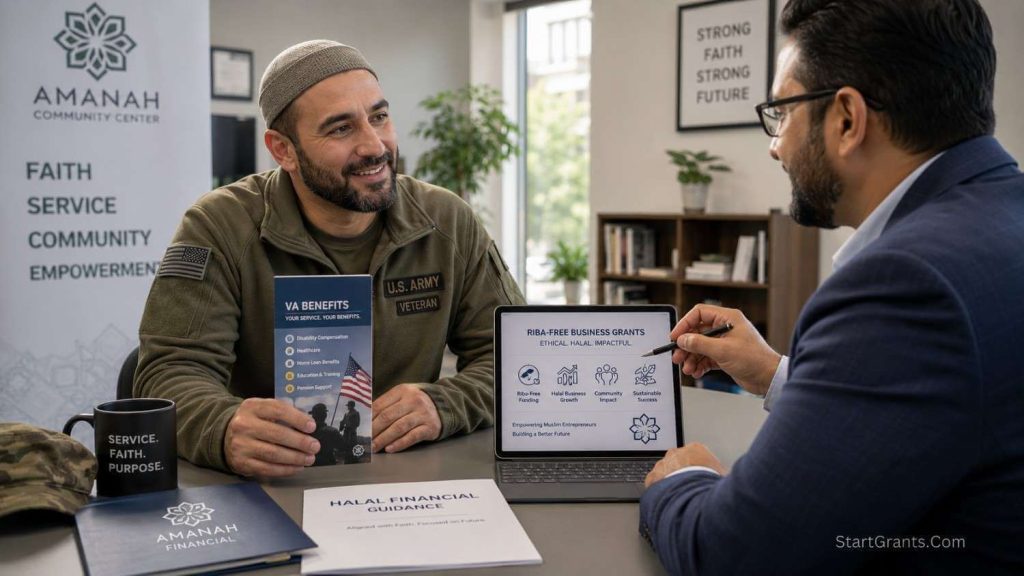
For a Muslim veteran, avoiding interest-bearing debt may be an important part of financial recovery. The safest starting point is not to label every veteran program “halal” or “haram,” but to identify the actual legal and financial structure.
Separate Benefits From Debt
- VA disability compensation is a public benefit, not a loan. Correctly paid benefits do not accrue interest or require scheduled repayment, although VA can seek recovery of an overpayment.
- SAH, SHA, and qualifying nonprofit grants are generally nonrepayable when used according to their rules. Confirm whether a lien, recapture provision, matching requirement, or vendor-payment restriction applies.
- TSGLI is an insurance benefit funded through the SGLI premium, not a charitable grant. Islamic views about insurance arrangements can differ. Do not claim universal scholarly approval; show the actual terms to a qualified scholar if religious classification affects your decision.
- Military relief assistance may be a grant, an interest-free loan, or a combination. Ask which one you are receiving and what happens after a missed payment.
- SDVOSB status creates contracting opportunities. It does not make a commercial loan interest-free or turn borrowed capital into a grant.
A Practical Order of Assistance
- File for earned VA, DoD, Social Security, and state benefits for which you may qualify.
- Ask creditors and essential-service providers for hardship arrangements before an account enters default, and request every fee and term in writing.
- Apply for verified nonrepayable emergency assistance and direct-to-vendor aid.
- Ask an established mosque or Muslim social-service organization whether it currently offers zakat, sadaqah, food, rent support, or qard hasan. Availability and eligibility are local and never guaranteed.
- If borrowing remains necessary, review the total repayment obligation, fees, late consequences, collateral, and any interest clause with a qualified financial adviser and, when desired, an Islamic finance scholar.
Do not assume every injured veteran is automatically eligible for zakat under a specific religious category. Income, assets, debt, household support, local distribution policy, and scholarly interpretation can matter. Likewise, an “interest-free” loan may still contain administrative charges or penalties that deserve careful review.
Scams and Costly Mistakes to Avoid
- Guaranteed VA ratings: No private company can guarantee a disability percentage or decision date.
- Calling TSGLI a grant for any severe injury: Payment requires a covered person, traumatic event, scheduled loss, and other conditions.
- Buying before VA approval: Vehicle and adaptive-equipment applicants should obtain approval before purchase.
- Assuming a housing maximum is your award: FY 2026 SAH and SHA figures are caps, not automatic payments.
- Paying for government certification: SBA does not charge an application fee for VetCert. Certification creates eligibility to compete; it does not produce a grant or contract.
- Sharing logins or identity records: Do not give an adviser your VA.gov password. Use secure official portals and verify accreditation.
- Waiting for one decision: An unresolved VA claim should not stop you from applying separately for emergency, caregiver, housing, or Social Security help when relevant.
Your 48-Hour Action Plan
- Stabilize the emergency. Contact the landlord, utility, medical provider, or auto lender; request a written hardship option and pause on adverse action.
- Call the correct emergency route. Use the VA homeless line for housing instability, a military relief society for branch-related aid, and current nonprofit or county programs for essential bills.
- Protect the claim date. If you intend to seek VA disability compensation, ask an accredited representative about filing and preserving the appropriate effective date.
- Check TSGLI separately. Compare the injury and resulting loss with the official schedule rather than relying on the VA disability rating.
- List secondary needs. Housing adaptations, adaptive transportation, caregiver support, VR&E, and Social Security each require separate review.
- Prepare one document folder. Include DD-214, service and medical records, VA decisions, income evidence, bills, leases or mortgage statements, repair estimates, and application confirmations.
- Review every funding agreement. Determine whether it is a benefit, grant, insurance payment, vendor payment, or loan—and whether repayment, fees, liens, or recoupment can apply.
Frequently Asked Questions
Is there one federal grant for everyone called a wounded warrior?
No. “Wounded warrior” is a broad description used by government and nonprofit programs, not one universal eligibility status. Each benefit has separate service, injury, disability, financial-need, and application rules.
What is the difference between VA disability compensation and TSGLI?
VA disability compensation is a recurring benefit for service-connected disabilities. TSGLI is an insurance benefit that pays $25,000 to $100,000 when an eligible covered service member experiences a qualifying traumatic injury and scheduled loss.
Does a 100% VA disability rating guarantee Social Security Disability Insurance?
No. VA and Social Security use different disability standards and separate applications. A veteran may qualify for both, but one agency’s approval does not automatically establish eligibility with the other.
How much can VA adapted-housing grants provide in FY 2026?
The FY 2026 maximum is $126,526 for SAH and $25,350 for SHA. TRA maximums are $50,961 for an SAH-eligible person and $9,100 for an SHA-eligible person. These are caps, not automatic awards, and VA adjusts them annually.
Can Wounded Warrior Project pay an overdue bill directly?
Its Resource Center states that it does not provide direct financial assistance. WWP offers no-cost benefits assistance, financial coaching, career and wellness programs, and referrals to organizations whose aid and eligibility rules vary.
Can a family caregiver receive a monthly VA stipend?
An approved Primary Family Caregiver under PCAFC may receive a monthly stipend. The veteran and caregiver must satisfy the program’s requirements and complete a joint application and assessment; a disability rating alone does not guarantee approval.
Does SDVOSB certification provide a business grant?
No. SBA certification primarily lets an eligible business compete for certain federal set-aside and sole-source contracts. It does not guarantee a contract, revenue, startup capital, or grant.
Are all veteran assistance programs free of riba?
No universal conclusion should be made from a program label. Public benefits and true grants differ from loans, while TSGLI is insurance and military relief may include grants or interest-free loans. Review the written terms and seek qualified religious guidance for a personal determination.
Important disclaimer: StartGrants.com is an independent information portal. It is not affiliated with the U.S. Department of Veterans Affairs, Department of Defense, Wounded Warrior Project, Operation Homefront, Social Security Administration, or any other government agency or nonprofit. StartGrants.com does not award grants, decide eligibility, process claims, or provide legal, tax, financial, medical, or religious advice. Program rules, benefit amounts, application windows, and funding can change. Verify current information with the administering organization before acting or sharing personal documents.


