
Last Updated: May 2026 | Author: Robert
In the world of minority entrepreneurship, there is a dangerous myth: “The only good money is free money.”
Every day, thousands of Black, Hispanic, Asian, and Indigenous entrepreneurs scour the internet trying to figure out how to obtain business grants for minorities. While grants are excellent resources—and we cover them extensively in our Ultimate Guide to Minority Small Business Grants—they have two major limitations:
- Scarcity: For every $10,000 grant, there are often 5,000+ applicants. The odds are statistically lower than getting into Harvard.
- Scale: You cannot build a factory, buy a fleet of trucks, or acquire a competitor with a $5,000 grant.
If you are serious about scaling your business in 2026, you need to shift your mindset from “winning a contest” to “securing capital.”
This guide is not about predatory payday loans or high-interest credit cards. It is a comprehensive breakdown of the “Hidden Banking System” designed specifically for minority entrepreneurs. We will explore Community Development Financial Institutions (CDFIs), government-backed guarantees, and—crucially for our Muslim readers—ethical, interest-free (Halal) financing structures that respect your religious values.

Securing capital is the fuel your business needs to scale beyond the startup phase.
Phase 1: The “Access to Capital” Gap (Why You Are Here)
According to the Federal Reserve’s Small Business Credit Survey, minority-owned firms are far less likely to be approved for financing than their white counterparts, even when they have similar credit profiles.
- The Problem: Traditional “Big Banks” rely on automated algorithms that often disadvantage minority applicants due to systemic factors like lower average credit scores or lack of collateral.
- The Solution: You must stop knocking on the wrong doors. The lenders listed in this guide want to lend to you. It is part of their legal mission.
If you are an immigrant without a social security number, financing is still possible. Please refer to our specialized guide on Funding Options for Undocumented Entrepreneurs (ITIN Only).
Phase 2: The “Secret Weapon” – CDFIs and MDIs

CDFIs look at your character and community impact, not just your credit score.
If you take only one thing from this guide, let it be this acronym: CDFI.
Community Development Financial Institutions (CDFIs) are the single most important resource for minority entrepreneurs in the United States. They are private financial institutions certified by the U.S. Treasury to provide credit to low-income, low-wealth, and other disadvantaged communities.
Why CDFIs Say “Yes” When Banks Say “No”
Unlike a traditional bank (like Chase or Bank of America) that looks strictly at your FICO score and tax returns, a CDFI looks at the “Character” and “Community Impact” of your business.
- Holistic Underwriting: They listen to your story. If your credit score is low because of a past medical emergency or divorce, they can make exceptions.
- Technical Assistance: Most CDFIs require you to take free business consulting as part of the loan. This isn’t a penalty; it’s a benefit to help you succeed.
- Lower Rates: Their interest rates are typically capped and are far lower than online lenders.
If you have never heard of a Community Development Financial Institution before, you are not alone. Watch this quick breakdown explaining exactly how these mission-driven organizations operate:
Top CDFIs for Minority Entrepreneurs (2026 List)
While there are over 1,000 CDFIs in the US, here are a few giants that operate across multiple states:
-
Accion Opportunity Fund
- Best For: Food and beverage businesses, trucking, and retail.
- Loan Size: $5,000 to $250,000.
- Link: Accion Opportunity Fund
-
DreamSpring
- Best For: Entrepreneurs in the Southwest (AZ, CO, NV, NM, TX).
- Why apply: They offer a specific “Power Line of Credit” that is excellent for managing cash flow.
- Link: DreamSpring
-
Hope Credit Union
- Best For: Black entrepreneurs in the Deep South.
- Focus: They are an MDI (Minority Depository Institution) explicitly focused on closing the racial wealth gap.
- Link: Hope Credit Union
How to Find a Local CDFI
National lenders are great, but a local CDFI in your city is even better.
- Go to the official CDFI Fund Locator.
- Select your state and look for “Loan Funds” or “Credit Unions.”
- Pro Tip: Call them. Ask specifically: “Do you have a minority business lending program?”
Phase 3: Government-Backed Security – The SBA Advantage
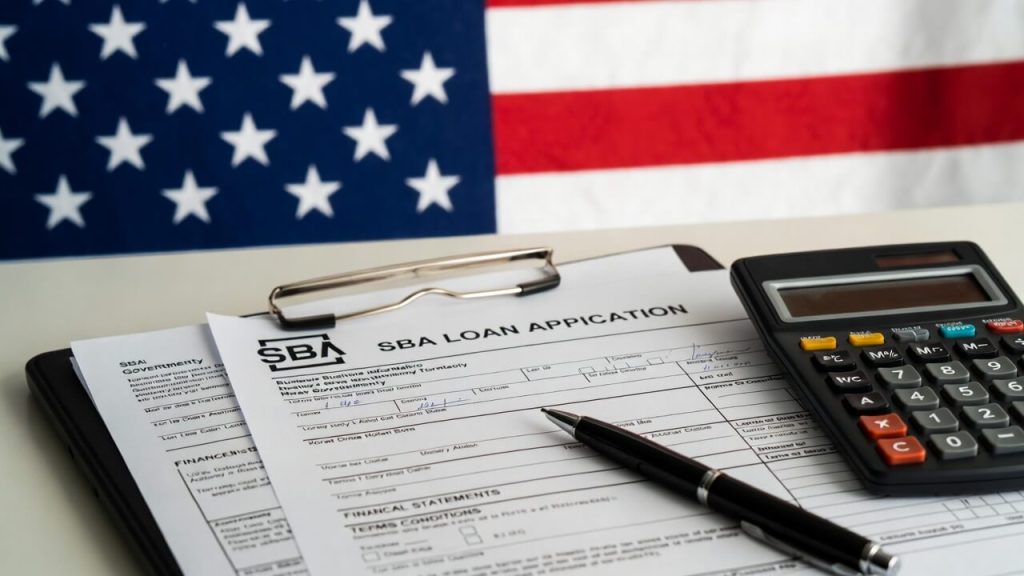
The SBA Community Advantage program reduces risk for lenders, making it easier for you to get approved.
While the Small Business Administration (SBA) does not lend money directly to entrepreneurs, they act as a co-signer for your loan.
This is critical for minority business owners. Often, a bank will look at a minority applicant and see “high risk.” The SBA steps in and says: “If this borrower defaults, the US Government will pay back up to 85% of the loss.”
1. The “Community Advantage” Pilot Program
If you are a minority entrepreneur, the standard SBA 7(a) loan might still be out of reach because it requires high credit scores. Enter the SBA Community Advantage program.
- Who it is for: Specifically designed for businesses in underserved markets.
- Loan Amounts: Up to $350,000.
- The “Secret” Benefit: Community Advantage loans are processed by mission-focused lenders (like CDFIs). They are far more likely to approve waivers for credit issues.
“Planning to use this capital to purchase a vehicle for your logistics company? Be sure to read our specific guide on How to Start a Trucking Business as an Immigrant to understand the specific costs involved.”
2. The SBA Microloan Program
For startups that don’t need hundreds of thousands of dollars, the SBA Microloan is the perfect stepping stone.
- Maximum Amount: $50,000 (Average loan is around $13,000).
- The “Character” Factor: These loans are administered by local non-profits who provide training and technical assistance. They care more about your business plan than your FICO score.
How to Apply: Use the official SBA Lender Match Tool.
Phase 4: Halal Financing – Ethical Capital for Muslim Entrepreneurs

Ethical financing options like Murabaha allow you to grow without compromising your faith.
For millions of Muslim entrepreneurs in the U.S., the barrier to capital isn’t just credit—it’s faith. Conventional business loans involve paying or receiving Interest (Riba), which is strictly prohibited in Islam.
The good news is that the U.S. financial ecosystem is adapting. In 2026, there are robust Sharia-compliant financing options that allow you to scale your business without compromising your values.
1. Understanding the Mechanics: “Profit Rate” vs. “Interest Rate”
- The Prohibition: Making money strictly from lending money (Riba).
- The Solution (Murabaha – Cost-Plus Financing): Instead of lending you cash to buy a machine, the Islamic bank buys the machine itself. They then sell it to you at a higher, agreed-upon price, which you pay back in installments.
2. Top Islamic Financing Providers in the U.S.
- UIF Corporation: Best for Commercial Real Estate financing using Murabaha or Ijara models.
- Guidance Residential: Uses a Musharaka (Co-ownership) model.
- LaRiba (American Finance House): Has a unique arrangement offering SBA-backed financing structured in a Halal way.
3. The “0% Interest” Loophole: Kiva US
For smaller amounts (under $15,000), Kiva is often cited as a permissible option.
- Why it works: In the U.S., Kiva loans usually carry 0% interest and no fees. It is effectively a Qard Hasan (Benevolent Loan).
Phase 5: Fintech & Online Lenders – The “Emergency” Option
Sometimes, you don’t have months to wait. You have a massive order today, and you need inventory tomorrow.
This is where Fintech (Financial Technology) lenders come in. Companies like BlueVine, OnDeck, PayPal Working Capital, and Stripe Capital use algorithms to approve loans in as little as 24 hours.
The Good: Why Minorities Use Them
- Blind Approval: Algorithms don’t care about your race. They only care about your cash flow.
- Speed: Funds hit your account in 1-3 business days.
The Bad: The Cost of Speed (Warning for Muslim Borrowers)
- High APR: Online loans can have effective APRs of 30% to 80%.
- Daily Repayments: Many take payments daily directly from your sales.
Crucial Warning for Muslim Entrepreneurs: Most Fintech loans are structured as interest-bearing debt (Riba). Some platforms offer a “fixed fee” structure. While this looks like a fee, many scholars classify this as Riba because it is money paid for the extension of time on money. Proceed with extreme caution and consult a trusted Islamic Finance expert.
Phase 6: How to Build “Business Credit”

Building a strong business credit profile opens doors to lower interest rates and higher capital limits.
The ultimate goal is to separate your personal life from your business life. You want lenders to trust your LLC.
Step 1: The “Digital Paperwork” Foundation
- Get an EIN: Free from the IRS Website.
- Get a D-U-N-S Number: Go to Dun & Bradstreet and register for free.
- Open a Business Bank Account: Never mix personal and business funds.
Step 2: The “Vendor Credit” Strategy (Net-30)
- What is it? Buy supplies now, pay in 30 days from major suppliers like Uline or Grainger.
- The Hack: Pay the bill early. They will report this to credit bureaus like Experian Business. Do this for 3 months, and your business credit score will be born.
Step 3: The “Credit Builder” Loan
- Action: Go to a credit union or a specialized lender like Credit Strong to take a small loan just to build a repayment history.
“Building credit takes time. If you need immediate funds specifically for food service equipment, check our guide on Grants for Immigrant-Owned Restaurants and Food Trucks.”
Conclusion: Your Capital Roadmap for 2026
Securing capital as a minority entrepreneur is a journey, not a sprint. The banking system was not originally built for us, but in 2026, there are more doors open than ever before—if you know where to knock.
Your Action Plan:
- Start Small: Open a Net-30 account today to build your D-U-N-S profile.
- Go Local: Find your nearest CDFI using the Treasury’s locator tool. Call them and ask for a meeting.
- Stay Ethical: If you are a Muslim founder, explore Kiva (0%) or LaRiba for compliant financing.
Still have questions about your status?
- No SSN? Read Funding Options for Undocumented Entrepreneurs (ITIN Only).
- Looking for Grants? Return to our main Minority Small Business Grants Guide.
Frequently Asked Questions (FAQ)
Q1: What is the minimum credit score for a minority business loan?
A: Traditional banks often require 680+, but CDFIs and microlenders frequently approve scores as low as 575-600 if the business has strong cash flow.
Q2: Is Islamic financing (Halal loans) truly interest-free?
A: Yes. Instead of charging interest (Riba), Islamic banks use Murabaha (Cost-Plus) or Musharaka (Partnership) models, treating the finance as a trade or investment rather than a money loan.
Q3: Can I get a business loan with an ITIN instead of an SSN?
A: Yes. Many CDFIs and non-profit lenders accept ITINs. Private mission-driven lenders are often more flexible than federal SBA programs regarding residency status. Read our ITIN Funding Guide for details.
Q4: Do I have to personally guarantee the loan?
A: For most small business loans (including SBA loans), yes. A personal guarantee means if the business fails, you are personally responsible for repaying the debt.
Q5: What is the difference between a CDFI and a regular bank?
A: Regular banks prioritize profit and low risk. CDFIs are Treasury-certified to serve disadvantaged communities, offering flexible terms, lower rates, and business coaching specifically for minority entrepreneurs.
Important Disclaimer: StartGrants.com is an independent information portal. We are not a government agency and do not provide direct grants or products. Always verify the current status of programs with the providing organization.