Last Updated: May 2026 | Author: Zee
A breast cancer diagnosis instantly alters the trajectory of a woman’s life. Between invasive surgeries, radiation, and exhausting chemotherapy regimens, patients are often forced to take extended, unpaid leaves of absence from work. This sudden loss of income, combined with skyrocketing medical copays, creates a financial crisis that demands immediate intervention.
If you are trying to understand how medical funding works across different chronic conditions, please start by reviewing our master command center for disease-specific financial assistance. Additionally, if you are part of a support group and advocating for patients with different primary tumors, you may want to bookmark our sister guide on financial assistance for lung cancer patients.
The silver lining to this diagnosis is the “Pink Ribbon Economy.” Breast cancer advocacy is a global powerhouse, resulting in billions of dollars dedicated exclusively to supporting patients. From paying your mortgage to covering your pharmacy deductibles, here is your 2026 guide to securing breast cancer financial assistance.
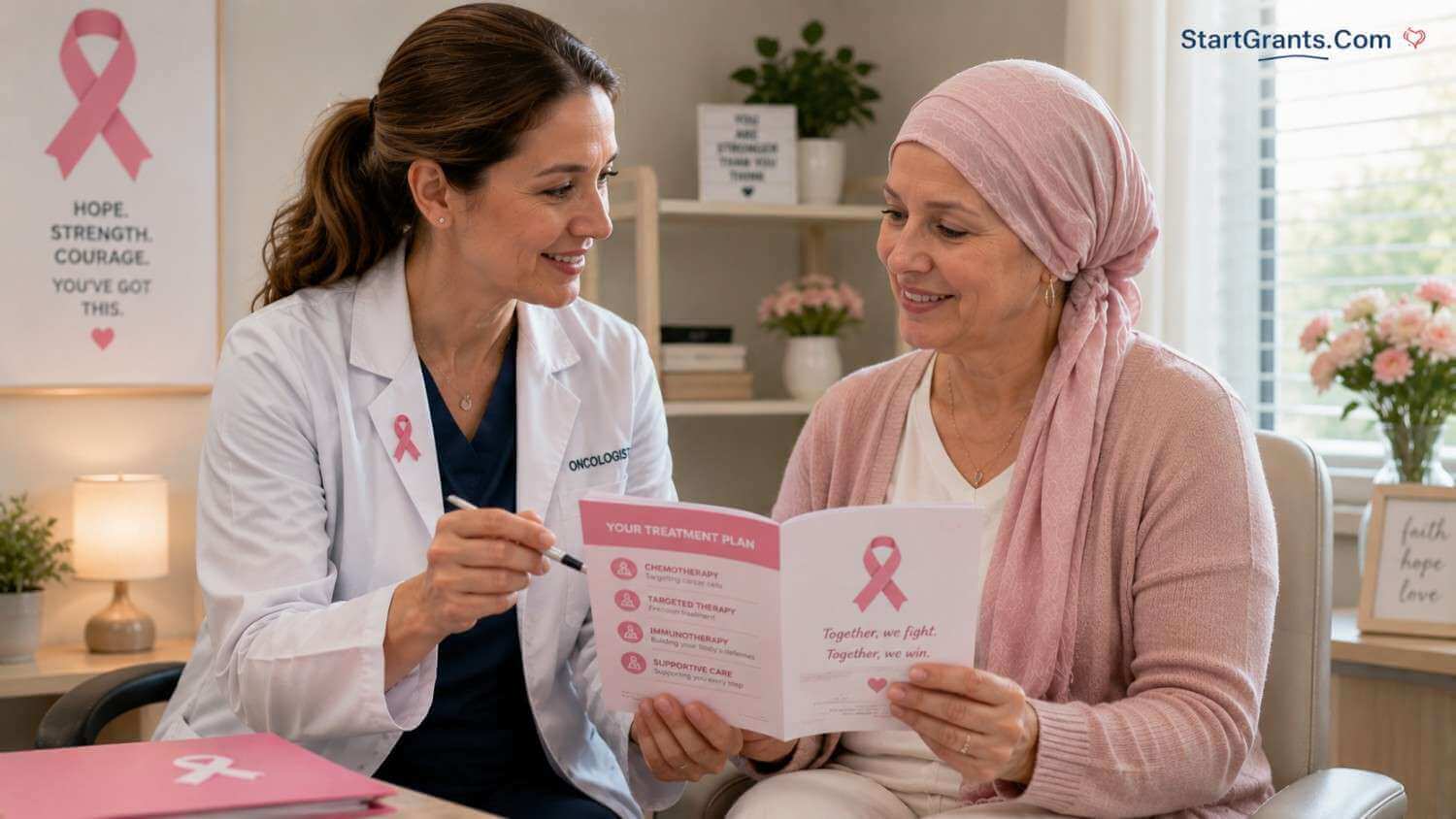
The “Pink Ribbon” philanthropic network is the strongest in the medical world. If you are facing a breast cancer diagnosis, millions of dollars in grant funding are reserved exclusively to help you pay for treatment and living expenses.
Phase 1: Grants for Everyday Living Expenses
One of the biggest financial hurdles of breast cancer is not just the hospital bill, but keeping the lights on at home when you are too sick to work. Most medical foundations strictly pay the pharmacy, but specialized breast cancer charities recognize the need for non-medical survival funds.
The Pink Fund
The Pink Fund provides up to 90 days of non-medical financial assistance to breast cancer patients in active treatment. They directly pay your creditors for housing (rent/mortgage), transportation (car payments/insurance), utilities, and health insurance premiums. This allows patients to focus 100% on healing rather than eviction notices.
Susan G. Komen (Financial Assistance Program)
The Susan G. Komen Foundation offers a dedicated Financial Assistance Program for eligible individuals undergoing breast cancer treatment. Their grants can be used for things insurance never covers: oral pain medications, anti-nausea prescriptions, childcare, eldercare, and transportation to the cancer center.
Pro-Tip: Winning The Pink Fund Grant
The Pink Fund has strict eligibility criteria regarding “active treatment” (chemo, radiation, or surgery). Watch this breakdown to ensure your application gets approved without delays:
Phase 2: Medical Copay & Prescription Assistance
If your health insurance leaves you with crushing $5,000 deductibles or massive copays for specialty hormone therapies, you must apply to the major copay foundations.
Organizations like the PAN Foundation and HealthWell Foundation have dedicated “Breast Cancer Funds.” When these fund buckets are open, they will issue you a pharmacy card that pays your out-of-pocket prescription copays directly at the counter. Because breast cancer funds are highly utilized, you must work with your oncology social worker to set up SMS alerts (using tools like FundFinder) so you can apply the exact minute a new round of funding is injected into the foundation.
Phase 3: Free Mammograms & Early Detection (Uninsured Patients)
If you are uninsured, discovering a lump is a terrifying scenario. You cannot let the fear of a medical bill stop you from getting a diagnostic mammogram. Early detection is the difference between a lumpectomy and a radical mastectomy.
The federal government operates the National Breast and Cervical Cancer Early Detection Program (NBCCEDP). This program provides free clinical breast exams, mammograms, and diagnostic testing for low-income, uninsured, and underinsured women across the United States. Even more importantly, if the free screening detects breast cancer, the program provides a direct, expedited pathway into your state’s Medicaid program to cover your entire treatment.
Phase 4: The Muslim Perspective (Modesty, Fiqh, & Halal Support)

Preserving your modesty and faith during breast cancer treatment is entirely possible. Understanding the Fiqh of medical necessity and utilizing Zakat funds ensures your physical and spiritual well-being remain intact.
For a Muslim woman (Muslimah), a breast cancer diagnosis introduces unique challenges that intertwine medical urgency with strict Islamic principles regarding modesty (Haya) and financial purity.
1. Modesty and the Fiqh of Medical Necessity
Breast cancer treatment involves highly invasive examinations of the Awrah (intimate parts of the body). Islamic jurisprudence dictates that a female patient should fiercely advocate for female doctors, surgeons, and ultrasound technicians. However, if a female specialist is unavailable or a male oncologist is the foremost expert who can save her life, the principle of Ad-Dharurat Tubihu Al-Mahzhurat (necessity permits the prohibited) applies. The male doctor is permitted to examine only the specific area required for treatment, and the patient incurs no sin. Preserving life (Hifz al-Nafs) is paramount.
2. Funding Treatment Ethically (Zakat vs. Riba)
Breast cancer treatment is exorbitantly expensive. When out-of-pocket maximums are reached, clinics often suggest high-interest medical credit cards (like CareCredit). Engaging in Riba (usurious interest) is strictly prohibited.
Muslim women must remember that severe medical debt qualifies them as Al-Gharimin, making them legally entitled to receive Zakat. Before accepting a predatory loan that strips the Barakah (blessing) from your recovery, coordinate with your local Islamic center or national Muslim relief funds to tap into community Zakat, while simultaneously applying for secular grants from The Pink Fund.
Conclusion: You Are Not Fighting Alone
Breast cancer attempts to strip away your health, your peace of mind, and your financial security. However, no other disease has a stronger army of philanthropists waiting to fight back on your behalf.
By leveraging the NBCCEDP for free diagnostics, securing living expenses through The Pink Fund, and protecting your spiritual and financial health from predatory debt, you can build a fortress of support around your recovery. Contact your hospital’s oncology social worker today and demand to start your grant applications.
Frequently Asked Questions (FAQs)
Q1: Does The Pink Fund pay me the grant money directly?
A: No. To ensure the funds are used strictly for survival needs, The Pink Fund makes direct payments to your creditors. If you are approved for a housing grant, the check goes directly to your landlord or mortgage company, not into your personal bank account.
Q2: I have health insurance, but I can’t afford the deductible. Can I still get help?
A: Yes. Copay assistance foundations (like the PAN Foundation) are specifically designed for patients who have insurance (commercial or Medicare) but cannot afford the massive out-of-pocket deductibles and copayments required for their specialty oncology medications.
Q3: What qualifies as “active treatment” for breast cancer grants?
A: Foundations usually define “active treatment” as the period when you are actively undergoing chemotherapy, radiation therapy, or recovering from a major surgical intervention (like a double mastectomy). Long-term hormonal maintenance therapy (like taking Tamoxifen for 5 years) is typically not considered “active” for the purposes of emergency living expense grants.
Q4: Are there grants that pay for breast reconstruction surgery?
A: First, check your insurance. The federal Women’s Health and Cancer Rights Act (WHCRA) legally mandates that if your insurance covers a mastectomy, they must also cover the reconstructive surgery. If you are uninsured, organizations like the AiRS Foundation (Alliance in Reconstructive Surgery) offer specific grants to help women afford post-mastectomy reconstruction.
Important Disclaimer: StartGrants.com is an informational directory, not a medical provider. Breast cancer funding buckets open and close rapidly. Always consult your oncology team and a dedicated hospital financial navigator to process your applications securely.