
Last Updated: June 2026 | Author: Munir Ardi
For millions of working-class households, the end of the month brings a terrifying dilemma: do you buy groceries to feed your children, or do you pay the landlord to keep a roof over their heads? In the social services sector, this is known as the “Heat, Eat, or Rent” crisis. As the cost of basic necessities skyrockets, families are increasingly forced to sacrifice their nutritional needs simply to avoid eviction and homelessness.
You should never have to make this choice. Nutritional starvation is a direct pipeline to severe health issues, lost wages, and housing instability. A robust network of federal grants, state-level initiatives, and local non-profit organizations exists specifically to absorb your food costs so you can allocate your hard-earned cash toward housing and utilities.
Before diving into the specific food assistance programs below, it is crucial to understand that securing free groceries is often the first defensive step in preventing homelessness. For a broader look at how to protect your living situation, please review our master directory on emergency housing for the homeless.
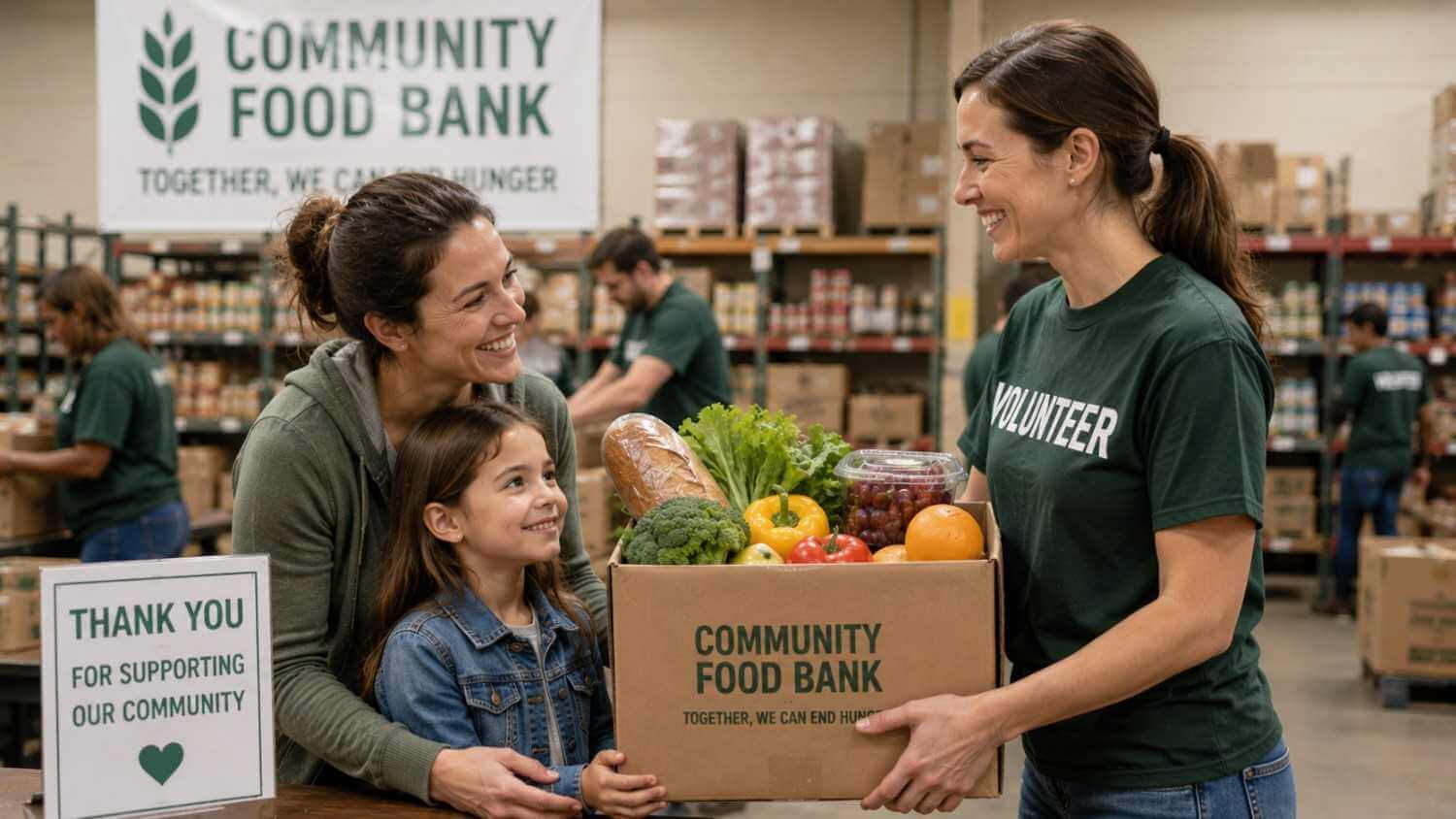
When facing housing insecurity, securing free groceries through local food banks can free up cash to pay rent and prevent eviction.
Phase 1: The “Rent vs. Food” Crisis
When financial disaster strikes, the grocery budget is usually the first thing families cut, because rent and utility bills are fixed costs with immediate, catastrophic penalties for non-payment. However, skipping meals or surviving on cheap, highly processed junk food destroys your physical and mental health, making it harder to maintain employment.
By aggressively seeking out free groceries, you instantly free up hundreds of dollars in your monthly budget. If you are currently cutting your food budget because you are terrified of losing your apartment, you must attack the problem from both sides. Secure your food using the methods below, and simultaneously read our urgent guide on how to get help paying your rent before you get evicted.
Phase 2: Federal Giants (SNAP and WIC)
The most reliable and dignified way to secure groceries is through the federal government. The U.S. Department of Agriculture (USDA) administers massive, multi-billion-dollar nutritional safety nets.
1. The Supplemental Nutrition Assistance Program (SNAP)
Formerly known as Food Stamps, SNAP is the largest anti-hunger program in the country. If you meet the income requirements, you receive an Electronic Benefit Transfer (EBT) card. This card functions exactly like a standard debit card, allowing you to walk into almost any supermarket, Walmart, or local bodega to purchase fresh fruits, vegetables, meat, dairy, and bread without any stigma.
Emergency SNAP: Normal SNAP applications can take 30 days to process. However, if you have less than $100 in the bank and your monthly housing costs exceed your income, you legally qualify for “Expedited SNAP.” By law, the state must issue your EBT card within seven days.
Pro-Tip: Navigating the SNAP Application
Navigating government bureaucracy can be overwhelming, especially when your family needs food immediately. To ensure you fill out the online paperwork correctly and expedite your EBT approval, watch this highly updated, step-by-step tutorial, HOW TO APPLY FOR SNAP BENEFITS (FOOD STAMPS) ONLINE – UPDATE 2026:
2. The WIC Program (Women, Infants, and Children)
If you are pregnant, postpartum, or have children under the age of five, the WIC program provides highly specific nutritional assistance. Unlike SNAP, which allows you to buy almost any food, WIC provides targeted funds for crucial developmental items like baby formula, milk, eggs, cereal, and peanut butter. Because child welfare is prioritized by the government, navigating WIC is heavily integrated with other family services. For more specialized resources for parents, review our guide on finding help for homeless families with children.
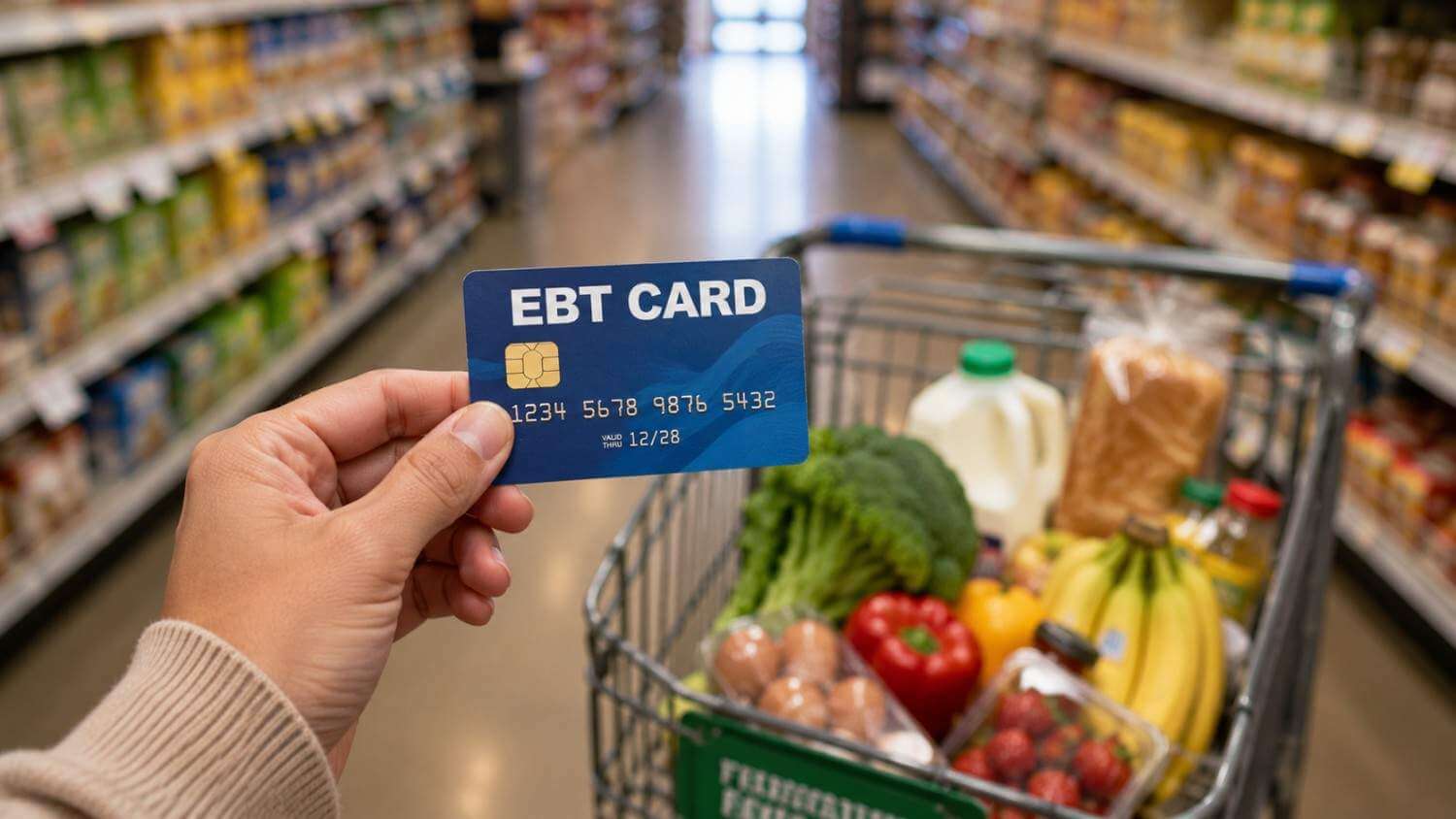
Federal programs like SNAP provide monthly EBT benefits, acting as a crucial lifeline for families struggling to afford basic necessities.
Phase 3: Emergency Food Banks and Soup Kitchens
If you do not qualify for SNAP, or if your EBT funds run out before the end of the month, your local community food bank is your next line of defense. The Feeding America network operates thousands of food pantries across the nation.
1. Traditional Food Pantries
Food pantries operate like free grocery stores. You walk in, present your ID (and sometimes proof of residency or a referral), and you are allowed to fill a box or bag with canned goods, pasta, bread, and often fresh produce and frozen meat. To understand the sheer volume of goods these organizations manage and how they supply the community, you can read our insights on what to donate to homeless shelters.
2. Soup Kitchens and Mobile Pantries
If you are currently experiencing homelessness or living in a motel without access to a kitchen or a refrigerator, raw groceries like frozen chicken or uncooked rice are useless to you. In this scenario, you must locate local “Soup Kitchens” or “Congregate Meal Sites” that serve hot, ready-to-eat meals daily. Many food banks also operate Mobile Pantries that drive into underserved neighborhoods or motel parking lots to distribute ready-to-eat food boxes directly to vulnerable populations.
Pro-Tip: What to Expect at a Food Bank
Visiting a community food pantry for the first time can feel intimidating if you do not know how the process works. To remove the anxiety and help you understand exactly what documents to bring and how the food distribution operates, watch this comforting walkthrough, What to Expect at a Food Bank: A First-Timer’s Guide:
Phase 4: The Muslim Perspective (Hifz al-Nafs & Avoiding Riba)
In Islam, access to food is a fundamental human right. Feeding the hungry is one of the most emphasized acts of worship. For a Muslim family facing severe financial hardship, securing food is a matter of Hifz al-Nafs (Preservation of Life). However, the desperation of an empty refrigerator can push individuals toward financial decisions that violate Islamic law.
1. The Riba Trap: Credit Cards and Payday Loans
When the bank account is empty, the immediate instinct is to buy groceries using a high-interest credit card or, worse, to take out a predatory “Payday Loan” to cover supermarket bills. This is a devastating spiritual and financial trap. These financial instruments operate entirely on compounding Riba (usury). Taking out an interest-bearing loan just to buy bread and milk traps your family in a cycle of debt that strips the Barakah (blessing) from your wealth. In Islam, engaging in Riba is strictly Haram.
2. The Gharar of Food Subscription Scams
Desperate families are also frequently targeted by predatory “grocery club memberships” or sketchy insurance-like schemes that promise guaranteed food deliveries for an upfront monthly fee, but have hidden cancellation penalties. Because these involve paying for an uncertain outcome heavily skewed against the consumer, they contain Gharar (excessive uncertainty and deception), which is forbidden.
3. The Halal Route: Hibah, Zakat, and Zabiha Pantries
You do not need to incur Riba-based debt to feed your family. Utilizing federal grants like SNAP and WIC is 100% Halal. These programs are social safety nets classified as Hibah (gifts from public funds); they require zero repayment and charge zero interest.
Furthermore, if you require culturally appropriate food (such as Zabiha Halal meat) that standard food banks do not carry, you must reach out to Islamic charities. Reputable organizations like ICNA Relief and Islamic Relief USA operate dedicated Halal Food Pantries across the country. They utilize Zakat (obligatory charity) funds to provide fresh, Halal-certified groceries to the community, ensuring you can feed your family both physically and spiritually without compromise.
Phase 5: Tactical 24-Hour Action Plan
If you have less than a few days’ worth of food left in your home, do not wait. Execute this tactical checklist immediately:
- Call 211 Immediately: Dial 2-1-1 on your phone. Tell the operator you have a “food emergency.” They will pinpoint the exact food pantries open in your zip code today.
- Apply for Expedited SNAP: Go to your state’s Department of Social Services website. Fill out the SNAP application and check the box indicating you have less than $100 in resources. This triggers the 7-day emergency review process.
- Contact Local Faith-Based Organizations: Call your local Masjids, Churches (like St. Vincent de Paul), or the Salvation Army. Religious institutions often have discretionary emergency funds and small, no-questions-asked food closets available for immediate walk-ins.
- Utilize School Programs: If you have school-aged children, contact the school counselor. Even during the summer, local school districts operate the Summer Food Service Program (SFSP), providing free breakfast and lunch to children regardless of their parents’ immigration or financial status.
Conclusion
Food insecurity is a terrifying reality, but it is a crisis with immediate, accessible solutions. You must not let the fear of eviction force you into starvation, nor should you rely on toxic, high-interest credit cards to feed your family. By aggressively securing federal SNAP benefits, utilizing targeted programs like WIC, and leveraging the massive network of local food banks, you can fulfill your family’s basic necessities for free. Claim your rights to these resources today, protect your household’s budget, and take the first step toward financial and physical stability.
Frequently Asked Questions (FAQs)
Q1: How long does it take to get a SNAP EBT card?
A: Standard applications can take up to 30 days to process. However, if your income and money in the bank are less than your monthly housing expenses, you qualify for “Expedited SNAP,” and the state must provide your EBT card within 7 days.
Q2: Can I go to a food bank if I am not a US citizen?
A: Yes. Community food banks, soup kitchens, and religious charities (like ICNA Relief or the Salvation Army) do not ask for proof of citizenship or immigration status. They are there to feed anyone who is hungry.
Q3: What can I buy with a WIC voucher?
A: WIC is highly specific. You can only buy approved nutritional items designed for pregnant women and young children, such as infant formula, baby food, milk, cheese, eggs, whole wheat bread, peanut butter, and fresh produce.
Q4: Can homeless individuals without an address get food stamps?
A: Yes. You do not need a permanent address to receive SNAP benefits. You can use the address of a local shelter, a friend’s house, or a local Social Services office to receive your mail and EBT card. Furthermore, homeless individuals are sometimes permitted to use EBT cards at authorized restaurants that offer concession meals.
Q5: Is it Halal to accept food from a non-Muslim charity?
A: Yes, absolutely. Accepting food from a secular organization, a community food bank, or a Christian charity is classified as accepting a gift (Hibah). As long as the specific food items you consume are Halal (e.g., avoiding pork or alcohol), accepting the assistance is completely permissible and encouraged to protect your family’s health and avoid Riba-based debt.