
Last Updated: April 2026 | Author: Zee
Despite comprising the majority of college students in the United States today, women still shoulder a disproportionate amount of student loan debt. According to recent federal data, women hold nearly two-thirds of the nation’s outstanding student debt. When this financial burden is combined with the persistent gender wage gap, graduating with loans can severely delay a woman’s financial independence, homeownership, and career mobility.
The definitive solution to this crisis is securing non-repayable financial aid before stepping foot on campus.
In 2026, the landscape of scholarships for women has expanded significantly. Philanthropic organizations, corporate tech giants, and advocacy groups are pouring millions of dollars into specific funding buckets designed to empower female leadership, increase representation in male-dominated fields, and support mothers returning to higher education.
This comprehensive guide will navigate you through the most lucrative funding opportunities available for female students, break down niche demographic grants, and show you exactly how to craft a winning application strategy.

Securing dedicated scholarships for women is the most effective strategy to bypass the student debt crisis and graduate with financial independence.
Phase 1: National Merit and Leadership Scholarships
Before diving into hyper-specific niches, every female applicant should target the massive, national-level organizations that have championed women’s education for decades. These organizations look for a demonstrated history of leadership and community service.
1. The AAUW (American Association of University Women)
The AAUW is one of the world’s largest sources of funding exclusively for women. They provide millions in fellowships and grants annually.
- Target Audience: While they offer some undergraduate assistance through local chapters, their massive funding is heavily directed toward graduate and postgraduate women.
- The Strategy: AAUW heavily favors applicants whose academic research or career goals directly benefit women and girls. If your major involves gender studies, public health policy affecting women, or female STEM advocacy, this is your primary target.
2. The P.E.O. Sisterhood Awards
The Philanthropic Educational Organization (P.E.O.) is a grassroots network that has helped over 122,000 women pursue educational goals.
- The STAR Scholarship: A highly competitive $2,500 award for graduating high school seniors who exhibit excellence in leadership, academics, and extracurricular activities.
- The Strategy: You cannot just apply online. You must be recommended by a local P.E.O. chapter. Your first step is to locate a chapter in your city and request an interview.
While national organizations cast a wide net, women from specific ethnic backgrounds should absolutely leverage heritage-based funding. Many advocacy groups operate massive endowments exclusively for Latinas or Indigenous women to close specific educational gaps. If this applies to your demographic, do not miss our specialized breakdowns on Scholarships for Hispanic Women and our guide detailing Where to Find Scholarships for Native Americans to maximize your award potential.
Phase 2: Empowering Non-Traditional and Returning Students
The traditional path of going to college directly after high school is no longer the only route. Millions of women are “non-traditional” students—meaning they are over the age of 24, are mothers, or are returning to school after a long absence in the workforce. Because federal aid formulas often disadvantage older students, specific foundations have stepped in.
1. The Jeannette Rankin Women’s Scholarship Fund
Named after the first woman elected to the U.S. Congress, the Rankin Foundation provides unrestricted micro-grants to low-income women aged 35 and older.
- The Hook: The funds are unrestricted, meaning you can use the money not just for tuition, but for childcare, rent, or transportation—the very obstacles that often force returning mothers to drop out.
2. The Society of Women Engineers (SWE) Scholarships
For adult women attempting to transition into technology or engineering careers later in life, SWE offers specific “Reentry Scholarships.” These are designed for women who have been out of the engineering workforce (or out of school) for at least two years and are returning to complete a degree.
Pro-Tip: Insider Strategies for Female Applicants
Finding the scholarship is only 10% of the battle; standing out among thousands of highly qualified female applicants is the real challenge. Before you begin writing your personal statement, watch this expert breakdown on what scholarship committees are actually looking for in female leadership essays:
Phase 3: The Intersection of Faith and Funding (The Muslim Perspective)
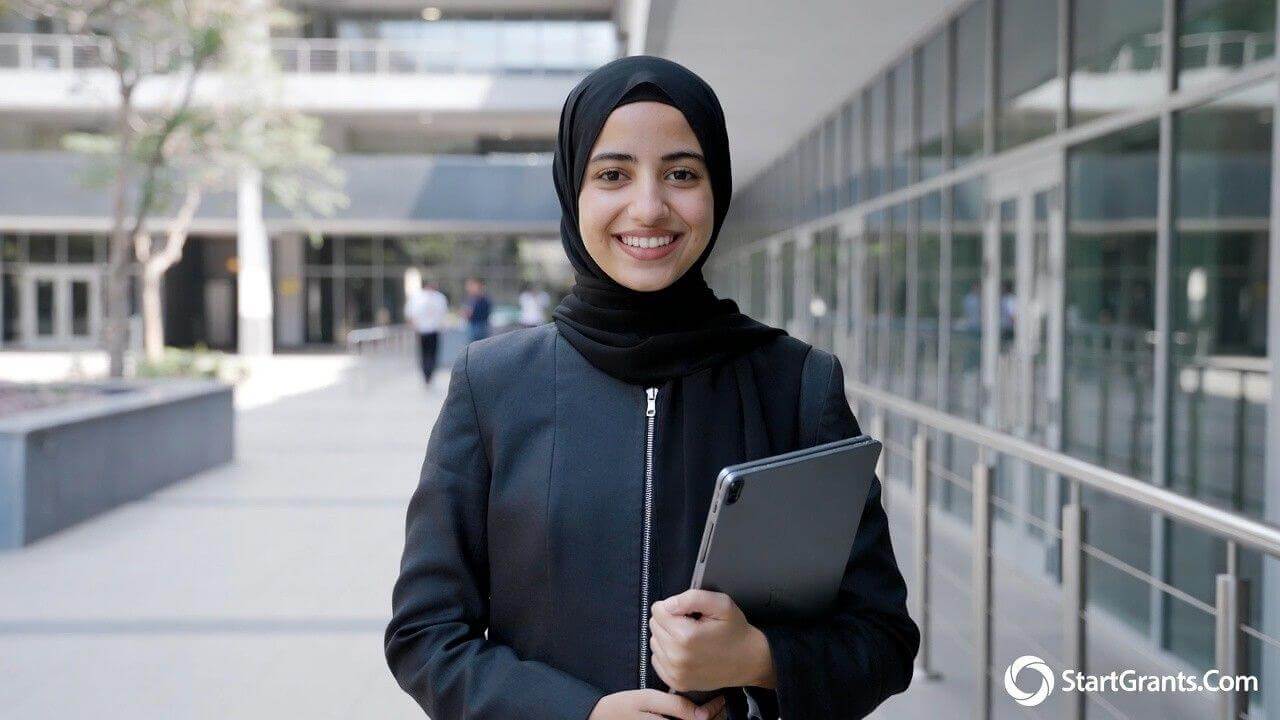
Organizations like the Islamic Scholarship Fund provide crucial financial support and industry mentorship to empower American Muslim women in higher education.
In 2026, educational funding has become deeply intersectional. Scholarship committees recognize that a student’s identity—including their faith—often shapes their leadership journey. For Muslim women in the United States, pursuing higher education can sometimes involve navigating unique cultural dynamics, combating media stereotypes, and adhering to Islamic financial principles (avoiding interest-bearing Riba loans).
Fortunately, several prestigious organizations are dedicated specifically to uplifting Muslim female voices and ensuring they graduate debt-free.
1. The Islamic Scholarship Fund (ISF)
The ISF is the premier organization supporting American Muslim students. They identified that Muslims are severely underrepresented in fields that shape public opinion and policy.
- The Target: ISF specifically funds students majoring in Media, Journalism, Law, Public Policy, and Film.
- The Female Advantage: ISF highly prioritizes the voices of Muslim women who are breaking barriers in journalism and civil rights law. If you are a Muslim woman aiming to write for major publications or work in constitutional law, an ISF grant provides both funding (up to $10,000) and crucial industry mentorship. You can explore their exact criteria at the official ISF portal.
2. A Continuous Charity (ACC)
For Muslim women who must avoid interest-based federal student loans due to religious convictions, ACC is a lifesaver. They are the first and largest Muslim charity in the U.S. providing interest-free educational loans.
- The Strategy: While technically a loan and not a grant, ACC allows Muslim women to fund degrees in STEM, Medicine, or Business without compromising their faith, making it a critical pillar in a Muslim student’s financial aid strategy.
3. Local Cultural Coalitions
Do not ignore local grassroots funding. Many regional chapters of the Arab American Institute or localized Muslim Women’s Associations (MWA) offer $1,000 to $2,000 micro-grants for female high school seniors in their specific zip codes.
Phase 4: Corporate Backing (Women in STEM & Business)
Corporate America is actively trying to fix its gender diversity problem, particularly in C-suite leadership and engineering departments. To build a pipeline of female talent, massive corporations are underwriting full-ride scholarships.
1. The Google Anita Borg Memorial Scholarship (Women Techmakers)
Google honors computer scientist Anita Borg by offering a $10,000 scholarship to female students in computer science. Winners are also invited to a Google retreat to network with female tech executives.
The push to close the gender gap in technical fields means that engineering majors currently have access to some of the most lucrative and exclusive funding pools in the country. If you are pursuing a degree in mechanical, civil, or software engineering, you must tailor your search. Explore our targeted directory on Where to Find Women in Engineering Scholarships to bypass general applicant pools and secure direct corporate backing.
2. Jane Street Women in STEM Scholarship
Financial and quantitative trading firms are aggressively recruiting women. Jane Street offers a prestigious scholarship for women pursuing degrees in mathematics, physics, computer science, or statistics.
3. The Forté Foundation (For Women in Business)
If you are pursuing an MBA, the Forté Foundation is your strongest ally. They partner with top business schools to offer Forté Fellowships to women who exhibit exemplary leadership. To date, they have awarded hundreds of millions of dollars to female MBA candidates.
Phase 5: The Strategic Execution
You now know where the money is hidden. However, applying for 50 different scholarships without a cohesive strategy is a fast track to burnout. You must treat funding your education like a professional job hunt.
To build a master timeline, understand the FAFSA inside and out, and learn how to stack multiple small awards into a full-ride package, you must move beyond a single demographic search. Combine the specific female-focused grants in this article with the foundational tactics outlined in our supreme headquarters guide on demographic and heritage college scholarships.
Conclusion: Your Funding Action Plan
The days of assuming that high grades alone will automatically generate a free college degree are over. You must actively advocate for your own financial future.
Here is your immediate tactical checklist:
- Audit Your Demographics: Write down every aspect of your identity. Are you a woman? A mother? A Muslim? A first-generation college student? An engineering major? Every one of these identities has a specific scholarship attached to it.
- Seek Local Endorsements: Contact your local AAUW or P.E.O. Sisterhood chapter this month to introduce yourself and ask about local chapter awards.
- Draft the “Overcoming” Essay: Every female scholarship requires an essay. Write a master template focusing on a time you demonstrated leadership, overcame a gender-based obstacle, or advocated for your community.
- Finalize the FAFSA: Even if you are relying on private organizational grants, almost all of them require a completed FAFSA on file to verify your basic financial need.
Do not let the fear of student debt dictate your career trajectory. The funding is out there. Claim your share, fund your degree, and take your seat at the leadership table.
Frequently Asked Questions (FAQs)
Q1: What is the best website to find scholarships specifically for women?
A: There is no single perfect website. However, utilizing databases like Scholarships.com or Fastweb and filtering specifically for “Female Applicants” is a good start. Additionally, directly checking the portals of the AAUW, SWE, and the P.E.O. Sisterhood will yield the highest quality, vetted awards.
Q2: Are there scholarships for stay-at-home moms going back to college?
A: Yes. Organizations like the Jeannette Rankin Women’s Scholarship Fund and the Soroptimist Live Your Dream Awards are explicitly designed for non-traditional students, older women, and mothers returning to school to improve their family’s financial standing.
Q3: Do I need a 4.0 GPA to win a women’s scholarship?
A: No. While some merit-based corporate scholarships are highly competitive academically, many demographic and foundation scholarships prioritize community leadership, volunteer work, and personal essays over perfect grades.
Q4: Can international female students apply for these scholarships?
A: It depends on the organization. Federal grants are strictly for U.S. citizens and eligible non-citizens. However, private organizations like the AAUW offer specific “International Fellowships” for women from other countries studying in the United States.
Q5: Are there scholarships for Muslim women who do not wear a hijab?
A: Absolutely. Scholarships based on faith and cultural heritage (like those from the Islamic Scholarship Fund) are awarded based on your academic merit, community involvement, and commitment to the organization’s goals, not on your personal level of religious observance or dress.
Q6: Can I use women’s scholarship money for living expenses?
A: This depends entirely on the terms of the specific grant. University-issued scholarships often apply directly to tuition only. However, private micro-grants (like the Jeannette Rankin Fund) are often unrestricted and can be used for rent, childcare, or transportation.
Q7: Is the Society of Women Engineers (SWE) scholarship only for engineers?
A: Primarily, yes. SWE scholarships are targeted at women pursuing ABET-accredited bachelor or graduate programs in engineering, computing, and technology. If you are majoring in biology or nursing, you should look for specific medical or general science foundations instead.
Q8: When should I start applying for women’s scholarships?
A: You should start in the late summer or early fall of your high school senior year (or a full year before you plan to return to school as an adult). Many major foundation deadlines, including corporate tech scholarships, close between November and February.
Important Disclaimer: StartGrants.com is an independent information portal. We are not a government agency and do not provide direct grants or products. Always verify the current status of programs with the providing organization.