
Last Updated: | Author: Munir Ardi
Crowdfunding can help a nonprofit invite many people to support a defined project through an online page. It works best when donors can identify the organization, understand the budget, see who controls the funds, and receive meaningful updates. This guide covers decisions for an organization-led campaign and for supporters fundraising on that organization’s behalf.
For the basic steps of planning any fundraising appeal, see our fundraiser planning guide. Here, the focus is nonprofit governance, payment setup, supporter-led pages, donor records, and project reporting.

Define the project and its accounting before asking supporters to launch their own pages.
1. Define the Campaign and the Organization Receiving Funds
Start with one purpose that people can explain to someone else: for example, purchasing equipment for a community pantry, funding a specified service period, or helping a local shelter complete a repair. Prepare a budget that includes direct costs, payment fees, and any relevant overhead. State whether a donor’s contribution is restricted to this project and what the organization will do if it raises too little or more than the target.
Name the legal recipient and describe how donations enter its account. The person who creates the page should have permission to speak for the organization. If a volunteer runs a campaign page, donors should still be able to see which organization receives the money and how the funds will be transferred. Do not promise that every nonprofit contribution is deductible: the IRS Tax Exempt Organization Search helps donors examine an organization’s current status, while deductibility depends on the organization and the transaction.
Fundraising registration and solicitation rules can also depend on the state and the activity. A nonprofit should check requirements with the relevant state charity regulator before expanding a campaign across jurisdictions. This article is an editorial planning guide, not a substitute for the organization’s legal review.
2. Choose the Website and Payment Route
A third-party crowdfunding page can provide a ready-made campaign layout and sharing tools. A page hosted on the nonprofit’s own website can give the organization more control over presentation and donor communications. Neither option eliminates payment processing costs, recordkeeping, accessibility work, or account verification.
| Route | Potential advantage | Check before launch |
|---|---|---|
| Third-party campaign page | Hosted page and sharing features | Recipient controls, fees, refunds, data access, payout timing |
| Nonprofit website | Control of message and site experience | Security, checkout setup, receipts, mobile and accessibility testing |
| Supporter-led pages | Volunteers invite their own networks | Brand approval, recipient accuracy, reporting, volunteer training |
Note: Confirm current fees with the actual provider. The payment product and approved charity status may change the applicable rate.
For example, GoFundMe’s pricing page distinguishes campaign creation, transaction charges, and optional contributions by donors. PayPal’s US fee schedule separately identifies ordinary donations and eligible, pre-approved charity transactions. Compare the total cost and whether the platform can produce the records your bookkeeper needs.
If you use a nonprofit website, our PayPal Donate button guide addresses the website integration and testing. A campaign manager should also test the page on a phone, confirm the displayed recipient and currency, and make it easy to contact the organization.
3. Write the Appeal and Protect Donor Trust
Describe the project’s need, the amount sought, an approximate timeline, and what the funds will buy. An example: “We are raising $4,000 for replacement refrigerators at our food pantry. We estimate $3,500 for the equipment and delivery and $500 for installation and related costs. The pantry will update supporters when installation is complete.” Use estimates honestly; obtain quotes where possible and revise the page if prices change.
Ask permission before publishing anyone’s medical details, photograph, or personal story. A nonprofit should avoid using a beneficiary as a prop for fundraising. Explain how supporters will see progress without revealing private information. Give donors a contact address and a way to find the organization’s own website.
For donor records, the IRS guidance on written acknowledgments addresses the information donors need for contributions of $250 or more. Do not tell every donor that an instant platform email alone satisfies all tax requirements; the contents of the acknowledgment and any goods or services received matter.
4. Launch With a Real Outreach Plan
Before announcing the campaign, ask staff and a few trusted supporters to review the page for errors, broken links, confusing fee language, and mobile checkout issues. Let them know when the campaign goes live and offer a short, accurate message they can adapt. Some may donate; others may simply share. Their support is voluntary.
The original draft prescribed a 48-hour traffic spike and a required 20% early goal to activate a platform algorithm. Those are not verified universal rules. Set a schedule that your team can actually follow: an announcement, a later progress update, and a closing summary. Monitor visits, completed donations, cost of outreach, and questions from supporters without claiming that quick gifts guarantee visibility.
An email to supporters should identify the organization, describe one specific need, link directly to the official campaign page, and say how to verify the recipient. Our fundraising email guide provides the writing format. Follow the organization’s consent and unsubscribe practices for its mailing list.
5. Invite Supporters to Fundraise on Your Behalf
In a peer-to-peer campaign, volunteers or board members create individual appeals tied to the nonprofit’s cause. The organization should provide a short project description, correct recipient name, approved visuals, the campaign URL, and a contact person for questions. A supporter may explain why the cause matters personally, but should not promise benefits, match offers, or deadlines the nonprofit has not authorized.
Before launch, decide whether contributions go directly to the organization or pass through an individual account. Direct payment to the organization usually makes bookkeeping and donor communication clearer. Reconcile supporter pages with the nonprofit’s ledger and clarify who sends acknowledgments. A volunteer trip is a specific example of supporter-led fundraising; our mission trip fundraising guide covers how to explain travel costs separately from aid delivered to beneficiaries.
Not every project needs dozens of volunteer pages. A small group with accurate information and consistent follow-up can be easier to administer than many pages with conflicting messages. Review any external campaigns using your nonprofit’s name.
6. Close the Campaign and Account for the Money
Thank contributors, reconcile gross gifts, processing fees, refunds, and net deposits, and compare the result with the project budget. If the goal was restricted to a particular purpose and circumstances change, review donor restrictions and applicable rules before redirecting the funds. Publish a practical summary of what was purchased or provided while protecting beneficiary and donor privacy.
Secure access to payment dashboards with appropriate account controls and limit volunteer access to the data required for their tasks. Download campaign records under the platform’s terms and store them under the organization’s retention policy. A payment page does not replace internal approval for spending funds.
A Muslim Perspective
For a Muslim-led nonprofit, a transparent campaign should distinguish general sadaqah from donations designated as zakat. Zakat eligibility depends on who benefits, how funds are used, restrictions, and the governing religious interpretation; a platform label does not decide the question. Ask qualified advisers to review the proposal before making a claim, keep restricted contributions separately identifiable, and tell donors how distributions will be documented.
A faith-focused service such as LaunchGood can be compared with other platforms on account rules, fees, donor experience, and reporting. Do not assume a religious audience or seasonal timing guarantees campaign reach. If the organization considers advances against expected donations, study the actual contract, financing cost, and cash-flow risk with qualified legal and Islamic finance advisers; a flat fee alone does not determine the ruling. Donor information is an amanah and deserves careful handling.
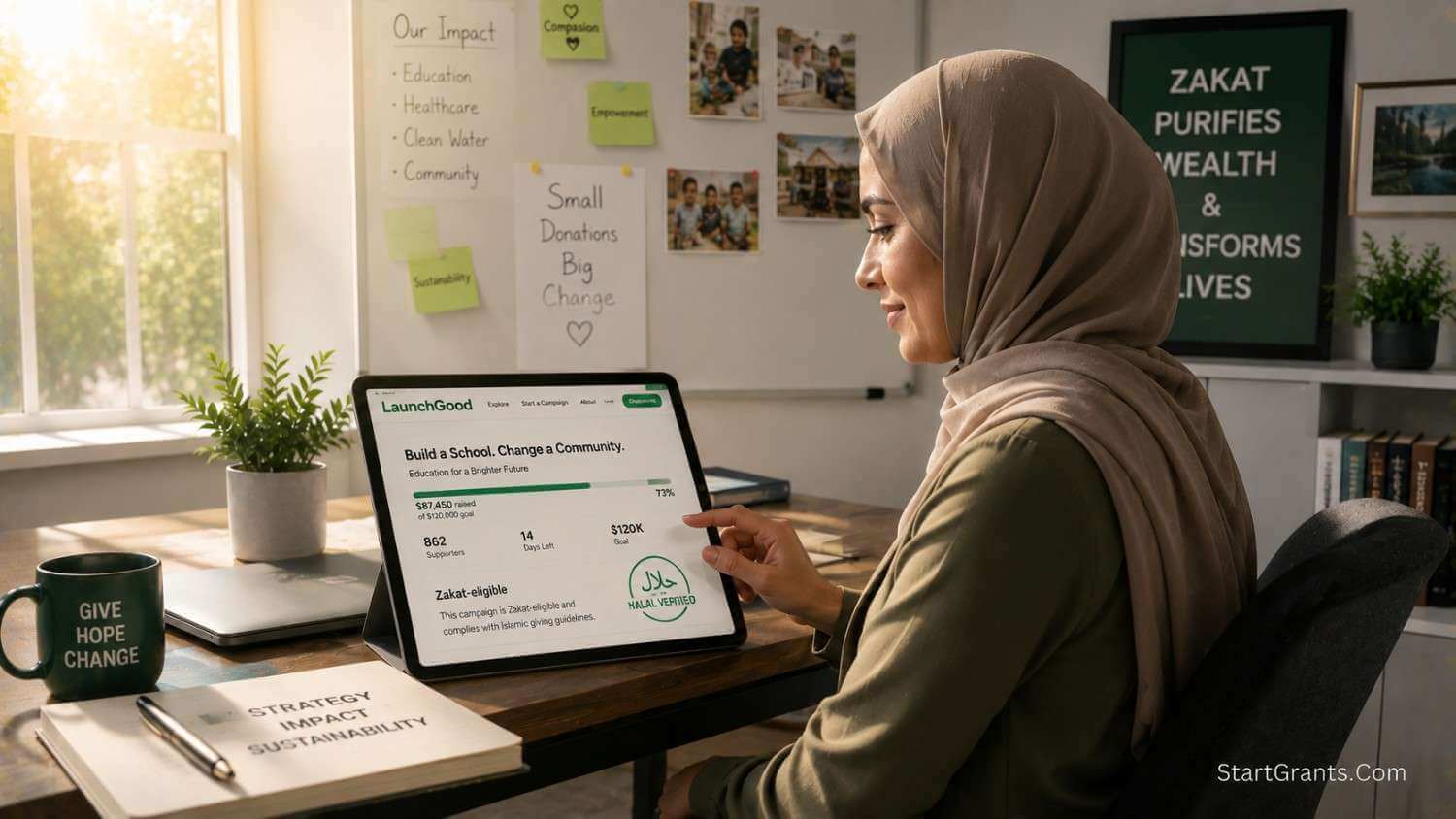
Label restricted zakat gifts only after an appropriate eligibility review.
Frequently Asked Questions
How is nonprofit crowdfunding different from a personal fundraiser?
A nonprofit campaign should identify the organization that receives and controls the funds, the specific program or purpose, how donors will be updated, and any applicable charitable status. A personal fundraiser raises money for a person and should not claim the same tax treatment.
Are gifts to every nonprofit crowdfunding campaign tax-deductible?
No. A donor’s deduction depends on the recipient organization, the gift, and applicable tax rules. Verify the organization through the IRS Tax Exempt Organization Search and avoid a blanket promise of deductibility.
Does every donor need an emailed tax receipt immediately?
No universal rule requires an automatic email for every gift. Donors may need records, and an acknowledgment for a contribution of $250 or more has specific IRS requirements. The organization should provide accurate acknowledgments under applicable rules.
What fees do crowdfunding platforms charge nonprofits?
Fees depend on the platform, country, payment method, and account. Some separate platform charges, transaction fees, and optional donor contributions. Compare current official pricing and calculate net proceeds before setting a goal.
What is peer-to-peer fundraising?
A nonprofit authorizes supporters to create and share individual campaign pages that direct gifts to the organization or an approved campaign. It needs clear branding, consent to use stories, and a way to reconcile incoming donations.
Must we raise 20% of the target in the first 48 hours?
No. There is no universal platform rule requiring that percentage or guaranteeing algorithmic promotion. An early group can help review the page and share it, but evaluate results over the full campaign.
Should the nonprofit use its own site or a third-party platform?
Compare control of donor data, technical support, checkout accessibility, payment methods, fee structure, receipts, reporting, and payout terms. Neither option guarantees more contributions or lower total cost.
Can a nonprofit label a crowdfunding page zakat-eligible?
Only after qualified review of the recipient, proposed use, applicable interpretation, and any restrictions. Label zakat and voluntary sadaqah clearly and record restricted gifts separately.
Disclaimer: StartGrants.com is an independent information portal, not a grantmaker, crowdfunding platform, tax adviser, law firm, payment processor, or religious authority. Verify account terms, state fundraising rules, and donor acknowledgment requirements with the relevant provider or qualified adviser.