
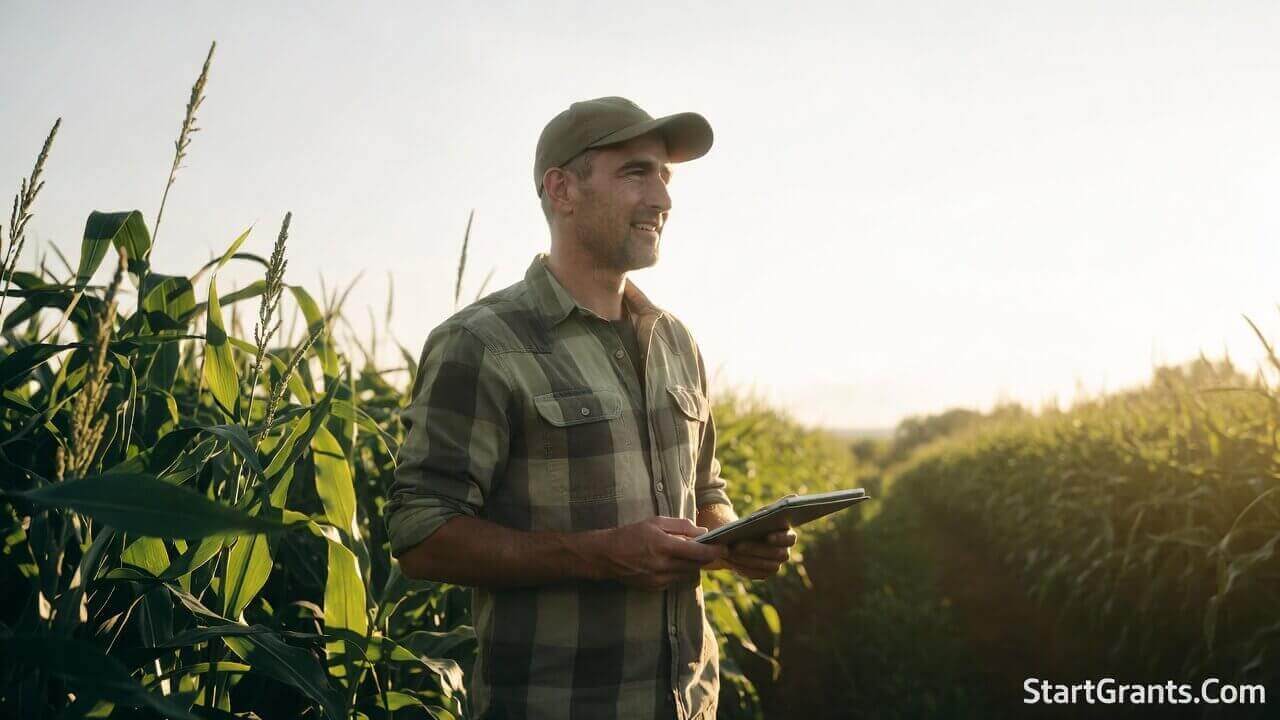
Transitioning from the military to agriculture is a rewarding journey, and numerous federal and private grants can help fund your new mission.
Last Updated: April 20, 2026 | Author: Munir Ardi
The transition from the battlefield to civilian life is rarely a straight line. For many veterans, the structured chaos of military service leaves them searching for a new mission—one that offers peace, tangible results, and a deep connection to the land they swore to protect.
Agriculture provides exactly that. The therapeutic benefits of working the soil, combined with the rigorous work ethic forged in the military, make veterans uniquely qualified to become America’s next generation of farmers and ranchers.
However, starting a farm is exceptionally capital-intensive. Buying land, securing equipment, and building infrastructure require significant financial backing. Fortunately, the federal government and private organizations have recognized this need, creating a robust network of specialized funding. When exploring your options on farm grants for veterans programs, it is crucial to understand the difference between federal cost-share incentives, private cash fellowships, and specialized microloans.
This comprehensive 2026 guide will break down exactly how you can fund your agricultural dreams from the ground up.
The Muslim Veteran’s Perspective: Halal, Tayyib, and Riba-Free Farming In Islam, cultivating the land and providing sustenance for the community is considered a deeply honorable and spiritually rewarding profession. The concept of Tayyib (wholesome, pure, and ethically produced) aligns perfectly with modern organic and sustainable farming practices.
For the Muslim veteran, navigating agricultural funding requires careful attention to Islamic finance principles. While traditional farm mortgages often involve interest (Riba), many federal and private agricultural grants offer direct, non-repayable cash injections or equipment donations. By focusing on these specific grants and cost-share programs, Muslim veterans can build a thriving, Halal agribusiness without compromising their faith or falling into the trap of conventional debt.
Phase 1: The Federal Powerhouse (USDA & FSA Programs)
When people think of “farm grants,” they usually look toward the United States Department of Agriculture (USDA) and its subsidiary, the Farm Service Agency (FSA).
It is important to clarify a major misconception early: The USDA rarely hands out blank checks to start a farm. Instead, they offer powerful “cost-share” grants, infrastructure incentives, and highly favorable financing specifically earmarked for veterans.
Here are the most potent federal programs you must leverage:
1. NRCS EQIP (Environmental Quality Incentives Program)
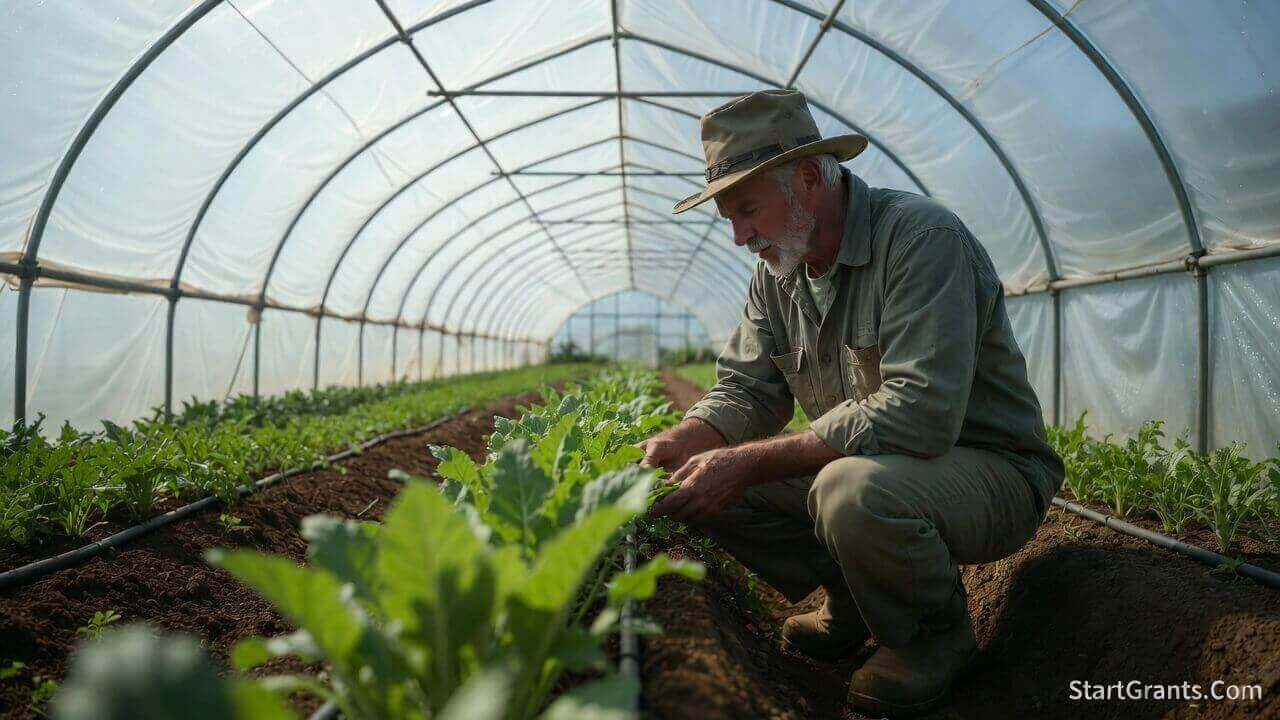
The USDA’s EQIP program can cover up to 90% of the costs for veteran farmers to build essential infrastructure like high tunnels and drip irrigation systems.
The Natural Resources Conservation Service (NRCS) manages EQIP, which is arguably the most valuable “grant-like” program available to veteran farmers. If you want to build infrastructure that improves water quality, soil health, or wildlife habitat, EQIP will pay for it.
-
The Veteran Advantage: Normally, EQIP reimburses farmers for 75% of the cost of an approved project. However, as a certified Veteran Farmer or Rancher, you receive an elevated payment rate of up to 90%.
-
Advance Payments: Cash flow is the number one killer of new farms. Under the 2018 Farm Bill provisions (still active through 2026), veteran farmers can receive up to 50% of their EQIP grant upfront before they even start construction. This means you don’t have to drain your savings to buy materials.
-
What it Funds: You can use EQIP funds to build high tunnels (greenhouses), install advanced drip irrigation systems, construct cross-fencing for rotational grazing, or plant cover crops.
2. Value-Added Producer Grants (VAPG)
If you are already growing a crop but want to increase your profit margins, the VAPG program is a massive cash grant designed to help you process your raw agricultural products into something more valuable.
-
The Concept: Instead of selling raw strawberries at $3 a pound, you use VAPG funds to process, package, and market those strawberries as artisanal organic jam selling for $10 a jar.
-
The Veteran Advantage: The VAPG is highly competitive, but the USDA sets aside 10% of total program funds explicitly for Beginning Farmers and Veteran Farmers. Your application automatically receives priority scoring points.
-
The Funding Limit: Planning grants can reach up to $75,000, while Working Capital grants can hit a staggering $250,000. (Note: This is a matching grant; you must provide 50% of the total project cost, though some of your match can be “sweat equity” or your own time).
3. FSA Microloans (The Necessary Stepping Stone)
While our primary focus is on grants (money you do not repay), we must address the FSA Microloan program. Because pure cash grants for buying land are virtually non-existent at the federal level, the FSA Microloan is often the necessary first step for a veteran to secure their property before applying for infrastructure grants like EQIP.
-
The Structure: You can borrow up to $50,000 for operating expenses (seeds, tractors, livestock) and another $50,000 for farm ownership (buying the land itself).
-
The Veteran Advantage: The FSA waives the standard guarantee fee for veteran farmers, significantly lowering your closing costs. Furthermore, your military leadership experience can often substitute for the required “farm management experience” that civilian applicants must prove.
Phase 2: The Top Private Farm Grants for Veterans
While federal programs focus on infrastructure and loans, the private non-profit sector is where you will find direct cash injections and equipment grants. These organizations are deeply committed to the idea that farming is a form of healing for returning warriors.
These grants do not require repayment, do not charge interest, and are entirely Halal for Muslim veterans looking to bootstrap their operations.
1. The Farmer Veteran Fellowship Fund
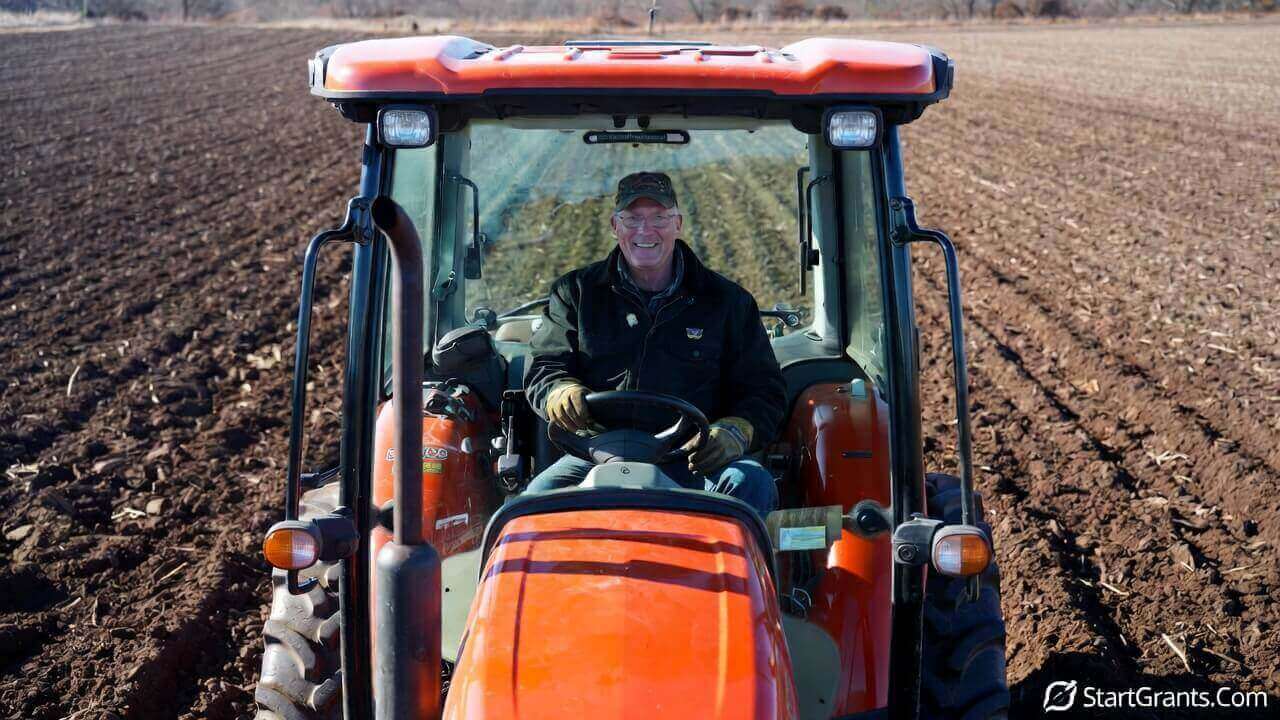
Private non-profits like the Farmer Veteran Coalition award direct cash fellowships and brand-new agricultural equipment to eligible veterans.
Managed by the Farmer Veteran Coalition (FVC), this is the largest and most prestigious private grant program strictly for military veterans in agriculture.
-
The Award: Instead of handing you a blank check, the FVC purchases exactly what you need to grow your business. Awards range from $1,000 to $5,000. They might buy you an industrial walk-in cooler, a flock of breeding sheep, or an ATV for your ranch.
-
The Kubota Program: Through a corporate partnership, the FVC also awards brand-new Kubota tractors and utility vehicles to a select group of veteran applicants every year.
-
Who Qualifies: You must have an honorable discharge, be a member of the FVC, and have a solid business plan.
2. Rodale Institute Veteran Farmer Grants
For veterans interested in sustainable, organic, or regenerative agriculture, the Rodale Institute is the premier research and educational organization in the country.
-
The Focus: They occasionally offer direct micro-grants to veteran farmers to help them transition their conventional farms into Certified Organic operations.
-
Training Support: Even when cash grants are closed, their Veteran Farmer Training program provides paid apprenticeships. You get paid to learn how to farm organically on their massive research farms.
3. The AgrAbility Project
What happens if you have a severe physical disability (like a missing limb or a spinal cord injury) but you still want to farm? The physical demands seem impossible, but AgrAbility exists to solve this exact problem.
-
The Support: Sponsored by the USDA, AgrAbility works with state-level universities to provide assistive technology. While they don’t give you cash directly, they provide the funding and engineering to modify your equipment.
-
Examples: They can fund the installation of an electronic lift that hoists a wheelchair-bound veteran directly into the cab of a combine harvester, or provide specialized ergonomic tools for veterans with severe arthritis or hand injuries.
Phase 3: The “Homegrown By Heroes” Certification
Sometimes, a grant isn’t about getting cash—it is about getting leverage.
The Homegrown By Heroes (HBH) label is an official certification program administered by the Farmer Veteran Coalition. It allows you to place a highly visible, patriotic logo on your agricultural products.
Why This is a Massive Financial Advantage:
-
Premium Pricing: Studies show that American consumers are willing to pay a premium for locally grown food. When they see the Homegrown By Heroes label at a farmers market or grocery store, they are often willing to pay even more to support a military veteran.
-
Wholesale Contracts: Many large grocery chains and restaurants have internal mandates to source a percentage of their ingredients from veteran-owned businesses. Having this certification makes you eligible for these massive wholesale contracts.
-
Synergy with SDVOSB: If you combine your Homegrown By Heroes label with an official Service-Disabled Veteran-Owned Small Business (SDVOSB) certification, your farm can bid on lucrative federal contracts to supply food to VA hospitals and military bases.
Phase 4: Halal Capital – Riba-Free Financing Institutions for Muslim Veterans

Institutions like LARIBA offer Halal, Riba-free commercial financing options, allowing Muslim veterans to acquire farmland without compromising their faith.
As mentioned in the introduction, navigating the financial landscape of agriculture can be spiritually challenging for Muslim veterans. While the FSA Microloan program offers excellent terms for the average veteran, it is still fundamentally a conventional loan that accrues interest (Riba), which is prohibited in Islamic finance.
So, if purely cash grants (like the Farmer Veteran Fellowship) are not enough to buy your 10-acre dream farm, where do you turn for Halal, Riba-free capital?
You must look toward Islamic commercial finance institutions operating within the United States, as well as community-funded models.
1. LARIBA (American Finance House)
LARIBA is one of the oldest and most respected Islamic finance institutions in the United States. While they are famous for home financing, they also provide Commercial and Business Financing that strictly adheres to Sharia principles.
-
The Model: Instead of lending you money at an interest rate to buy a tractor or farmland, LARIBA uses a Murabaha (cost-plus financing) or a Musharakah (joint venture/lease) model. They purchase the equipment or land alongside you, and you buy out their shares over time at an agreed-upon, fixed profit mark-up. There is no compounding interest.
-
The Application: You can apply for commercial financing to secure the heavy machinery or the physical land you need to start your agribusiness.
2. UIF Corporation (University Islamic Financial)
UIF is another major player in the US Islamic finance sector. While their primary focus is residential and commercial real estate, agricultural land often falls under commercial real estate if you are building a legitimate agribusiness.
-
The Strategy: If you are buying a farm that includes a primary residence (a homestead), you can utilize their Halal home financing models to secure the property. Once the land is secured without Riba, you can then apply for the USDA’s EQIP grants (which are pure, Halal cash reimbursements) to build your greenhouses and irrigation systems.
3. LaunchGood (Agricultural Crowdfunding)
Never underestimate the power of the community. LaunchGood is the world’s largest Muslim crowdfunding platform.
-
The Strategy: If you are building an agribusiness focused on Tayyib (organic, ethically raised) food, or a community garden to combat food deserts, LaunchGood is the perfect place to raise capital. Many Muslim farmers have successfully raised tens of thousands of dollars in pure grant money from the global community by presenting a business plan that feeds people healthy, Halal food.
Phase 5: Educational Bootcamps (Learn Before You Farm)
Farming is a business with notoriously thin profit margins. If you do not know how to manage soil health, crop rotation, or market volatility, even the largest grant will not save your farm.
Before any organization—whether it is the USDA, the Farmer Veteran Coalition, or an Islamic finance board—hands you capital, they want to see that you have agricultural education. Here are the best free or fully funded training programs for veterans.
1. Armed to Farm (by NCAT)
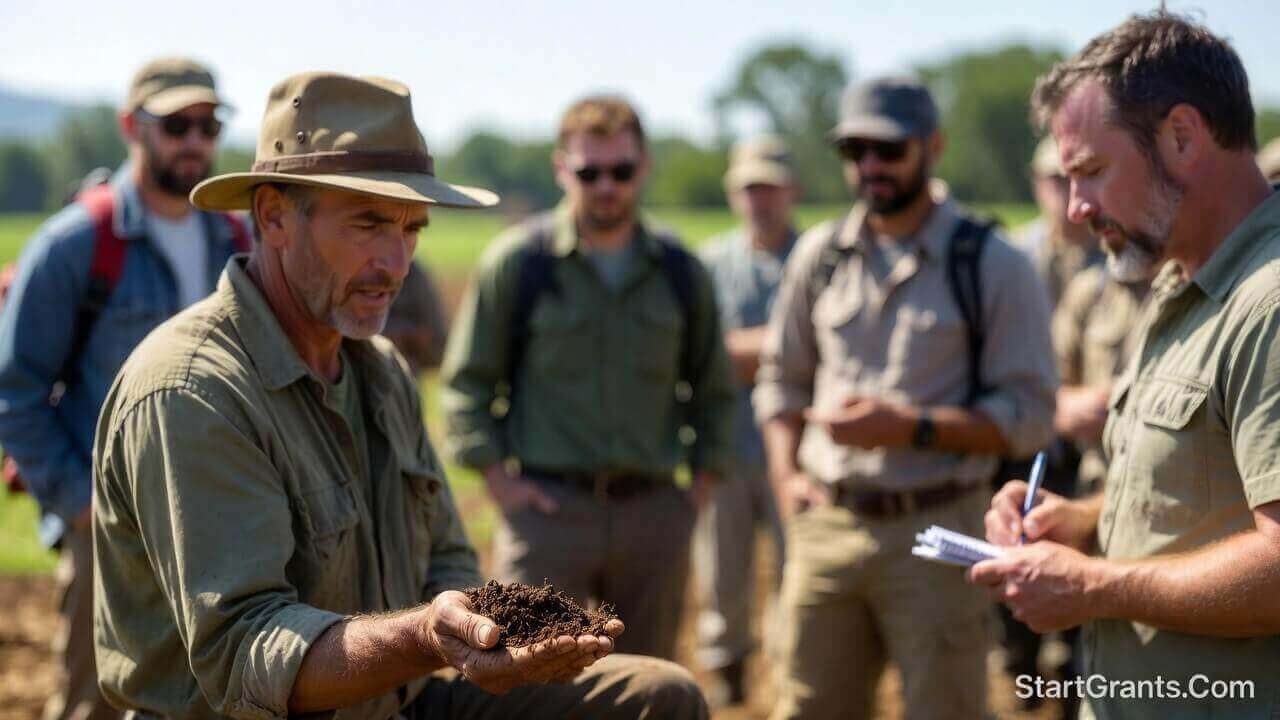
Before applying for massive capital grants, attending fully funded bootcamps like “Armed to Farm” will give you the business and soil management skills needed to succeed.
The National Center for Appropriate Technology (NCAT) runs “Armed to Farm,” which is the gold standard for veteran agricultural training.
-
The Program: This is a week-long, intensive bootcamp. You will split your time between classroom business planning and hands-on, dirty-boots work on successful, operating farms.
-
The Cost: It is completely free. If you are accepted, the program covers your lodging, meals, and all instructional materials. You only have to pay for your travel to the training site.
2. Boots to Roots
While you might be familiar with the SBA’s “Boots to Business” program, “Boots to Roots” initiatives (often run by local university agricultural extension offices) focus specifically on transitioning military skills into agribusiness management.
-
The Curriculum: These programs teach you how to write a farm business plan, how to navigate the USDA bureaucracy to get your Farm Tract Number, and how to price your organic produce for farmers markets.
-
Action Step: Search for your local “University Cooperative Extension” office. Every state has one (e.g., Texas A&M AgriLife, Penn State Extension), and almost all of them have a dedicated veteran agriculture liaison.
3. Formal Online Degrees & Family Benefits
If you want to formally study agribusiness, accounting, or supply chain management without leaving your farm, distance learning is your best option. You can leverage your military benefits for online universities. Read our breakdown on Grants for Veterans: AIU Online Grant Information. (Pro Tip: If your agribusiness is successful and you want to ensure your legacy continues, make sure you also secure your family’s educational future by exploring Scholarships and Grants for Grandchildren of Veterans).
Phase 6: Step-by-Step Execution (How to Get Started Today)
Reading about grants is easy; executing the application process is where most aspiring farmers fail. Bureaucracy can be as thick as clay soil. If you want to secure funding, you must follow this exact order of operations.
Step 1: Get Your Farm Tract Number
You cannot apply for any USDA program (including EQIP or FSA Microloans) without a Farm Tract Number. This is essentially a Social Security Number for your specific piece of land.
-
The Action: Go to your local USDA Service Center and register your farm. Even if you are just leasing the land (not buying it), you can still register it and get a number.
Step 2: Register with the Farmer Veteran Coalition (FVC)
Before you apply for the Fellowship Fund or the Kubota tractor giveaway, you must be a registered member of the FVC. Membership is free for veterans and gives you instant access to a nationwide network of mentors who have successfully secured the exact grants you are pursuing.
Step 3: Write an Agricultural Business Plan
No bank, Islamic finance board, or non-profit foundation will give you capital without a written business plan. They need to know what you are growing, who your buyers are, and what your profit margins look like. Use the education you received from Armed to Farm to draft a bulletproof 5-year projection.
Phase 7: Strategic Synergies (Maximize Your Veteran Benefits)
Farming does not happen in a vacuum. Your agribusiness is tied directly to your housing situation and your overall financial health. To truly succeed, you must leverage your other veteran benefits simultaneously.
-
Secure Your Homestead: If you are a disabled veteran looking to build an accessible farmhouse on your new land, do not pay out of pocket. You can combine your agricultural efforts with VA housing assistance. Read our master guide on How to Get Housing Grants for Disabled Veterans.
-
Official Business Certification: Your farm is a business. By officially certifying your agribusiness as a Service-Disabled Veteran-Owned Small Business (SDVOSB), you can secure massive government contracts to supply food to military bases. Learn the steps in our Service-Disabled Veteran-Owned Small Business Grants Guide.
-
Emergency Safety Nets: Farming is unpredictable. A bad drought or a broken tractor can ruin a season. If your farm is struggling and you are facing a personal financial crisis, stabilize your homefront first through our Emergency Financial Assistance for Veterans hub.
- Leverage State-Level Cash Bonuses: Farming is highly regional. Depending on where you buy your land, your specific state government might offer localized cash bonuses or tax breaks that can be injected straight into your farm’s operating budget. If you are setting up your ranch in the South, check our guide on Financial Assistance for Veterans in Texas. Midwestern farmers should definitely explore regional lifelines like the Illinois Veterans Grant Program or the Ohio Veterans Bonus Program.
Throughout this guide, we have highlighted the immense support network waiting for you, particularly the Farmer Veteran Coalition. Before we cover the final technical FAQs regarding taxes and Farm Tract Numbers, watch this incredible official spotlight from the U.S. Department of Veterans Affairs. It perfectly captures why so many veterans are finding peace and purpose in agriculture, and how the grants we discussed actually look in the real world:
Frequently Asked Questions (FAQ)
Q1: Do I need to own land to get a farm grant?
A: No. Many veterans successfully apply for USDA EQIP grants and private fellowships while leasing land. As long as you have a registered Farm Tract Number and a lease agreement that extends through the lifespan of the grant contract, you are eligible for funding.
Q2: Are farm grants considered taxable income?
A: Generally, yes. Unlike VA disability compensation, which is entirely tax-free, agricultural grants (like the Value-Added Producer Grant or cash from private fellowships) are usually treated as taxable business income by the IRS. Always consult with an agricultural CPA.
Q3: What exactly is a Farm Tract Number?
A: It is a unique identification number assigned to your farm by the Farm Service Agency (FSA). It tracks the agricultural history, soil type, and boundaries of your land. You cannot participate in federal farm programs without it.
Q4: Can I use my GI Bill to learn how to farm?
A: Yes. The GI Bill can be used to pay for traditional agricultural degrees at universities, but more importantly, it can be used for On-The-Job Training (OJT) and paid apprenticeships on approved veteran-owned farms.
Q5: Can disabled veterans get extra physical help on the farm?
A: Absolutely. Programs like the USDA-sponsored AgrAbility project specialize in modifying farm equipment (like adding lifts to tractors or designing ergonomic tools) to help veterans with severe physical disabilities or amputations continue farming safely.
Conclusion: Sow the Seeds of Your Future
Agriculture is more than an industry; it is a profound way to continue serving your community by providing essential, life-sustaining resources. The therapeutic rhythm of farming has saved countless veterans from the dark aftermath of combat.
Whether you are utilizing federal EQIP cost-shares to build your first greenhouse, partnering with LARIBA for Halal land financing, or winning a Kubota tractor from the Farmer Veteran Coalition, the capital is out there waiting for you.
Your Action Plan for Today:
-
Find Your Local Office: Locate your nearest USDA Service Center and schedule an appointment with the FSA agent.
-
Join the Network: Sign up for free at the Farmer Veteran Coalition website.
-
Commit to Learning: Register for the next available Armed to Farm bootcamp in your region.
Transitioning from a soldier to a farmer requires grit, patience, and strategy. You already have the grit and patience. Now, use this guide as your strategy, and go build your agribusiness empire.
Important Disclaimer: StartGrants.com is an independent information portal. We are not a government agency and do not provide direct grants or products. Always verify the current status of programs with the providing organization.


