
Last Updated: August 2026 | Author: Munir Ardi
There was a time when studying abroad was viewed strictly as a luxury—a multi-month European vacation reserved exclusively for affluent college students. In 2026, that paradigm has been entirely shattered. In a hyper-globalized economy, international exposure, cross-cultural competence, and foreign language proficiency are critical assets that Fortune 500 companies and federal agencies actively demand from recent graduates.
However, the financial barrier to entry remains brutal. A comprehensive summer study abroad program—factoring in university tuition, international flights, housing, and food—can easily cost between $5,000 and $15,000. If your family cannot write a check for that amount, you must not resort to predatory travel loans. Instead, you must master the acquisition of summer study abroad scholarships.
Before launching an international funding campaign, you must ensure your domestic educational financing is impenetrable. Anchor your overarching college funding strategy by reviewing our Master Pillar: Undergraduate and Career-Specific College Scholarships.
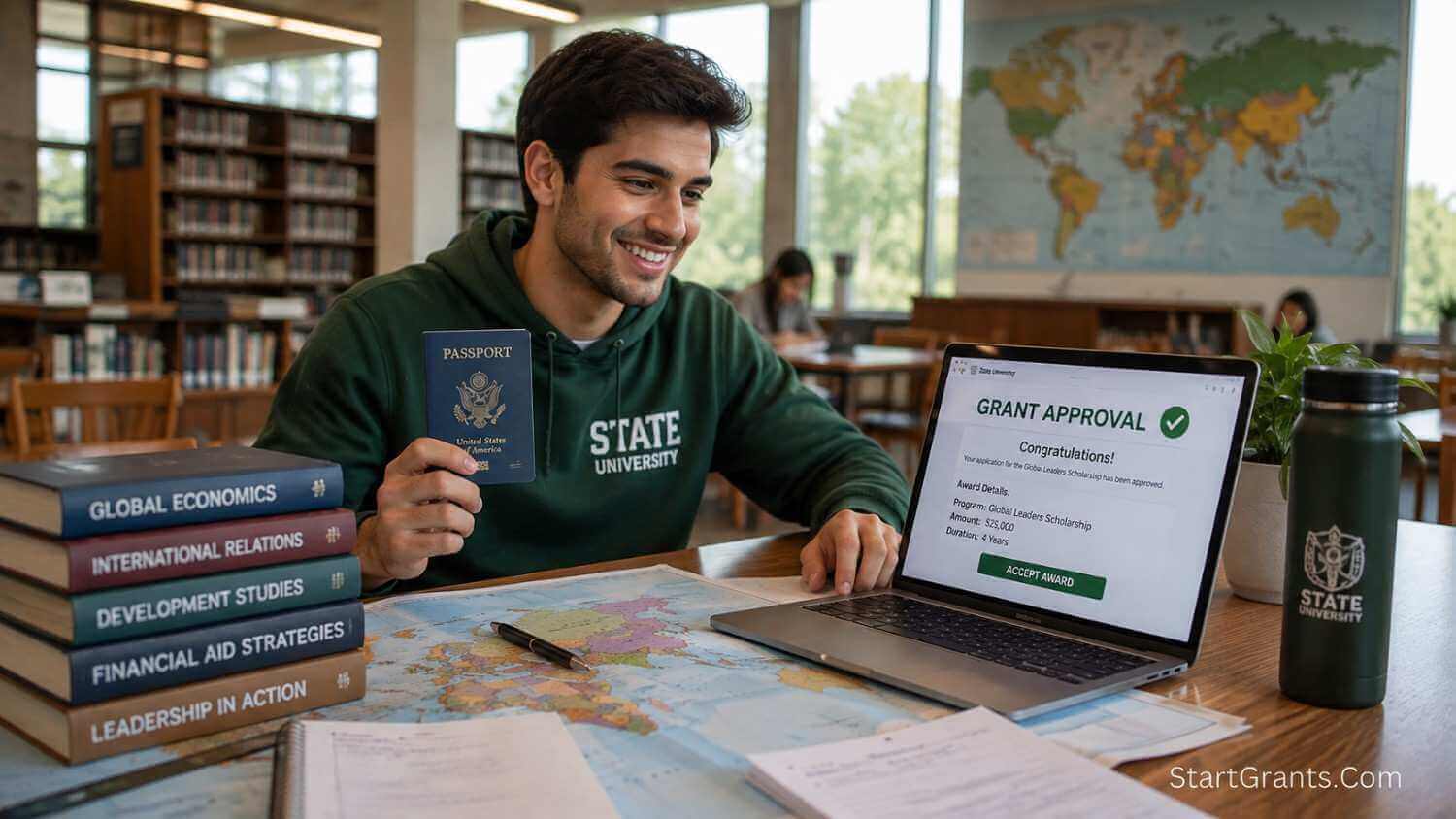
Studying abroad is no longer an exclusive luxury; it is a critical career asset. By securing federal grants like the Gilman Scholarship, undergraduate students can fund their international summer studies completely debt-free.
Phase 1: The Federal Pipeline (The Gilman Scholarship)
If you are an undergraduate student with limited financial means, your absolute first target must be the United States federal government. The U.S. Department of State operates the most powerful and widely accessible international funding mechanism in the country: the Benjamin A. Gilman International Scholarship.
The Gilman Scholarship is specifically designed to democratize international travel. It awards up to $5,000 to help students cover the costs of tuition, room and board, books, local transportation, and airfare.
The Bureaucratic Key: You cannot apply for the Gilman Scholarship if you are not receiving the Federal Pell Grant. The government uses your Pell Grant status as absolute proof of financial need. If you receive a Pell Grant, the Gilman application should be your top priority. Furthermore, if you are studying a “Critical Need Language” (like Arabic, Mandarin, or Russian) during your summer abroad, the Gilman program can boost your award up to $8,000.
Pro-Tip: Writing the Winning Gilman Essay
The Gilman Scholarship does not require a minimum GPA; it is fiercely competitive based entirely on the strength of your essays. Reviewers want to know exactly how studying abroad will impact your future career and how you will promote the program upon your return. To master the three required essay prompts and guarantee your application stands out, watch this highly practical breakdown: EASY Essay Writing Tips for the Gilman International Scholarship:
Phase 2: National Security & Language (Boren Awards)
The U.S. government is desperately seeking college graduates who understand foreign cultures and speak languages critical to national security. If you are willing to study outside of Western Europe (e.g., Africa, Asia, Latin America, or the Middle East), you must target the Boren Awards.
Funded by the National Security Education Program (NSEP), Boren Scholarships provide massive funding for summer programs (up to $8,000 specifically for STEM majors running summer research, and up to $25,000 for longer academic periods). The Catch: In exchange for this massive, debt-free capital, Boren recipients must agree to work in the federal government (in national security roles) for at least one year after graduation. It is not just a scholarship; it is a guaranteed career pipeline.
Phase 3: Synergizing Academic Timelines & Majors
Timing and major selection are critical components of a successful study abroad funding strategy. You cannot decide you want to study abroad in May and expect to find funding in April. You must plan 6 to 9 months in advance.
- The Sophomore Strategy: The absolute best time to apply for summer study abroad scholarships is during your second year of college, preparing for a summer trip before your junior year. If you are currently in this window, you must synchronize your travel funding with your broader academic grants. Learn how in our guide: Scholarships for College Sophomores.
- Fieldwork and STEM: Many summer abroad programs are not classroom-based; they are empirical fieldwork operations. If you are traveling to Costa Rica to study rainforest ecology or Iceland to study geothermal activity, you unlock highly restricted scientific endowments. Combine your travel goals with specialized major funding in: Environmental Science Scholarships.
Phase 4: Institutional & Corporate Endowments
If federal grants fall short, you must tap into private and institutional wealth. Never pay a third-party company to “find” study abroad grants for you.
- Your University’s Study Abroad Office: This is the most overlooked resource. Most major universities have internal, donor-funded endowments specifically earmarked to help their own students travel. These funds are often highly under-utilized because students forget to ask.
- The Fund for Education Abroad (FEA): The FEA is a massive 501(c)(3) nonprofit dedicated to increasing the demographics of students who study abroad. They aggressively target minority students, first-generation college students, and community college students, offering direct cash grants for summer, semester, and year-long programs.
- Diversity Endowments: Organizations like the Diversity Abroad Network offer specific summer scholarships to ensure low-income and minority students have equal access to international education.
Phase 5: The Muslim Perspective (Safar, Riba, Gharar, & Ibn al-Sabil)
For Muslim undergraduate students in the United States, traveling internationally for education is a profound fulfillment of faith. The pursuit of knowledge (Talib al-Ilm) and travel (Safar) to understand Allah’s diverse creation is highly encouraged in Islamic tradition. However, the Western collegiate system relies heavily on debt and commercial insurance to execute these trips. The Muslim student must navigate this international journey with strict adherence to Islamic financial jurisprudence (Shariah).
The Trap of Riba in “Study Abroad Loans”
When a student realizes that their summer program in Spain or Morocco will cost $8,000, and their Pell Grant will not cover the summer term, university financial aid officers frequently suggest taking out a “Private Study Abroad Loan” or a “Federal PLUS Loan.”
In Islam, intentionally signing a contract that requires the payment of compounding interest is explicitly Riba, which is strictly Haram (forbidden). Entering a foreign country to study while burdened by the severe sin of usury entirely eradicates the spiritual Barakah (blessing) of the journey. A Muslim student must adamantly refuse these interest-bearing travel loans.
This reality elevates the pursuit of Scholarships and Grants (Hibah) into a religious necessity. Because grants require no repayment, they are 100% Halal capital. If Gilman or FEA grants are insufficient, Muslim students must seek Qard Hasan (zero-interest benevolent loans) from family or organizations like A Continuous Charity (ACC) to bridge the financial gap ethically.
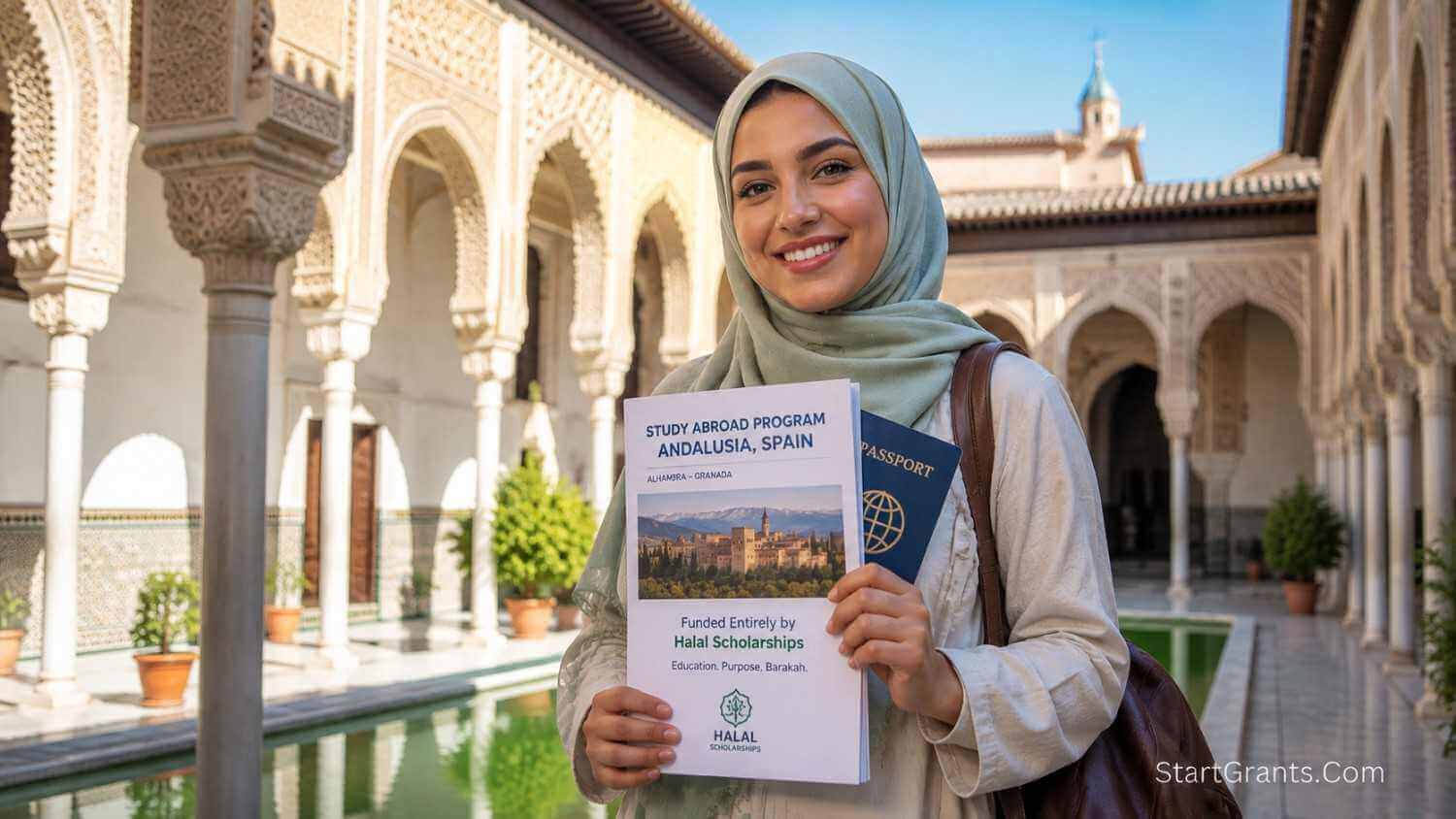
Traveling to seek knowledge (Safar for Talib al-Ilm) is a beautiful Islamic tradition. By fiercely avoiding Riba-based travel loans in favor of Halal grants (Hibah), Muslim students ensure their international education is filled with absolute spiritual Barakah.
Gharar and Mandatory Travel Medical Insurance
When you enroll in an international study program, the host university and the U.S. government will legally mandate that you purchase comprehensive Travel Medical and Emergency Evacuation Insurance. An unexpected hospitalization or a medical flight back to the U.S. can cost upwards of $100,000, causing instant bankruptcy.
Traditional commercial travel insurance contains Gharar (excessive uncertainty) and elements of gambling. Ideally, Muslim travelers should use Takaful (Islamic cooperative insurance). However, because authentic Takaful for international medical evacuation is practically non-existent for American students, contemporary Islamic scholars universally apply the principle of Dharurah (legal and life-saving necessity). This permits the Muslim student to purchase the heavily mandated commercial policy to satisfy university laws and protect their life from catastrophic ruin overseas, provided the intent is survival, not speculative profit.
The Fiqh of Zakat and Ibn al-Sabil (The Stranded Traveler)
Many students ask: “Can I use Zakat money to pay for my study abroad trip?”
The answer is No. Zakat is a divine, obligatory tax restricted to specific human recipients (the Asnaf). It cannot be used to fund an academic enrichment trip or purchase a plane ticket for an educational program. Those expenses must be funded via Halal grants (Hibah) or general Sadaqah (voluntary charity).
However, there is a strict jurisprudential exception regarding travel. If a Muslim student travels abroad for a Halal purpose (like education) and their wallet is stolen, their bank accounts freeze, and they are completely stranded in a foreign country without money, they instantly qualify for Zakat under the category of Ibn al-Sabil (The Stranded Traveler/Wayfarer). Even if they are wealthy back in the U.S., the Muslim community is obligated to provide Zakat to secure their safe passage home.
Conclusion
Finding summer study abroad scholarships requires executing a highly organized, bureaucratic timeline. You must abandon the idea of using high-interest debt to fund an academic vacation. By aggressively targeting federal pipelines like the Gilman Scholarship and Boren Awards, leveraging your sophomore timeline, and utilizing private endowments like the FEA, you can secure the non-dilutive capital required to access the global stage.
For the Muslim undergraduate, traversing the globe is a profound pursuit of Ilm (knowledge). By fiercely rejecting the predatory trap of Riba-laced study abroad loans in favor of Halal Hibah, navigating insurance mandates via Dharurah, and understanding the strict limitations of Zakat, your international journey will not only expand your career but will radiate with unyielding spiritual purity and divine Barakah.
Frequently Asked Questions (FAQs)
Q1: Who is eligible for the Gilman Study Abroad Scholarship?
A: To be eligible for the Benjamin A. Gilman International Scholarship, you must be a United States citizen, an undergraduate student in good academic standing, and you must be receiving the Federal Pell Grant at the time of your application or during the term of your study abroad program.
Q2: Can I get a scholarship if I am only studying abroad for the summer?
A: Yes. While many scholarships prioritize full semester or year-long programs, organizations like the Fund for Education Abroad (FEA) and the Gilman Scholarship offer specific grant brackets designated entirely for short-term, summer study abroad programs (usually requiring a minimum of two to three weeks abroad).
Q3: What makes the Boren Awards different from regular scholarships?
A: Boren Awards are funded by the National Security Education Program. They provide massive funding (up to $25,000) but are restricted to students studying less commonly taught languages in regions critical to U.S. national security. Furthermore, recipients incur a service requirement to work for the federal government in a national security role for at least one year after graduation.
Q4: Why is it Haram for a Muslim student to take out a “Study Abroad Loan”?
A: Private student loans and travel loans require the borrower to pay back the principal amount plus a percentage of compounding interest over time. In Islamic finance, any transaction that requires the payment of interest is classified as Riba, which is strictly forbidden (Haram). Muslims must fund travel through Halal grants (Hibah), savings, or interest-free loans (Qard Hasan).
Q5: Can an Islamic charity use Zakat funds to pay for a student’s study abroad flight?
A: No. Zakat is restricted to the eight eligible categories (Asnaf) listed in the Qur’an, which primarily encompass the absolute poor and destitute. Funding an academic trip abroad does not qualify for Zakat. However, if that student is robbed or stranded overseas and cannot return home, they become an “Ibn al-Sabil” (stranded traveler) and are then legally permitted to receive emergency Zakat for repatriation.
Disclaimer: The information provided in this article is for educational and informational purposes only. We are not a federal agency, a university study abroad office, or a religious fatwa council. Department of State grant regulations, Boren Award service requirements, and university deadlines are subject to constant changes. Always consult directly with your university’s financial aid office for grant eligibility, and seek guidance from a qualified Islamic finance scholar regarding Halal education financing, Riba avoidance, and specific Zakat rules for Ibn al-Sabil.