Last Updated: | Author: Munir Ardi
The Beginning Farmer and Rancher Development Program (BFRDP) does not normally give startup checks directly to individual farmers. Administered by the USDA National Institute of Food and Agriculture (NIFA), it funds eligible networks and partnerships that provide education, mentoring, outreach, and technical assistance to people in their first 10 years of operating a farm or ranch.
The FY 2026 competition is closed. NIFA posted the opportunity on May 13, 2026, and required applications by 5:00 p.m. Eastern Time on June 16, 2026. Organizations considering a future BFRDP application can use the closed notice for planning, but they should not assume that FY 2027 dates, funding levels, eligibility rules, or application requirements will be identical. For broader context on how NIFA competitions work, see our USDA NIFA grants and eligibility overview.
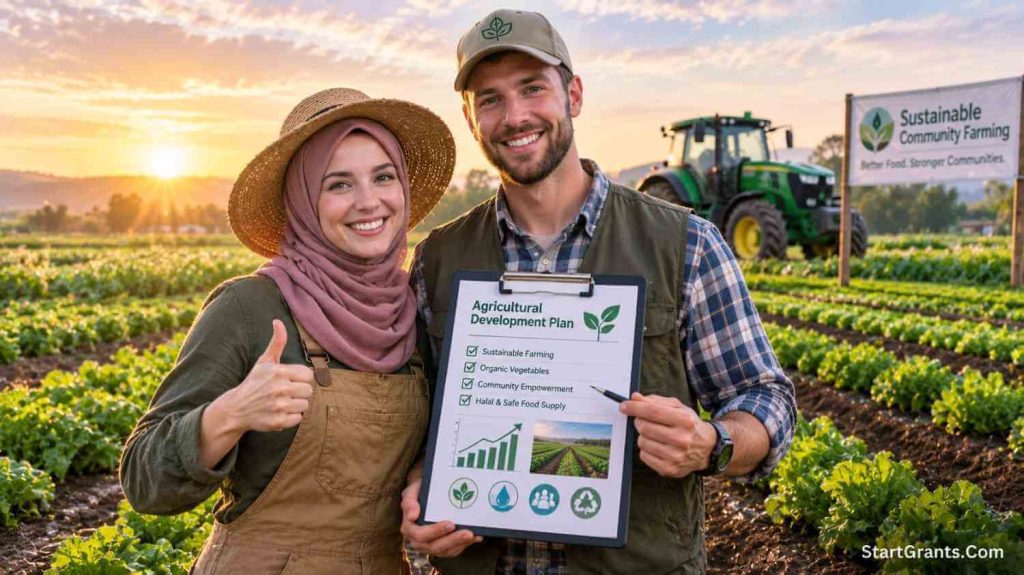
BFRDP supports organizations that train and assist beginning farmers and ranchers; it is not a direct farm-startup grant for individuals.
What the Beginning Farmer and Rancher Development Program Does
NIFA describes a beginning farmer or rancher as a person who has not operated a farm or ranch, or who has operated one for no more than 10 years, while also meeting any additional criteria established by the Secretary of Agriculture. BFRDP projects are intended to help these producers enter agriculture or improve the success and sustainability of their operations.
Depending on the funded project, assistance may include:
- farm business planning and financial management;
- production, marketing, and risk-management education;
- mentoring, apprenticeships, workshops, or peer learning;
- land-access and farm-transition education;
- legal, regulatory, food-safety, or recordkeeping instruction; and
- training designed for a particular region, commodity, or community.
Those are examples of allowable program themes, not benefits promised to every participant. A local project may offer classroom instruction without land, equipment, stipends, or cash assistance. Read the provider’s enrollment rules and description of services before applying.
FY 2026 Status, Funding, and Award Categories
The official FY 2026 BFRDP opportunity page lists approximately $44,443,140 in anticipated program funding. That is the total competitive program amount, not an award available to one farmer. The governing FY 2026 Notice of Funding Opportunity established these categories:
| Award category | FY 2026 maximum and duration | Primary purpose | Status as of September 10, 2026 |
|---|---|---|---|
| Simplified Standard | Up to $49,999 for 12 months | Build capacity, partnerships, materials, and a small training effort | Closed June 16, 2026 |
| Small Standard | Up to $300,000 over as many as 36 months | Training and technical assistance with a smaller scope | Closed June 16, 2026 |
| Medium Standard | Up to $525,000 over as many as 36 months | A broader training and assistance project | Closed June 16, 2026 |
| Large Standard | Up to $750,000 over as many as 36 months | A larger-scale regional, statewide, or national effort | Closed June 16, 2026 |
| Education Team | $600,000 to $750,000 for 36 months | Curriculum, cross-region education, and training for trainers or service providers | Closed June 16, 2026 |
| Curriculum and Training Clearinghouse | $600,000 to $750,000 for 36 months | Maintain and improve the national BFRDP clearinghouse | Closed June 16, 2026 |
Award figures are ceilings or ranges for organizational projects. NIFA may fund fewer proposals than anticipated, negotiate budgets, or make no award in a category. A future NOFO may also change the categories and amounts.
Who Can Apply for a BFRDP Grant?
The distinction between a federal applicant and a program participant is essential. Under the FY 2026 NOFO, the applicant had to be a collaborative state-, Tribal-, local-, or regionally based network or partnership of qualified public or private entities. An individual and an organization applying without other entities in a network or partnership were not eligible.
| Party | Role in BFRDP | Can submit the federal application alone? |
|---|---|---|
| Individual beginning farmer or rancher | May receive training or technical assistance from a funded project and may participate in project design | No |
| One organization without partners | Could potentially join or lead a qualifying partnership | No under the FY 2026 rules |
| Eligible collaborative network or partnership | Designs, administers, evaluates, and reports on the funded project | Yes, if every NOFO requirement is met |
Potential partners can include Cooperative Extension, federal, state, municipal, or Tribal agencies, community-based and nongovernmental organizations, colleges, universities, foundations, and private for-profit organizations. The FY 2026 NOFO strongly encouraged incorporating beginning and non-beginning producers into the collaborative group.
Are there set-asides for women?
The FY 2026 BFRDP NOFO did not create a women-only application route or promise women preferential approval. It required at least 5% of available funds for projects serving limited-resource beginning farmers and ranchers or farmworkers who want to become producers, and at least 5% for projects serving veteran beginning farmers and ranchers. Applicants targeting either subset had to explain recruitment, retention, training, budget allocation, and relevant experience.
Women can participate in BFRDP-funded services when they meet a provider’s rules, and organizations can design projects around documented community needs while following current federal requirements. Readers researching other USDA opportunities should distinguish targeted outreach from a cash entitlement; our article on government farm funding options for women explains that distinction.
What BFRDP Does Not Automatically Pay For
BFRDP is not a general-purpose farm capitalization program. An individual should not expect NIFA to reimburse a tractor purchase, make a down payment on land, cover household bills, or deposit an unrestricted award into a personal bank account. A funded organization may budget approved project costs and participant-support activities, but those expenses must follow the award, the approved budget, and federal cost rules.
Some providers operate incubator farms, arrange apprenticeships, or make shared tools available. Others focus on business courses, mentoring, production training, or market development. Never advertise a local BFRDP project as providing free land or equipment unless its current official enrollment page says so. If equipment is the primary need, compare programs in our guide to farm equipment grants and financing.
How an Individual Can Find BFRDP-Funded Help
- Search Farm Answers. The BFRDP Curriculum and Training Clearinghouse collects educational resources and information for beginning farmers and ranchers.
- Review funded-project records. Use NIFA’s Data Gateway to research awards, project directors, locations, and project descriptions. An award record does not prove that enrollment is currently open, so contact the project.
- Ask Cooperative Extension. Contact the Extension office serving your county or state and ask specifically about beginning-farmer classes, incubators, mentoring, and BFRDP-funded partners.
- Verify the participant rules. Ask about service area, operating-history limits, age, application dates, fees, attendance, language access, and whether a course is online or in person.
- Confirm what is included. Get a written explanation of tuition, supplies, travel, stipends, land access, equipment access, and any post-program obligations.
Producers planning small-scale city operations may also want to review urban farming grant and assistance options. A BFRDP class can strengthen skills, but it does not make a separate grant or loan automatic.
How Eligible Organizations Prepare for a Future Competition
A partnership considering a future application should use the latest closed NOFO only as a planning reference and wait for the next official notice before finalizing its proposal.
- Build a real partnership. Define the lead applicant, partner responsibilities, producer involvement, referral network, and administrative capacity.
- Document the audience and need. Use credible local data and direct input from beginning farmers and ranchers rather than generic national claims.
- Choose the correct award category. Match the project’s geographic reach, audience, activities, staffing, and evaluation plan to the requested budget.
- Design measurable education and assistance. State what participants will learn or accomplish and how progress will be measured.
- Address matching funds. FY 2026 applicants generally had to provide nonfederal cash or in-kind contributions equal to 25% of the federal funds requested. The Secretary could waive or reduce the match when necessary to reach an underserved area or population, but a request was not automatic approval.
- Complete federal registrations early. NIFA’s application guidance directs organizations to maintain SAM.gov registration, obtain a Unique Entity Identifier, register with Grants.gov, and follow the NOFO and NIFA application guide.
- Submit through the required system. The FY 2026 competition accepted electronic applications through Grants.gov; late registration did not extend the deadline.
For FY 2026, matching documentation had to identify the source and amount, and an award could not be issued until required match over the project life was secured. Future applicants should never promise donated staff time, land, or services before confirming that the valuation and documentation comply with the current rules.
Save This BFRDP Checklist
- [ ] Confirm whether you are seeking participant services or preparing an organizational grant application.
- [ ] Check the NIFA opportunity page for the current open or closed status.
- [ ] If applying for funding, document a qualifying network or partnership.
- [ ] Match the project scope to the correct award category and current ceiling.
- [ ] Verify the required nonfederal match and any waiver-request procedure in the current NOFO.
- [ ] Confirm SAM.gov, UEI, Grants.gov, and authorized representative details well before the deadline.
- [ ] Give beginning farmers and ranchers a documented role in project design.
- [ ] Do not promise participants cash, land, equipment, or loan approval unless the approved project expressly provides it.
BFRDP Compared With Capital and Land Programs
| Resource | What it provides | Important limitation |
|---|---|---|
| BFRDP | Grants to eligible partnerships for education, outreach, mentoring, and technical assistance | Not a direct startup grant to an individual farmer |
| FSA farm loan | Repayable financing for eligible operating or ownership needs | A loan, not a grant; underwriting, interest, security, and repayment terms apply |
| CRP Transition Incentives Program | Up to two additional annual CRP rental payments to a qualifying owner or operator who transitions expiring CRP land to an eligible non-family beginning or veteran producer | It applies to eligible land coming out of an expiring CRP contract; it is not a general land-purchase grant for the incoming producer |
| Local incubator or apprenticeship | May offer supervised experience, mentoring, a plot, or shared resources | Terms and availability depend on the provider; not every program is BFRDP-funded |
The FSA Transition Incentives Program page explains the landowner payment and conservation requirements. A BFRDP provider may teach participants how to approach financing or land access, but completing a course does not confer eligibility, preferred status, or approval for an FSA loan, TIP transaction, or another USDA benefit.
A Muslim Perspective: Reviewing Farm Training and Finance
A Muslim applicant can distinguish a non-repayable program award from a loan carrying interest. BFRDP funds are governed by an approved public-purpose project, with budget restrictions, reporting, matching obligations, and possible remedies for noncompliance. That structure should be reviewed rather than described automatically as an unrestricted hibah.
An individual receiving education through a funded project should ask whether there are fees, stipends, reimbursements, service commitments, or repayment conditions. An organization should examine how matching contributions, participant support, procurement, and unused funds are treated. Clear written terms help reduce gharar, or avoidable uncertainty.

A profit-sharing partnership may be one financing option, but ownership, risk, management, and loss provisions should be documented and professionally reviewed.
If capital is needed after training, conventional FSA or commercial loans generally involve interest and repayment. Possible alternatives may include savings, retained earnings, family assistance, a properly documented interest-free loan, grants for eligible purposes, crowdfunding, equipment leasing, or a genuine equity or profit-sharing arrangement. Each option has different legal, tax, operational, and Islamic-finance consequences; changing the label of a contract does not change its substance.
Agricultural zakat, crop insurance, financing, and partnership-loss rules are fact-specific and should not be reduced to a universal percentage or ruling in a grant article. Review the actual agreement and consult a qualified Islamic finance scholar along with an attorney, accountant, insurance professional, or agricultural adviser as appropriate. This article does not provide a fatwa.
Common Mistakes and Warning Signs
- Applying as an individual to NIFA. Individuals were not eligible applicants under the FY 2026 BFRDP NOFO.
- Treating an old deadline as current. The FY 2026 competition closed on June 16, 2026; monitor NIFA for a new notice.
- Calling training a cash grant. A participant may receive valuable services without receiving money.
- Assuming every project includes land or equipment. Benefits vary by award and local provider.
- Confusing a grant with an FSA loan. Farm loans must be repaid under their stated terms.
- Paying someone who promises approval. Federal registration and Grants.gov submission do not require a private broker who guarantees an award.
- Using unsupported demographic claims. Read the current NOFO instead of relying on old set-aside summaries or promises of automatic preference.
Frequently Asked Questions
Does BFRDP give grants directly to individual farmers?
No. Under the FY 2026 rules, individuals could not submit BFRDP applications. NIFA funded eligible collaborative networks or partnerships that proposed education, outreach, mentoring, and technical assistance for beginning farmers and ranchers.
Who counts as a beginning farmer or rancher for BFRDP?
NIFA describes a beginning farmer or rancher as someone who has not operated a farm or ranch or has operated one for no more than 10 years, while meeting any other criteria established by the Secretary of Agriculture. A local funded project may also have service-area and enrollment requirements.
Is the FY 2026 BFRDP application still open?
No. The FY 2026 deadline was June 16, 2026, at 5:00 p.m. Eastern Time. Organizations interested in a later round should monitor the official NIFA funding page and follow the next NOFO rather than reuse the old deadline or assume the rules will remain unchanged.
How much could an organization request in FY 2026?
The ceiling depended on the category. Simplified Standard grants were capped at $49,999 for one year; Small, Medium, and Large Standard grants were capped at $300,000, $525,000, and $750,000 respectively over as many as three years. Education Team and Clearinghouse awards ranged from $600,000 to $750,000 for 36 months.
Can one nonprofit apply without partners?
No, not under the FY 2026 NOFO. The applicant had to be a collaborative network or partnership of qualified public or private entities. An otherwise qualified organization could participate as the lead or a partner, but a solo organizational application was ineligible.
Did FY 2026 BFRDP require matching funds?
Yes. Applicants generally had to provide nonfederal cash or in-kind contributions equal to 25% of the federal funds requested. The Secretary could waive or reduce the requirement when necessary to reach an underserved area or population, but the applicant had to request that treatment and could not assume approval.
Can BFRDP pay for a participant’s tractor or farmland?
BFRDP is not a direct equipment or land-purchase grant for an individual. A funded project may provide approved training, participant support, demonstrations, or access to shared resources, but the exact benefits depend on the award and provider.
Does completing BFRDP training guarantee an FSA loan?
No. Training may help a producer develop business, production, and financial-management skills, but FSA applies the eligibility, underwriting, security, and repayment rules for the specific loan. Course completion does not guarantee approval or preferred status.
Where can a farmer find a nearby BFRDP project?
Start with Farm Answers, NIFA’s Data Gateway, and the Cooperative Extension office serving the area. Confirm directly with the project whether it is active, accepting participants, available in the applicant’s location, and offering the specific service needed.
Is BFRDP the same as the CRP Transition Incentives Program?
No. BFRDP funds organizational education and technical-assistance projects. The Transition Incentives Program may provide up to two additional annual CRP rental payments to a qualifying owner or operator who transitions eligible expiring CRP land to an eligible non-family beginning or veteran farmer or rancher.
Conclusion
BFRDP is best understood as a capacity-building program, not a personal farm-startup check. Beginning farmers and ranchers can use funded projects to gain knowledge, mentoring, and technical support. Eligible organizations can compete to deliver those services through a qualifying partnership when NIFA opens a funding opportunity.
As of September 10, 2026, the FY 2026 round is closed. Individuals should search for active local services, while organizations should use the official FY 2026 materials for preliminary planning and verify every detail against the next NOFO before applying.
Important disclaimer: StartGrants.com is an independent information portal. It is not a government agency, grantmaker, application administrator, lender, law firm, tax adviser, insurance adviser, or religious authority. StartGrants.com does not issue grants, loans, land, equipment, benefits, legal advice, tax advice, insurance advice, or fatwas. Program availability, deadlines, eligibility, award amounts, matching requirements, fees, and terms can change. Verify every opportunity with USDA NIFA, USDA FSA, or the responsible provider and seek qualified professional guidance for your circumstances.