
Last Updated: May 2026 | Author: Zee
Deciding to expand your family after a previous tubal ligation is an incredibly emotional journey. The excitement of wanting another child is often immediately crushed by the overwhelming financial reality. Because insurance companies universally classify sterilization reversals as “elective” procedures, patients are forced to face an out-of-pocket bill that typically ranges from $6,000 to $10,000.
If you are looking for general funding for a different type of medical procedure, please route your search through our main directory on surgery and operation grants. This guide is built exclusively for women seeking financial assistance to restore their natural fertility.
While direct “free tubal reversal” vouchers are extremely rare, the broader fertility and family-building ecosystem is filled with philanthropic foundations that provide massive financial grants. In this guide, we will break down the top national grants, compare the costs of reversal versus IVF, and explore the specific ethical considerations for Muslim families navigating fertility treatments.
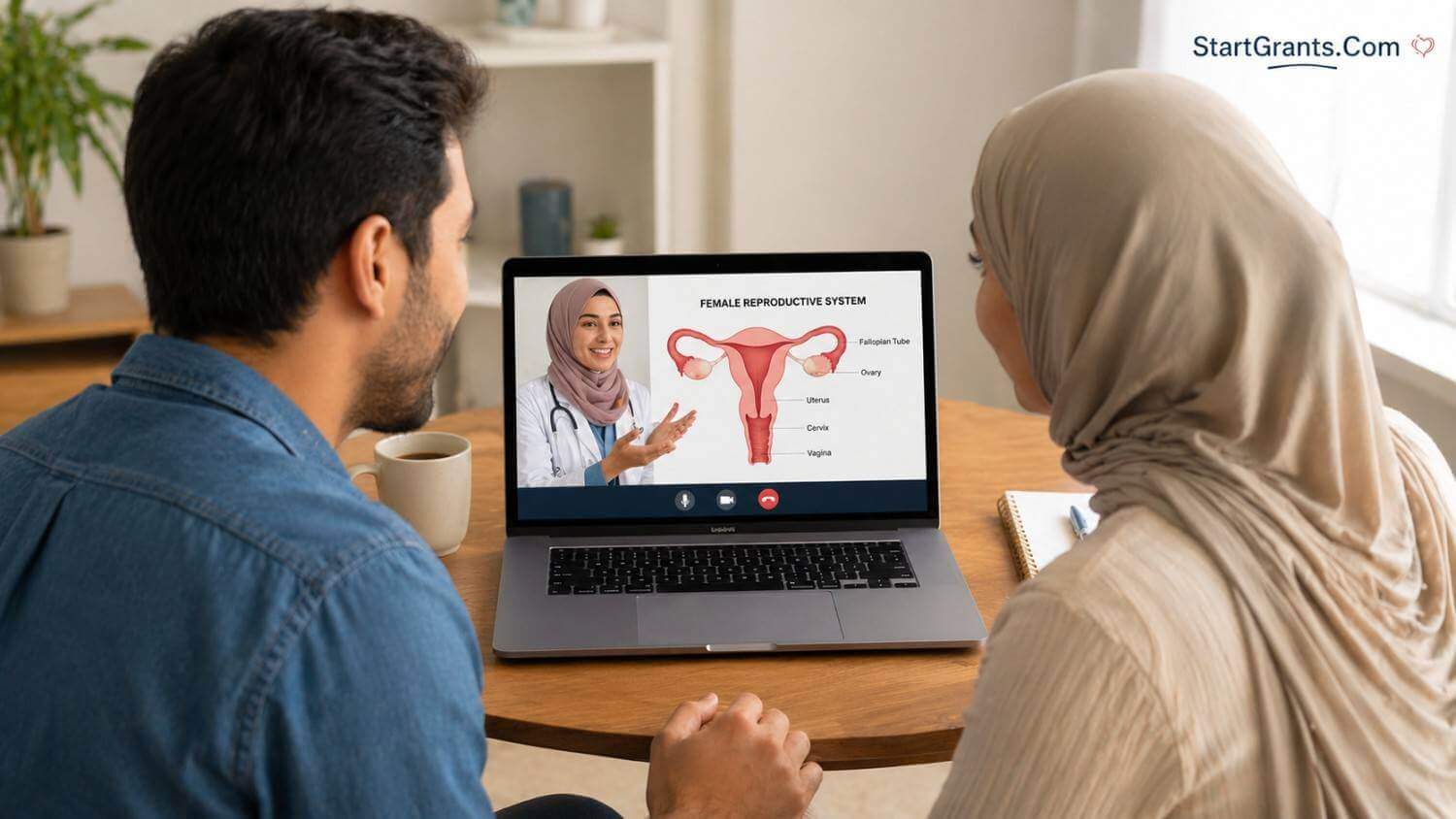
Reversing a tubal ligation is a major financial hurdle, as health insurance rarely covers “elective” fertility surgeries. Fortunately, specialized family-building grants can help bridge the gap.
Phase 1: The Economics of Reversal vs. IVF
Before applying for grants, you must have a clinical consultation to determine if you are even a candidate for a reversal. Doctors will measure the remaining length of your fallopian tubes and assess your current egg reserve. If your tubes are severely damaged (such as after a cauterization/burning method), a reversal may not be possible, and your only option will be In Vitro Fertilization (IVF).
The Financial Breakdown (2026 Averages):
- Tubal Reversal Surgery: $6,000 – $9,000 (One-time cost. If successful, you can conceive naturally multiple times).
- IVF (One Cycle): $15,000 – $25,000 (You bypass the tubes entirely. If it fails, you must pay again for another cycle).
Because IVF is significantly more expensive, many couples prefer to try a tubal reversal first. Fortunately, the grants listed below generally allow the funds to be used for either surgical reversal or IVF treatments, depending on what your doctor recommends.
Phase 2: The Top Fertility & Family-Building Grants
There is no federal government program that pays for tubal reversals. Your entire strategy must focus on private, 501(c)(3) non-profit foundations dedicated to curing infertility.
1. The Baby Quest Foundation
Baby Quest provides financial assistance to those who cannot afford the high costs of fertility procedures. They are one of the most inclusive grants available.
- What they cover: IVF, egg freezing, and reproductive surgeries (which can include tubal reversals if deemed medically viable).
- The Application: You must demonstrate financial need, provide medical documentation of your tubal ligation, and submit an application fee (usually around $50).
- Apply Here: Baby Quest Foundation
2. The Cade Foundation (Family Building Grant)
The Tinina Q. Cade Foundation provides grants of up to $10,000 per family to assist with the costs associated with fertility treatments or domestic adoption.
- The Advantage: This is a massive grant that can easily cover the entire cost of a tubal reversal surgery at most specialized clinics.
- Requirements: You must have a diagnosis of infertility (which a tubal ligation functionally provides) and be a legal resident of the United States.
3. Pay It Forward Fertility Foundation
This foundation partners directly with specific fertility clinics to offer discounted or free care to patients who lack insurance coverage for reproductive medicine.
- The Strategy: You must check their list of partner clinics. If there is a participating surgeon in your state, winning this grant can drastically reduce your operating room and anesthesia fees.
Pro-Tip: Preparing Your Fertility Grant Essay
Winning a family-building grant is highly competitive. Watch this breakdown on how to structure your personal statement to stand out to the grant committee:
Phase 3: The Muslim Perspective (Halal Fertility & Avoiding Riba)

Restoring fertility is deeply encouraged in Islamic tradition. Understanding the ethical boundaries of IVF and avoiding high-interest medical loans ensures your family-building journey remains pure.
For Muslim families, the pursuit of pregnancy after a tubal ligation is not just a medical journey; it involves navigating strict Islamic jurisprudence (Fiqh) regarding family lineage, bodily autonomy, and ethical finance.
1. The Fiqh of Sterilization and Reversal
In Islam, permanent sterilization (such as tying or burning the fallopian tubes) is generally considered Haram (prohibited) under the principle of At-Taghyir (unlawfully altering Allah’s creation), unless there is a severe, life-threatening medical necessity to prevent future pregnancies. Consequently, seeking a tubal reversal to restore the body’s natural function and ability to bear children is highly encouraged and viewed as a return to the natural fitrah.
2. The Boundaries of IVF
If a doctor determines that your tubes cannot be surgically repaired and IVF is your only option, you must ensure the procedure remains Halal. Islamic scholars universally agree that IVF is permissible only if it strictly utilizes the husband’s sperm and the wife’s egg, and the resulting embryo is implanted exclusively into the wife’s uterus. The use of donor sperm, donor eggs, or a third-party surrogate is strictly Haram, as it violates the sanctity of the marital lineage (Nasab).
3. Avoiding Riba (Interest) in Medical Debt
Because fertility grants are highly competitive, many clinics will push patients toward medical credit cards (like CareCredit) to finance the $8,000 surgery. These loans often carry exorbitant, compounding interest rates. Entering into a contract involving Riba (usury) is a major sin. Muslim couples are urged to exhaust philanthropic grants, borrow interest-free funds from family, or save over time, rather than compromising their faith with predatory medical debt.
Phase 4: Low-Cost Alternatives & Specialized Clinics
If you apply for the grants and are denied, your next best option is medical geographic arbitrage. Do not get a tubal reversal at an expensive, full-service hospital. Hospitals charge massive “facility fees.”
Instead, look for Dedicated Outpatient Reversal Clinics. These are specialized surgical centers where doctors perform hundreds of reversals a year. Because they specialize, their prices are highly optimized. Clinics in states like North Carolina, Texas, and Florida often offer “All-Inclusive Packages” for around $6,000—nearly half the price of a standard hospital.
Note: If you are researching this for your partner, or are exploring male fertility options, you can review our sister guide on what makes the vasectomy reversal success rate high to understand the clinical and financial aspects of male sterilization reversal.
Conclusion: Funding Your Family’s Future
Reversing a tubal ligation is a financial challenge, but it is not an insurmountable wall. While your health insurance will likely deny your claims, the philanthropic sector has stepped in to help.
By securing clinical proof that your tubes are repairable, aggressively applying to foundations like Baby Quest and Cade, and avoiding high-interest medical loans, you can fund your surgery ethically and safely. Start gathering your medical records today—your family-building journey is just beginning.
Frequently Asked Questions (FAQs)
Q1: Does Medicaid cover tubal reversals?
A: Almost never. Medicaid and standard state health insurance programs cover the initial tubal ligation (sterilization) but explicitly exclude reversal procedures, labeling them as non-essential, elective fertility treatments.
Q2: Can I use CareCredit for a tubal reversal?
A: Yes, most specialized fertility clinics accept CareCredit. However, patients must be extremely cautious of the deferred interest terms. If you do not pay off the full balance within the promotional 6-to-18-month window, you will be hit with retroactive interest rates often exceeding 26%.
Q3: How long after a tubal ligation can it be reversed?
A: Technically, a reversal can be performed 10 or even 15 years after the initial procedure. However, success rates (clinical pregnancy) drop significantly the longer you wait and the older the patient is, primarily due to the natural decline in egg quality, not just the tubes themselves.
Q4: Will a grant pay me the cash directly?
A: No. Fertility grants are paid directly to your chosen medical provider or surgical clinic. If you are awarded a $10,000 grant, the foundation will handle the billing with the surgeon and the anesthesiologist directly to ensure the funds are used exclusively for medical care.
Important Disclaimer: StartGrants.com is an informational directory and does not provide medical advice or direct funding. Success rates for fertility procedures vary wildly based on age and clinical factors. Always consult a board-certified reproductive endocrinologist before making financial decisions regarding surgery.