
Last Updated: August 2026 | Author: Munir Ardi
Embarking on a mission trip—whether to rebuild homes after an earthquake in Central America, deliver clean water technology to East Africa, or provide emergency medical triage in a refugee camp—is a life-altering decision. However, the passion to serve is immediately met with a brutal logistical reality: international humanitarian work is astronomically expensive.
Between round-trip airfare, emergency travel visas, specialized vaccinations, and in-country lodging, a standard two-week mission trip can easily cost between $3,000 and $5,000. If you are an unpaid volunteer, covering this cost out-of-pocket is often impossible. Learning exactly how to raise money for a mission trip is the critical first step to ensuring your humanitarian efforts actually get off the ground.
Before you draft a single email or post a link on social media, you must understand the broader psychological architecture of asking people for money. Anchor your tactical strategy by reviewing our foundational master guide: How to Get Donations for a Fundraiser: The Ultimate Guide.
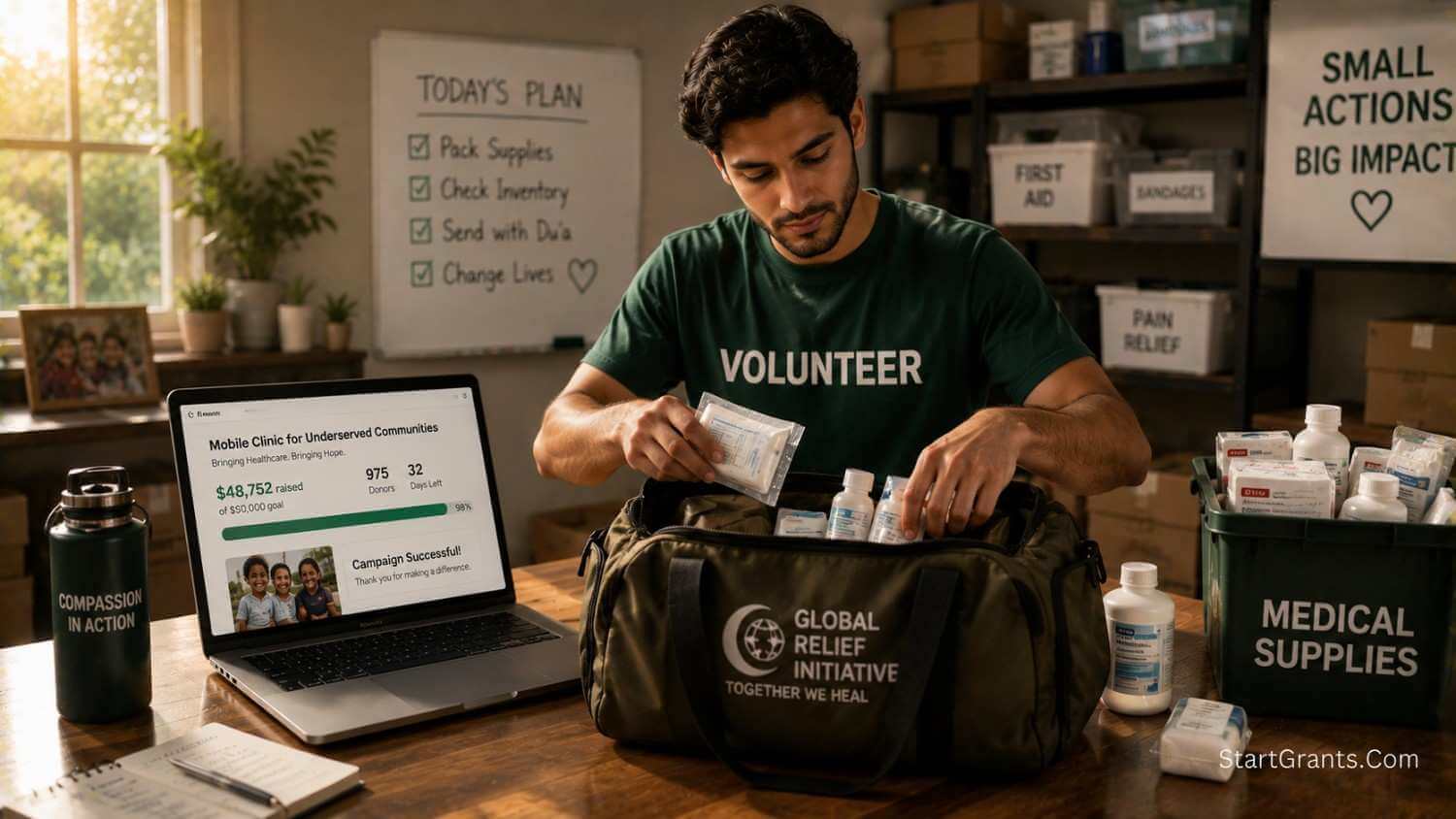
International volunteerism is expensive. To successfully raise funds for a mission trip, you must convince your donors that they are not funding a vacation, but rather investing in critical humanitarian impact.
Phase 1: The Mindset Shift (Defeating the “Vacation” Myth)
The single greatest obstacle you will face when asking for mission trip funds is donor skepticism. Many people view international volunteering (often cynically called “voluntourism”) as a glorified, taxpayer-subsidized vacation. If a potential donor believes they are just paying for you to take selfies with exotic animals or visit the beach, they will not donate a dime.
You must completely shift the narrative. You must separate your proactive mission from a reactive personal crisis. To understand how donors view these two vastly different scenarios, review our breakdown on How to Get Donations for Yourself.
The Strategic Narrative: Your campaign must emphasize impact and logistics. Do not talk about how this trip will “change your life.” Talk about how this trip will change the lives of the beneficiaries. Break down the exact work you will be doing—laying bricks, administering vaccines, or installing solar panels. When donors see you as a tactical asset rather than a tourist, the money will flow.
Phase 2: Digital Execution & The Email Engine
In 2026, setting up a digital crowdfunding page is mandatory. You must have a centralized URL where supporters can read your story and process their credit cards instantly.
If you are building your own blog to document the journey, you must remove all technical friction from the checkout process so donors do not abandon the page. Learn how to optimize your digital infrastructure by reading our Tips on Adding a PayPal Donation Button on Your Fundraising Website.
The Power of the Inbox
Once your page is live, social media posts alone will not reach your goal. The most powerful weapon for raising mission trip capital is direct email. A highly personalized, structured email sent to your extended family, former teachers, and colleagues yields a significantly higher conversion rate than a generic Facebook post.
To ensure your request avoids the spam folder and strikes the perfect balance between passion and professionalism, you must deploy the exact copywriting templates found in: How to Write a Fundraising Email That Converts.
Pro-Tip: Execution and Follow-Through
Securing donations from your network requires more than just a single email; it demands a structured, multi-channel approach. To see exactly how experienced international volunteers structure their campaigns, from writing the initial letter to organizing community support, watch this excellent breakdown: Missions 101: How to Fundraise For Your Mission Trip:
Phase 3: Corporate Sponsors & The “In-Kind” Pivot
Individual donors are essential, but to close a massive $5,000 funding gap quickly, you must target local businesses. However, asking a business for a $1,000 cash check is incredibly difficult. You must pivot to the “In-Kind” strategy.
Instead of asking for cash, ask for the physical assets you need to execute the trip:
- Airlines & Travel Agencies: Ask if they are willing to donate frequent flyer air miles or subsidize a portion of your international flight ticket.
- Local Clinics/Pharmacies: If it is a medical mission, ask them to donate boxes of bandages, basic antibiotics, or sterile gloves to take with you.
- Outdoor Retailers: Ask for donations of rugged hiking boots, specialized water-filtration backpacks, or heavy-duty duffel bags.
This strategy is highly effective because it costs the business wholesale prices, but they receive a retail-value tax deduction. Learn the profound economics of this tactic in our guide: Why In-Kind Donations for Nonprofits Are Incredibly Valuable.
To secure these corporate assets, you cannot send a text message; you must submit a highly professional proposal. Master this B2B communication style by reading How to Write a Formal Letter Asking for Donations.
Phase 4: IRS Tax Deductions (The Bureaucratic Advantage)
The greatest tool you have to convince wealthy individuals or corporations to fund your mission trip is the United States tax code. If a donor gives you $2,000 to fly to Kenya, can they write it off on their taxes?
According to the IRS (specifically IRS Publication 526 on Charitable Contributions), the answer is yes, but only if you meet strict criteria. The mission trip must be conducted under the official umbrella of a registered 501(c)(3) public charity or religious organization. Furthermore, there must be “no significant element of personal pleasure, recreation, or vacation” involved in the travel.
If your trip is legitimate, you must explicitly state in bold letters on all your fundraising materials: “All donations made toward this mission are 100% tax-deductible, and a formal receipt will be provided by [Name of 501(c)(3) Organization].” This single sentence will double your corporate donations.
Phase 5: The Muslim Perspective (Dawah, Riba, Gharar & Zakat)
For Muslim youth, doctors, and professionals in the United States, embarking on an international mission trip is often viewed as a religious duty. Whether it is responding to a humanitarian crisis alongside organizations like Islamic Relief USA, or traveling to impoverished regions to build Masjids and spread Dawah (Islamic education), these journeys are profoundly spiritual. However, funding these trips requires strict adherence to Islamic financial jurisprudence (Shariah) to ensure the mission begins with pure Barakah (blessing).
The Trap of Riba in Travel Financing
Because mission trips are expensive and the deadlines are tight, many enthusiastic volunteers make a fatal spiritual error: they purchase their $3,000 international flight on a personal credit card, assuming they will slowly pay it off over the next year.
If the credit card is not paid off immediately, it accumulates compounding interest. In Islam, intentionally taking on interest-bearing debt is explicitly Riba, which is strictly Haram (forbidden). Embarking on a noble humanitarian or Dawah mission while simultaneously engaging in Riba creates a severe spiritual contradiction. A Muslim volunteer must absolutely refuse to fund their trip with interest-bearing debt. The trip must be funded strictly through Halal cash savings or community crowdfunding (Sadaqah/Hibah).
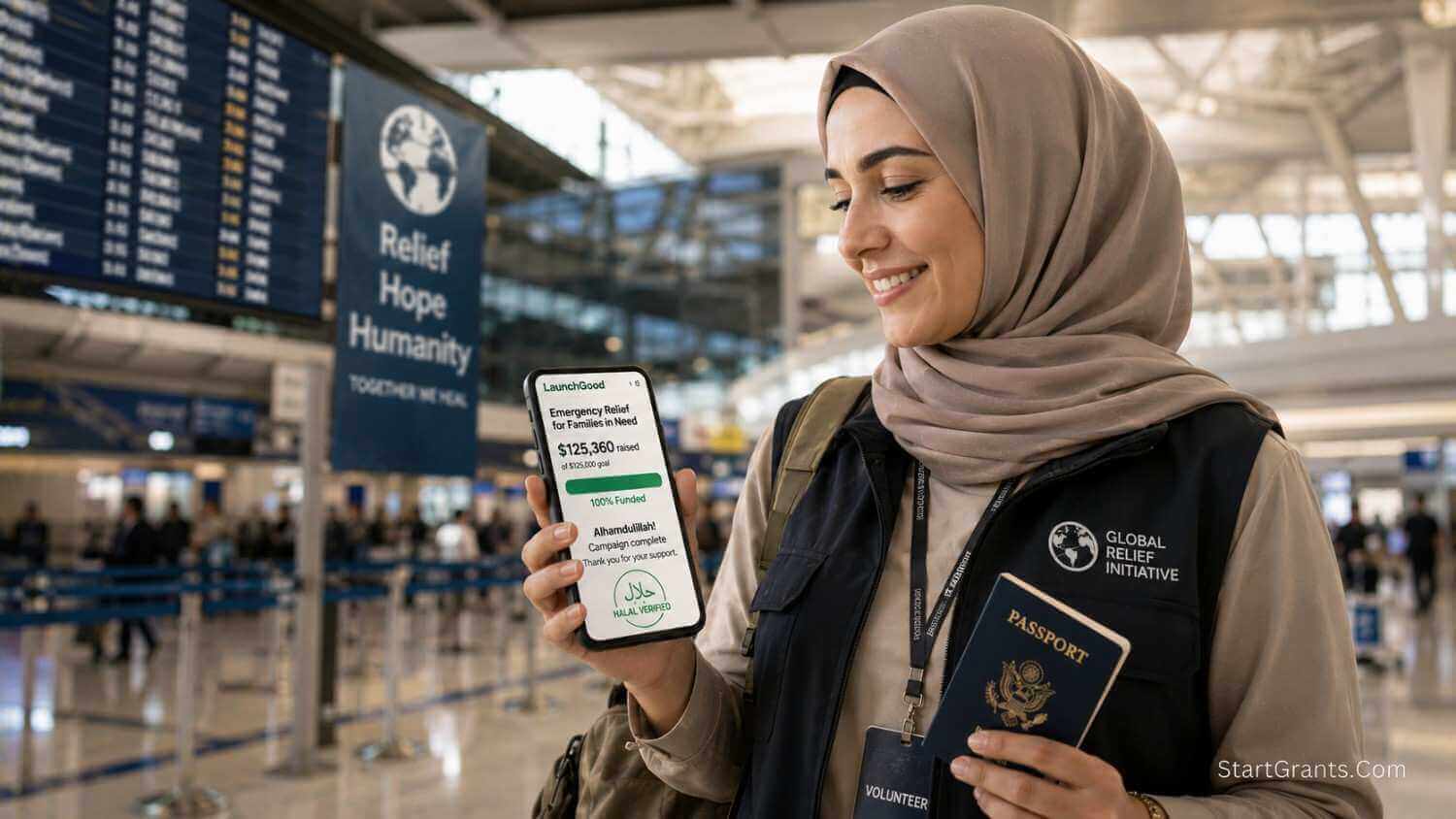
For the Muslim volunteer, embarking on a humanitarian or Dawah mission requires ethical preparation. By aggressively securing Halal crowdfunding (Sadaqah) instead of relying on Riba-bearing credit cards, the journey begins with profound Barakah.
Can You Use Zakat for a Mission Trip?
The most common question Muslim volunteers ask is whether they can collect Zakat (obligatory alms) from their community to fund their travel expenses.
In Islamic Fiqh, Zakat is restricted to eight specific categories (Asnaf). Two categories directly apply to mission trips:
- Fi Sabilillah (In the Path of Allah): Historically, this included military defense, but contemporary scholars universally extend this to individuals traveling explicitly for Dawah, establishing Islamic education, or executing critical humanitarian relief for the Ummah. If your trip is purely for the advancement of the faith and community survival, many scholars permit the use of Zakat to fund the logistical travel costs.
- Ibn al-Sabil (The Stranded Traveler): If a volunteer undertakes a noble journey and runs out of funds while overseas, they are legally entitled to receive Zakat to return home safely.
However, to avoid any theological doubt (Syubhat), volunteers are highly encouraged to fund their personal airfare and lodging using Sadaqah (voluntary charity), reserving collected Zakat strictly for the direct beneficiaries (e.g., buying food and medicine for refugees).
Gharar and Emergency Medical Evacuation Insurance
If you are traveling to a conflict zone, a refugee camp, or a post-disaster region, the sponsoring 501(c)(3) NGO will legally mandate that you purchase extensive Travel Medical and Emergency Evacuation Insurance. A helicopter medevac from a remote region can cost $100,000.
Traditional commercial insurance contains Gharar (excessive uncertainty) and elements of gambling. While true Islamic cooperative insurance (Takaful) for international travel is virtually non-existent for U.S. citizens, contemporary Islamic scholars widely apply the principle of Dharurah (legal and life-saving necessity). This permits the Muslim volunteer to purchase the mandated commercial policy to protect their life and satisfy the NGO’s legal requirements, provided the intent is survival, not speculative profit.
Conclusion
Mastering how to raise money for a mission trip is an exercise in strategic communication. You must defeat the “vacation” myth by clearly articulating the brutal, logistical reality of your humanitarian work. By utilizing digital crowdfunding, leaning heavily on the “In-Kind” corporate pivot for supplies, and leveraging IRS tax deductions, you can raise thousands of dollars and embark on your journey completely debt-free.
For the Muslim volunteer, this logistical preparation is elevated by profound spiritual discipline. By fiercely rejecting the trap of Riba-laced credit card debt, managing mandatory travel insurance through the lens of Dharurah, and navigating the strict Fiqh parameters of Zakat versus Sadaqah, you ensure that your mission trip serves humanity while maintaining absolute divine purity from departure to return.
Frequently Asked Questions (FAQs)
Q1: How do I convince people my mission trip isn’t just a vacation?
A: The key is absolute transparency regarding your itinerary and impact. Do not post pictures of tourist attractions on your campaign page. Instead, provide a detailed, day-by-day breakdown of the grueling work you will be doing (e.g., pouring concrete, treating patients). Highlight the living conditions (e.g., sleeping in tents without AC) to prove the trip is focused entirely on labor and service.
Q2: Are donations to a personal mission trip tax-deductible?
A: Yes, but only if the trip is conducted through an officially registered 501(c)(3) nonprofit organization (like a church, mosque, or global NGO), and there is no significant element of personal recreation. The donor must make the check out to the nonprofit, not to your personal bank account, and the nonprofit must issue the tax receipt.
Q3: Should I ask for cash or supplies from local businesses?
A: Ask for supplies. This is known as an “In-Kind” donation. Businesses are highly protective of their cash flow but are often willing to donate physical inventory (like hiking gear, basic medical supplies, or bottled water) because it costs them less than wholesale value, yet provides them with a full retail-value tax deduction.
Q4: Why is it Haram to use a credit card to pay for a mission trip flight?
A: If you use a personal credit card and do not pay the balance in full by the due date, the credit card company will charge compounding interest. In Islamic finance, intentionally engaging in a contract that stipulates the payment of interest is classified as Riba, which is strictly forbidden (Haram), even if the reason for the travel is noble.
Q5: Can I collect Zakat to pay for my volunteer trip?
A: It depends on the exact nature of the trip. If the trip is specifically for Dawah (spreading the faith) or critical humanitarian relief (Fi Sabilillah), many scholars permit the use of Zakat for travel logistics. However, to avoid spiritual doubt, it is highly recommended to fund your personal travel expenses using general Sadaqah (voluntary charity) and reserve Zakat funds strictly for the impoverished beneficiaries you are traveling to help.
Disclaimer: The information provided in this article is for educational and informational purposes only. We are not a global NGO, a financial advisory firm, or a religious fatwa council. IRS regulations regarding charitable travel deductions (Publication 526) are subject to constant legislative changes. Always consult with a certified CPA regarding donor tax receipts, the sponsoring 501(c)(3) organization for compliance, and a qualified Islamic finance scholar regarding Halal crowdfunding, Zakat eligibility for Fi Sabilillah, and mandatory insurance via Dharurah.